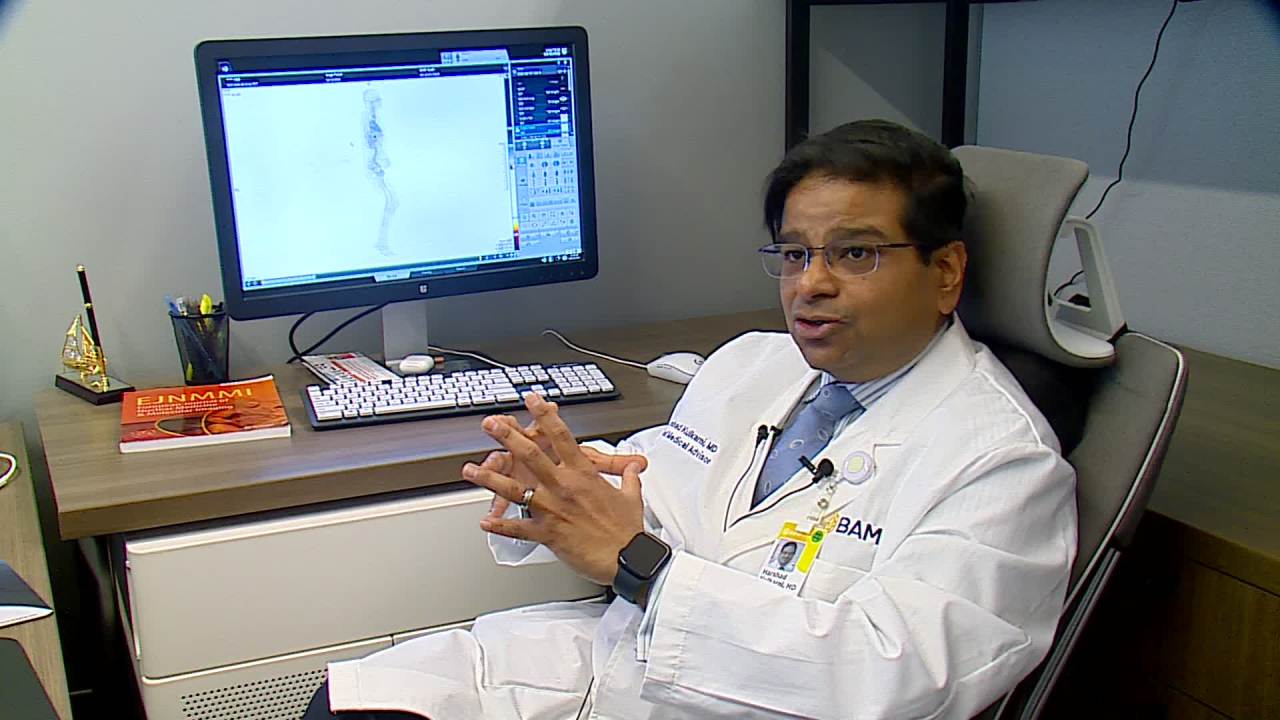
Recent research suggests that the rise in pancreatic cancer diagnoses among young adults is primarily due to an increase in the detection of endocrine tumors, which are generally less aggressive and more treatable than the more common adenocarcinoma. This increase in detection is attributed to advancements in imaging technology, such as CT and MRI scans, rather than an actual rise in cancer incidence. Experts are considering reclassifying these tumors to better reflect their nature and improve data accuracy.
Recent reports suggesting a surge in pancreatic cancer cases may not be as alarming as initially thought. New analyses indicate that the increase in reported cases could be attributed to improved diagnostic techniques and better awareness, rather than an actual rise in incidence. This suggests that while vigilance is necessary, the situation may not be as dire as previously feared.
Dr. Mark Bloomston, a surgical oncologist, shares new hope for pancreatic cancer patients, emphasizing that cures are possible and significant advancements have been made in diagnosis and treatment. The "Whipple" procedure, a 100-year-old surgery, is now considered for older patients, and chemotherapy has improved to offer a longer and better quality of life. Combining chemotherapy and surgery has led to unprecedented survival rates. Physicians are now more proactive in early diagnosis, listening for symptoms and screening high-risk patients, with the goal of providing patients with a longer, quality life.
Matthew Rosenblum, diagnosed with stage four pancreatic cancer at 32, defied the odds and survived almost four years thanks to a "miracle" drug combination. Initially misdiagnosed due to symptoms including white stools and severe itching, he underwent a Whipple procedure, but the cancer had spread. Targeted therapies and a potent chemotherapy regimen led to significant improvement, with scans showing disappearance of liver spots and successful tumor removal. Despite low survival odds, Rosenblum remains focused on raising awareness and advocating for patients not to view pancreatic cancer as a death sentence.
A West Michigan man with pancreatic cancer became the first person in the world to test a new imaging agent as part of a clinical trial conducted by BAMF Health, which aims to improve the detection of the disease. The imaging agent, labeled with a radioactive isotope, was used in conjunction with a total-body PET/CT scanner to localize the presence of the disease in the patient. The trial's results could potentially lead to the development of targeted treatments for pancreatic cancer, which currently do not exist.
A new blood test has shown promise in detecting early-stage pancreatic cancer with up to 97% accuracy by identifying genetic markers shed by the cancer. When combined with an existing pancreatic cancer marker test, the accuracy increased to 97% for stage 1 and 2 cancers. The test offers potential for early detection, which is crucial as pancreatic cancer is often diagnosed at advanced stages. However, further research is needed before it can be widely used.
Pancreatic cancer is a dangerous disease that often goes undetected until it has progressed significantly. Recognizing warning signs such as jaundice, stomach or back pain, nausea, vomiting, weight loss, changes in bowel habits, diabetes, blood clots, digestive issues, and fatigue can lead to early diagnosis and effective treatment.
Researchers at the University of California, Davis have identified a protein, Engrailed-1 (EN1), that is linked to the progression and metastasis of pancreatic cancer. The abnormal expression of EN1 promotes pancreatic cancer progression and metastasis in vitro and in mouse models, and elevated EN1 levels are associated with severe, metastatic pancreatic cancer in human patients. The findings suggest that EN1 could be a potential target for pancreatic cancer therapies, and the researchers are working on ways to translate their findings into clinical applications. This discovery sheds light on the molecular mechanisms driving metastasis in pancreatic cancer and could lead to the development of new therapeutic strategies for this challenging disease.
Researchers at MIT have developed computer models using artificial intelligence to identify more high-risk individuals for pancreatic cancer, potentially increasing the number of patients who can benefit from screening from 10% to 35%. The models analyzed electronic health records to identify patterns common among those who developed pancreatic cancer, showing promising results. While the approach still needs to be proven in clinical settings, the study's diversity and large-scale analysis offer hope for early detection of hard-to-find cancers. The team is also exploring the application of the model for other cancers, such as kidney and ovarian cancer.