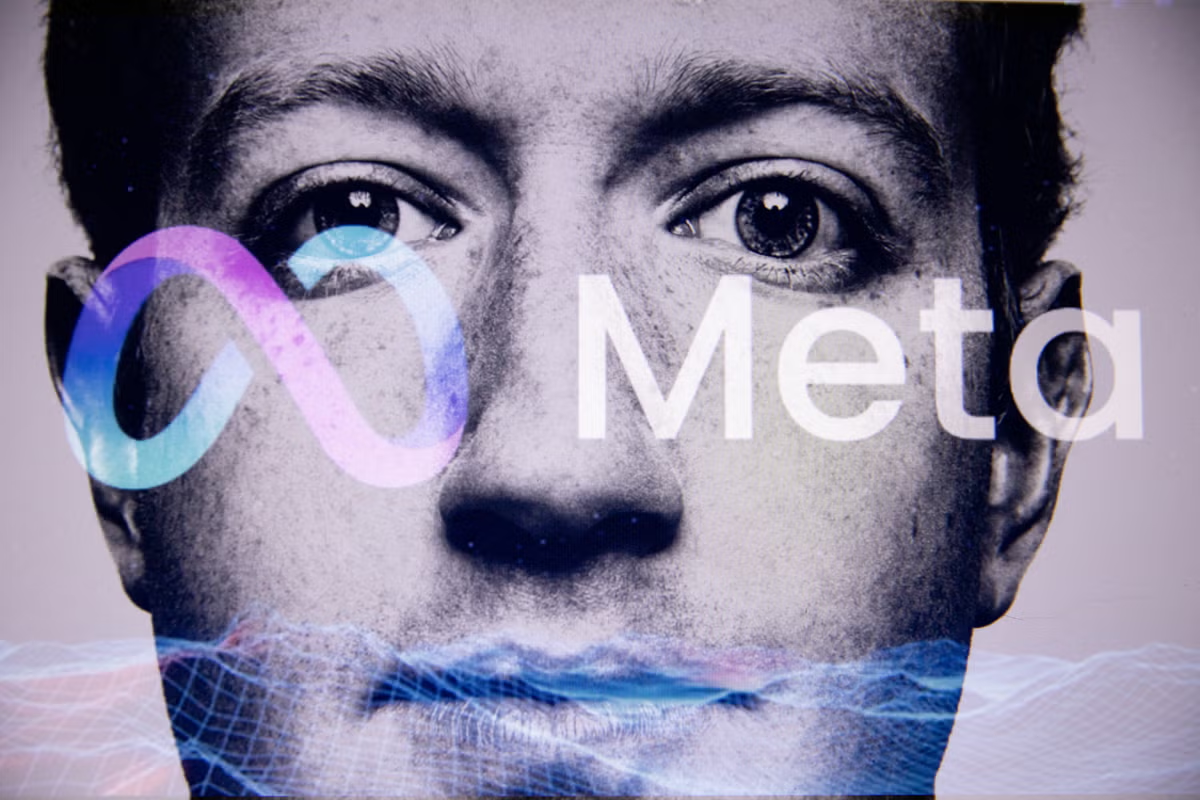
Meta, led by Mark Zuckerberg, is heavily investing in AI with its upcoming Prometheus project to compete with OpenAI, involving significant financial commitments, talent acquisition, and infrastructure development, raising both technological and ethical questions about the future integration of AI into daily life.
AI-powered virtual interviewers are increasingly replacing human recruiters, offering personalized but often impersonal and hollow interview experiences, raising concerns about dehumanization and bias in the hiring process.
Astronomers are using AI to analyze previously discarded data from the Event Horizon Telescope, leading to new insights into the structure and rotation of the supermassive black hole Sagittarius A* at the center of the Milky Way, including evidence that it spins at nearly top speed.
Adobe is expected to report strong fourth-quarter earnings, with analysts predicting revenue of $5.54 billion and earnings per share of $4.65. The company has consistently beaten revenue and earnings estimates in recent quarters. Analysts highlight Adobe's healthy subscription growth and high operating margins, despite concerns about AI competition. Key areas to watch include subscription revenue, AI impact, and new product updates. Adobe's stock is down 6% year-to-date, but analysts see potential for it to become a market leader.
David Baker, a computational biologist and professor at the University of Washington, accepted the Nobel Prize in chemistry in Sweden for his work with Demis Hassabis and John Jumper of Google DeepMind. The trio was recognized for developing techniques to decode and design proteins using artificial intelligence, potentially revolutionizing drug and material creation. Baker, the eighth UW faculty member to win a Nobel, directs the Institute for Protein Design and was recently named one of Time magazine's 100 most influential people in health.
An OpenAI employee, Vahid Kazemi, claims the company has achieved artificial general intelligence (AGI) with its o1 model, though he acknowledges it is not superior to humans in all tasks. Kazemi argues that the model's ability to perform a wide range of tasks surpasses most humans, despite not excelling in specific areas. His comments come amid OpenAI's removal of 'AGI' from its Microsoft deal, raising questions about the business implications of such claims.
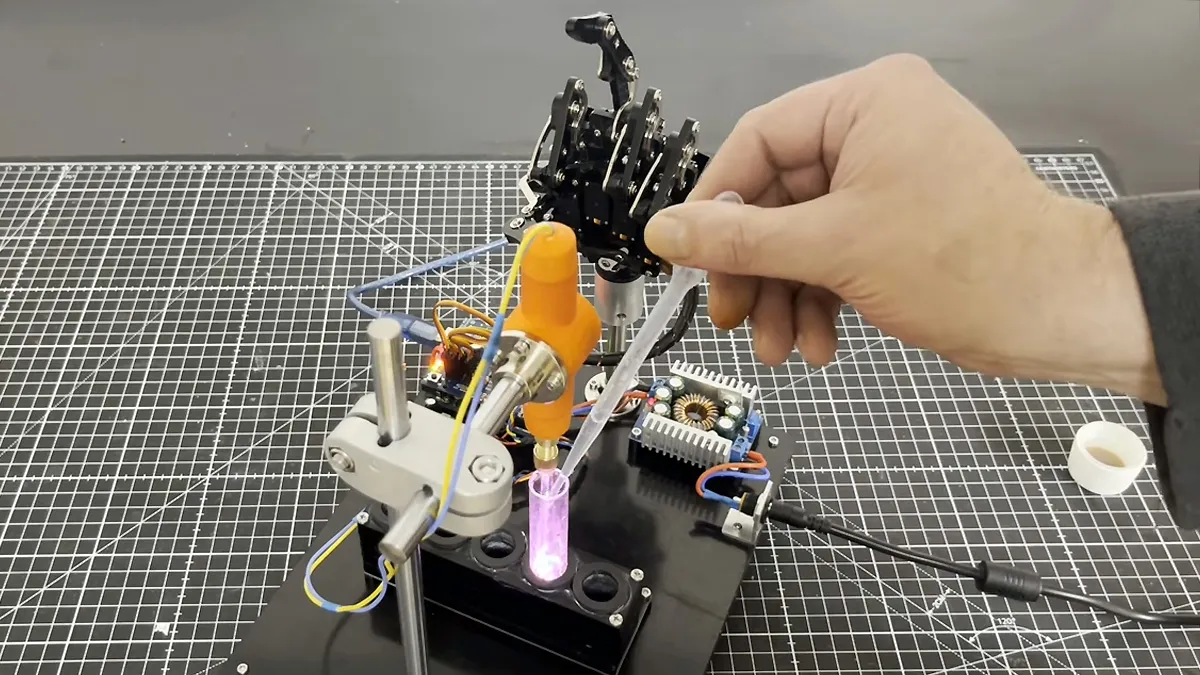
[Marb] explores the concept of a robot controlled by chemical reactions, using luminol to create artificial logic gates and a chemical brain. The project features a bionic robot hand that responds to chemical reactions, utilizing a 'lab-on-a-chip' approach with microfluidics to streamline processes. This innovative experiment merges chemistry and robotics, showcasing the potential of chemical brains in technology.
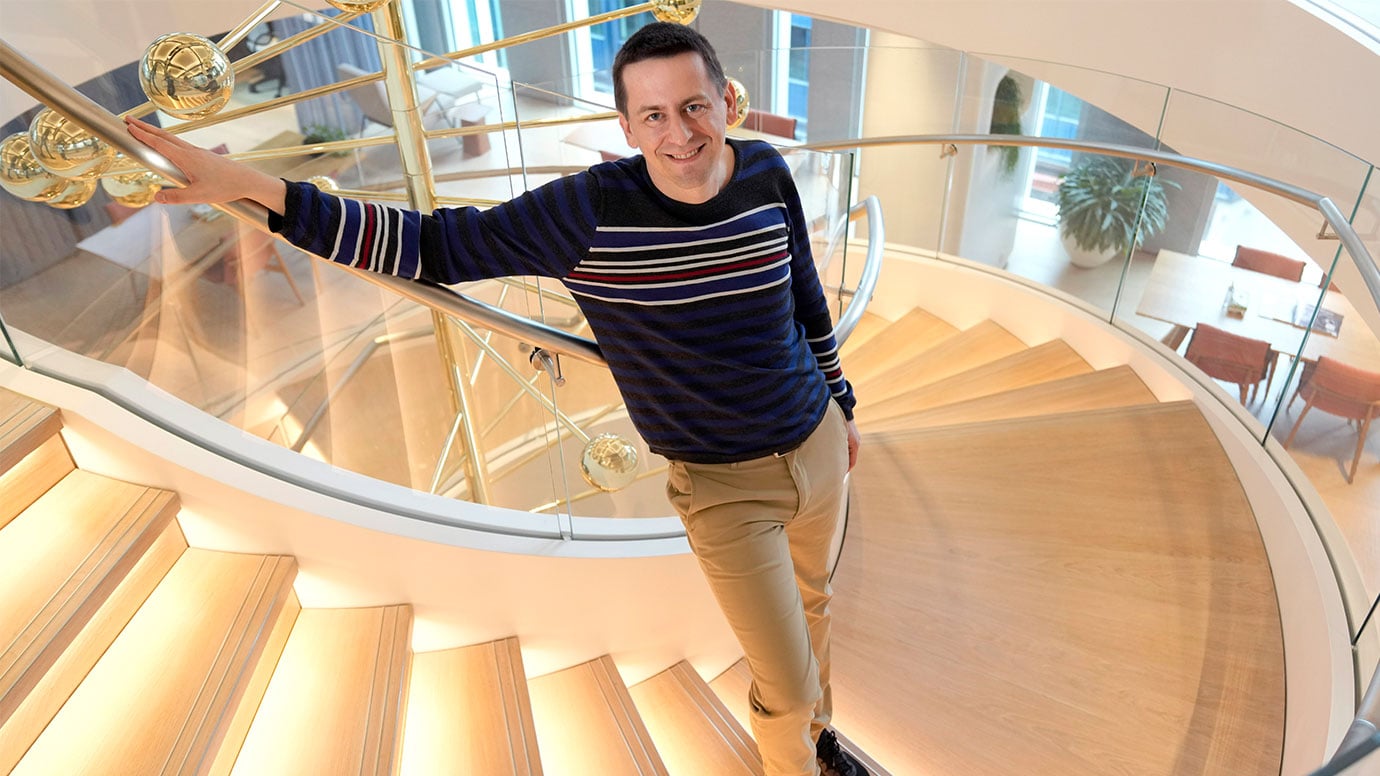
John Jumper, a Nobel laureate in Chemistry, initially struggled with chemistry but found his passion in computational modeling of protein folding. His work at the University of Chicago and later at DeepMind led to the development of AlphaFold, an AI program that predicts protein structures from genetic sequences. This breakthrough has significant implications for understanding diseases and drug development, earning Jumper and his colleague Demis Hassabis the 2024 Nobel Prize in Chemistry.
The S&P 500 has surged nearly 26% in 2024, nearing record highs due to improved macroeconomic conditions, AI excitement, and potential corporate tax cuts. Despite this, some quality stocks like Dutch Bros remain undervalued. Dutch Bros, trading 30% below its peak, has seen a 68% rise this year, driven by a 28% revenue increase and plans to expand from 950 to 4,000 stores by 2035. Its unique coffee service model and expansion into new states present strong growth opportunities.
Glassnode co-founders Jan Happel and Yann Allemann suggest that Bitcoin may have bottomed out after a correction, as long-term holders have sold less aggressively compared to earlier in the year. They also express optimism about the AI-based crypto project, Artificial Superintelligence Alliance (FET), which they believe is poised for a rally due to its strong fundamentals, neutral RSI, and accumulation phase. FET is currently trading at $1.62, up 8.1% in the last 24 hours.
Niantic, the creator of Pokémon Go, has revealed that the game has been used to collect vast amounts of geospatial data, training AI to understand and navigate 3D spaces. This data, gathered from millions of user-submitted photos, has been used to develop a "Large Geospatial Model" for augmented reality applications. While Niantic highlights positive uses, such as enhanced AR features, the potential for more concerning applications of this technology is also noted.
Apple is reportedly planning to launch a new smart home hub device, which could boost its stock value, according to analysts. The device, resembling a 6-inch square iPad, will control home appliances and support video conferencing and Siri voice prompts. Analysts believe this product could enhance Apple's AI ecosystem and compete with Amazon Echo and Meta's Portal. Apple stock is currently rated as a buy, with a target price of $265.
Apple CEO Tim Cook announced during the annual shareholders meeting that the company will "break new ground" in GenAI this year, following reports of reassigning staff from a scrapped EV project to work on GenAI initiatives. Apple has been slow to invest in GenAI compared to its rivals, but is reportedly planning to upgrade Siri, Spotlight, Keynote, and Apple Music with GenAI models, with potential new features expected to be showcased at the Worldwide Developer Conference. The company has also been intensifying its focus on GenAI, publishing open source models and tools, investing $1 billion a year in GenAI efforts, and rumored to be upgrading the Neural Engine in upcoming iPhone 16 models.
Temu and Microsoft's Copilot saw a surge in app downloads following their Super Bowl commercials, with Temu's downloads increasing by 34% on Super Bowl Sunday. The e-commerce marketplace Temu, known for its low prices and gamified design, has rapidly grown in popularity and ad spend, impacting other e-commerce platforms. Microsoft's Copilot, an AI chatbot, also gained traction after its Super Bowl ad. The rise of these apps reflects the impact of Super Bowl commercials on app downloads and consumer behavior.
Super Bowl LVIII will feature a departure from tech-focused ads, with traditional themes of amusement and comedy taking center stage as renowned companies like BMW, DoorDash, Budweiser, State Farm, and Oreo secure slots for the event. The absence of cryptocurrency and artificial intelligence ads reflects the cautious approach of advertisers amidst the current uncertainty in the industry, while the shift towards a lighter tone aims to provide a respite from the seriousness and complexity that has characterized recent years.