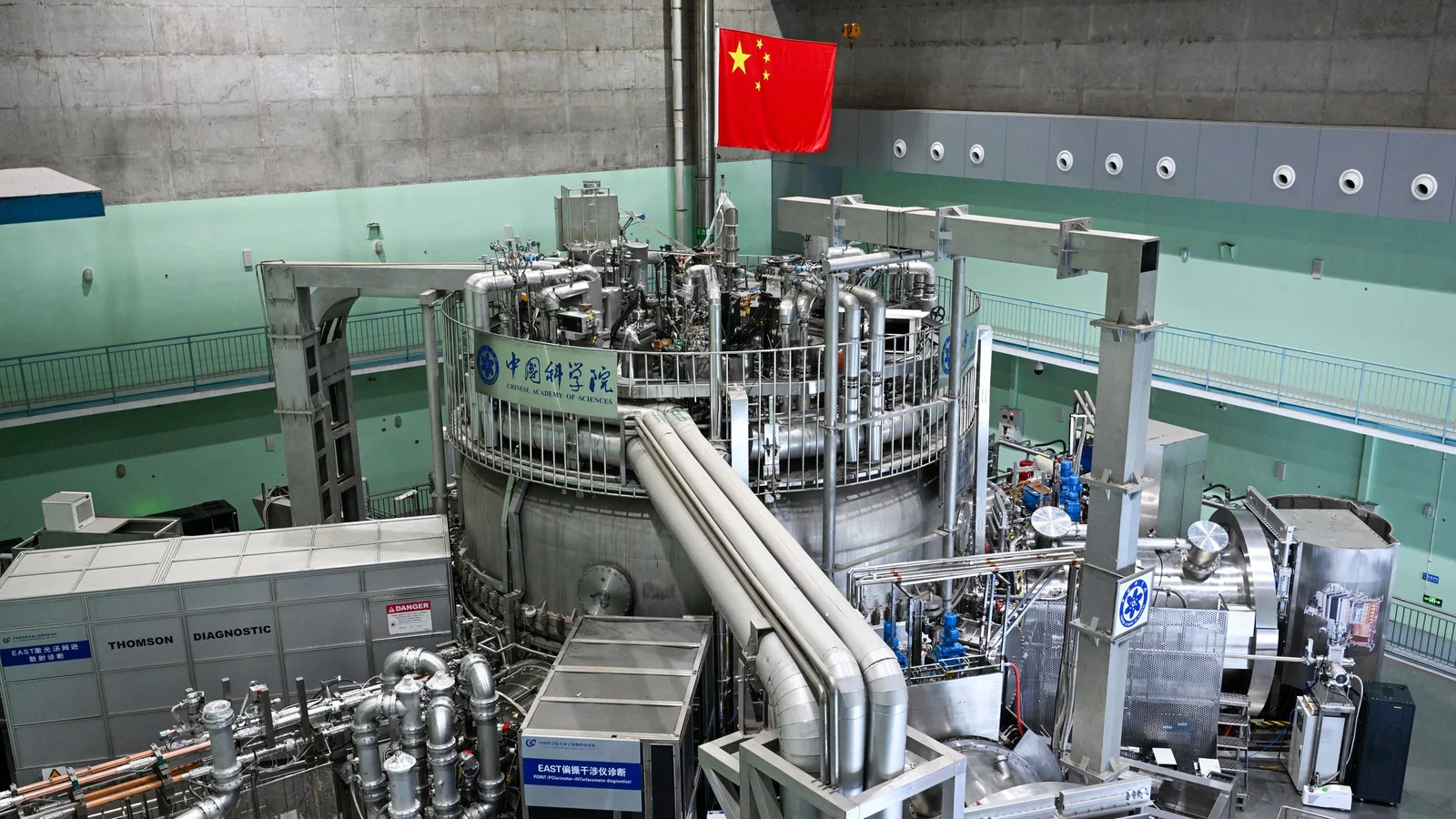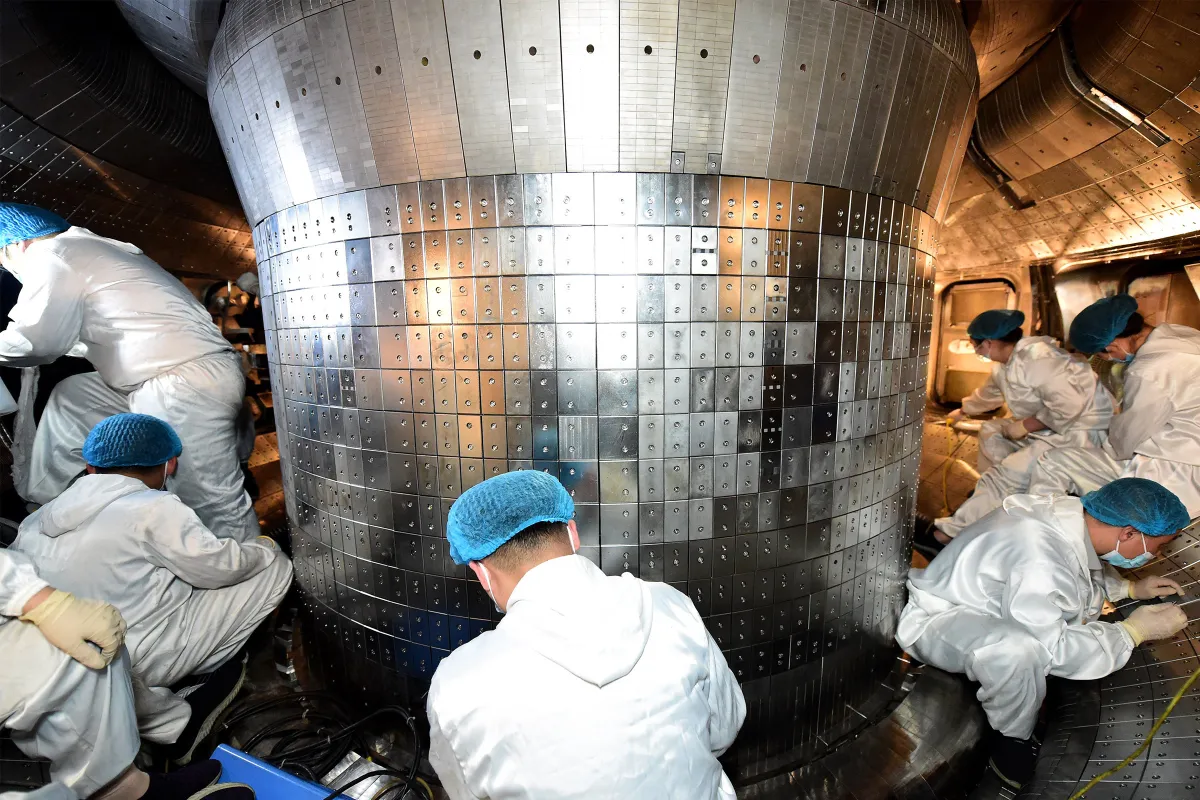
China's 'artificial sun' reactor, EAST, has broken a major fusion limit by maintaining plasma stability at densities 1.3 to 1.65 times beyond the Greenwald Limit, advancing nuclear fusion research and bringing humanity closer to potential clean, limitless energy. This achievement, published in Science Advances, demonstrates progress in overcoming key challenges in fusion technology, which could inform future reactors like ITER.
Meta Platforms signed new nuclear energy agreements with Vistra, Oklo, and TerraPower to power its data centers and AI initiatives, leading to significant stock gains for Vistra and Oklo, and highlighting Meta's commitment to clean, reliable energy sources for its technological growth.
Meta has announced partnerships with three companies—Oklo, TerraPower, and Vistra—to support the development and operation of up to 6.6 GW of nuclear energy by 2035, aiming to power its data centers and AI infrastructure with clean, reliable energy, create jobs, and strengthen America's nuclear supply chain.
Scientists at China's EAST tokamak have achieved plasma densities previously thought impossible, potentially paving the way for more efficient nuclear fusion energy by surpassing the Greenwald limit and maintaining stable, high-density plasma.
The US welcomes India's SHANTI Bill 2025, which modernizes India's nuclear legal framework, allows private companies to participate in nuclear energy, and aims to strengthen energy security and civil nuclear cooperation between the two countries.
The year 2025 was tumultuous for clean energy in the US, marked by policy reversals under Trump that hindered wind and solar projects, yet the industry showed resilience with booming solar and storage sectors, advancements in nuclear and geothermal energy, and a challenging but evolving offshore wind industry, setting the stage for continued growth in 2026.
Ontario and New York have signed an agreement to collaborate on developing nuclear technologies, including small modular reactors, to meet increasing energy demands, enhance reliability, and promote decarbonization, with a focus on technological innovation, trade, and workforce development.
The U.S. Department of Energy has selected TVA and Holtec to support the deployment of small modular reactors in Tennessee and Michigan, with up to $800 million in funding, aiming to deliver new nuclear capacity by the early 2030s and strengthen domestic supply chains as part of a broader effort to expand America's energy independence and security.
Oklo, a nuclear startup focused on small modular reactors, reported a Q3 loss of $36.3 million with no revenue but saw its stock rise amid increased government backing and positive analyst outlooks, highlighting its potential in the growing nuclear energy sector.
Oklo, a nuclear startup valued over $15 billion with no revenues yet, reported a larger-than-expected Q3 loss but announced significant progress on major projects, including a DOE-approved facility and a prototype reactor expected by July 2026. Its shares surged, driven by optimism about nuclear energy's role in powering data centers and government backing, making it a standout performer among nuclear stocks. Meanwhile, retail investors are shifting focus from meme stocks to gold, with increased trading activity in gold ETFs.
Cameco's stock surged after announcing a strategic partnership with Westinghouse, backed by the U.S. government, to build at least $80 billion worth of new nuclear reactors in the U.S., aligning with Trump's nuclear energy initiatives and boosting nuclear stocks.
Amazon announced plans to support the development of small, modular advanced nuclear reactors in Washington State, including the new Cascade Advanced Energy Facility, which aims to generate 960 MW of power and create jobs, with construction expected to start in the late 2020s.
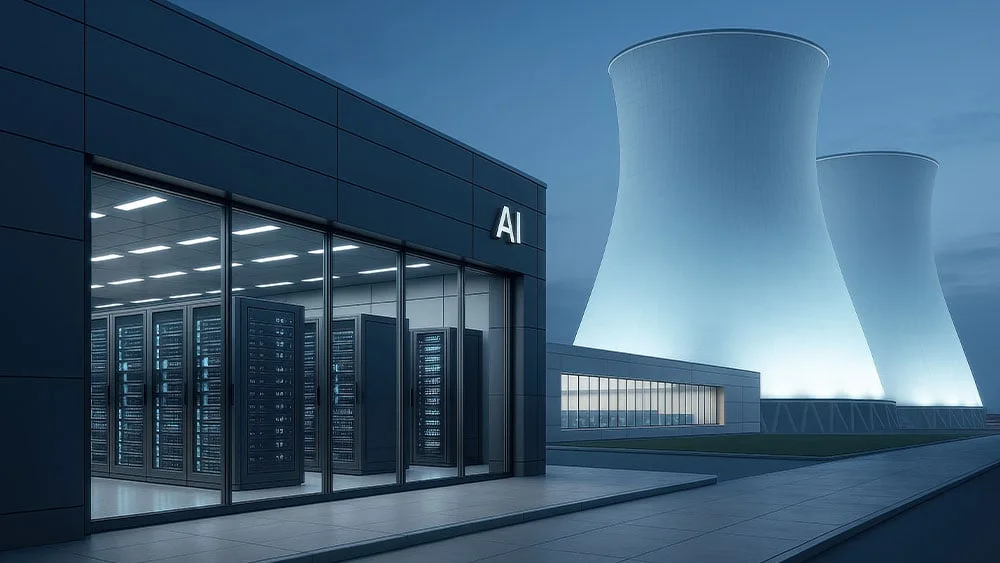
Big tech companies are investing in nuclear energy, particularly small modular reactors, to meet the growing power demands of AI and data centers, despite challenges like public perception, high costs, and waste management. While promising, these technologies are still in early stages and may only address future energy needs years down the line.
The article discusses the rise of nuclear stocks driven by US government efforts, led by President Trump, to revive domestic uranium mining and reduce reliance on imports, amid a broader nuclear renaissance fueled by Big Tech's interest in nuclear power for AI data centers. Despite supportive policies and increased interest, the uranium industry faces challenges such as long lead times for production increases and supply chain constraints, which could hinder the rapid expansion of nuclear energy and related stocks.
Oklo, a nuclear startup developing small modular reactors, has seen its stock surge over 540% in 2025 despite not expecting revenue until 2027, driven by increased government support and positive analyst outlooks, though it remains unprofitable through 2028.