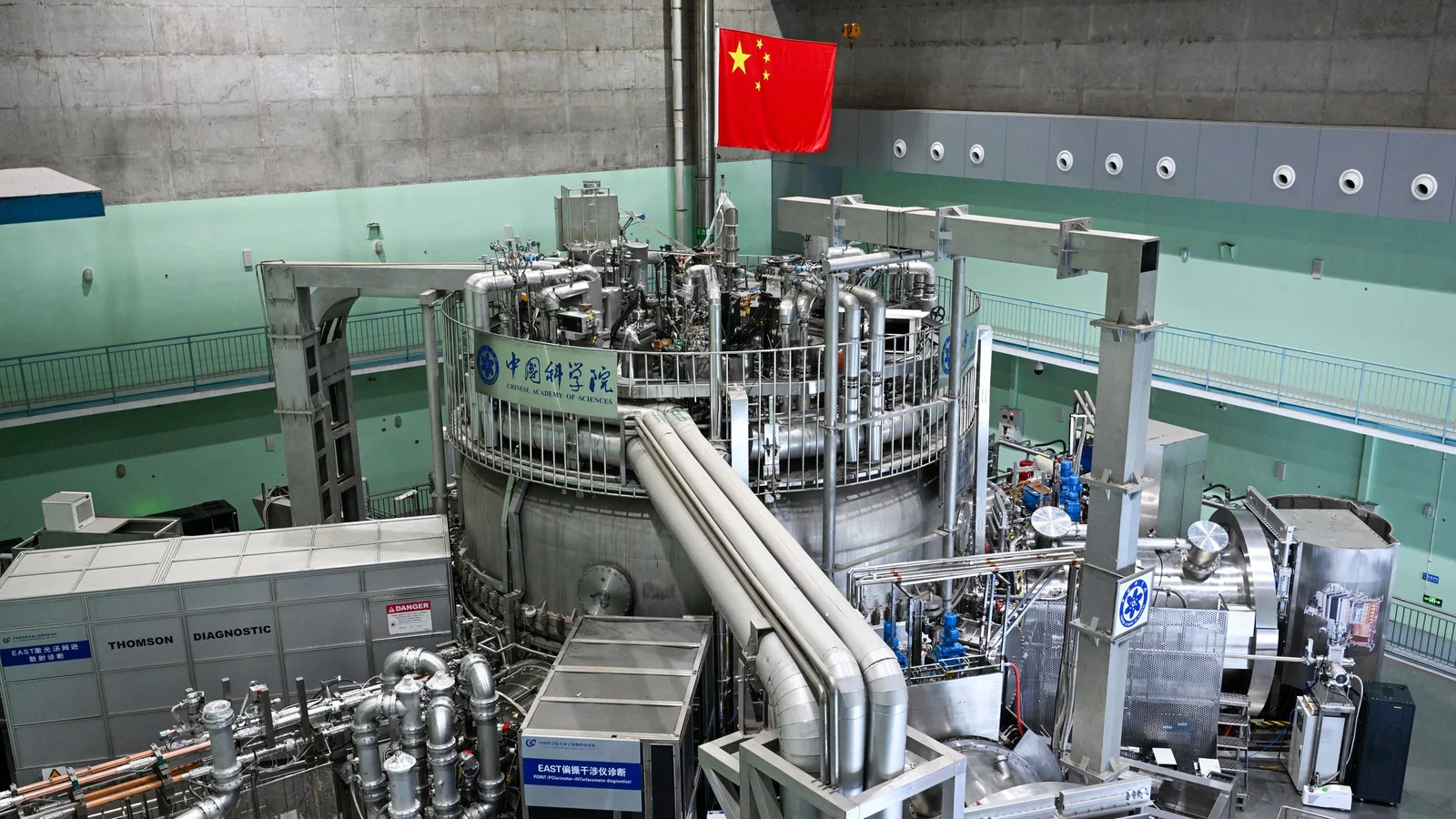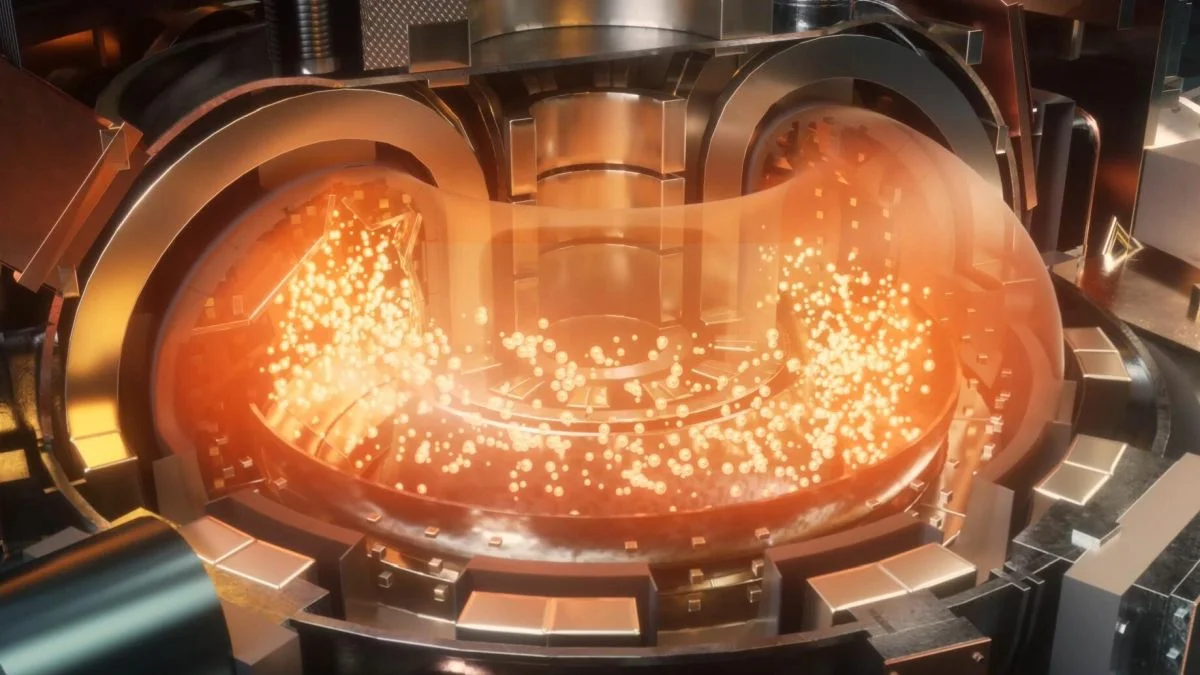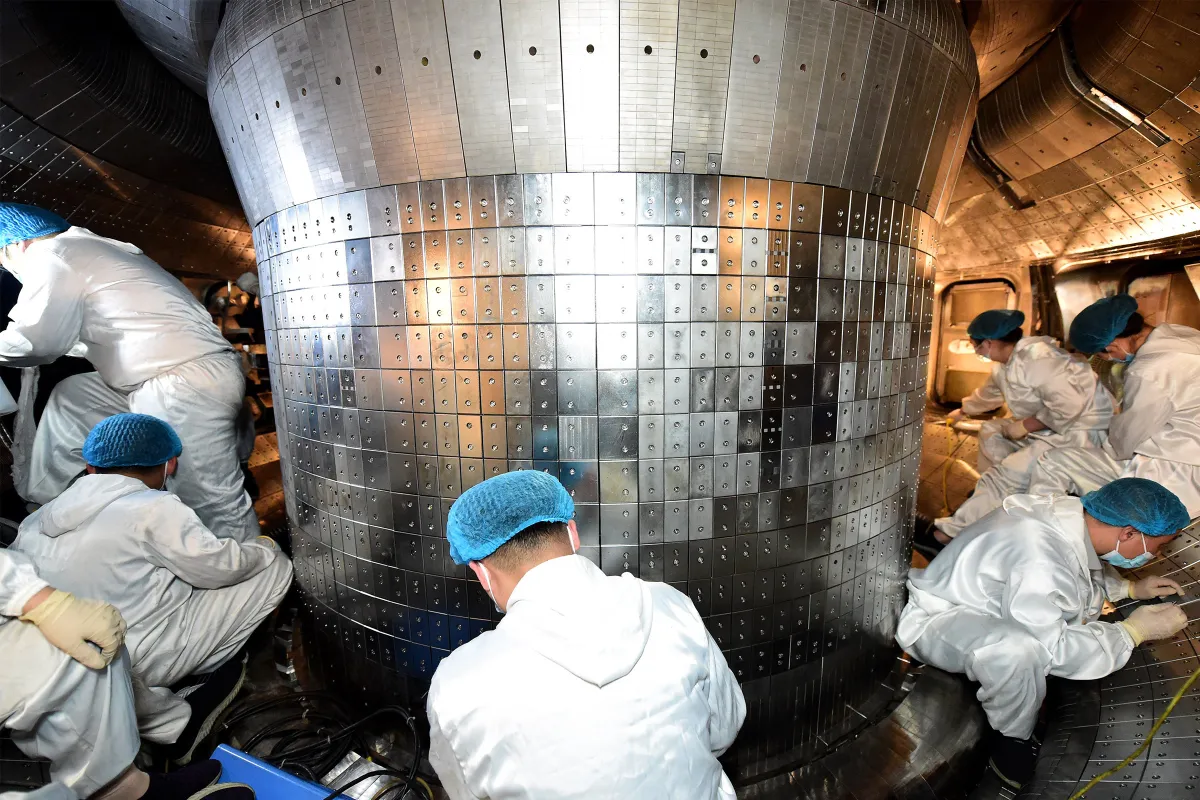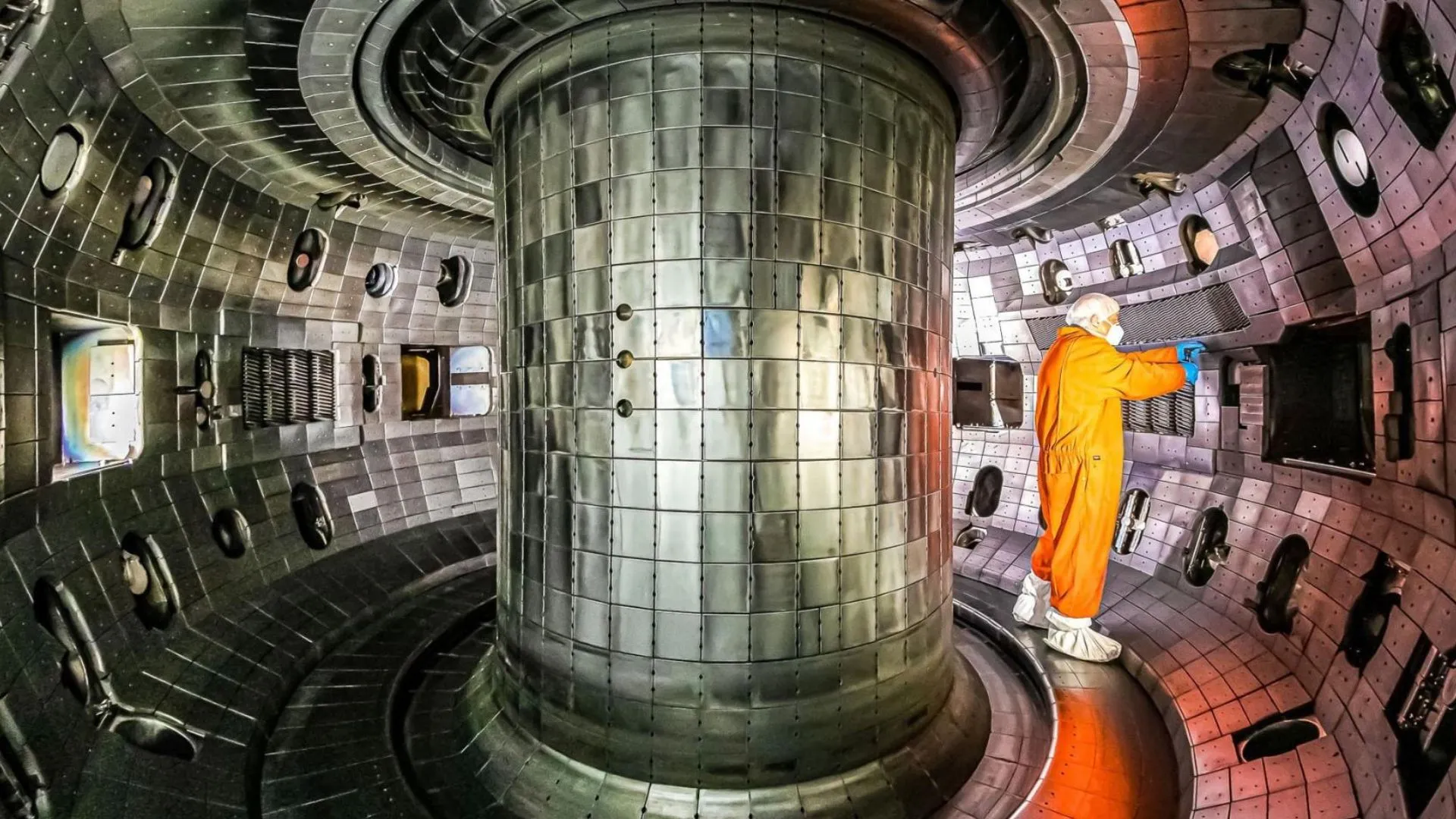
China's 'artificial sun' reactor, EAST, has broken a major fusion limit by maintaining plasma stability at densities 1.3 to 1.65 times beyond the Greenwald Limit, advancing nuclear fusion research and bringing humanity closer to potential clean, limitless energy. This achievement, published in Science Advances, demonstrates progress in overcoming key challenges in fusion technology, which could inform future reactors like ITER.
Researchers in China have demonstrated a method to surpass the Greenwald density limit in a fusion reactor by controlling plasma-wall interactions, potentially paving the way for more efficient fusion energy production.
Scientists at China's EAST tokamak have achieved plasma densities previously thought impossible, potentially paving the way for more efficient nuclear fusion energy by surpassing the Greenwald limit and maintaining stable, high-density plasma.
Nuno Loureiro, a prominent plasma physicist and head of MIT's Plasma Science and Fusion Center, was tragically shot and killed at his home in Brookline, Massachusetts, in an apparent homicide, shocking the scientific community and highlighting recent tragedies involving US universities.
Rosalía's album Lux is an ambitious, global, and maximalist project recorded with the London Symphony Orchestra, blending classical, folk, and electronic music across 13 languages, inspired by feminine mysticism and her personal journey of transformation and cultural fusion.
Researchers at the DIII-D National Fusion Facility have demonstrated that an inverted 'D' shaped plasma, known as negative triangularity, can achieve stable, high-performance conditions for nuclear fusion, potentially addressing heat management and stability challenges in future fusion reactors.
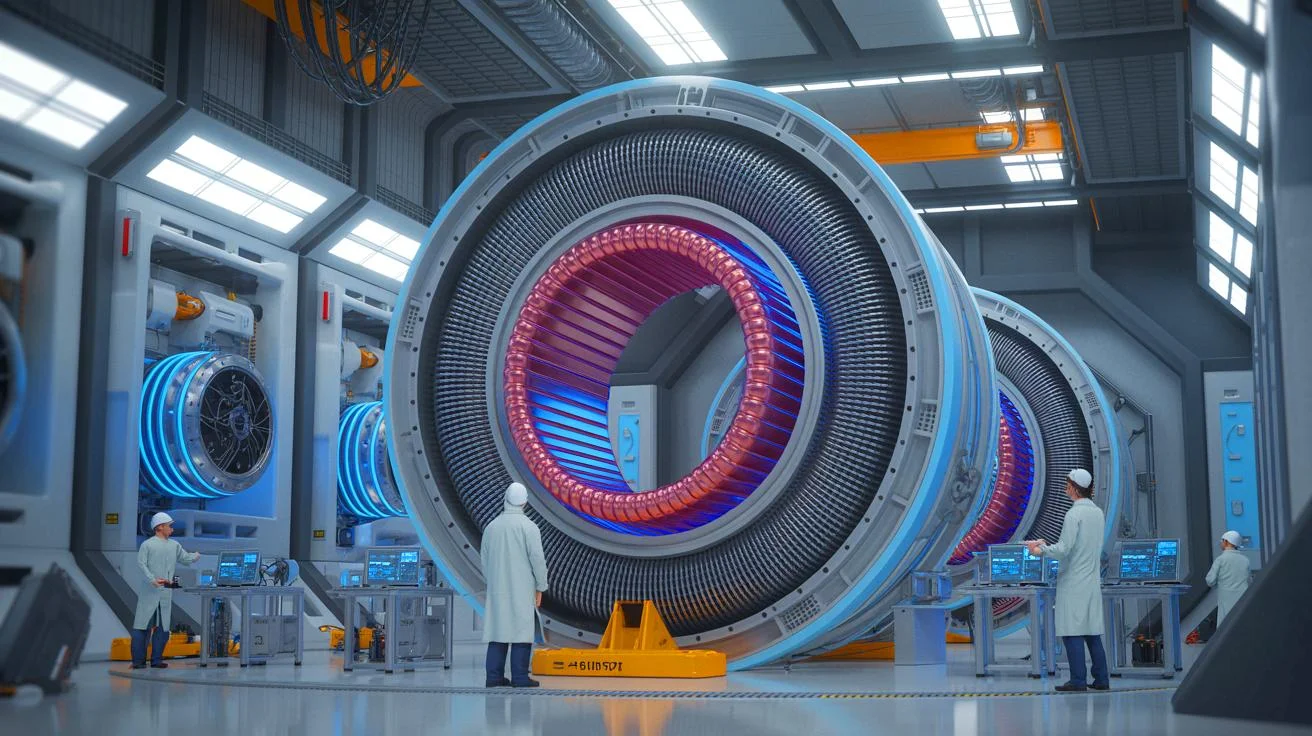
The ITER project has achieved a major milestone by completing a powerful central solenoid magnet capable of levitating an aircraft carrier, which is crucial for sustaining the superheated plasma needed for nuclear fusion. This international effort demonstrates significant progress toward developing clean, sustainable energy, with the first reactor operation expected by 2035, despite ongoing technical challenges.
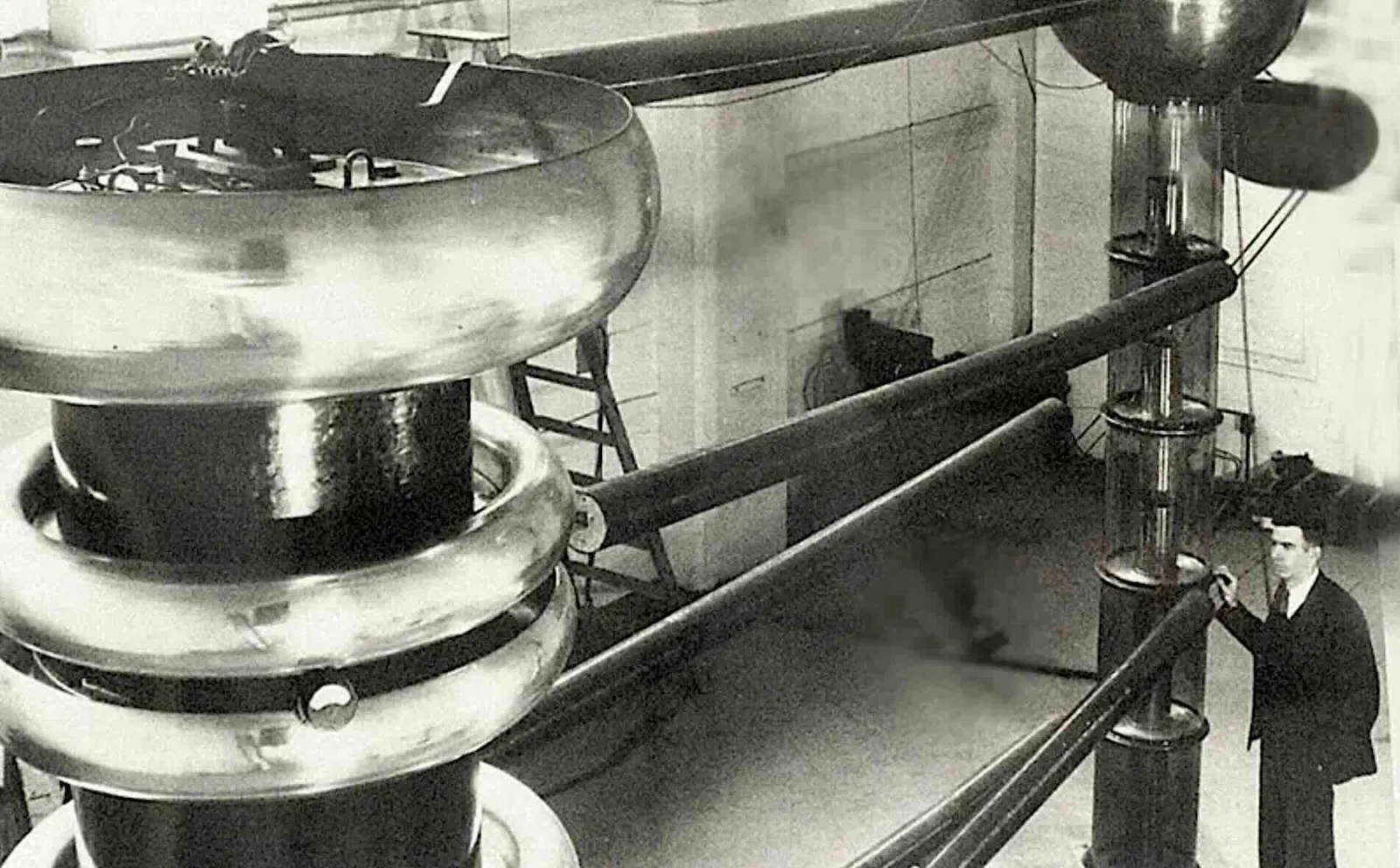
A 1938 experiment by Arthur Ruhlig, which first observed deuterium-tritium fusion and was largely forgotten, has been rediscovered and replicated by modern scientists, confirming its findings and shedding light on the early history of nuclear fusion research.
Physicists at Los Alamos have recreated a 1938 experiment that first observed deuterium-tritium fusion, confirming its high probability and its significance for nuclear energy and defense, thus shedding new light on early fusion research and its impact on modern efforts like the National Ignition Facility.
Researchers at the Princeton Plasma Physics Laboratory have made a significant breakthrough in stellarator fusion technology by developing a computational method to optimize plasma confinement. This method uses a proxy function to predict particle loss rates, allowing for the exploration of various magnetic configurations that improve particle retention. This advancement could enhance the efficiency and stability of stellarators, bringing fusion energy closer to practical use.
Researchers at Laboratorio Nacional de Fusión–CIEMAT have developed a new family of magnetic fields that enhance plasma confinement in fusion reactors, potentially simplifying reactor design and advancing the realization of fusion energy. These omnigenous magnetic fields allow for better particle confinement without complex equipment, broadening the possibilities for future stellarator reactors. The study, published in Physical Review Letters, suggests that optimizing magnetic fields in a 'piecewise omnigenous' manner could improve the efficiency of fusion devices.
VMware has issued security patches to fix four flaws affecting ESXi, Workstation, and Fusion, including two critical vulnerabilities that could result in code execution. The flaws, tracked as CVE-2024-22252 and CVE-2024-22253, are use-after-free bugs in the XHCI USB controller. Two other vulnerabilities, CVE-2024-22254 and CVE-2024-22255, have also been patched. VMware has provided versions addressing these issues and recommended a temporary workaround until the patches can be deployed.
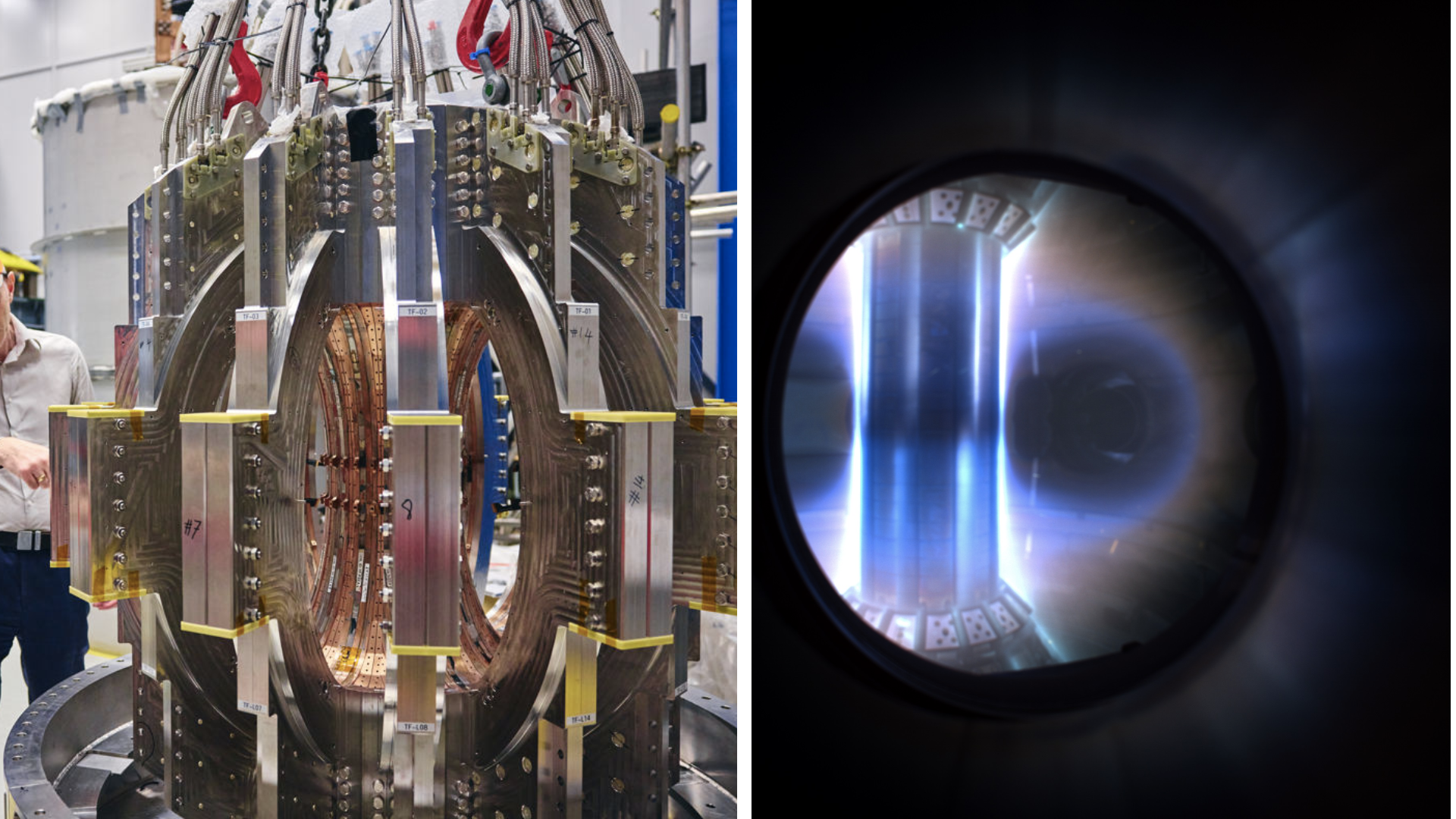
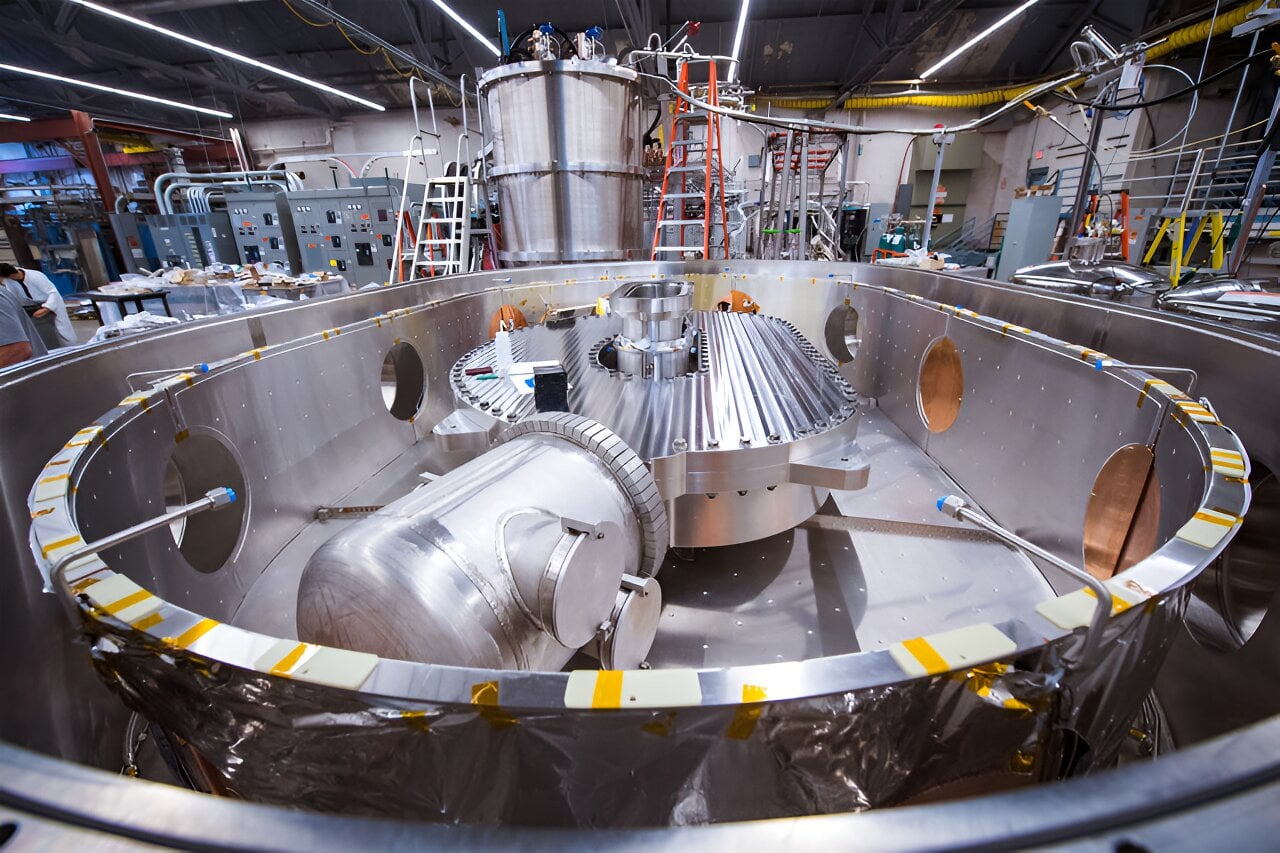
Engineers at MIT's Plasma Science and Fusion Center have achieved a world-record magnetic field strength of 20 tesla for a large-scale magnet made from high-temperature superconducting material, a crucial milestone for building a fusion power plant. The successful test, detailed in six peer-reviewed papers, demonstrates the practicality of such strong magnets at a greatly reduced size, potentially changing the cost per watt of a fusion reactor by a factor of almost 40. The new high-temperature superconducting material, REBCO, allows operation at 20 kelvins, offering significant advantages in material properties and practical engineering. The innovative magnet design, including the elimination of insulation around the superconducting tape, has been validated through rigorous testing, providing a solid foundation for the development of fusion devices.
Scientists at the US National Ignition Facility have achieved a historic milestone in nuclear fusion, with their laser-powered fusion reaction producing more energy than it consumed. The experimental design and results have passed peer review, marking a significant breakthrough in the quest for clean, abundant energy. While the achievement is a major step forward, commercial-scale applications are still a long way off, and the challenges ahead are steep. Despite the promise of fusion as a clean energy source, it is not the immediate solution to the climate crisis, and the focus should remain on existing renewable energy technologies.
Scientists from the University of Rochester's Laboratory for Laser Energetics have developed an effective "spark plug" for direct-drive methods of inertial confinement fusion (ICF), demonstrating the ability to achieve fusion reactions that produce more energy than the amount of energy in the central hot plasma. The experiments, conducted using the OMEGA laser system, represent a significant step towards achieving fusion at a future facility and offer promising implications for the future of laser fusion technology.