Tag

Mycelium

All articles tagged with #mycelium

science-and-environment1 month ago

Scientists Uncover the Engineering Marvels of Fungi

Scientists are exploring the potential of fungi, particularly mycelium, to address environmental challenges such as plastic waste and pollution, with innovations like fungi-activated diapers that could decompose plastics within a year and fungi-based materials for packaging, insulation, and chemical production, highlighting fungi's versatility as nature's original engineers.

science6 months ago

Giant 35,000-Ton Organism May Be Earth's Largest

The humongous fungus in Oregon, known as Armillaria ostoyae, is the largest organism on Earth by mass, spanning 2,385 acres and weighing around 35,000 tons, primarily existing as an underground network of mycelium that plays a crucial role in decomposing organic matter and recycling nutrients, with debates ongoing about its true size and the definition of an organism.

science1 year ago

Fungi Study Challenges Traditional Views on Cognition

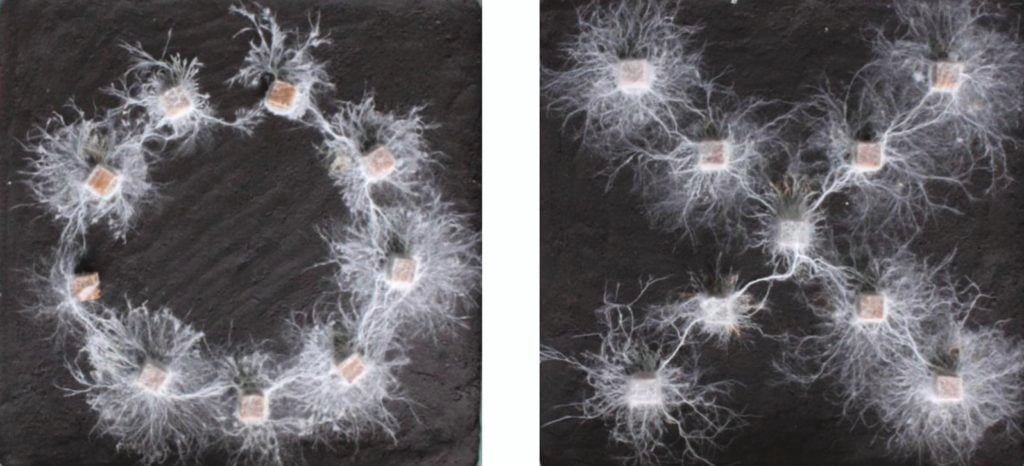
A study by researchers at Japan's Tohoku University has found that a species of wood-eating fungus, Phanerochaete velutina, can recognize and remember shapes, suggesting cognitive abilities without a brain. The fungi maintained specific patterns in their growth, indicating a form of spatial memory and decision-making. This challenges traditional views on consciousness and cognition, suggesting that intelligent behavior can occur without a central nervous system. The findings could have implications for understanding cognition in other life forms, including humans.

environment2 years ago

"The Environmental Power of Mushrooms: Mycelium, the Life Force of Earth"

Mushrooms and their underground network of mycelium have the potential to play a crucial role in saving the planet. They can help combat climate change by sequestering carbon dioxide, breaking down pollutants, and restoring damaged ecosystems. Additionally, mushrooms offer sustainable alternatives to materials like plastic and leather, and can even be used to create renewable energy. Harnessing the power of mushrooms could contribute to environmental sustainability and biodiversity conservation.

technology2 years ago

"Scientists Propose Fungal Coating to Neutralize Killer Robots"

Researchers have developed a living skin made of fungus, inspired by "The Terminator," which could act as a biodegradable and multifunctional sensor for electronics. The fungus, Ganoderma sessile, was grown on a seven-inch "Terminator" model, turning it into a "bio-cybernetic entity." While currently a proof of concept, the researchers hope their research could pave the way for living skins that could regulate building temperatures.

science-and-technology2 years ago

"Revolutionary Discovery in Home Construction: A Game-Changing Breakthrough"

Scientists at Newcastle University in the UK are using fungal networks called mycelium to build lighter-weight structures, aiming to reduce reliance on concrete and minimize environmental impact. By mixing mycelium spores with materials that the spores can grow on, such as grains, and using flexible knitted molds, they have created mycocrete, a stronger and more versatile building material. This innovative approach could have a significant impact on the construction industry and help address the environmental issues associated with concrete production.

architecture2 years ago

"Fungi and 3D Printing: A Sustainable Solution for Building Materials and Carbon Storage"

PLP Labs, the research arm of London-based PLP Architecture, has been experimenting with mycelium bio-composites as a sustainable alternative to traditional building materials. The team created 3D-printed wooden formworks, which were then loaded with hemp as a substrate. This substrate, inoculated with mycelium, then starts to grow, taking the shape of its vessel. The mycelium forms possess excellent acoustic and thermal properties, are lightweight, fire-resistant, and have good insulation properties.

environment2 years ago

The Climate Solution Beneath Our Feet: Fungi's Role in Carbon Storage.

Fungi, specifically their vast network of roots known as mycelia, hold a third of the annually emitted carbon dioxide emissions on Earth, making the soil beneath our feet the biggest carbon sink in the world. An international team of researchers pooled data from hundreds of studies on plant-soil processes to make this discovery. Mycelium can be grown extremely fast, while producing mushrooms as a food source, making them a potential solution to managing fossil fuel emissions. The researchers are now investigating how long carbon is stored by the fungi and are seeking to further explore how it boosts ecosystems.

environment2 years ago

Fungi: The Key to Cutting Emissions and Fighting Climate Change?

Architects and scientists are exploring the use of mycelium, the root-like network of fungal threads, as a sustainable and low-carbon alternative to traditional building materials like steel, cement, and glass. Mycelium is lightweight, biodegradable, and has high resistance to fire, making it an ideal material for construction. Researchers are investigating how to grow mycelium into stronger structures that can support weight and exploring the possibility of 'grow at home' kits that could be used to create custom structures. The use of innovative materials like fungi could help reduce the environmental impact of construction and build a greener future.

science-and-technology2 years ago

Self-Repairing Clothes: The Future of Fashion

Researchers from Newcastle University and Northumbria University have developed a biodegradable, wearable material made from the root-like threads of fungi that can repair itself. The material, produced from the Ganoderma lucidum fungus, could be used as a substitute for leather and has potential applications in furniture, automotive seats, and fashionwear. The process of creating the material needs to be scaled up and sped up before it can be used in clothing. The material is made from a mix of mycelia, chlamydospores, carbohydrates, proteins, and other nutrients in a liquid that encourages the growth of a skin that can be removed and dried.

science2 years ago

Rainfall Triggers Mushroom Conversations

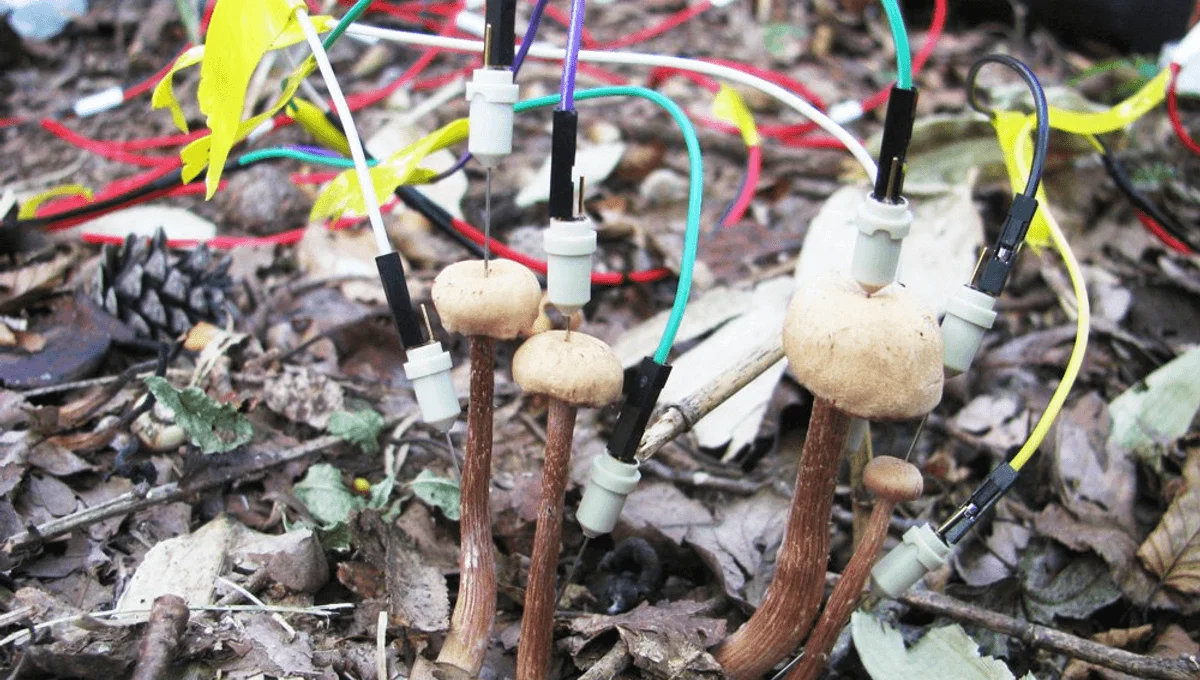
Mushrooms have been found to exchange electrical signals that some scientists consider a form of communication, and a new study suggests that the fungal telephone lines go quiet when their environment dries out. However, the fungal chatter comes to life with a little precipitation, although we still don’t know what they are saying. These signals involve trains of voltages that may be the equivalent of words, and the significance of this remains controversial. The study was the first time fungal communication has been studied in the wild, rather than in the lab, and it was found that the activity started 1-2 hours after the rain began and was mostly concentrated in an eight-hour period.

science-and-technology2 years ago

Self-repairing leather-like material made from fungi mycelium.

Biotechnologists from Newcastle and Northumbria Universities have developed a process to create a self-healing wearable material using mycelium, a thread-like structure produced by some types of fungus. The researchers grew their own batch of mycelium and applied a mix of temperatures and chemicals that allowed the material to become leather-like without killing the embedded chlamydospores. Testing showed that the newly restored material was just as strong as an undamaged control sample, though it was still possible to see where the holes had been.