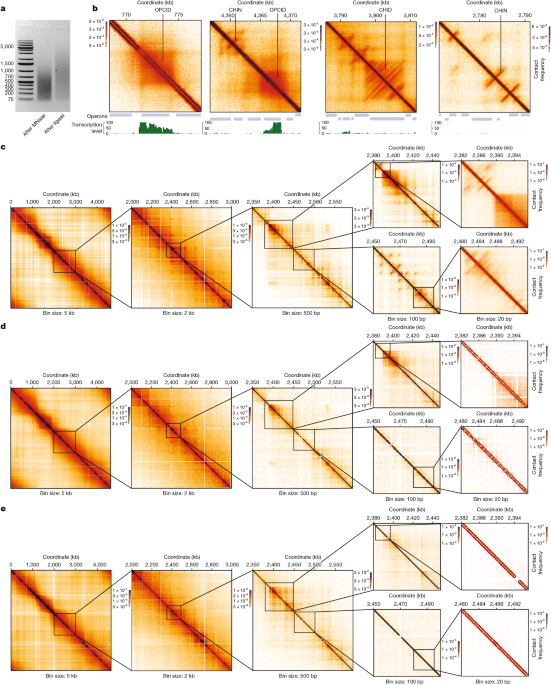
The study uses ultra-high-resolution Micro-C mapping to reveal complex 3D structures in the E. coli genome, including transcription-dependent domains called OPCIDs and repressive structures called CHINs and CHIDs, which are primarily assembled on horizontally transferred genes and regulated by nucleoid-associated proteins like H-NS. These structures influence gene expression and genome stability, with H-NS playing a central role in their formation and maintenance.
MIT researchers have developed a new technique called Region Capture Micro-C (RCMC) that can map the interactions between regulatory elements and genes in the 3D genome with 100 times higher resolution than previously possible. The researchers found that many genes interact with dozens of different regulatory elements, and that DNA appears to coil itself into nested “microcompartments” that facilitate these interactions. The new method is able to inexpensively generate maps 100 times richer in information than other published techniques for a fraction of the cost.