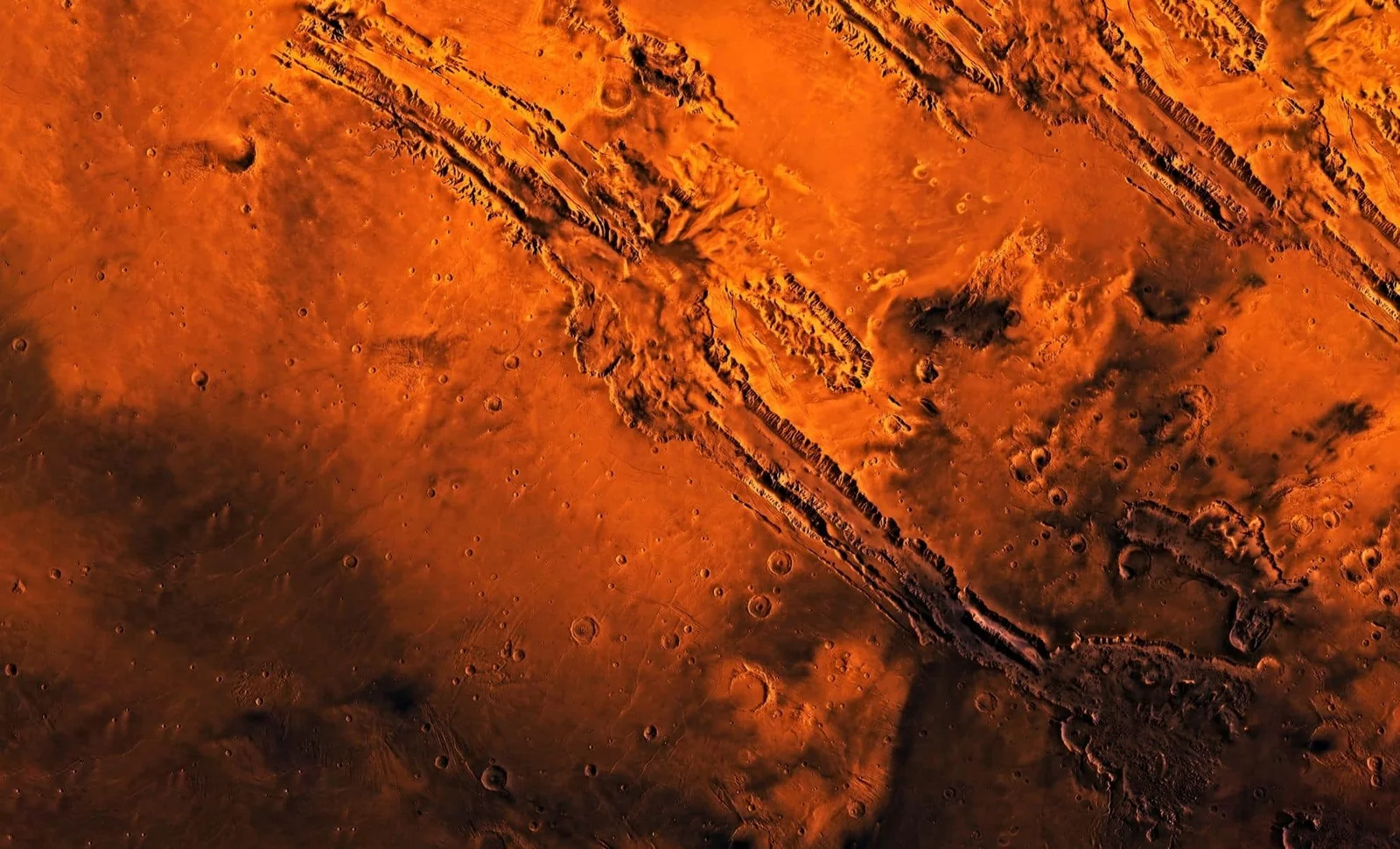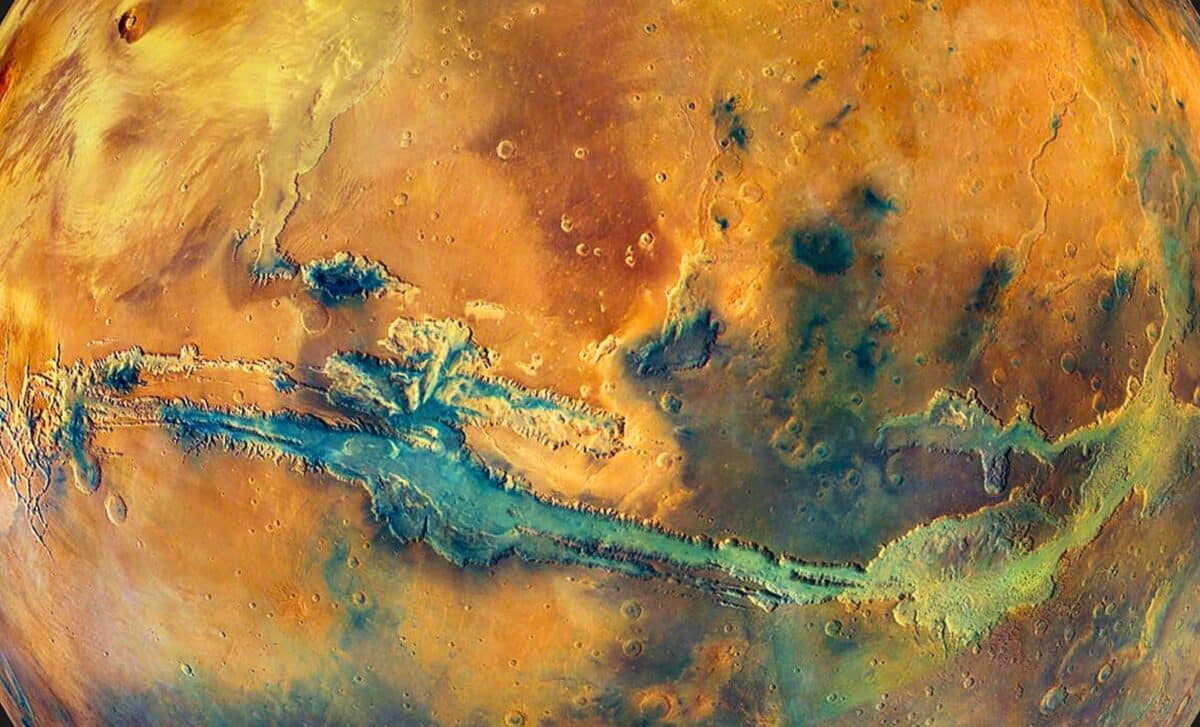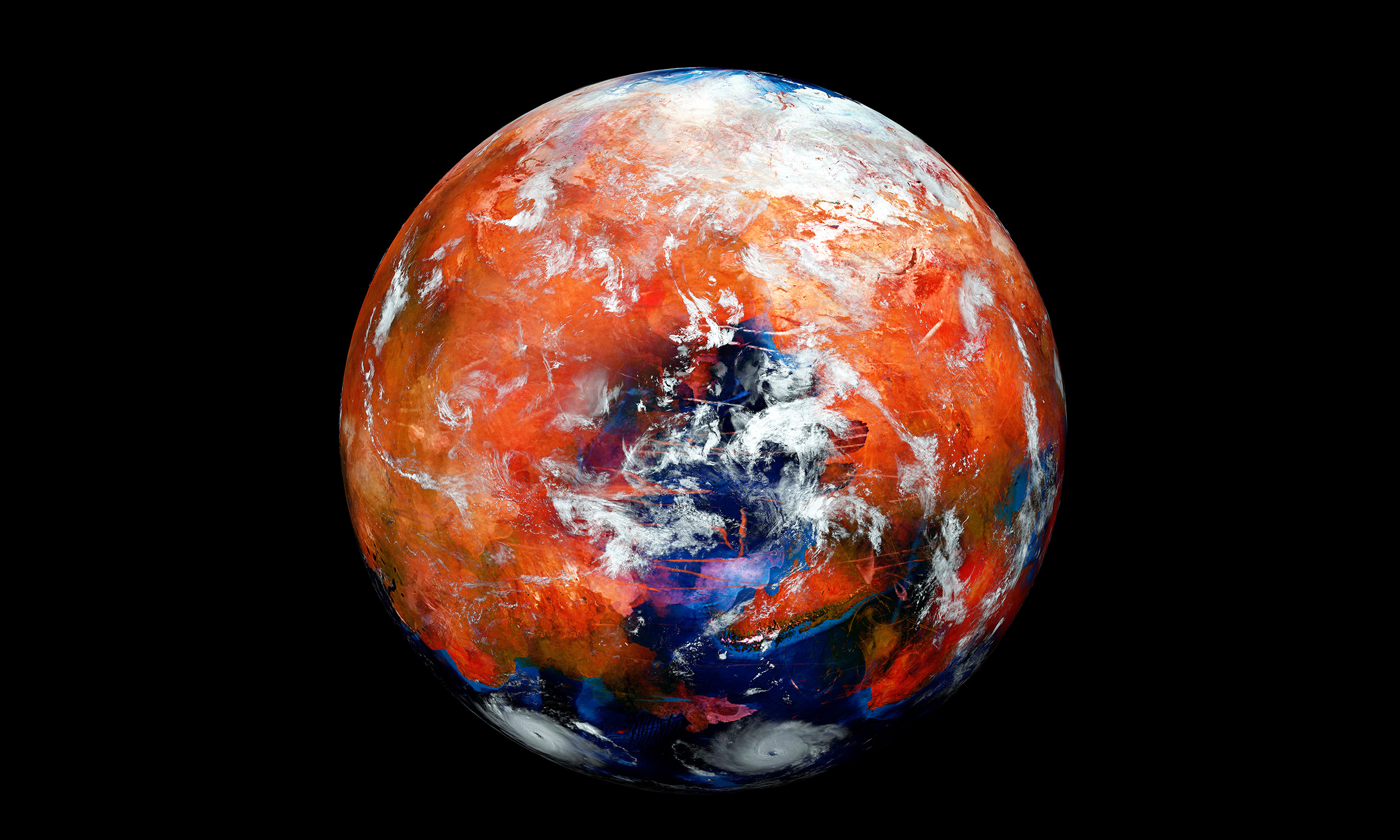
A new true-color mosaic of Mars, created from 20 years of data by ESA's Mars Express, offers the most accurate visual representation of the planet's surface, revealing nuanced colors and geological features that challenge previous exaggerated red portrayals, and providing valuable scientific insights into Mars' mineral diversity and history.
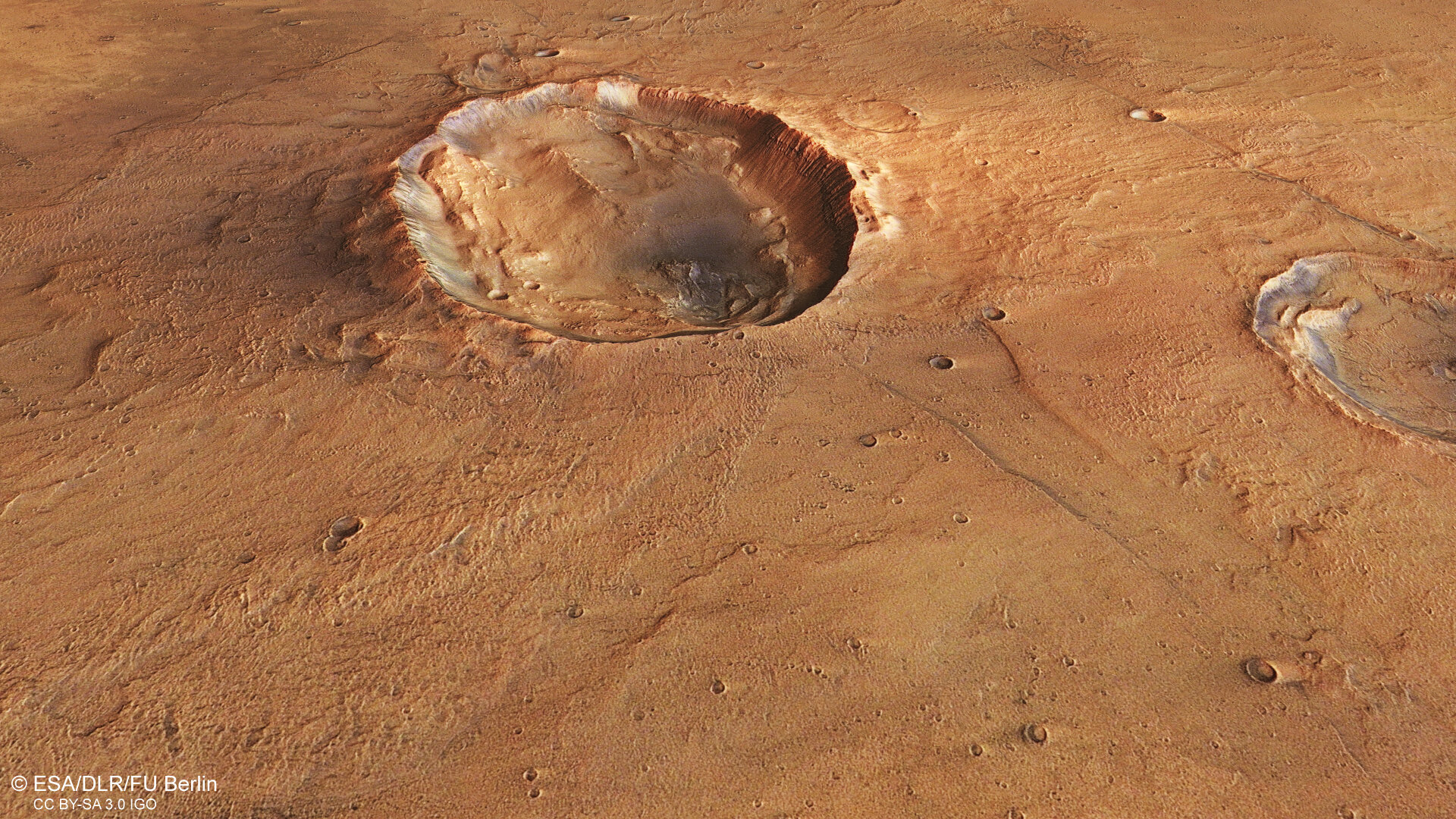
ESA's Mars Express has captured an image of a unique crater on Mars that resembles a butterfly, formed by a low-angle impact that created irregular wings and a central oval body, with evidence suggesting interaction with water or ice during formation. The region also features volcanic mesas and signs of past volcanic activity, providing insights into Mars's geological history.
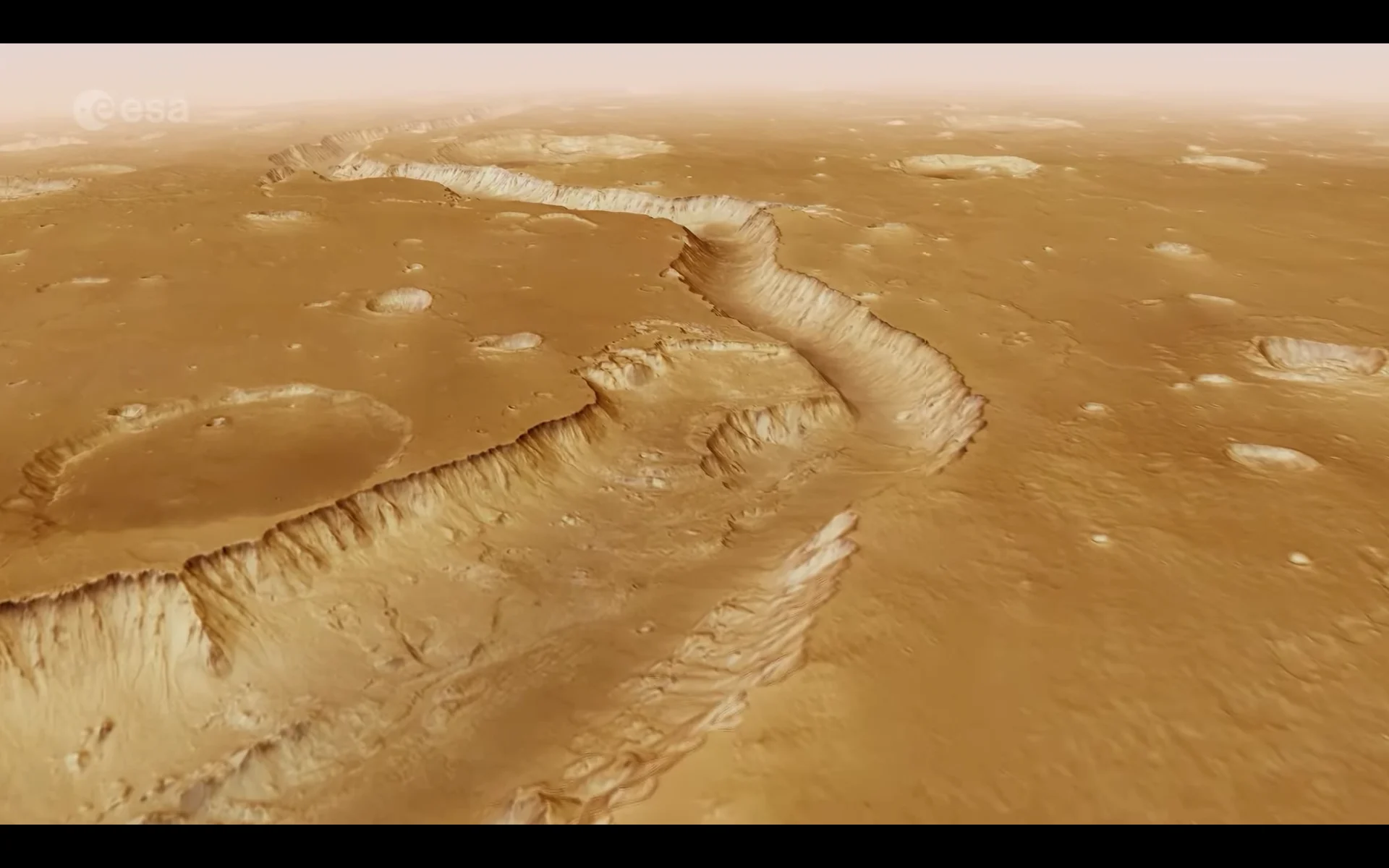
A new satellite video from ESA offers a mesmerizing flyover of Mars' Xanthe Terra region, highlighting a 1300 km outflow channel called Shalbatana Vallis and other geological features formed by ancient water floods, providing insights into the planet's history and ongoing exploration efforts by the Mars Express spacecraft.
The ESA's Mars Express orbiter has released a stunning 3D flight over Xanthe Terra, showcasing features like the 1300 km-long Shalbatan Vallis, which provides evidence of ancient water flow on Mars, culminating in a view of the Da Vinci crater, highlighting the planet's geological history.
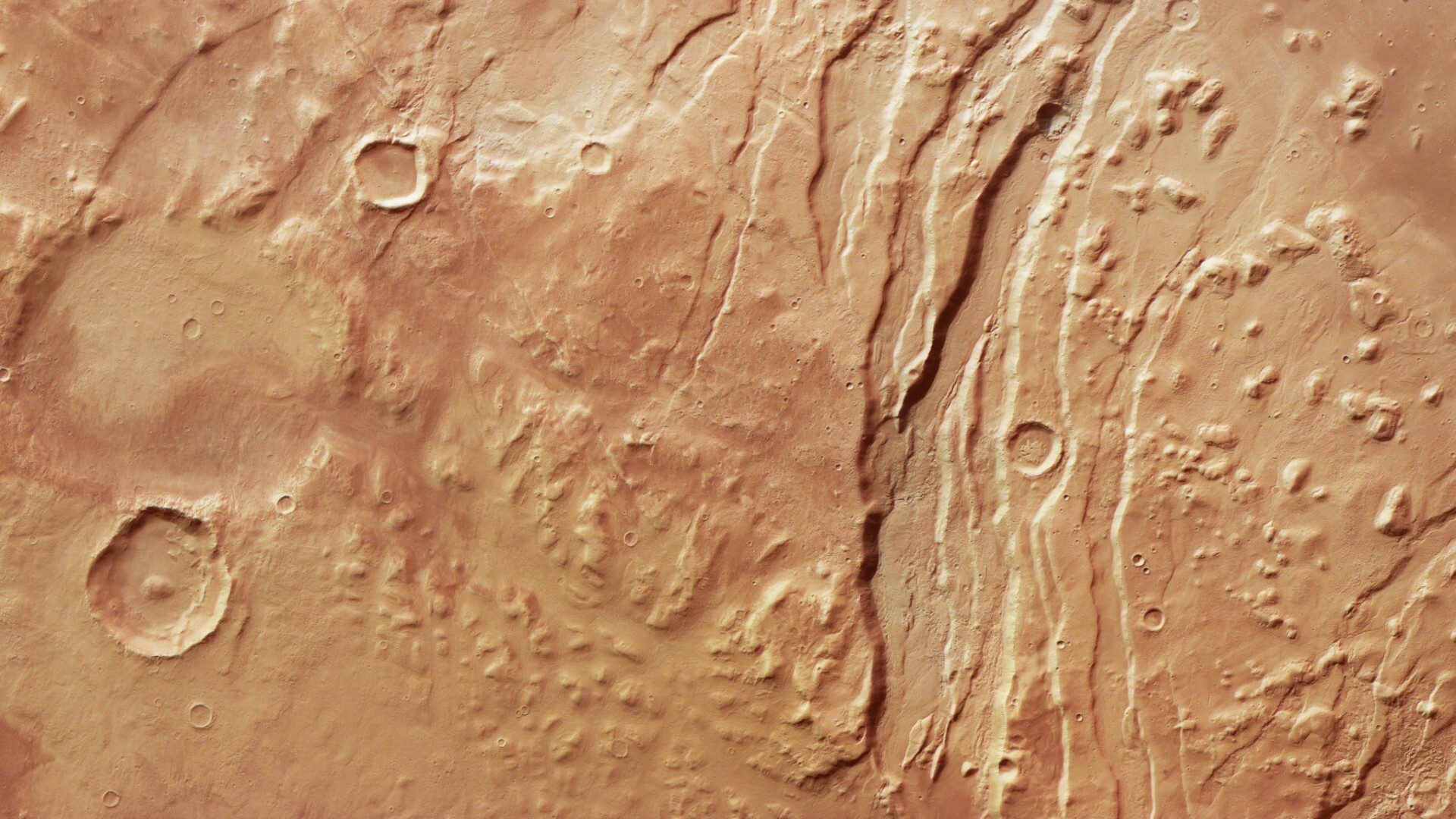
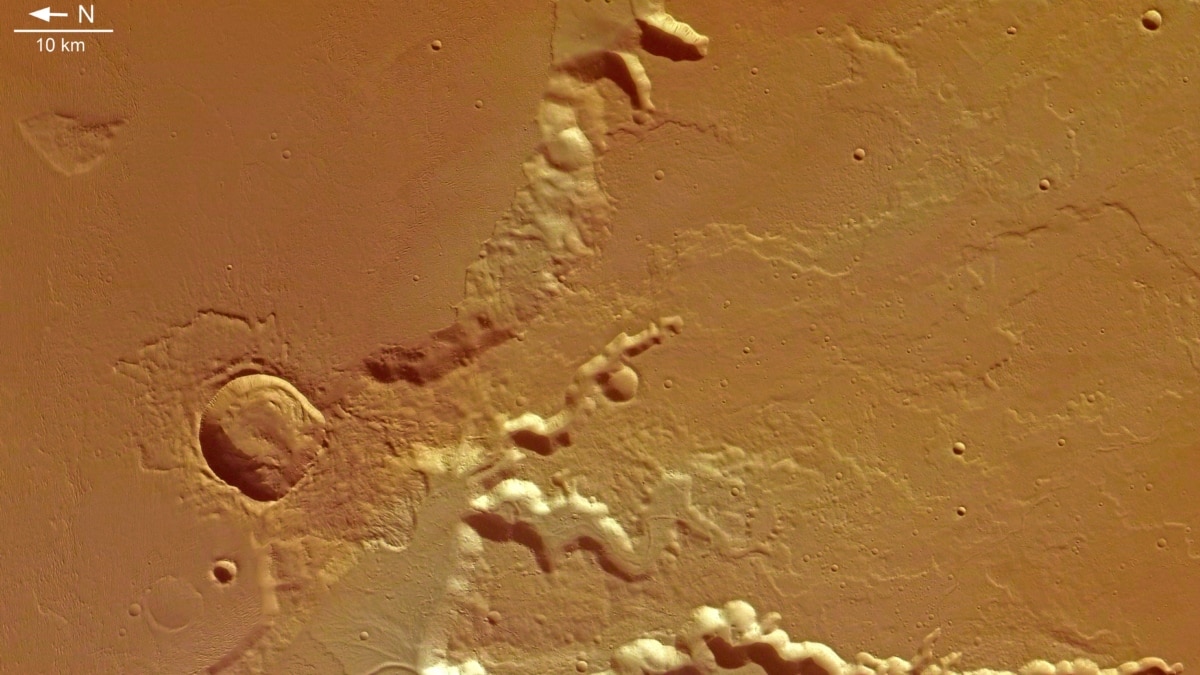
The European Space Agency's Mars Express orbiter has captured a detailed image of the Acheron Fossae region on Mars, revealing complex geological features such as fault-like channels, ridges, valleys, and the influence of ancient rock glaciers, providing insights into the planet's geological history and ongoing surface processes.
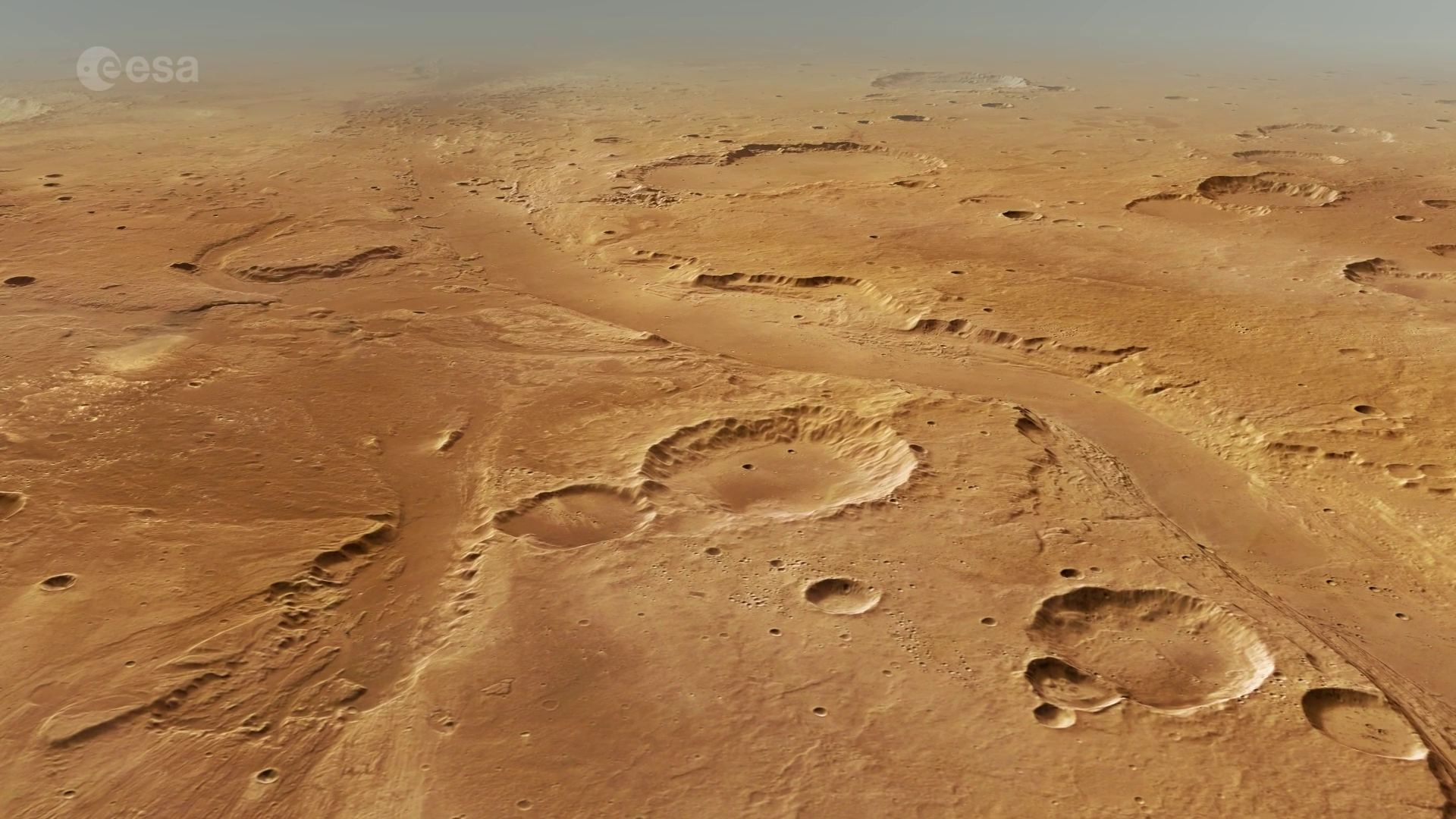
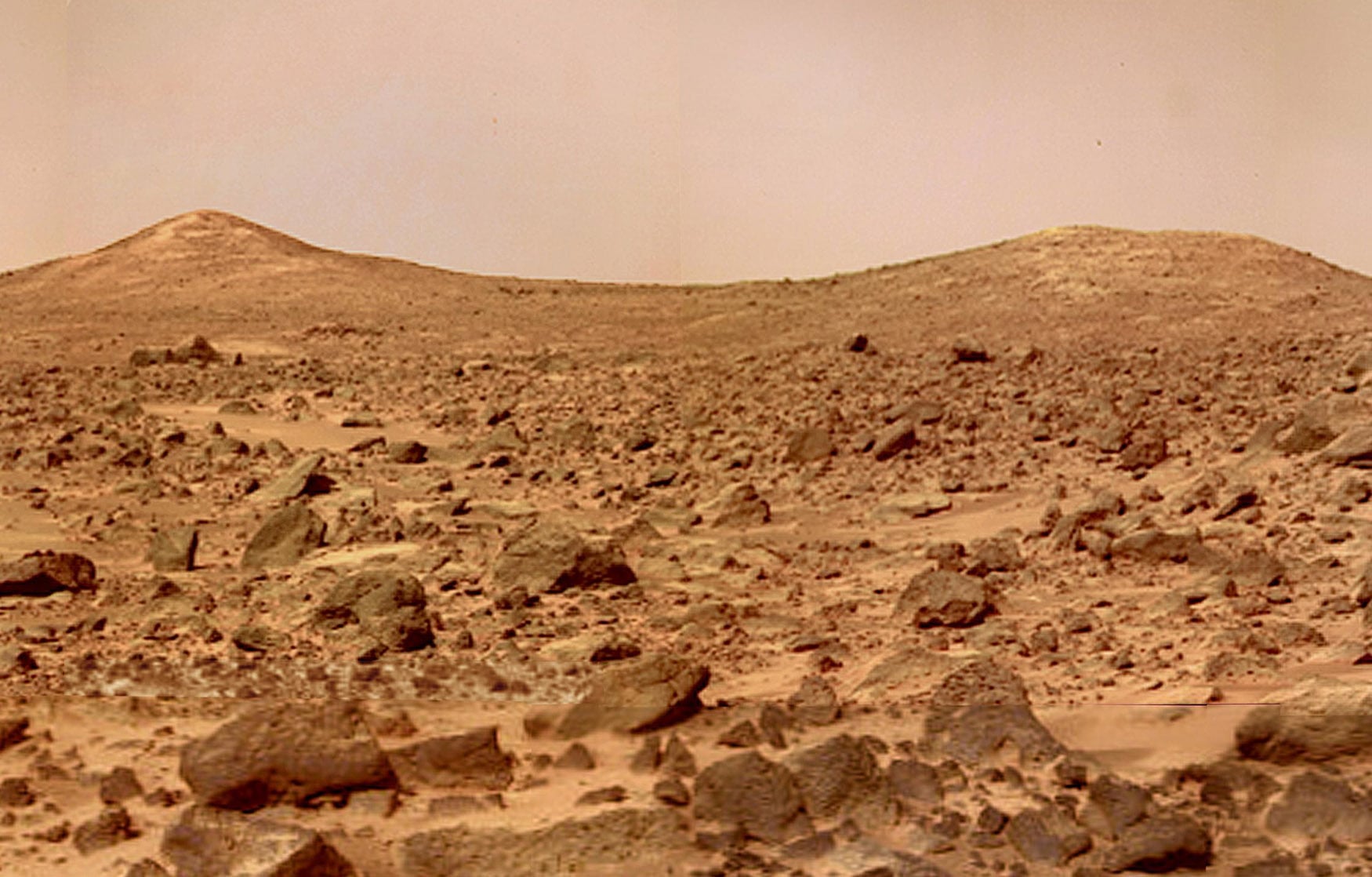
ESA's Mars Express offers a virtual flight over Ares Vallis on Mars, showcasing the planet's ancient water-carved landscapes, including channels, islands, and chaotic terrain. The tour highlights significant sites like NASA's Pathfinder landing area and the planned ExoMars Rosalind Franklin rover site. The film, created using high-resolution data and digital terrain models, provides a detailed view of Mars's water-rich history and geological features.
The European Space Agency's Mars Express orbiter has captured stunning flyover footage of Mars' Nili Fossae trenches, revealing insights into the planet's ancient past. These trenches, formed by a colossal meteorite impact around 4 billion years ago, show evidence of past water flow and diverse minerals, indicating a once wet environment. The video, created using high-resolution stereo camera data, aids in understanding Mars' history and informs future exploratory missions.
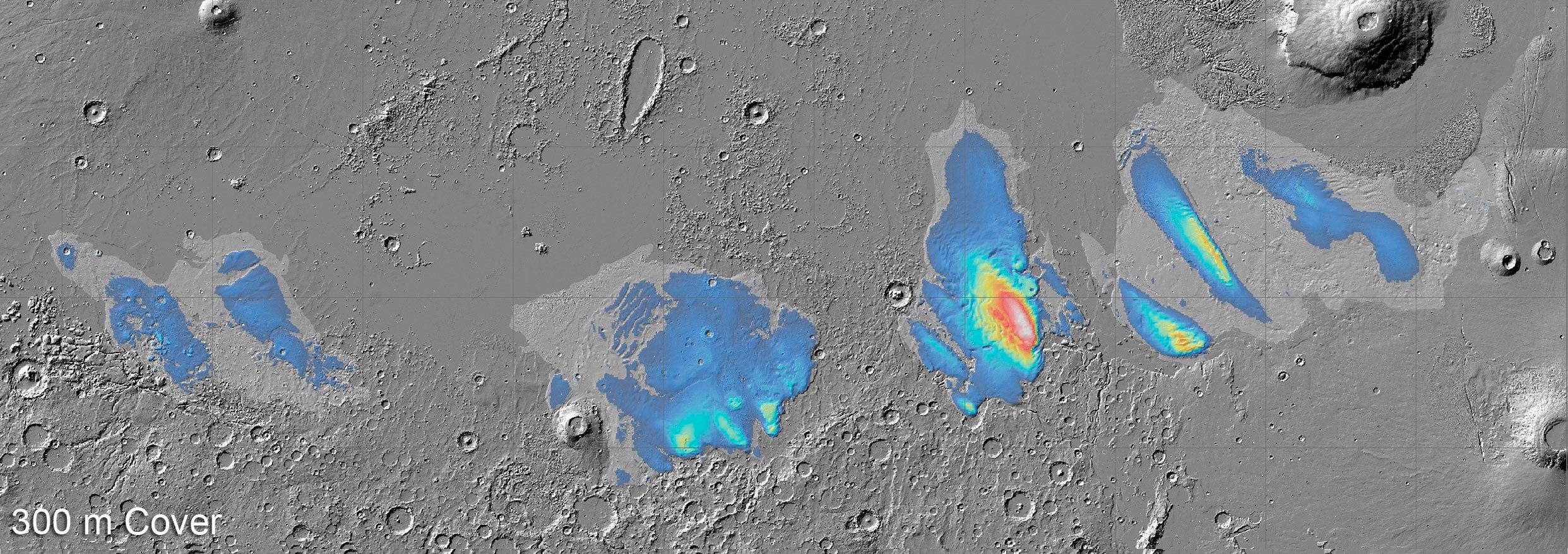
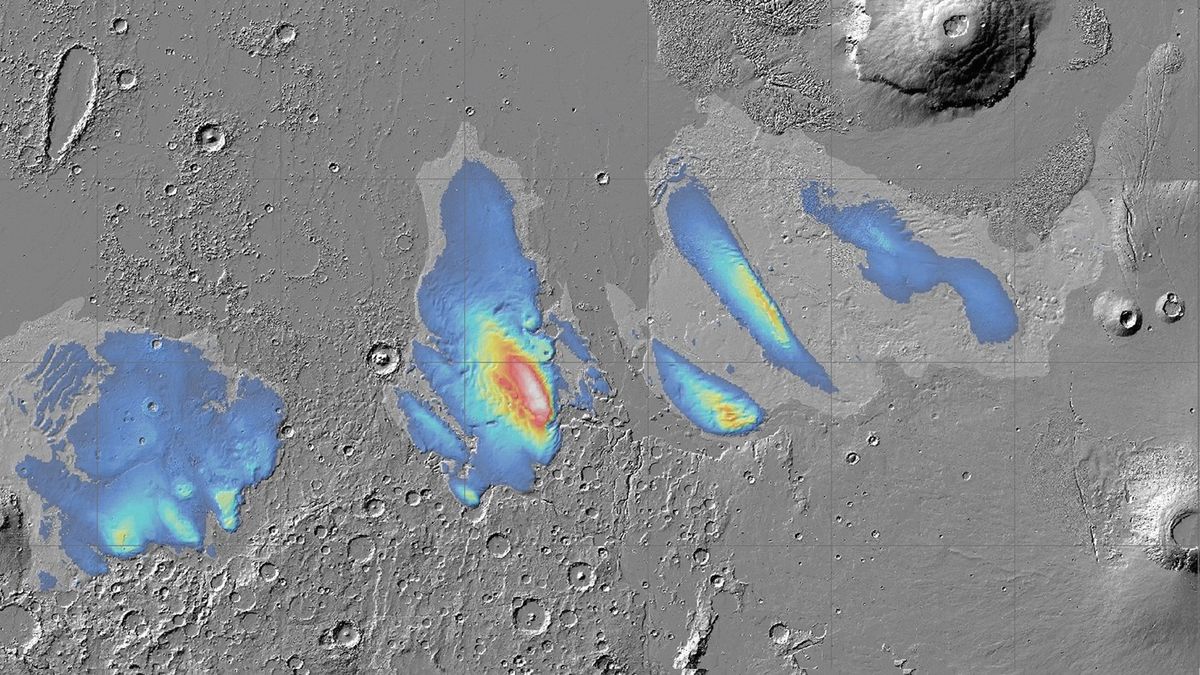
Data collected by the Mars Express orbiter suggests the presence of a large water ice deposit near Mars' equator, potentially indicating that the planet may have once supported life. The discovery was made using the orbiter's MARSIS instrument, which detected thick ice deposits extending up to 3.7 kilometers below the surface. The findings, published in Geophysical Research Letters, raise questions about Mars' climate history and could make the area near the equator an ideal landing spot for future exploration missions.
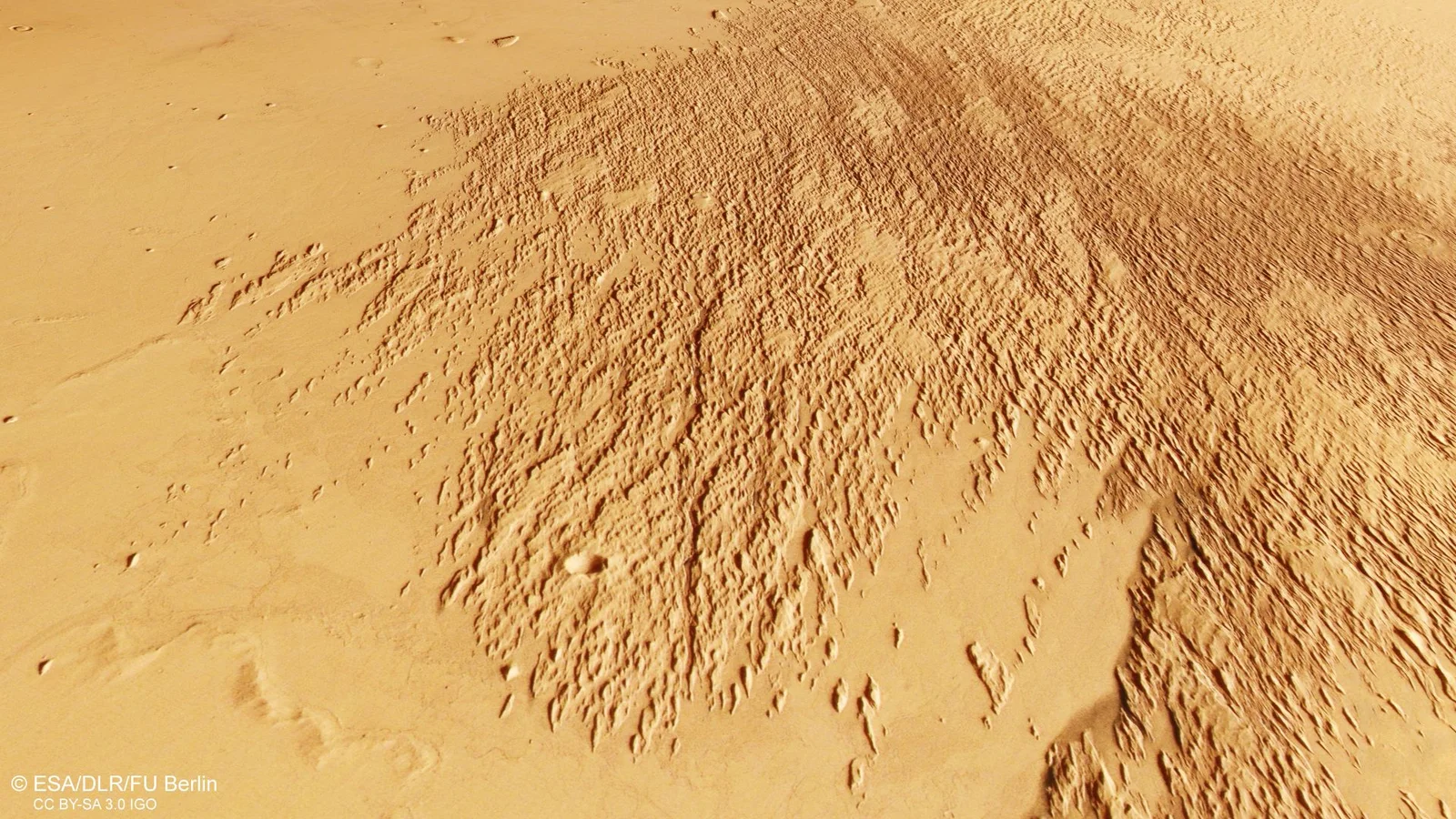
The European Space Agency's Mars Express has discovered a nearly two-mile deep water reservoir on Mars, composed of water ice. This finding in the equatorial region known as the Medusae Fossae Formation could provide insights into the planet's history and its dusty, sandy surface. The discovery supports the theory that Mars was once covered in oceans and rivers, and further exploration may reveal more about these water ice reservoirs.
ESA's Mars Express has discovered extensive layers of water ice in Mars's Medusae Fossae Formation near the equator, potentially impacting our understanding of the planet's climate history and future human exploration. The radar signals match those from Mars's polar caps, indicating the presence of significant water ice deposits, with enough to cover the entire planet in a layer of water 1.5 to 2.7 meters deep if melted. This discovery challenges our understanding of Mars's past climate and presents valuable opportunities for future exploration and potential resource utilization.
The Mars Express mission has discovered a massive water reservoir, up to 3.7 km thick, within Mars's Medusae Fossae Formation, holding enough water to fill Earth's Red Sea. This finding challenges previous theories and suggests a water-rich past for Mars, with implications for future exploration. The discovery of extensive ice deposits near Mars's equator enriches our understanding of the planet and its potential for human exploration, offering promising prospects for scientific discovery.
Mars Express has discovered evidence of a massive water ice deposit up to 3.7 km thick in the Medusae Fossae Formation (MFF) on Mars, challenging previous assumptions about the composition of this region. The findings suggest that the MFF contains alternating layers of dust and ice, with the ice deposits potentially holding enough water to cover the entire planet in a layer 1.5 to 2.7 meters deep. This discovery raises questions about Mars's climate history and presents potential opportunities for future human or robotic exploration.
The European Space Agency's Mars Express mission has discovered a substantial amount of water ice buried beneath Mars' equator, measuring up to 2.3 miles thick and extending 3000m underground. This finding challenges previous assumptions about the planet's geology and climate history, suggesting that Mars may have had a different climate in the past due to variations in its axial tilt. The ice, heavily contaminated by dust, is difficult to access but could provide valuable resources for future crewed missions.
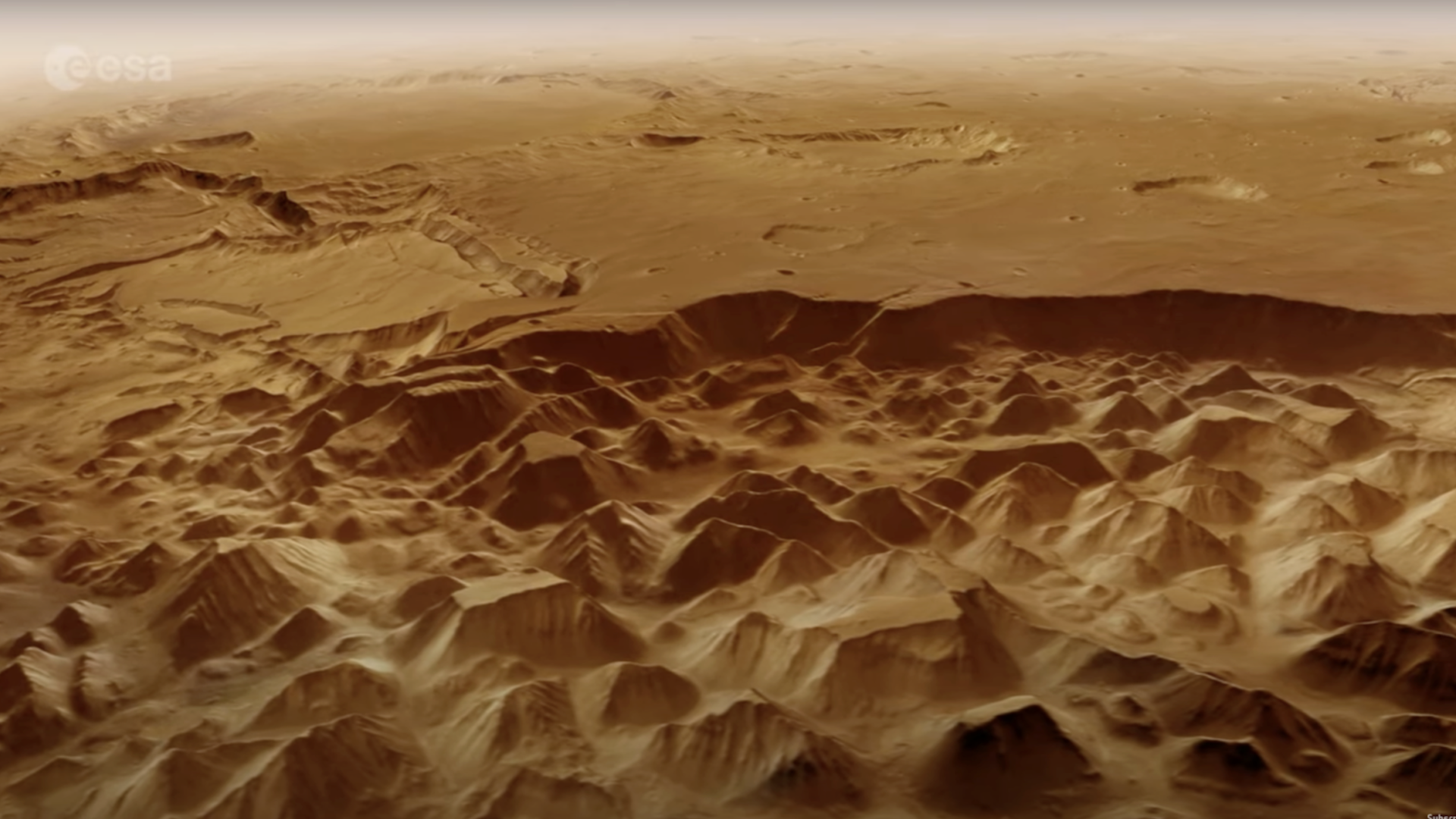
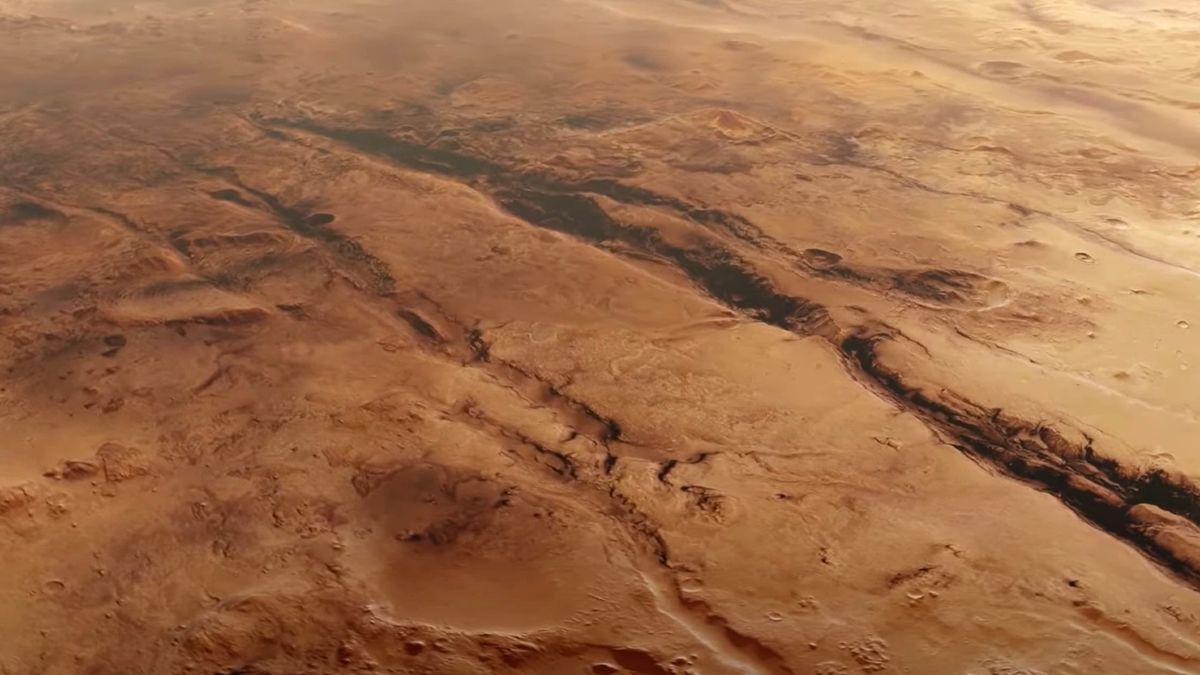
The European Space Agency (ESA) has released a thrilling satellite video that allows viewers to fly through the "Labyrinth of Night," a massive system of steep valleys on Mars known as Noctis Labyrinthus. The video showcases the criss-crossing valleys, craters, landslides, dunes, and grabens, which are signs of plate tectonics. Created using data from the Mars Express satellite, the video provides a unique perspective on the Martian landscape and contributes to our understanding of Mars' geology and atmosphere.
The European Space Agency (ESA) has released an animation showcasing the Noctis Labyrinthus, or 'Labyrinth of Night', on Mars. The video, created using images taken by ESA's Mars Express spacecraft, provides a stunning overhead view of the Martian landscape. Noctis Labyrinthus is a maze of valleys formed by tectonic and volcanic activity, stretching for 745 miles (1,200km) and featuring deep fractures and collapsed crusts. The animation offers viewers a unique perspective of flying over the Red Planet's breathtaking terrain.