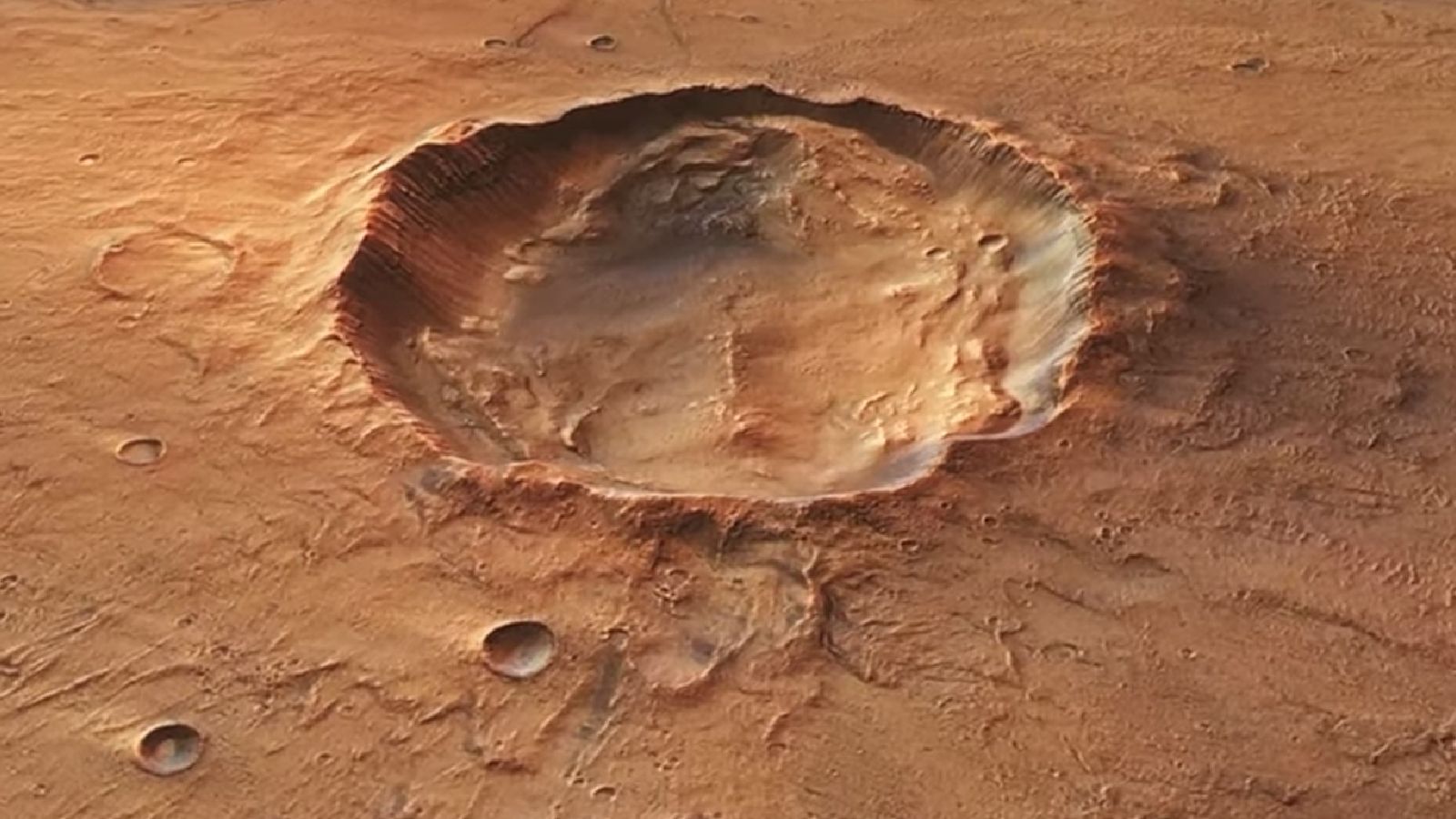
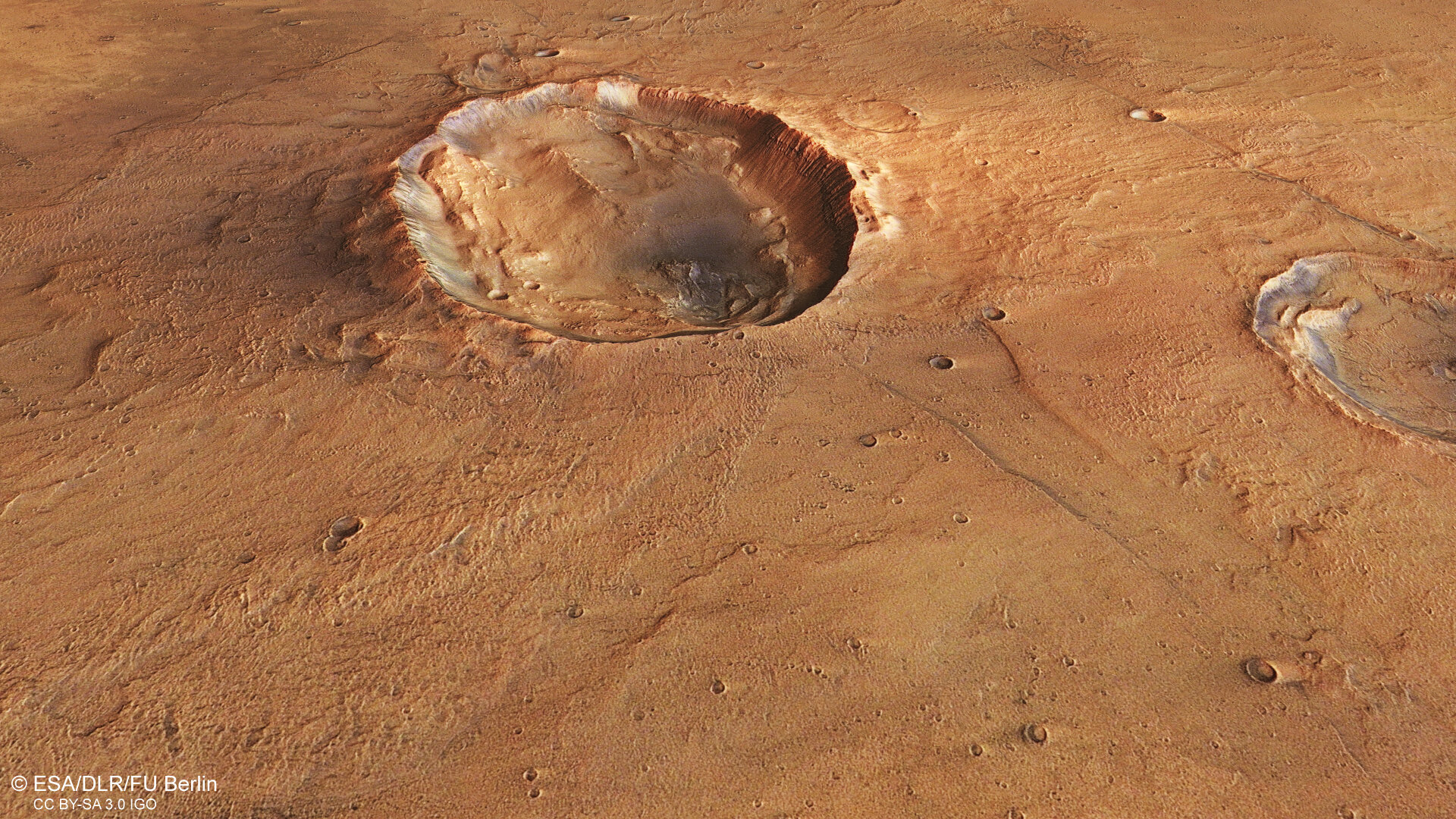
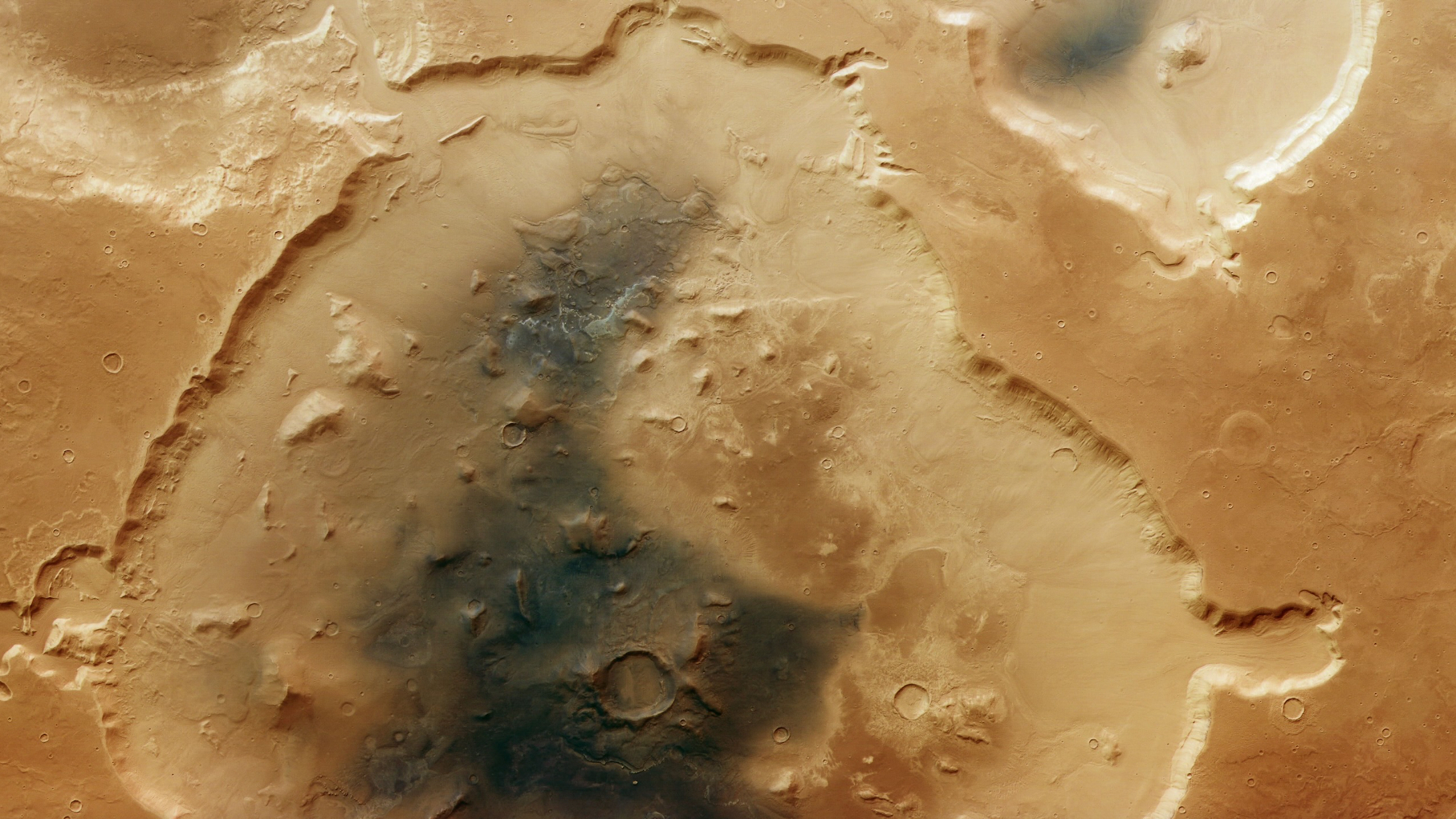
A large butterfly-shaped impact crater on Mars, created by a low-angle asteroid collision, shows signs of having been influenced by water, providing insights into the planet's watery past and impact history.
ESA's Mars Express has captured an image of a unique crater on Mars that resembles a butterfly, formed by a low-angle impact that created irregular wings and a central oval body, with evidence suggesting interaction with water or ice during formation. The region also features volcanic mesas and signs of past volcanic activity, providing insights into Mars's geological history.
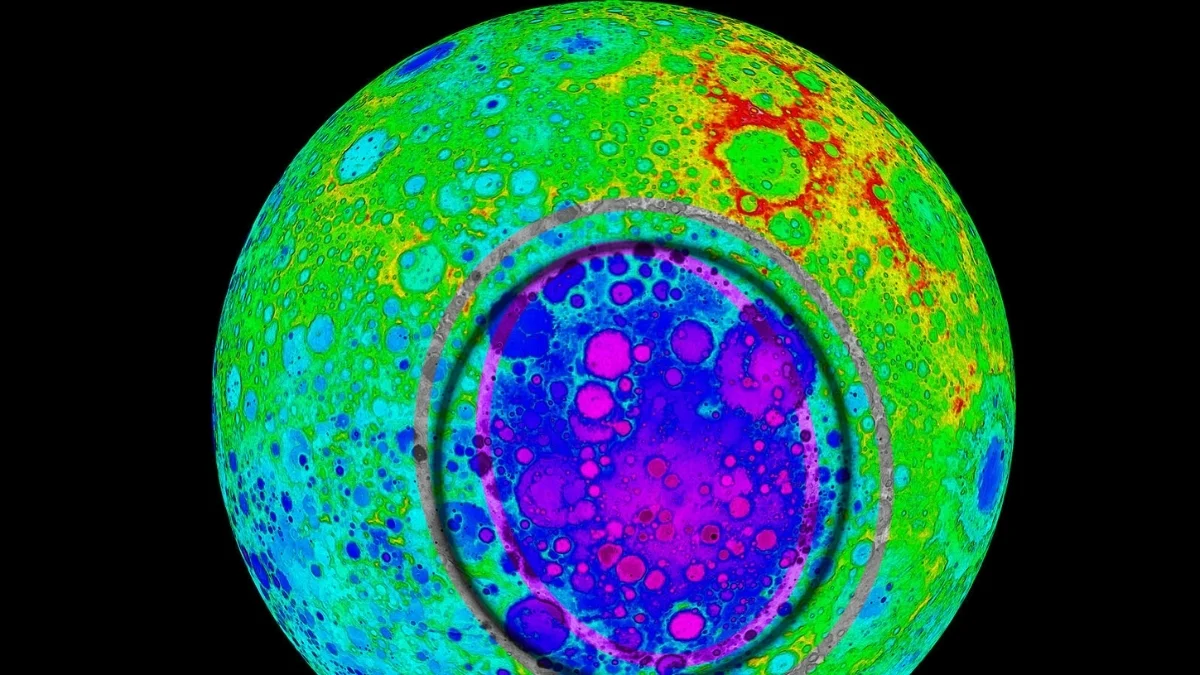
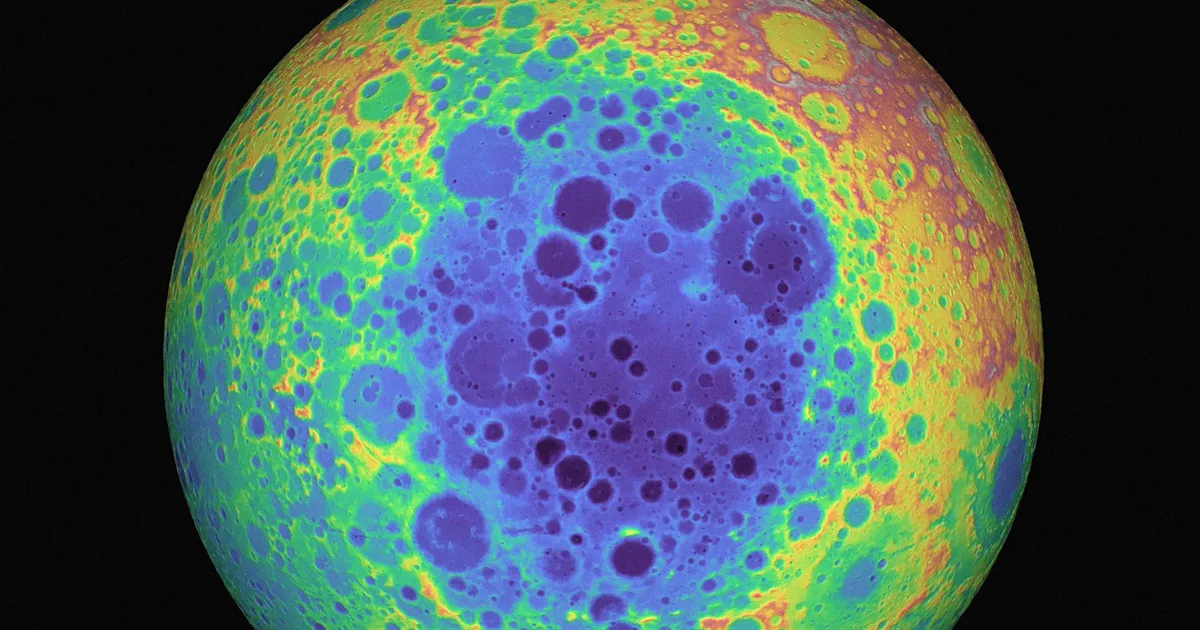
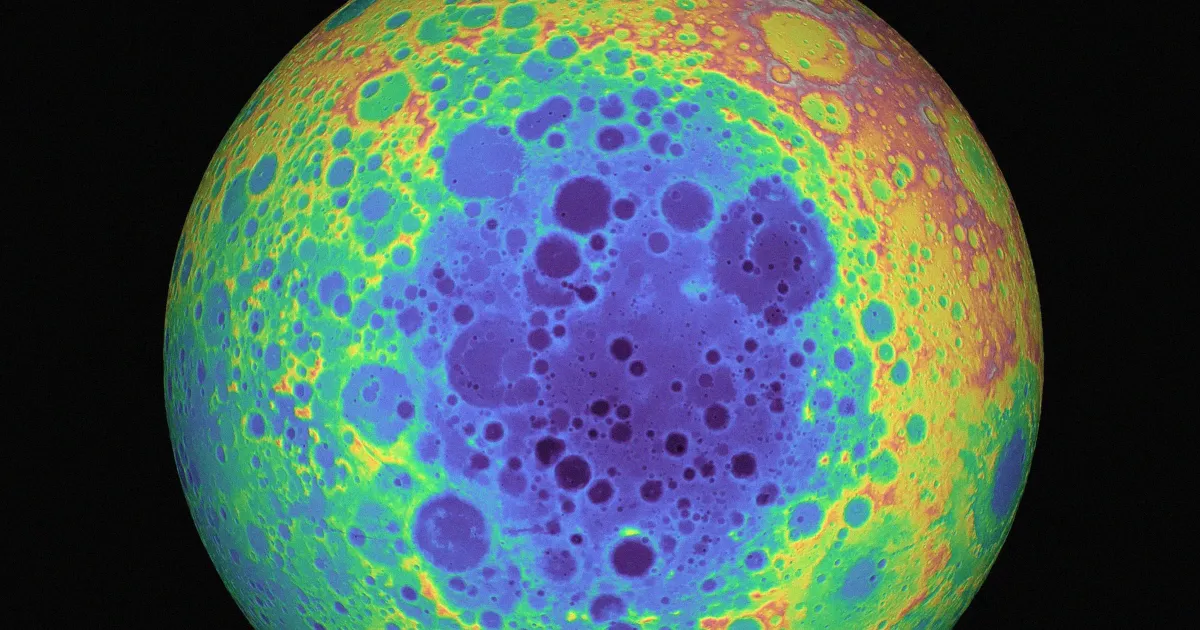
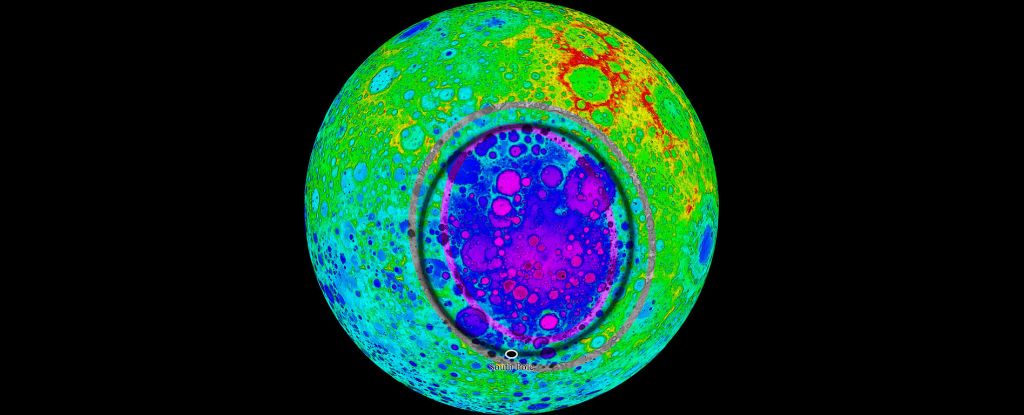
A new study reveals that the Moon's largest crater, the South Pole-Aitken basin, was formed by an impact from the north, providing insights into the Moon's early evolution and the distribution of materials like KREEP, which explains the hemispheric differences. Artemis astronauts will target this site to collect samples that could shed light on the Moon's geological history.
Scientists have revised their understanding of the Moon's largest crater, the South Pole-Aitken basin, suggesting it was formed by a glancing blow rather than a head-on impact. This new insight could influence upcoming NASA Artemis missions targeting the lunar south pole, as the region may contain valuable clues about the Moon's interior and evolution. The findings also shed light on the asymmetry between the Moon's near and far sides, particularly regarding mineral distribution and crust formation.
Scientists have revised their understanding of the Moon's largest crater, the South Pole-Aitken basin, suggesting it was formed by a glancing blow rather than a head-on impact. This new insight could influence upcoming NASA Artemis missions, which aim to explore the lunar south pole, and deepen our understanding of the Moon's interior and geological history.
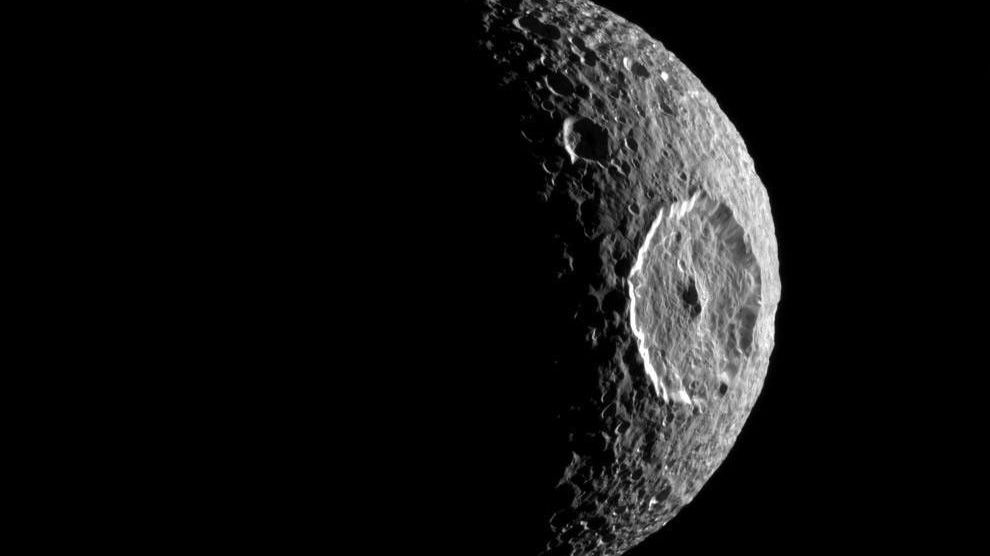
Research suggests Saturn's moon Mimas may have a young, buried subsurface ocean, formed by gravitational interactions with Saturn that generate heat, with evidence from crust thickness and crater analysis supporting this possibility. Future missions could potentially detect this ocean by measuring heat flow beneath the ice shell.
Scientists confirmed that an asteroid approximately 535 feet wide struck the North Sea over 43 million years ago, creating a 3 km wide crater and causing a significant tsunami, with new evidence from seismic imaging and rock samples settling previous debates about its origin.
European Mars Express orbiter captured detailed images of the crumbling Deuteronilus Cavus crater on Mars, revealing layers of volcanic, water-related, and glacial history that provide insights into the planet's geological and climatic evolution over billions of years.
New research suggests that the South Pole-Aitken basin, the largest crater on the Moon, may be larger and formed differently than previously thought. The study indicates a more circular shape, implying a vertical impact, which could mean debris is more evenly distributed. This discovery has significant implications for future lunar missions, potentially providing access to ancient lunar materials that could offer insights into the Moon's formation and the early Solar System. The findings are published in Earth & Planetary Science Letters.
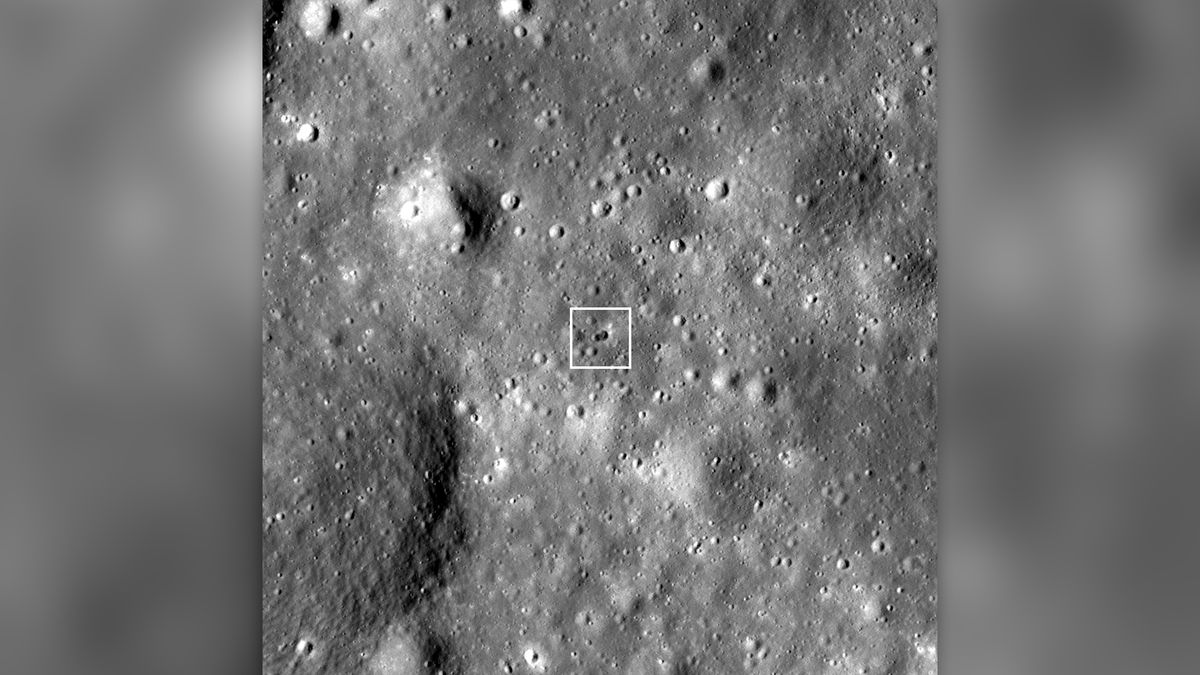
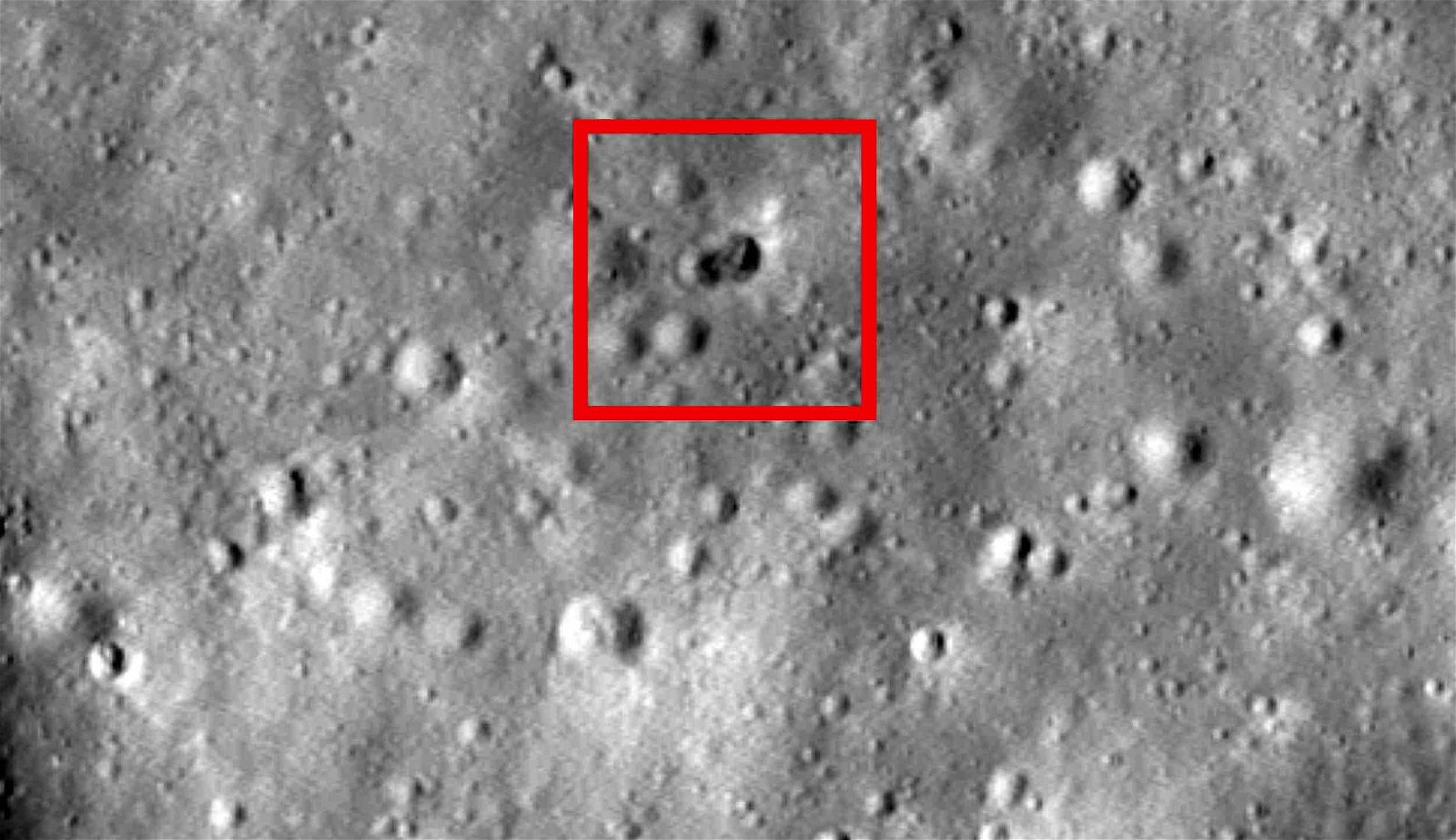
A study published in The Planetary Science Journal claims to have "definitive proof" that a mysterious rocket that crashed into the moon in March 2022 came from China and was carrying an undisclosed payload. The rocket, identified as the spent upper stage of China's Chang'e 5-T1 rocket, left behind two overlapping craters at its crash site. The researchers propose that the rocket's mass distribution, with twin rocket boosters acting as one mass and a mysterious counterweight on the other, caused the double crater. The exact nature of the payload remains unknown and is unlikely to be determined.
Last year, a mystery object crashed into the Moon, leaving behind a double crater. Scientists initially believed it was a defunct Chinese rocket, but new evidence confirms its identity. However, the findings also reveal that the rocket likely carried an unknown payload. The object was first detected by researchers at the University of Arizona and was later identified as a Chinese rocket booster. The team observed variations in the light reflected off the rocket, indicating its identity. The rocket's unusual movement suggested the presence of another object on board. The double crater left by the impact is unique and requires two roughly equal masses. The identity of the object presumed to have created the second crater remains unknown, and it may never be disclosed unless China chooses to reveal it.
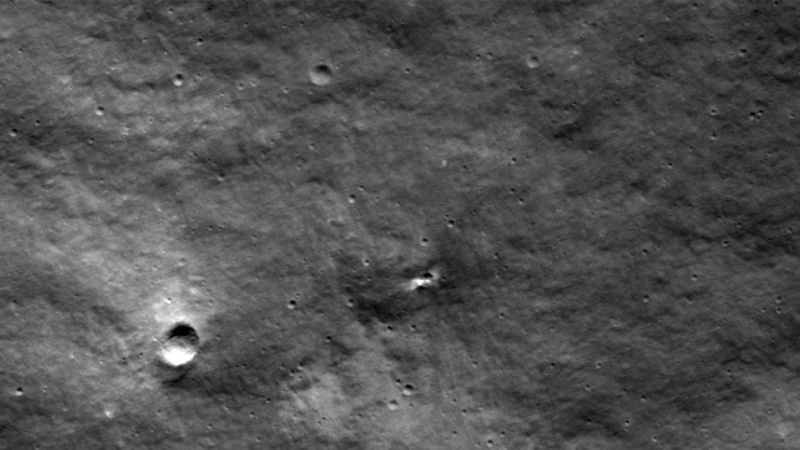
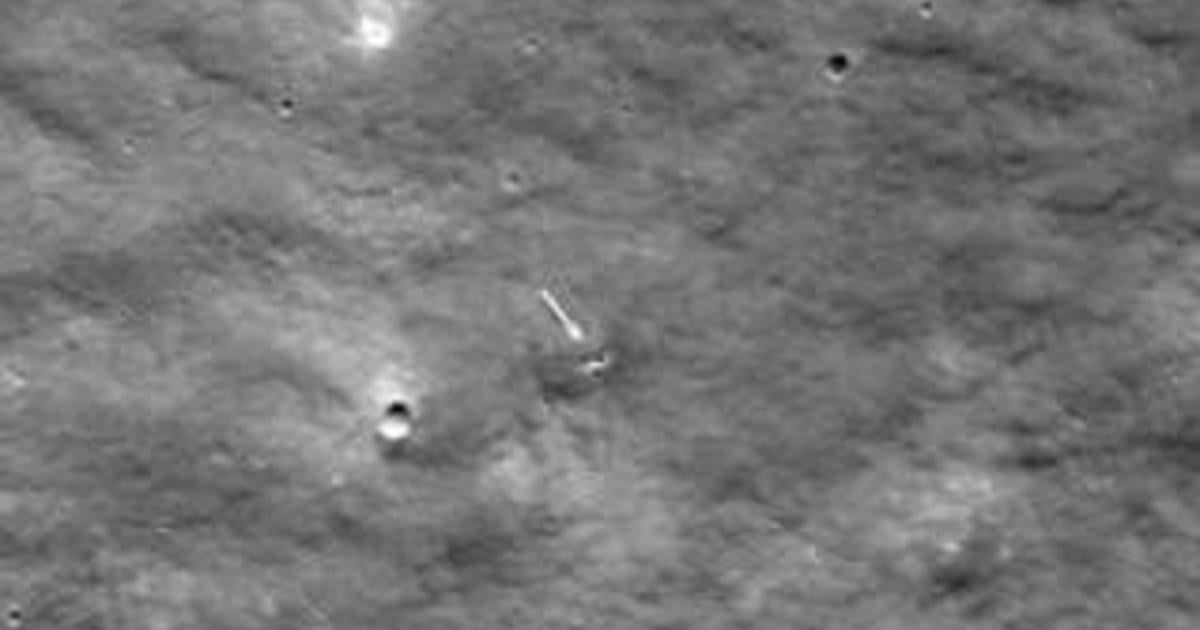
Russia's lunar lander Luna-25 unexpectedly crashed during descent, failing to soft land at the Moon's South Pole. NASA's Lunar Reconnaissance Orbiter (LRO) team discovered a fresh crater approximately 10 meters in diameter, located roughly 400 kilometers from Luna-25's planned landing site. The crater is likely the result of the crash, marking Russia's first lunar mission in half a century.
NASA's Lunar Reconnaissance Orbiter has captured images of a new crater on the moon, likely caused by the crash of Russia's Luna 25 spacecraft. The Luna 25 mission, Russia's first lunar lander in 47 years, experienced an "emergency situation" during its attempt to enter a pre-landing lunar orbit. The estimated impact point allowed the orbiter team to take images of the site, confirming the new crater as the likely final resting spot of Luna 25. The crater measures 32.8 feet across and is located 248.5 miles short of the intended landing target. The Lunar Reconnaissance Orbiter has previously spotted and imaged impact craters from other crashed missions.
NASA has released images showing a 33-foot-wide crater on the lunar surface, believed to be caused by Russia's Luna-25 probe crashing into the moon last month. The probe lost control and crashed after a thruster firing went awry, cutting off communications and putting it on the wrong orbital path. The failure was a setback for Russia's space program, which was aiming to explore the moon's southern polar region for potential ice deposits. The crater is close to the estimated impact point of the probe, according to NASA.
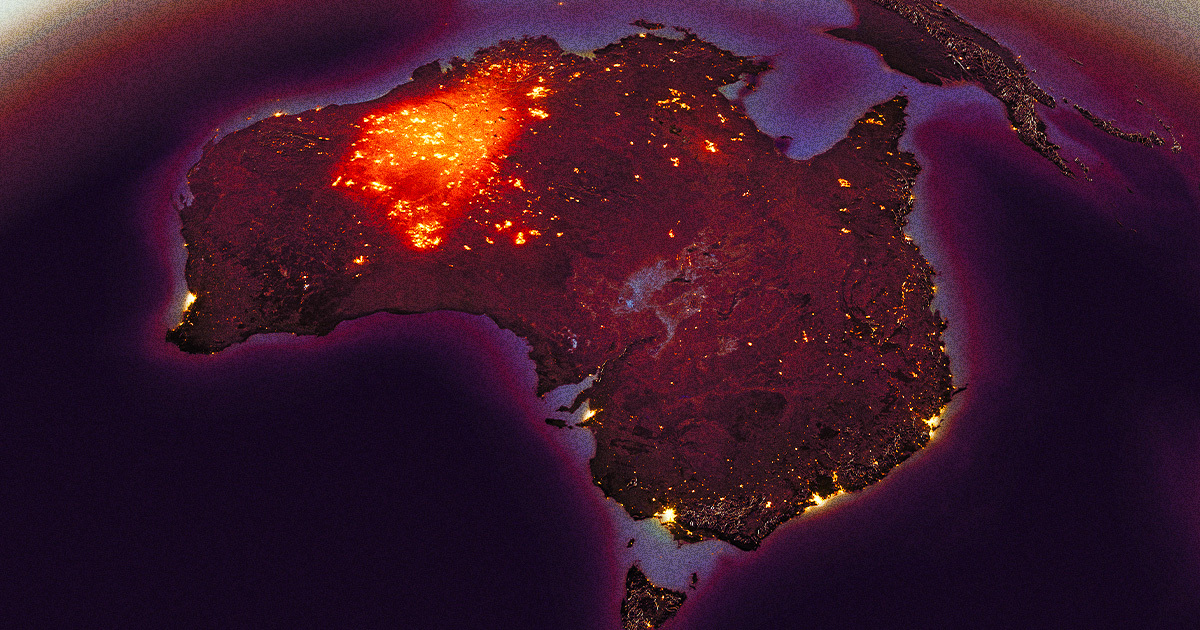
Geologist Andrew Glikson's research suggests that Australia may be hiding the largest known asteroid crater on Earth, estimated to be over 320 miles in diameter. Known as the Deniliquin structure, it could be larger than the Vredefort Crater in South Africa and the Chicxulub crater that caused the extinction of the dinosaurs. The existence of the Deniliquin structure was proposed in the late 90s based on magnetic patterns, and recent analysis confirmed its presence. Further deep drilling is needed to provide definitive proof of impact, but the structure is believed to have formed around 445 million years ago, coinciding with a mass extinction event.