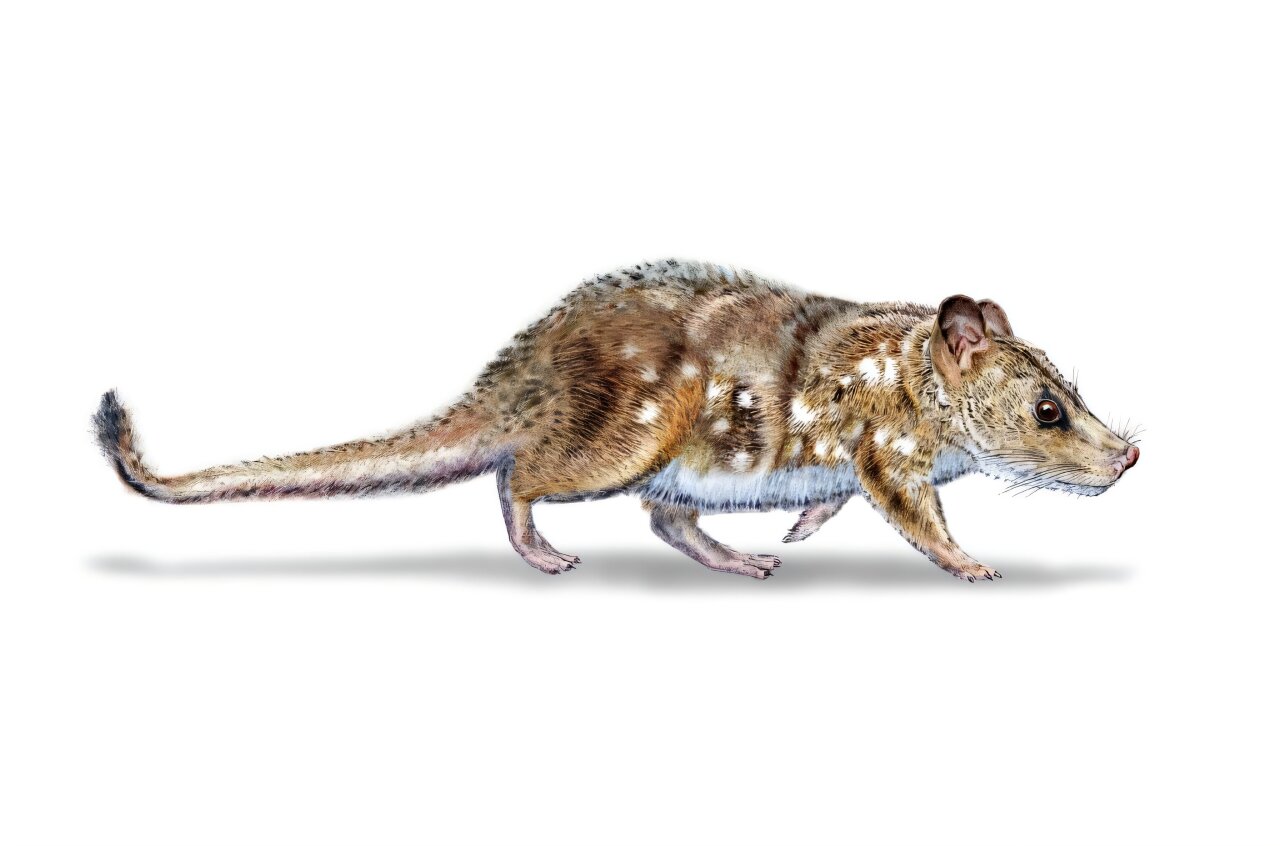
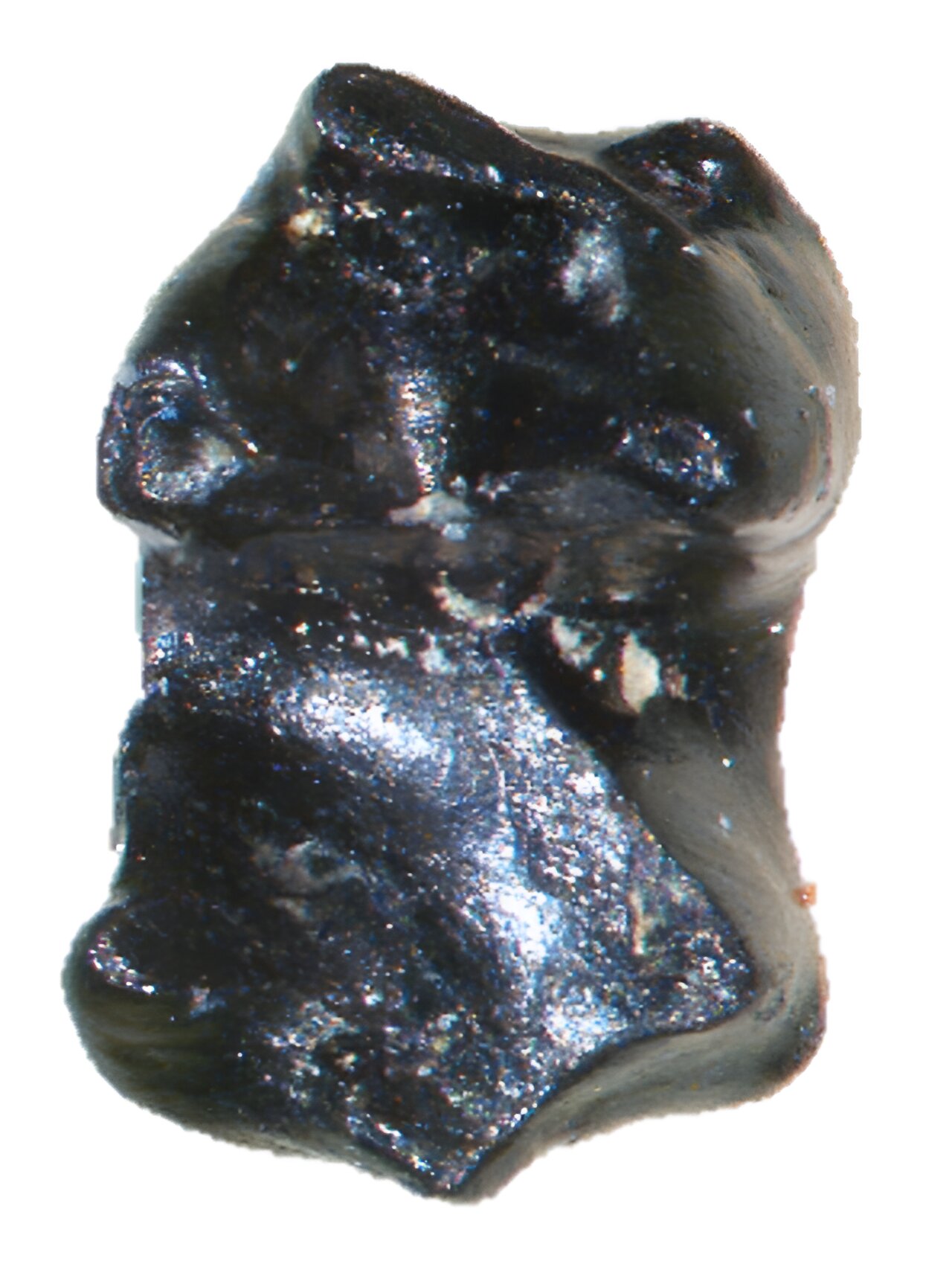
Scientists in Chile have discovered a 74-million-year-old fossil of a tiny mammal called Yeutherium pressor, the smallest mammal found in South America from the time of the dinosaurs, which likely laid eggs or carried its young and had a diet of hard vegetables.
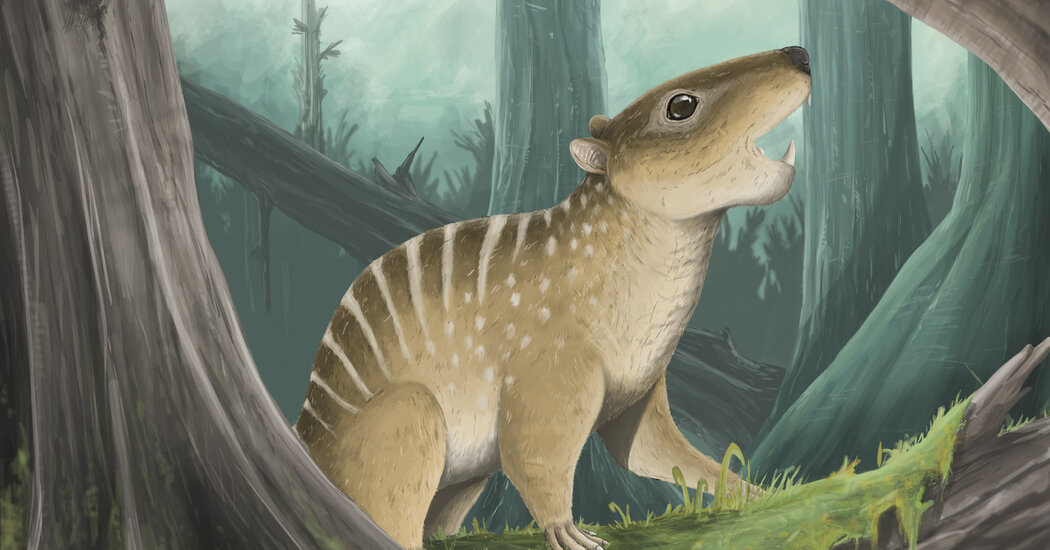
Scientists discovered a nearly complete fossil of Novaculadon mirabilis, a small, sharp-toothed mammal from the Mesozoic Era that coexisted with dinosaurs and survived the mass extinction, highlighting its successful ecological niche and adaptation, though it eventually went extinct around 30 million years ago.
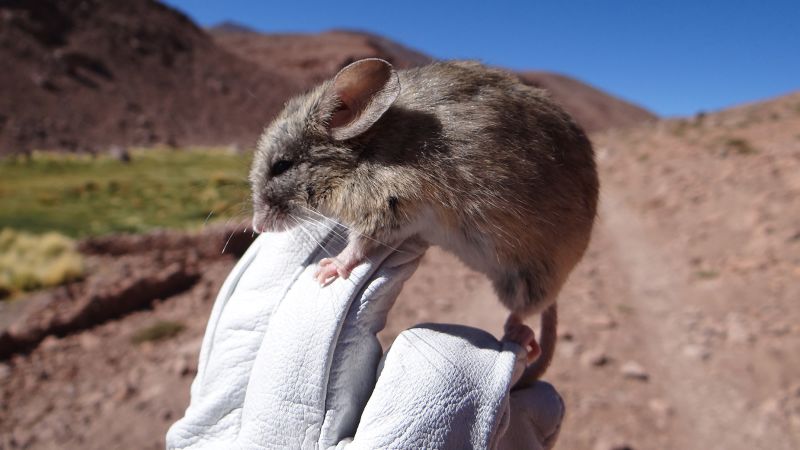
A team of scientists from Argentina, Chile, Bolivia, and the United States have discovered 13 mummified mice at elevations above 6,000 meters in the Andes mountains, making them the world's highest dwelling mammal. The mice, called Phyllotis vaccarum, are commonly found at lower elevations but have been found at extreme heights on the Atacama Plateau. The harsh conditions, similar to those on Mars, create perfect conditions for preservation. The researchers are conducting further studies to understand how the mice survive in these extreme conditions and are exploring theories such as their diet of lichens or the transportation of food by wind. This discovery challenges previous beliefs about species' survival capabilities in high-altitude environments.
Paleontologists have discovered a tiny fossil mammal, named Sikuomys mikros, that lived in northern Alaska around 73 million years ago. Despite the extreme cold and darkness of the Arctic winter, this small creature, resembling a shrew, stayed active year-round, burrowing underground and feeding on insects and worms. The fossil was found in sediments along the Colville River, providing insights into an ancient Arctic ecosystem that was home to dinosaurs, small mammals, and birds adapted to survive in highly seasonal and freezing conditions. The discovery sheds light on the physiology and behavior of animals in the face of drastic climatic fluctuations.
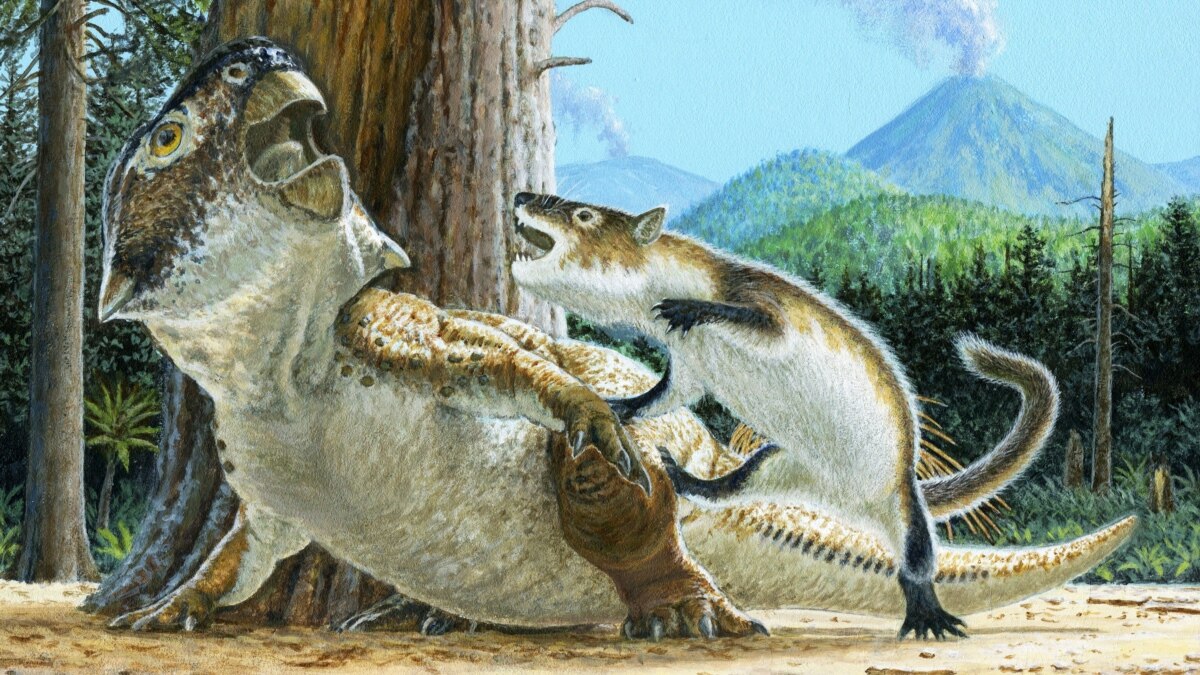
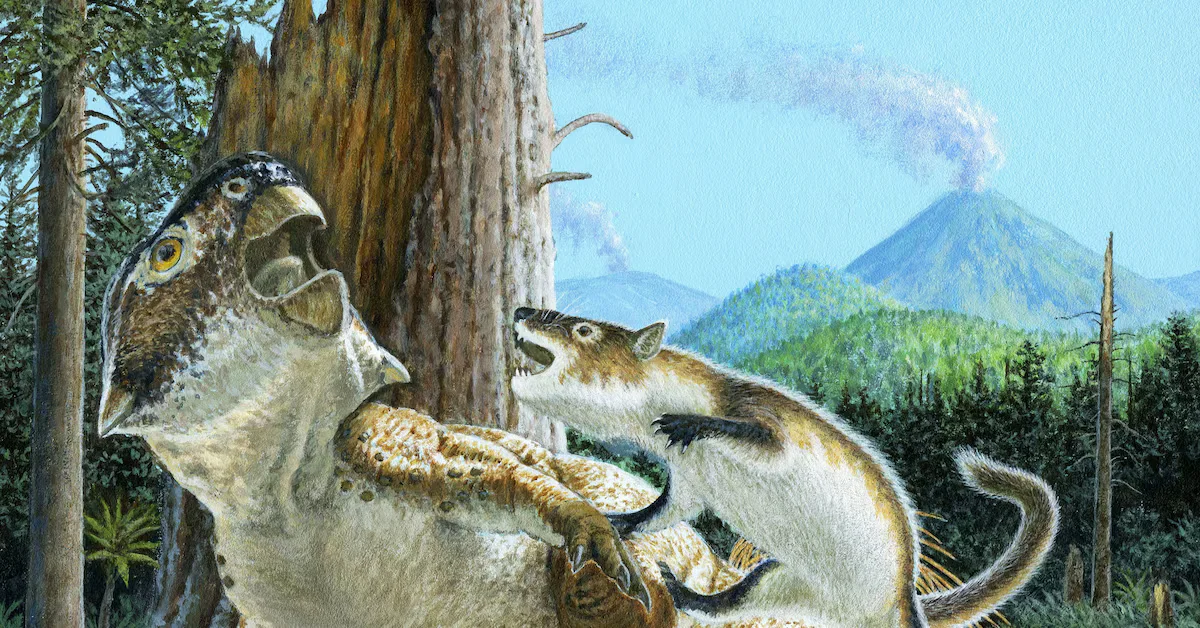
Researchers have discovered a fossil in China that suggests ancient mammals may have attacked and eaten larger dinosaurs. The fossil, found in 2012, is believed to be from 125 million years ago and shows a mammal similar to a badger attacking a small beaked dinosaur. The moment was preserved in a lava flow from a nearby volcano. This finding challenges the previous belief that small mammals only scavenged dead dinosaurs and provides evidence that mammals were capable of attacking and fighting back against dinosaurs.
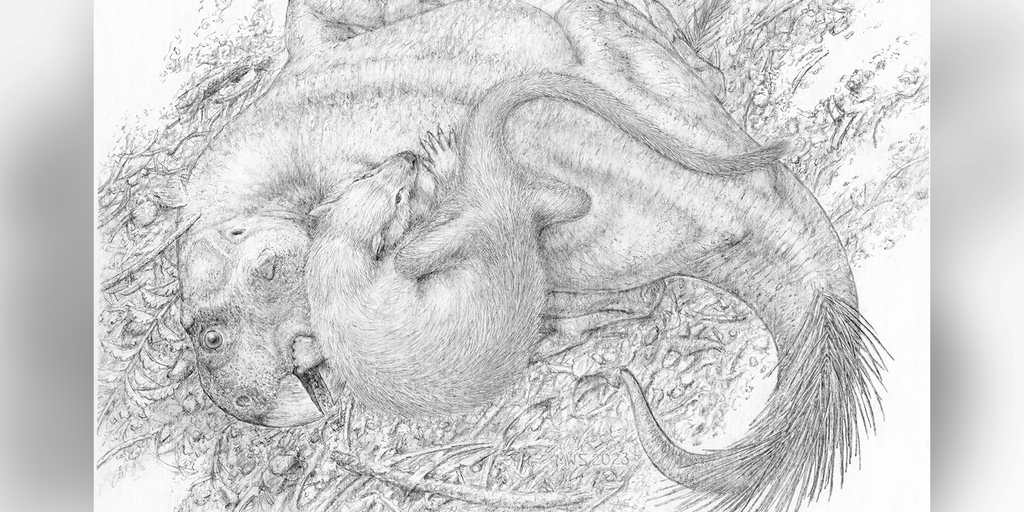
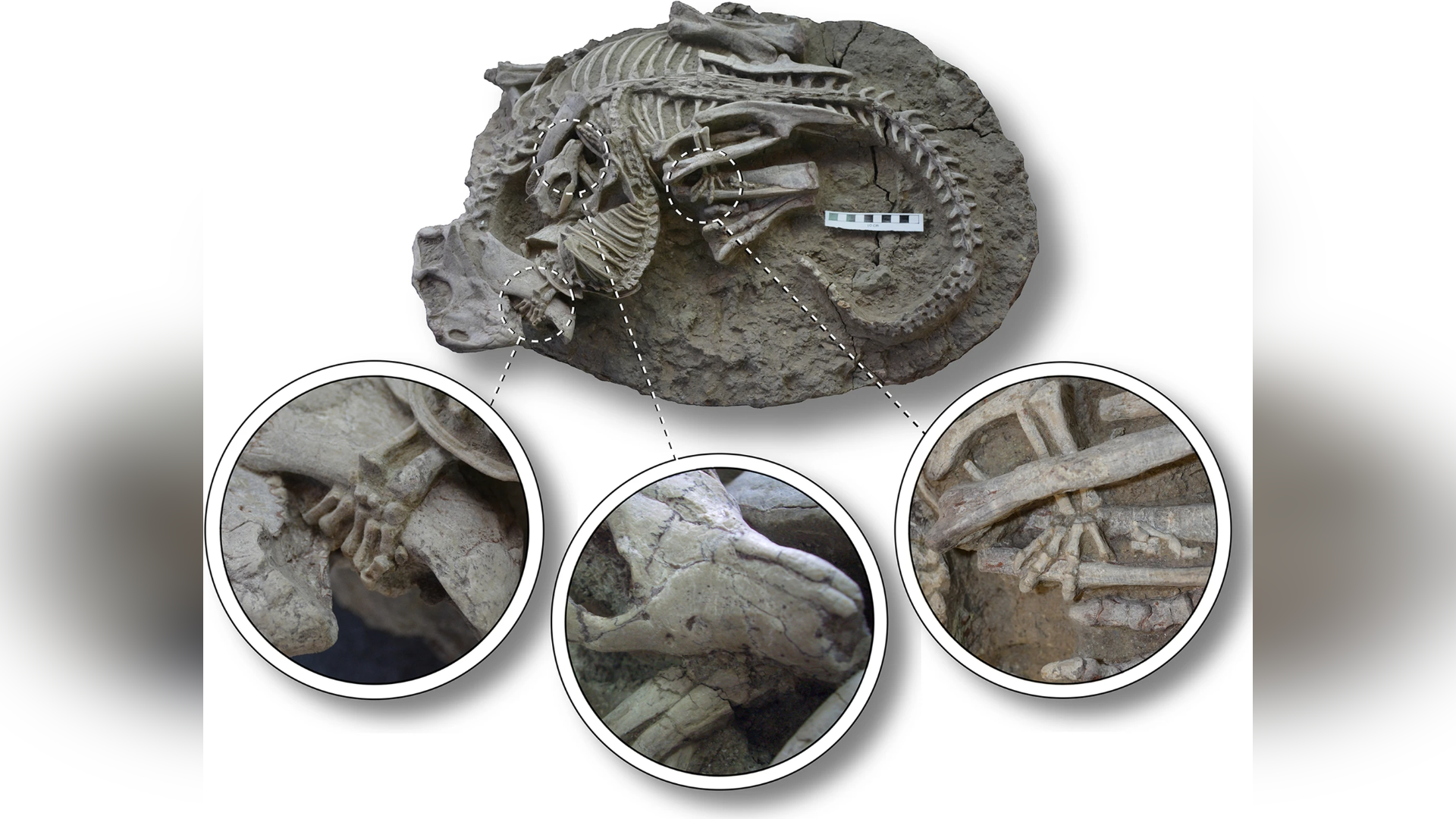
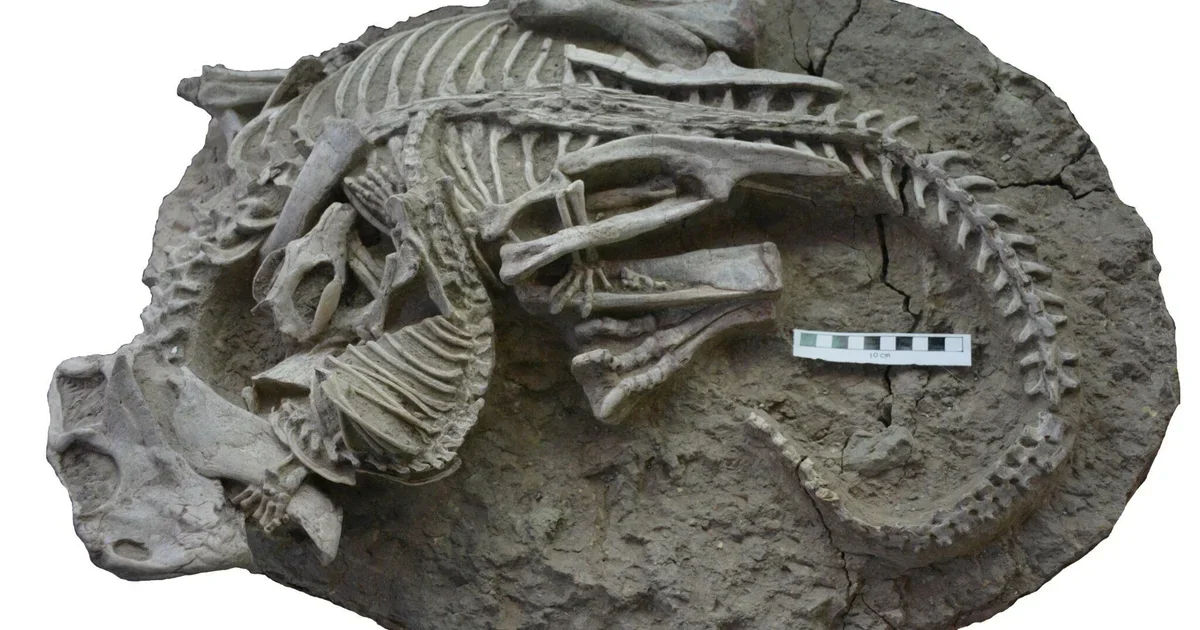
A remarkable 125 million-year-old fossil discovered in China shows a small mammal, Repenomamus robustus, engaged in an epic battle with a larger dinosaur, Psittacosaurus lujiatunensis. The fossil suggests that smaller mammals may have hunted and successfully preyed on dinosaurs more frequently than previously thought. The positioning of the mammal on top of the dinosaur, lack of bite marks on the dinosaur's skeleton, and the grasping and biting actions of the mammal indicate that it was preying on the weaker dinosaur, which was three times its size. This fossil provides valuable insights into the interactions between dinosaurs and mammals during the Cretaceous period.
A remarkable fossil discovered in China shows a small mammal, Repenomamus robustus, engaged in an epic battle with a larger dinosaur, Psittacosaurus lujiatunensis, suggesting that smaller mammals may have hunted and successfully preyed on dinosaurs. The fossil, dating back 125 million years, reveals the mammal gripping the dinosaur's jaw and leg while biting into its rib cage, indicating that it was likely preying on the dinosaur rather than scavenging its carcass. The unique preservation of the intertwined creatures suggests that such encounters may have occurred more frequently than previously thought.
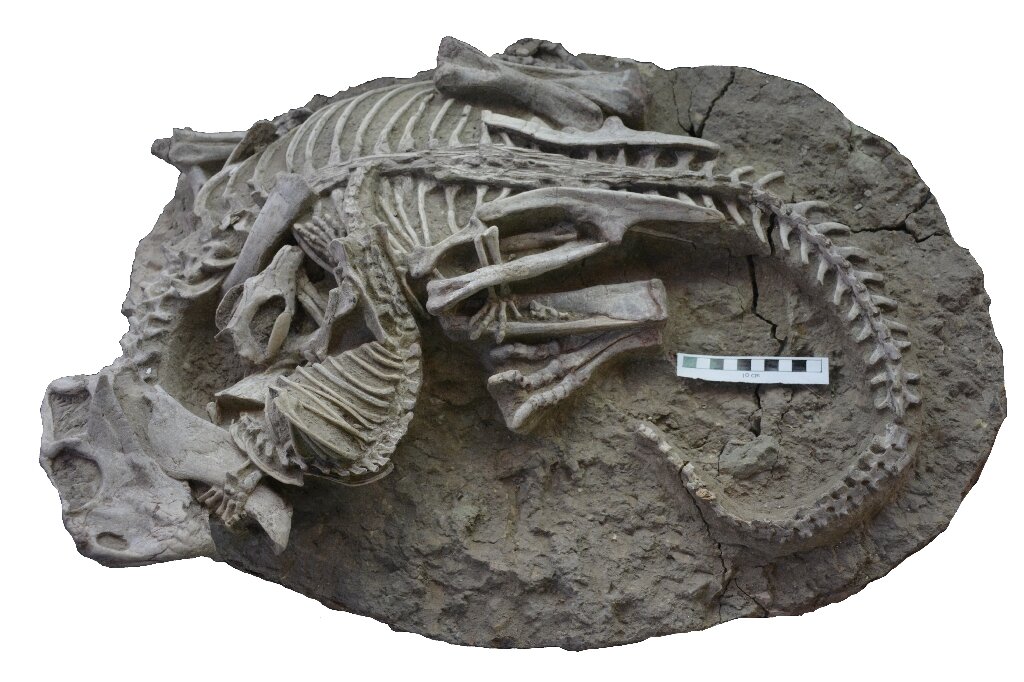
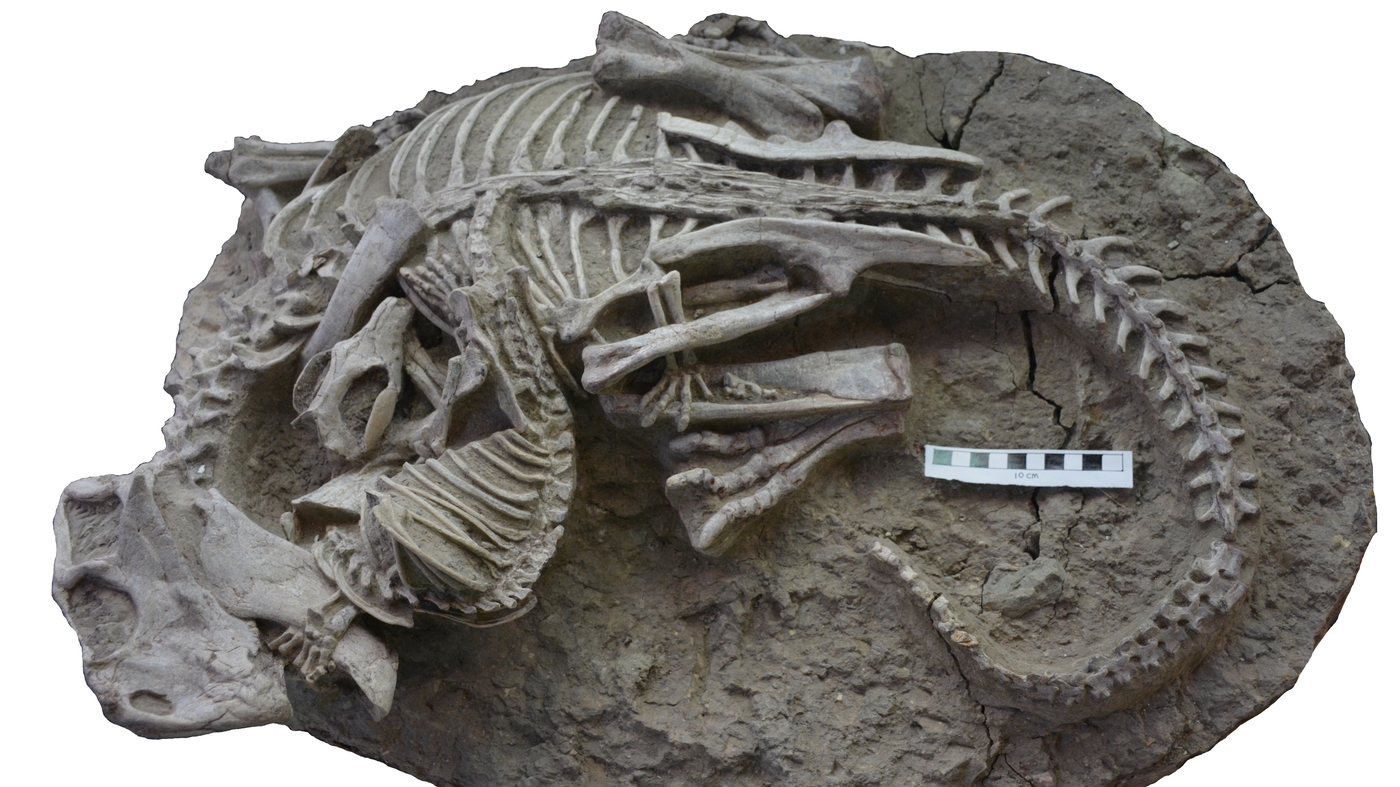
Scientists have uncovered a fossilized tableau of a small ceratopsian dinosaur, Psittacosaurus lujiatunensis, entangled with a smaller gobiconodontid mammal, Repenomamus robustus, dating back 125 million years. The fossil provides a glimpse into the power shift between dinosaurs and mammals that would occur millions of years later. The dinosaur skeleton is complete, estimated to have weighed 10.6 kg at the time of death, while the mammal's skeleton is nearly complete, with its left hand gripping the dinosaur's lower jaw and its left hindleg trapped within the dinosaur's folded leg. The outcome of the fight remains unknown.
A remarkably preserved fossil from the Cretaceous Period reveals a Repenomamus robustus, a carnivorous mammal, preying on a Psittacosaurus lujiatunensis, a beaked dinosaur. The fossil provides evidence that mammals were occasionally capable of hunting even near fully grown dinosaurs, challenging the assumption that dinosaur-mammal interactions were one-way. The two animals died mid-conflict and were buried by a volcanic mudflow. The fossil, found in Liaoning, China, is part of the Jehol Biota, a fossil-rich region. This discovery adds to our understanding of ancient ecosystems and interactions between mammals and dinosaurs.
A fossil discovered in China shows a badger-like mammal, Repenomamus robustus, biting into the ribs of a Psittacosaurus lujiatunensis dinosaur, suggesting that small mammals may have preyed on dinosaurs during the Cretaceous period. The fossil, which is the first of its kind, provides evidence that mammals were capable of taking down adult dinosaurs. The discovery was made at a site in China known as the "Chinese Pompeii" due to the abundance of preserved dinosaur and animal fossils.
A fossil discovered in China's Liaoning Province shows a mammal, Repenomamus robustus, attacking a Psittacosaurus dinosaur, challenging the notion that dinosaurs ruled the land. The mammal's predatory behavior is a first-of-its-kind evidence of a mammal preying on a dinosaur. The intertwined skeletons and completeness of the fossils suggest the find is legitimate, and experts believe the attack was preserved when the animals were caught in a volcanic flow. This discovery overturns the traditional understanding of dinosaur dominance.
A fossil discovered in northeastern China reveals a small mammal, Repenomamus robustus, attacking and preying on a larger plant-eating dinosaur, Psittacosaurus lujiatunensis, during the Cretaceous Period about 125 million years ago. This finding challenges the traditional belief that dinosaurs always ate smaller mammals. The fossil suggests that Mesozoic food webs were more complex than previously thought, with some mammals giving as good as they got. The fossil was found in the "Chinese Pompeii," an area known for volcanic eruptions that buried various animals. The researchers ruled out scavenging, as the mammal was found on top of the dinosaur and there were no bite marks on the bones.
A fossil discovered in northeast China reveals an herbivorous dinosaur, Psittacosaurus, being attacked by a mammal, Repenomamus, challenging the traditional view of dinosaurs as dominant and mammals as submissive. The fossil, preserved in remarkable detail due to an ancient volcanic eruption, shows the mammal biting into the dinosaur's ribcage, suggesting an active attack. While some scientists believe the dinosaur may have already been weakened or recently deceased, the fossil provides evidence of a more complex and rich Cretaceous food web, with smaller mammals occasionally preying on dinosaurs.
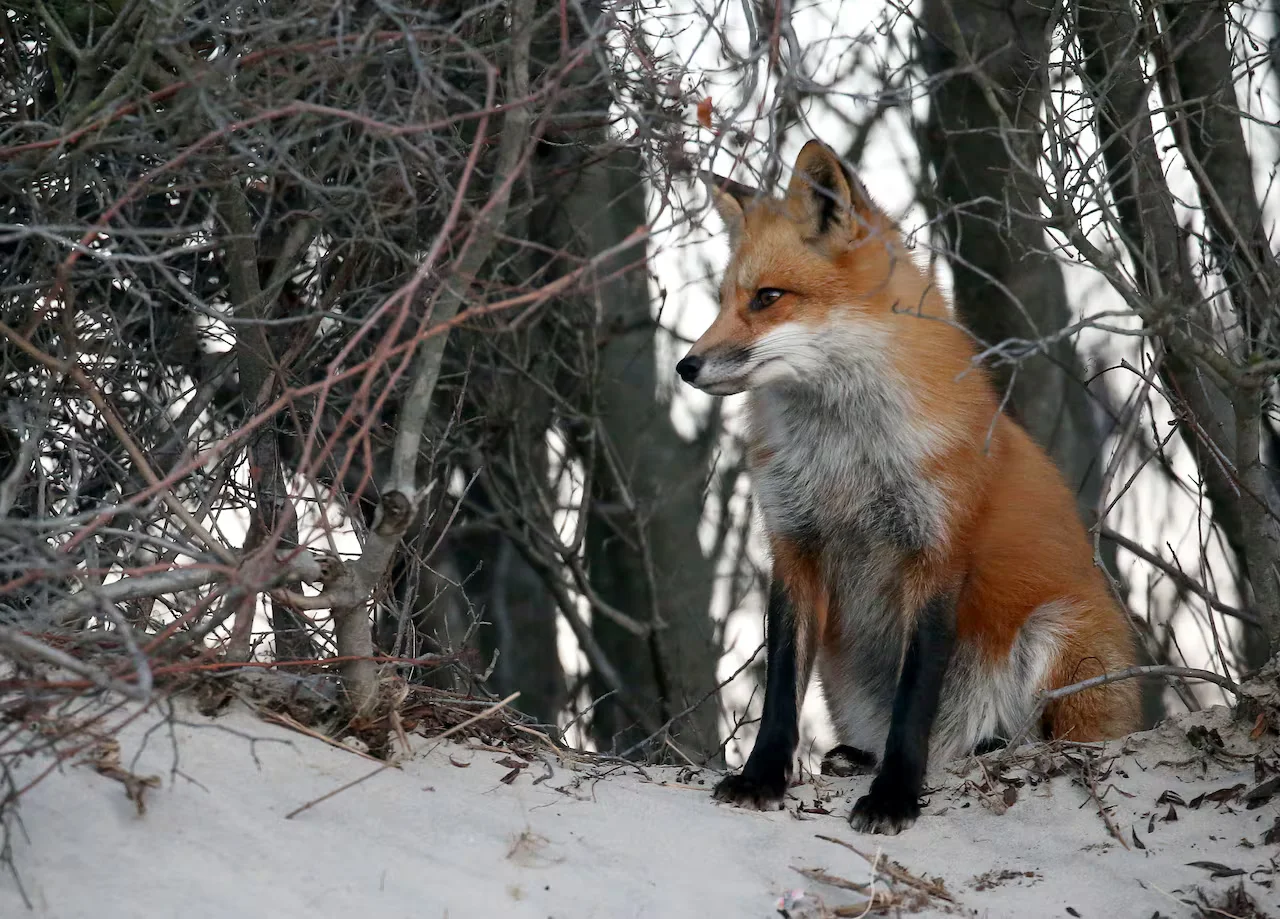
The highly pathogenic avian influenza has been detected in a mammal in the Lehigh Valley for the first time, with the H5N1 strain of the bird flu being found in a red fox collected in Northampton County. Of the 191 detections of highly pathogenic avian influenza in mammals, 42% have been in red foxes. The bird flu has also been found in other mammal species. The red fox that tested positive was an orphaned kit that was admitted to a local wildlife rehabilitation center after it was found alongside dead littermates. Federal agriculture officials recommend not touching or collecting sick or dead animals.