A severe heat dome is causing dangerous heat conditions for over 100 million people across the US, with high temperatures, humidity, and risk of heat-related illnesses, especially in the southeast and Tennessee Valley, while thunderstorms and wildfires also pose additional hazards.
A severe heatwave is affecting millions across the central and eastern US, with temperatures feeling like over 110°F in some areas, driven by a heat dome and climate change, leading to dangerous conditions and increased health risks, especially for vulnerable populations.
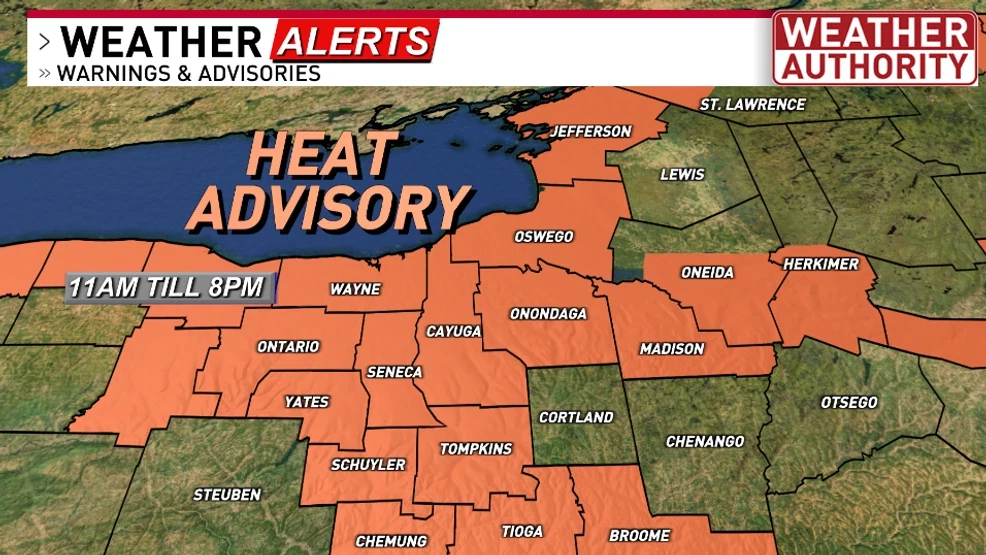
Heat advisories are in effect across central New York today due to high temperatures and dewpoints, with the heat index nearing 100°F. Expect early afternoon showers and potential severe thunderstorms after 5PM, which could bring heavy rain and strong winds. A cold front will bring more showers on Thursday, followed by a cool-down into the weekend.
Boston is experiencing an unprecedented early-season heatwave, with temperatures potentially surpassing the city's all-time high of 104°F and breaking June records, prompting health warnings and safety precautions due to dangerous humidity levels and heat index values around 110°F.
Upstate New York is facing an intense heat wave with record temperatures reaching up to 97°F and high humidity, leading to 'extreme' heat risk, with little relief at night, driven by a heat dome from the Southeast, prompting precautions like early school dismissals.
A severe heat wave continues to affect the eastern United States, with peak temperatures expected in the Ohio Valley and Midwest before shifting to the Southeast and Plains early next week. Record highs and dangerous heat indexes are anticipated, prompting officials to warn about heat stress and the need for cooling measures. The heat may ease later next week but could return by July, with above-normal temperatures forecasted for much of the country.
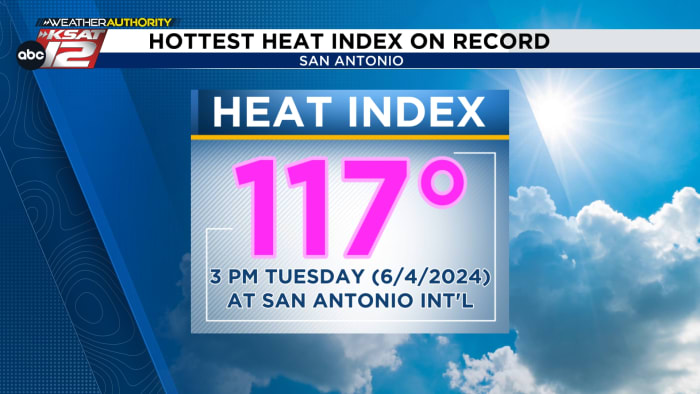
San Antonio recorded its highest-ever heat index of 117 degrees on June 4, 2024, breaking last year's record of 116 degrees. High humidity and afternoon dewpoints in the mid-to-upper 70s have caused feels-like temperatures to soar into triple digits across South Central Texas. Residents are advised to stay hydrated, wear sunscreen, and take care of pets as the hot and humid conditions persist.
Texas and Florida are experiencing unprecedented early-season extreme heat, with Miami recording its hottest May on record and heat indexes reaching 112 degrees Fahrenheit. Experts warn that this could foreshadow a record-breaking hot year, with climate change contributing to more frequent and intense heat waves. Heat advisories are in effect, urging residents to stay cool and hydrated.
A study focusing on Texas last summer reveals that the apparent temperature, or heat index, is increasing three times faster than the measured temperature due to climate change, with the relative humidity remaining constant as the temperature rises, reducing the body's ability to cool through sweating. The study's revised heat index model shows that the apparent temperature at Houston's Ellington Airport on July 23 of last year was 167 degrees Fahrenheit, with climate change accounting for 12 degrees. The lead author warns that extreme heat conditions in Texas may become hyperthermic for all and emphasizes the need to reduce additional warming by ceasing the burning of fossil fuels.
A new study shows that the heat index, which measures how hot it really feels, has increased much faster in Texas than the measured temperature, with extreme days feeling 8 to 11 degrees Fahrenheit hotter due to climate change. The study highlights the dangers of rising temperatures and the need to communicate heat stress accurately to the public. Researchers emphasize the importance of ceasing additional warming by stopping the burning of fossil fuels. The study also suggests that people need to take precautions to avoid hyperthermia, especially in extreme heat situations, and that the current heat index calculations are inaccurate in today's climate conditions.
A study supported by the National Institutes of Health predicts that cardiovascular-related deaths due to extreme heat will increase in the United States between 2036 and 2065. Older adults and Black adults are expected to be disproportionately affected, as they often have underlying health conditions and face socioeconomic barriers that can influence their health. The study estimates that each summer, about 71 to 80 days will feel 90 degrees or hotter, leading to a projected increase in annual heat-related cardiovascular deaths from 1,651 to 4,320 for the general population. The number of deaths could more than triple if greenhouse gas emissions rise significantly. The researchers emphasize the importance of taking extra steps to avoid extreme temperatures, especially for those with underlying health risks.
Record high temperatures were reached today at all three airports in the Washington D.C. area, with temperatures in the upper 90s, and are expected to be broken again on Tuesday. The combination of high temperatures and humidity could result in heat index values near 105 degrees in some areas. It is advised to stay hydrated, seek shade and air conditioning, and check on those who may struggle with the heat.
Meteorologists have issued a heat advisory for Rochester and the surrounding area on Labor Day, with temperatures expected to reach the 90s all week. This follows a national trend of September feeling more like August. The heat and high humidity may lead to heat illnesses, prompting warnings to stay hydrated, stay in air-conditioned rooms, and avoid strenuous activities during the hottest parts of the day. The Democrat and Chronicle will release a podcast called "City on Fire" exploring the effects of heat and violence in Rochester, as temperatures continue to rise due to the climate crisis.
Over a dozen high school football games in the Kansas City area have been delayed due to dangerous temperatures. The decision to delay the games was based on heat index readings and the wet bulb globe thermometer, which measures heat-related stress on the human body. The National Weather Service has extended the Excessive Heat Warning until Friday evening, with temperatures reaching the upper-90s and heat indexes between 110-120 degrees. Relief is expected with a cold front bringing temperatures down to the 80s and some rain chances on Sunday.