Tag

Heart Rate Variability

All articles tagged with #heart rate variability

health1 year ago

High Blood Sugar Linked to Brain Health Risks in Non-Diabetics

A Baycrest study published in Neurobiology of Aging reveals that high blood sugar can impair brain health in non-diabetic individuals, particularly affecting older adults and women. The research found that elevated blood sugar levels are linked to weakened brain networks and reduced heart rate variability, which are crucial for cognitive functions like memory and attention. The findings emphasize the importance of managing blood sugar through diet and exercise to maintain brain health, even for those without diabetes.

health1 year ago

Elevated Blood Sugar Linked to Brain Health Risks

A study by Baycrest reveals that elevated blood sugar levels can negatively impact brain health, even in non-diabetic individuals, by reducing connectivity in brain networks crucial for cognition, memory, and emotion regulation. The effects are more pronounced in older adults and women. Additionally, higher blood sugar is linked to lower heart rate variability, an indicator of brain health. The findings emphasize the importance of managing blood sugar through diet, exercise, and regular medical checkups to support both body and brain health.

neuroscience1 year ago

Heart Rate Variability Unreliable for Predicting Aggression, Study Finds

A study from the University of St. Andrews has debunked the theory that heart rate variability (HRV) is linked to reactive aggression, challenging its use as a biomarker for predicting aggression in wearable devices. The research, led by Annah McCurry, reviewed 705 studies and found no evidence supporting HRV's correlation with aggression, emphasizing the need for continued search for effective biomarkers to understand and prevent aggressive behavior.

mental-health1 year ago

Study Finds No Link Between Borderline Personality Disorder and Abnormal Facial Expression Processing

A neuroimaging study found that individuals with borderline personality disorder did not show abnormal brain activity when processing facial expressions compared to healthy individuals, but did exhibit lower heart rate variability. The study contributes to understanding the neural functioning of individuals with borderline personality disorder, but the small sample size and use of static images may not fully represent real-life emotional processing.

health1 year ago

"Effective Breathing Techniques for Long COVID Relief"

A new study suggests that performing simple breathing exercises twice a day with the help of a mobile phone application can alleviate Long Covid symptoms. Resonant breathing, focusing on heart rate variability, significantly improved symptoms, sleep, and physical functioning among participants. The research, led by Dr. Manoj Sivan at the University of Leeds, indicates that this technique could be an easy and effective treatment option for Long Covid sufferers, with positive feedback from patients. Further research is needed to test the technique on a larger scale and against a control group.

health2 years ago

"Predicting Future Health with Heart Rate Variability"

Your resting heart rate and heart rate variability can provide valuable insights into your current and future health. A higher resting heart rate is associated with increased risks of all-cause mortality, cardiovascular disease, and various types of cancer, while a low resting heart rate throughout life is beneficial for cardiovascular health. On the other hand, high heart rate variability indicates better stress resilience and adaptability, while low heart rate variability is linked to higher risks of all-cause mortality, cardiovascular events, and inflammation-related diseases. Monitoring these heart metrics can offer predictive indicators for your future health and longevity.

health2 years ago

The Power of Slow Breathing in Preventing Alzheimer's

Slow, deliberate breathing exercises may offer surprising protection against Alzheimer's disease, according to a recent study. Researchers found that deep, slow breathing increased heart rate variability and decreased levels of amyloid beta, a protein associated with Alzheimer's. The study suggests that deliberate breathing may mimic the benefits of deep sleep, which helps clear neurotoxic waste products from the brain. While more research is needed, incorporating regular, slow-paced breathing exercises into one's routine may have potential benefits for emotional well-being and biomarkers associated with Alzheimer's disease.

health2 years ago

Daily Breathing Exercises May Reduce Alzheimer's Risk

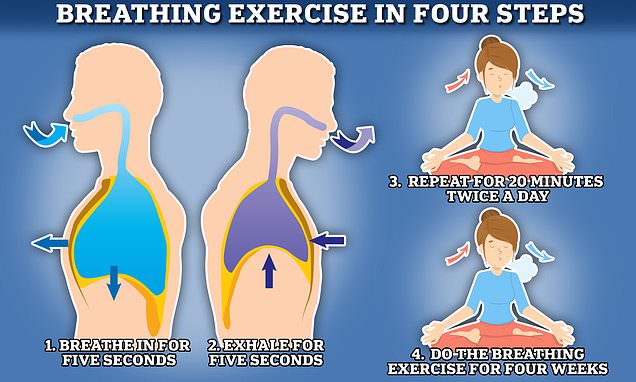
A breathing exercise involving inhaling and exhaling for 20 minutes, twice a day, for four weeks could reduce the risk of developing Alzheimer's disease, according to a study by Professor Mara Mather at SC Leonard Davis School of Gerontology. The exercise increased heart rate variability and decreased levels of amyloid-beta peptides in the bloodstream, which are connected to Alzheimer's disease. The study is the first to find that behavioural interventions can reduce amyloid-beta peptides in plasma and shows promise for future Alzheimer's treatment.

health2 years ago

"Breathing exercises may lower Alzheimer's risk, study finds"

Scientists at the University of Southern California's Leonard Davis School of Gerontology have found that inhaling for a count of five and then exhaling for the same length of time can benefit the brain by reducing the amount of amyloid beta in the blood. Clumps of these toxic proteins have been heavily linked to Alzheimer's over the past few decades, with neurologists believing they may even cause the disease. The breathing exercise, when carried out for 20 minutes twice a day, for four weeks, was found to have a positive effect on amyloid because the way we breathe affects our heart rate, which in turn affects our nervous system and the way our brain produces and clears away these toxic proteins.

health2 years ago

Optimizing Sleep with Wearable Data.

Wearable gadgets can help track sleep patterns, but not all the data they provide is equally helpful. While they can estimate sleep stages and breathing rates, they can't precisely measure what our brains are doing. However, tracking total time asleep and heart rate variability can be useful in understanding the quality of sleep. Wearables like Apple Watch, Oura Ring, and WHOOP 4.0 can help track sleep patterns, but users should pay attention to the right kinds of data.