Tag

Habitable Worlds

All articles tagged with #habitable worlds

science3 months ago

NASA Discovers Over 6,000 Exoplanets, Marking a New Era of Space Exploration

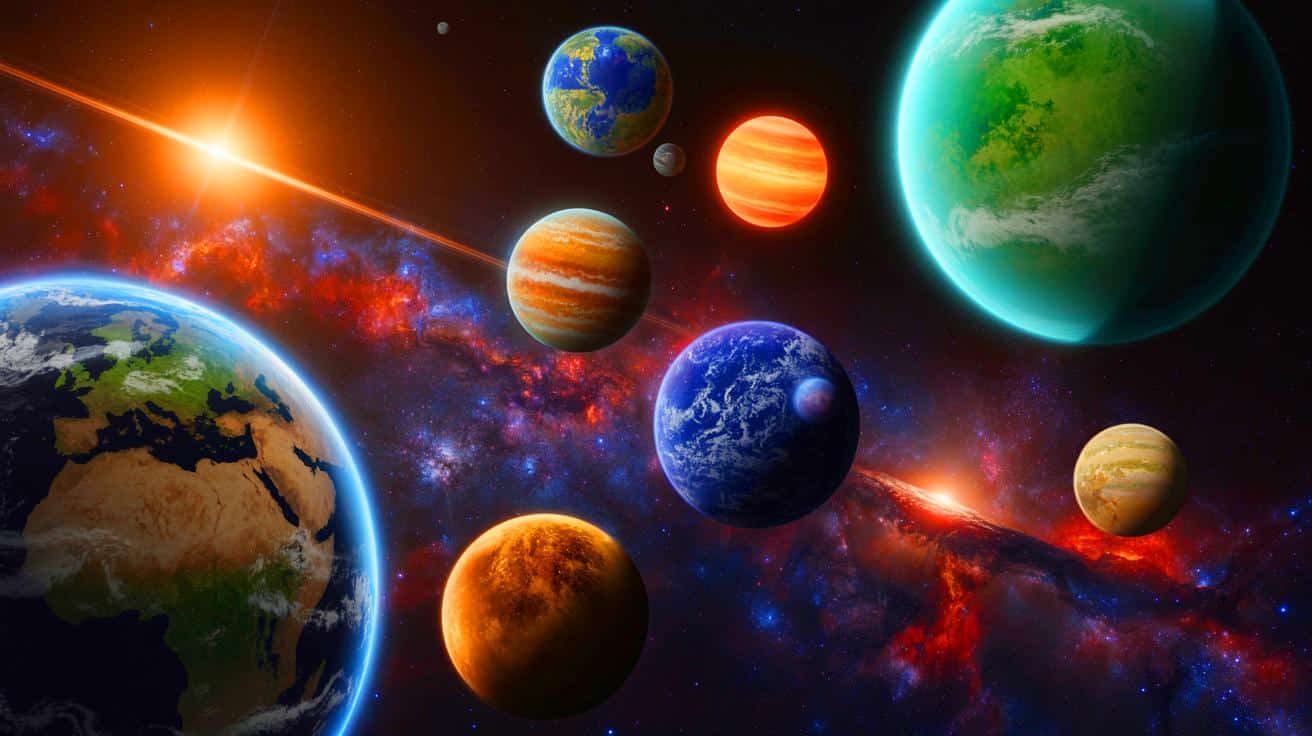
NASA has confirmed the discovery of 6,000 exoplanets beyond our solar system, marking a significant milestone in space exploration. The rapid advancements in detection methods have revealed a diverse array of planets, including some that could potentially support life. Future missions aim to find habitable worlds and detect biosignatures, bringing us closer to discovering Earth-like planets and extraterrestrial life.
space-science1 year ago

"James Webb Telescope Discovers Alcohol and Organic Molecules Around Infant Stars"

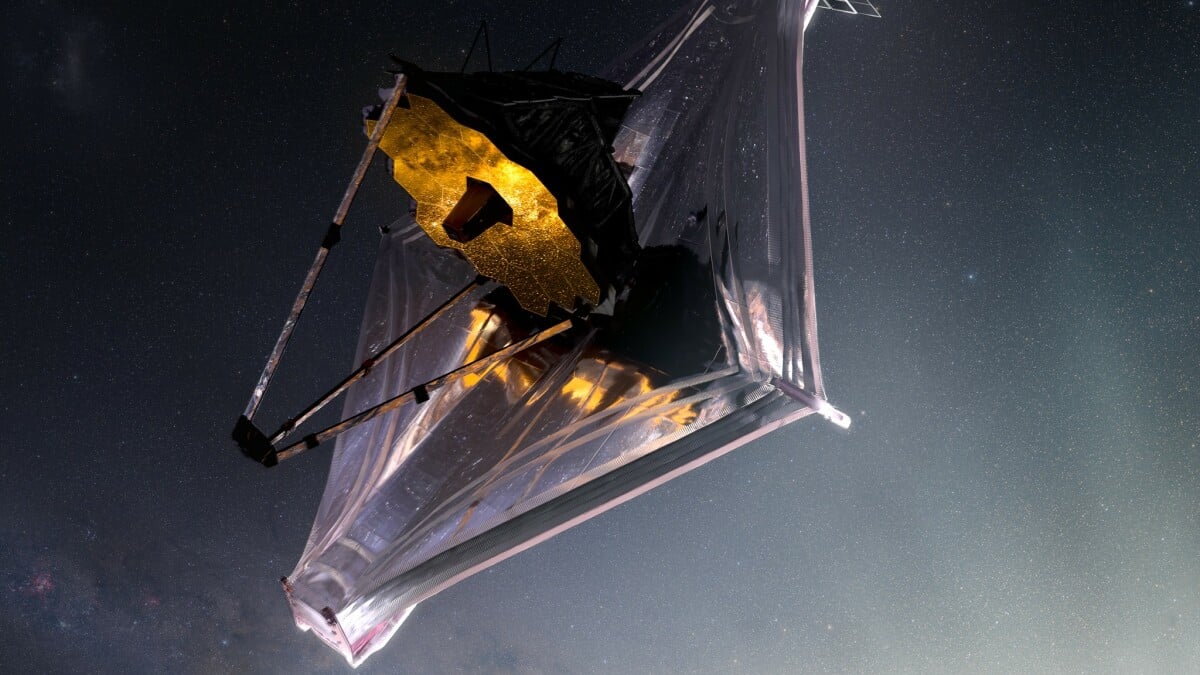
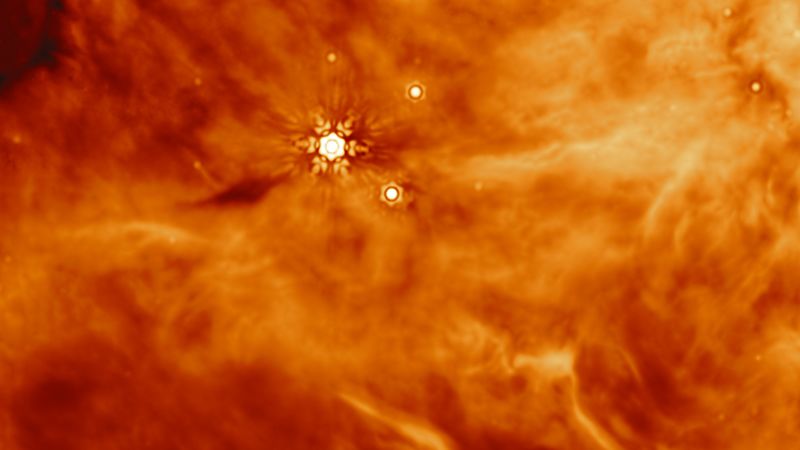
The James Webb Space Telescope has detected complex organic molecules, including ethanol and other key ingredients, around two youthful protostars, shedding light on the chemical-rich regions where planets are formed. These findings could provide insights into the origins of organic materials in our solar system and potentially habitable worlds. The telescope's powerful abilities, including its giant mirror and infrared view, allow it to peer into the deepest cosmos and revolutionize our understanding of distant exoplanets, offering the potential for groundbreaking discoveries in the search for habitable worlds.

astronomy1 year ago

"Ingredients for Habitable Worlds Found Around Two Baby Stars"

Astronomers using the James Webb Space Telescope have detected commonplace chemical ingredients found in vinegar, ant stings, and even margaritas around two young protostars, including acetic acid, ethanol, formic acid, sulfur dioxide, methane, and formaldehyde. These molecules could be crucial ingredients for potentially habitable worlds and may provide insight into the early history of our solar system. The discovery contributes to understanding the origins and incorporation of complex organic molecules in planets and has implications for astrochemistry research.

space-exploration1 year ago

"NASA's Europa Clipper Mission: Instruments Ready for Ocean World Exploration"


NASA's Europa Clipper mission, set to launch in October, will investigate Jupiter's moon Europa to determine whether it has conditions that could support life. The spacecraft will carry a suite of nine science instruments to study Europa's interior, atmosphere, surface, and ice shell. The mission aims to determine the moon's potential habitability and will perform 49 flybys of Europa over four years, providing valuable insights into the astrobiological potential for habitable worlds beyond Earth.

astronomy2 years ago

"The Formation of the First Living Worlds: A Glimpse into the Past"

The formation of the first living worlds is a complex process that involves the right type of star, chemical enrichment, and a stable environment. Stars with the right characteristics, such as not being too massive or too short-lived, are necessary for habitable planets to form. Planets also require sufficient heavy elements, time for their environment to settle down, and the right conditions for life to emerge and thrive. The earliest habitable worlds may have arisen in galaxies that ceased forming stars billions of years ago. While it's plausible that life may have arisen in the Universe before the billion-year threshold, the prevalence of life on planets beyond Earth remains unknown.

astronomy2 years ago

"The Influence of Giant Impacts on Solar System Planet Formation"

Giant impacts play a crucial role in the formation of planets in the solar system, from the initial collision of planetesimals to the later stage of protoplanets merging. These impacts can reshape planets and affect their habitability, as seen in the formation of Earth's moon and the tilt of Uranus. Understanding the impact of giant collisions is important for comprehending planetary diversity and the search for habitable worlds beyond our solar system.

space2 years ago

Unveiling Uranus' Infrared Aurora: Insights into Icy Worlds and Habitability

Astronomers from the University of Leicester have confirmed the presence of an infrared aurora on Uranus, shedding light on the mysteries of the planet's magnetic fields and the potential habitability of icy worlds. The discovery, made through infrared auroral measurements using the Keck II telescope, provides insights into the charged particles and atmospheric conditions of Uranus. The findings may also aid in understanding the magnetic fields of other planets and identifying exoplanets suitable for supporting life. Additionally, studying Uranus's aurora could provide valuable data on geomagnetic reversal, a rare phenomenon on Earth.

science-and-technology2 years ago

"Revolutionary Technology Unveiled: Exploring Other Earths"

The development of advanced specialized telescopes using starshades could revolutionize our ability to observe distant terrestrial planets, particularly Earth-like worlds orbiting red dwarf stars in their habitable zone. However, the faintness of these planets remains a challenge. A new study proposes using photonics, an advanced type of optics that works on the scale of individual photons, to enhance the detection of faint planets. By combining coronagraphs with photonic detectors, astronomers could create a hybrid system capable of observing much fainter planets. While starshade observatories are still in the future, this study highlights the potential of astronomical photonics to transform our understanding of the universe.

space-science2 years ago

"Chinese Scientists Develop 6-Meter Space Telescope in Search of Habitable Exoplanets"

Chinese scientists have proposed the Tianlin Mission, a 6-meter space telescope, to study the atmospheres of potentially habitable Earth-sized exoplanets. The telescope would use a coronagraph to block the light of a star and capture light from orbiting planets, allowing for the analysis of their spectra. If funded and launched within the next 10-15 years, the mission could observe hundreds of Earth-like worlds and potentially confirm the presence of life on an exoplanet. Other planned missions by NASA and the European Space Agency are also in the race to discover new Earths and extraterrestrial life.

astronomy2 years ago

Top Star Systems for Potential Life Identified by Scientists

A team of astronomers led by Anna Shapiro of the Max Planck Institute for Solar System Research in Germany has found that Earth-like exoplanets orbiting Sun-like stars with a relatively low metal content are more likely to be protected from harmful UV radiation that could hinder life by exposing it to the threat of genomic damage. This may seem counter-intuitive since stars with a lower metal content emit more ultraviolet light. But the team's work shows that a planet with an oxygen-rich atmosphere has a thicker ozone layer, giving a world orbiting a metal-poor star more protection than one with a metal-rich host.

space2 years ago

Juice Mission Launches to Explore Jupiter's Icy Moons.

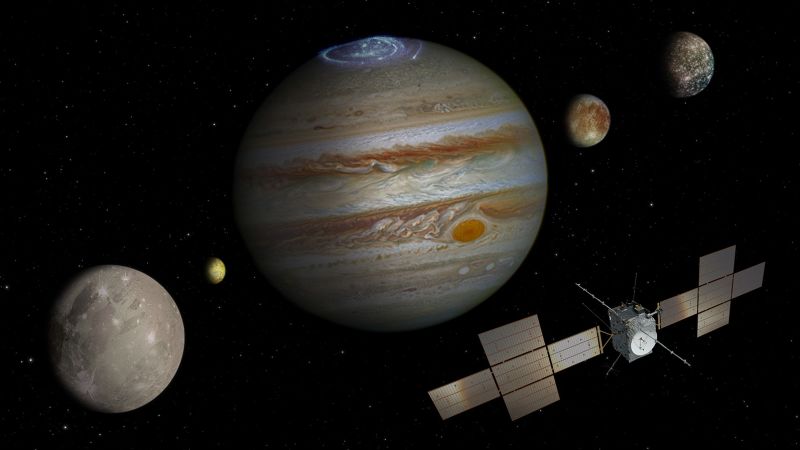
The European Space Agency's Jupiter Icy Moons Explorer mission, or Juice, has been launched to explore Jupiter and its three largest moons, Ganymede, Callisto, and Europa, which are believed to have subsurface oceans that could potentially harbor life. The spacecraft will take eight years to reach Jupiter and will spend about three and a half years orbiting the gas giant and conducting flybys of the moons. The mission has five main objectives, including characterizing the moons and determining if they are potentially habitable for life.

space2 years ago

Possible Discovery of Alien Life Through Repeating Radio Signal from Earth-Sized Exoplanet

Astronomers have detected repeating radio signals from a rocky planet orbiting a star only 12 light years from Earth, which they believe could be an Earth-sized world with a magnetic field, making it a strong candidate for harboring an atmosphere. The detection of a magnetic field on the exoplanet, dubbed YZ Ceti b, is a big deal because scientists have long struggled to detect magnetic fields on smaller, terrestrial worlds like our own planet, which has remained one of the biggest obstacles in the search for potentially habitable, life-sustaining worlds.