Tag

Energy Imbalance

All articles tagged with #energy imbalance

science1 year ago

Diminishing Low Clouds Linked to 2023's Record Heat Surge

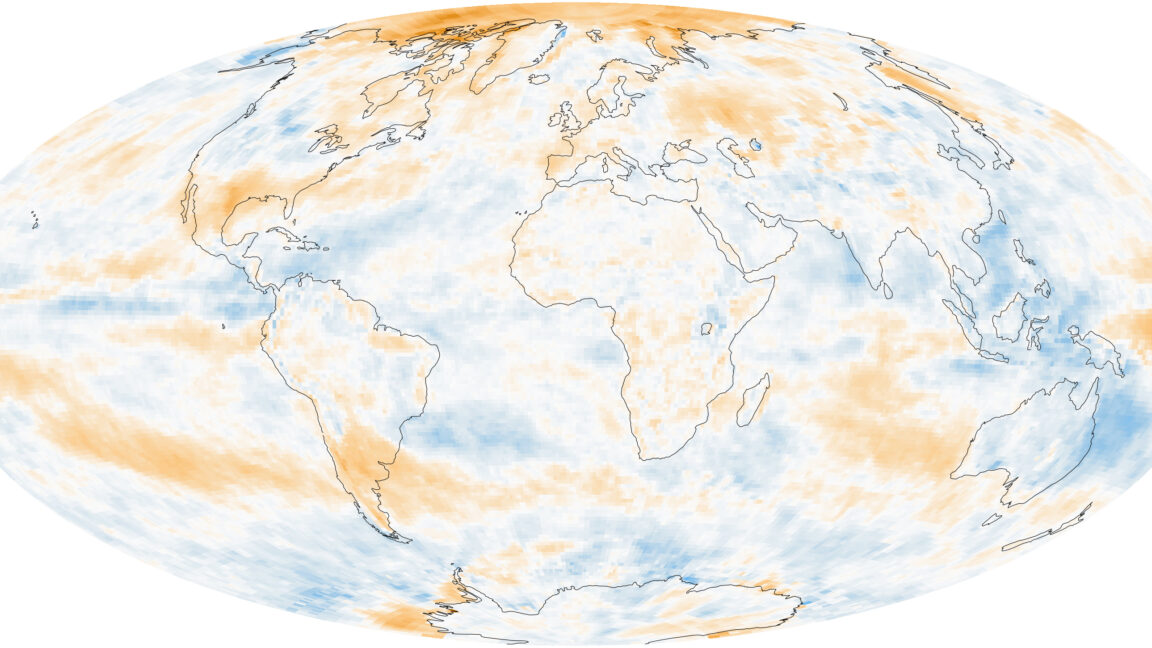
A study by German scientists suggests that the Earth is absorbing more sunlight due to reduced cloud cover, contributing to accelerated global warming. In 2023, a record energy imbalance was observed, with decreased albedo, or reflectivity, largely due to a decline in low-level clouds over northern mid-latitude and tropical oceans. This phenomenon may indicate a feedback loop where rising temperatures reduce cloud cover, further enhancing warming. The findings imply that future climate sensitivity could be higher than current estimates, emphasizing the urgency to understand these changes.


science1 year ago

"Saturn's Energy Imbalance Fuels Massive Storms, Cassini Reveals"

Scientists have discovered a significant seasonal energy imbalance on Saturn, with energy absorption and emission varying by up to 16% due to its elliptical orbit. This finding challenges existing models of gas giant atmospheres and suggests similar imbalances may exist on other gas giants like Jupiter, Neptune, and Uranus. The research, based on Cassini data, could also enhance our understanding of planetary weather and climate.

health2 years ago

"The Fructose Factor: Unveiling the Link to Obesity and Health Risks"

Scientists propose a new theory called the "fructose survival hypothesis" which suggests that fructose consumption is the key driver of obesity. According to the theory, fructose depletes active energy and hinders appetite control, leading to an energy imbalance that promotes weight gain. This unifying perspective could guide more effective approaches to obesity prevention and management. The theory brings together various dietary hypotheses and suggests that fructose is the true driver behind obesity, while fatty foods become the major source of calories that drive weight gain. Further research is needed to fully validate this hypothesis.

health2 years ago

Fructose: The Key Culprit Behind Weight Gain, Study Finds

A new study proposes that fructose, a simple sugar found in many foods, may be the key driver of obesity. The authors suggest that fructose resets cell metabolism, increasing hunger and driving the desire for energy-rich foods, leading to weight gain. The study integrates existing obesity theories and suggests that obesity is a condition of low energy, marked by insufficient ATP due to the types and amounts of food consumed. Fructose suppresses the activity of mitochondria, reducing ATP levels and triggering biological responses such as increased energy intake, insulin resistance, and reduced resting metabolism. The consumption of processed foods and high fructose corn syrup exacerbates the problem. Moderating fructose consumption and adopting a diet rich in fiber, non-starchy vegetables, whole fruits, and legumes, while limiting high-fructose foods and drinks, can help with weight management and obesity prevention.

health2 years ago

"The Impact of Fructose Intake on Obesity"

New research suggests that fructose, a simple sugar found in many foods, may contribute to obesity and related health conditions. The study proposes that fructose triggers a "survival switch" in the body, causing it to store fuel instead of using it. This evolutionary response, beneficial for animals preparing for hibernation, can lead to weight gain and metabolic disorders in humans who have continuous access to high-fructose foods. Fructose lowers ATP concentration in cells, reducing energy production and causing oxidative stress. The ingestion of fructose also stimulates further food intake, leading to the storage of excess calories as fat. While fructose from fruits is generally not a concern, concentrated fructose in processed foods can increase the risk of obesity.