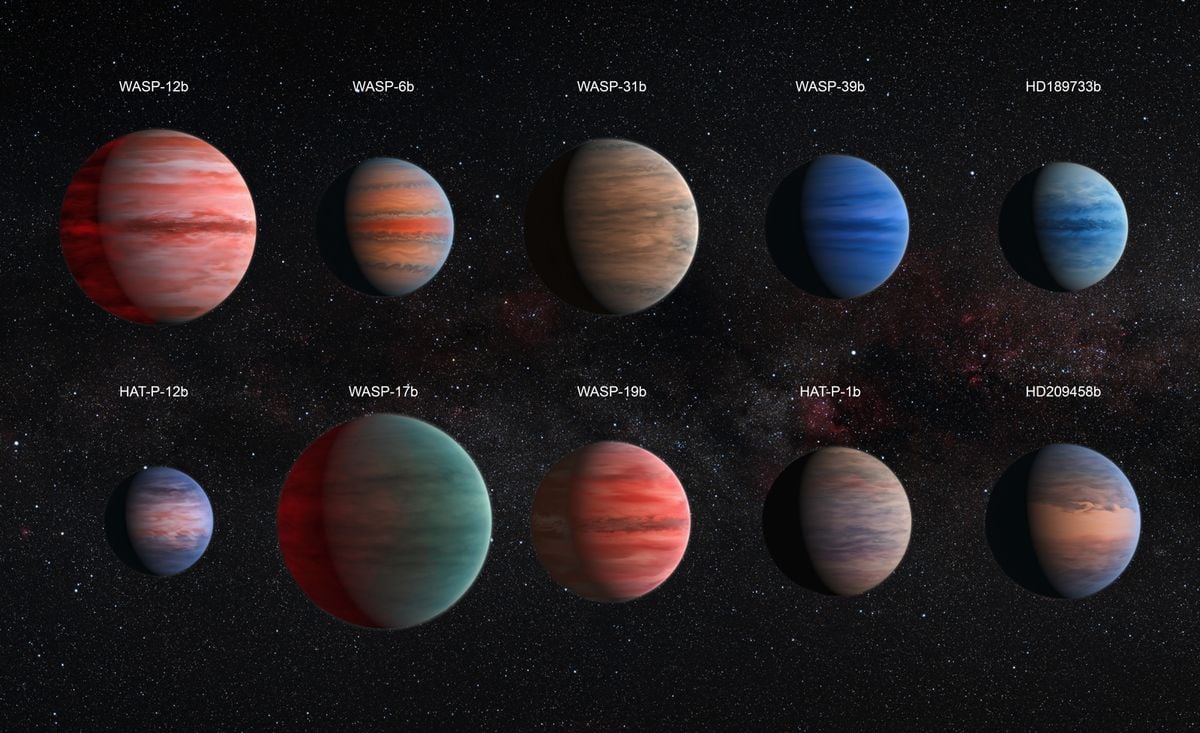
Astronomers have uncovered that double hot Jupiters, rare gas giant exoplanets orbiting each star in binary systems, may form through a natural process called ZLK migration, where gravitational interactions cause planets to migrate inward, challenging previous theories of planet formation.
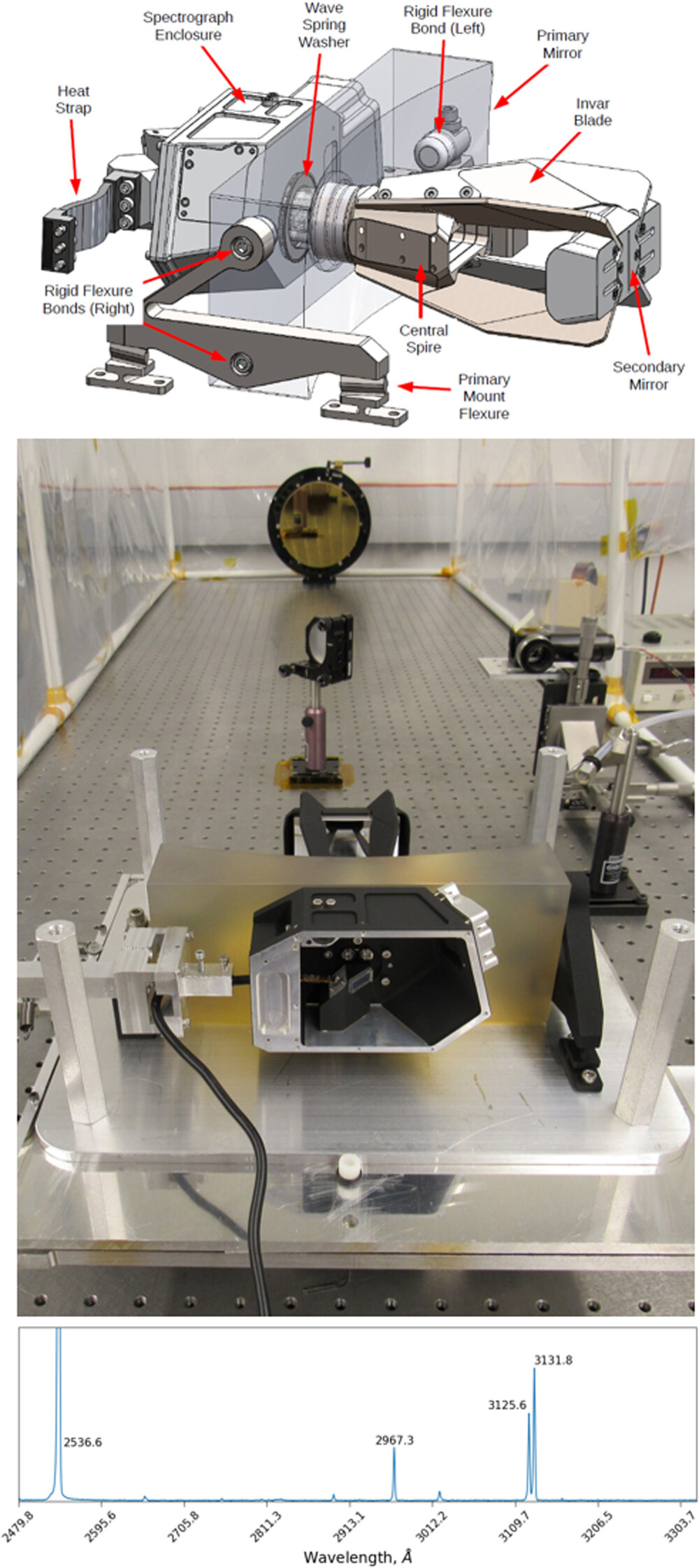
The Colorado Ultraviolet Transit Experiment (CUTE) satellite, a small cubesat, has observed the atmospheres of seven "hot Jupiters" and found variations in their evaporation rates. Hot Jupiters are gas giants that orbit close to their stars, causing their atmospheres to expand and become more susceptible to being blown away by radiation winds. CUTE detected different rates of atmospheric loss among the studied exoplanets, with some losing material rapidly while others showed no detectable gas loss. The findings could provide insights into the processes of atmospheric loss on both large and small scales, including the evolution of smaller worlds like Mars.
The Colorado Ultraviolet Transit Experiment (CUTE), a small spacecraft the size of a cereal box, has provided precise measurements of the atmospheres of "hot Jupiters" - large, puffy planets that orbit close to their stars. Led by a team from the University of Colorado Boulder, the findings suggest that the process of atmospheric escape from these planets may be more complex than previously thought. The observations from CUTE have revealed that some hot Jupiters are losing their atmospheres while others are not. The mission aims to understand the diversity of planets in the universe and the physical processes operating on them.
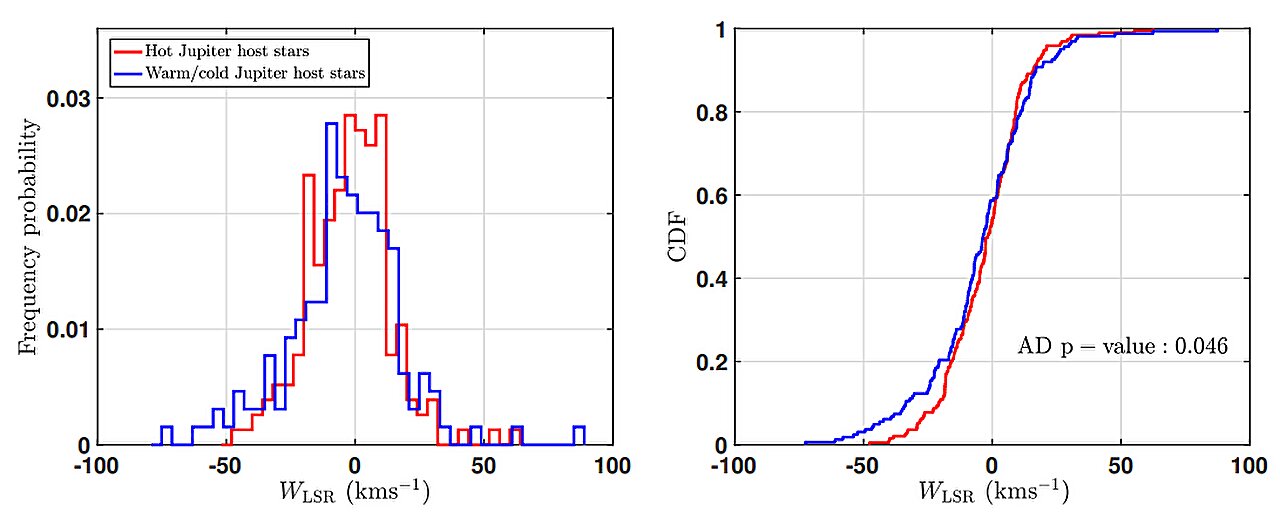
A study published in Proceedings of the National Academy of Sciences has found a correlation between the age of star systems and the frequency of hot Jupiters, large exoplanets that orbit close to their stars. The research team analyzed data for 383 Jupiter-sized exoplanets and found that hot Jupiters were more likely to be found around younger stars, with the frequency decreasing as star systems aged. The study also revealed that the frequency of hot Jupiters was related to the amount of metal in the host star, providing insights into the discrepancies between different exoplanet surveys.
Hot Jupiters, gas giants that orbit close to their host stars, are more common around younger stars because they don't live long enough to orbit older ones, according to a new study. The research suggests that hot Jupiters form early or migrate early in a star system's life. Older stars that once had hot Jupiters may have already consumed them. The study provides insights into how these gas giants form and offers a way to test models of planet formation.
A new study suggests that hot Jupiters, large gas giants that orbit their star in a matter of days, are rare around middle-aged Sun-like stars. The study analyzed a sample of 382 Sun-like stars and found that younger stars were more likely to have hot Jupiters than older stars. The researchers propose that hot Jupiter orbits destabilize over time, causing them to eventually be consumed by their star. This explains why our solar system, which is still in its middle age, does not have a hot Jupiter. The study highlights the uniqueness of our solar system and the need to explore a wider range of planetary systems to better understand the occurrence of different types of exoplanets.
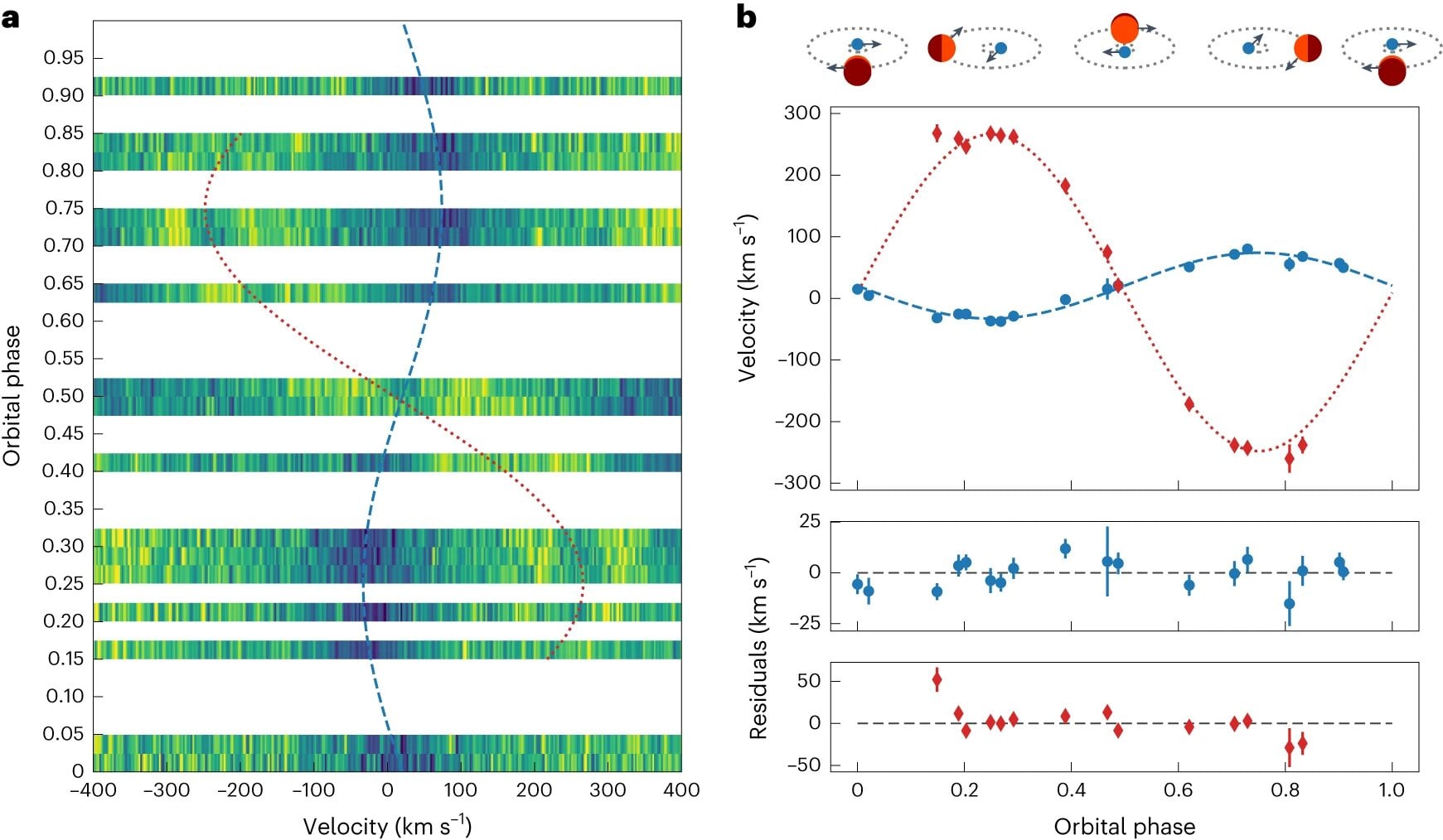
Scientists have discovered a binary system located 1,400 light years away that offers a unique opportunity to study hot Jupiters, a class of exoplanets that orbit very close to their stars and have extremely high surface temperatures. The system consists of a white dwarf and a brown dwarf, with the brown dwarf being the hottest ever found, about 2,000 degrees hotter than the surface of the sun. This discovery may provide insights into hot Jupiters' extreme conditions and the evolution of stars in binary systems.
Hot Jupiters, exoplanets that orbit their stars in 10 days or less, were thought to be solitary residents in their star systems. However, a new study analyzing data from NASA's Kepler Space Telescope found that 12% of known Hot Jupiters and up to 70% of warm Jupiters might have nearby planetary companions. The study used the transit timing variation method to detect worlds close to hot Jupiters that the transit method couldn’t spot. The presence of neighbor worlds around hot Jupiters is strong evidence that not all hot Jupiters have a violent history as was previously thought.
Research led by an Indiana University astronomer challenges the belief that hot Jupiters, gas giant planets that closely orbit stars outside our solar system, rarely have any nearby companion planets. The study analyzed the full, four-year data set for hot and warm Jupiters from NASA's Kepler Mission and found that at least 12% of hot Jupiters and 70% of warm Jupiters have a nearby planetary companion orbiting their host stars. The findings provide a new framework for explaining the evolution of hot and warm Jupiters and why some have companion planets.