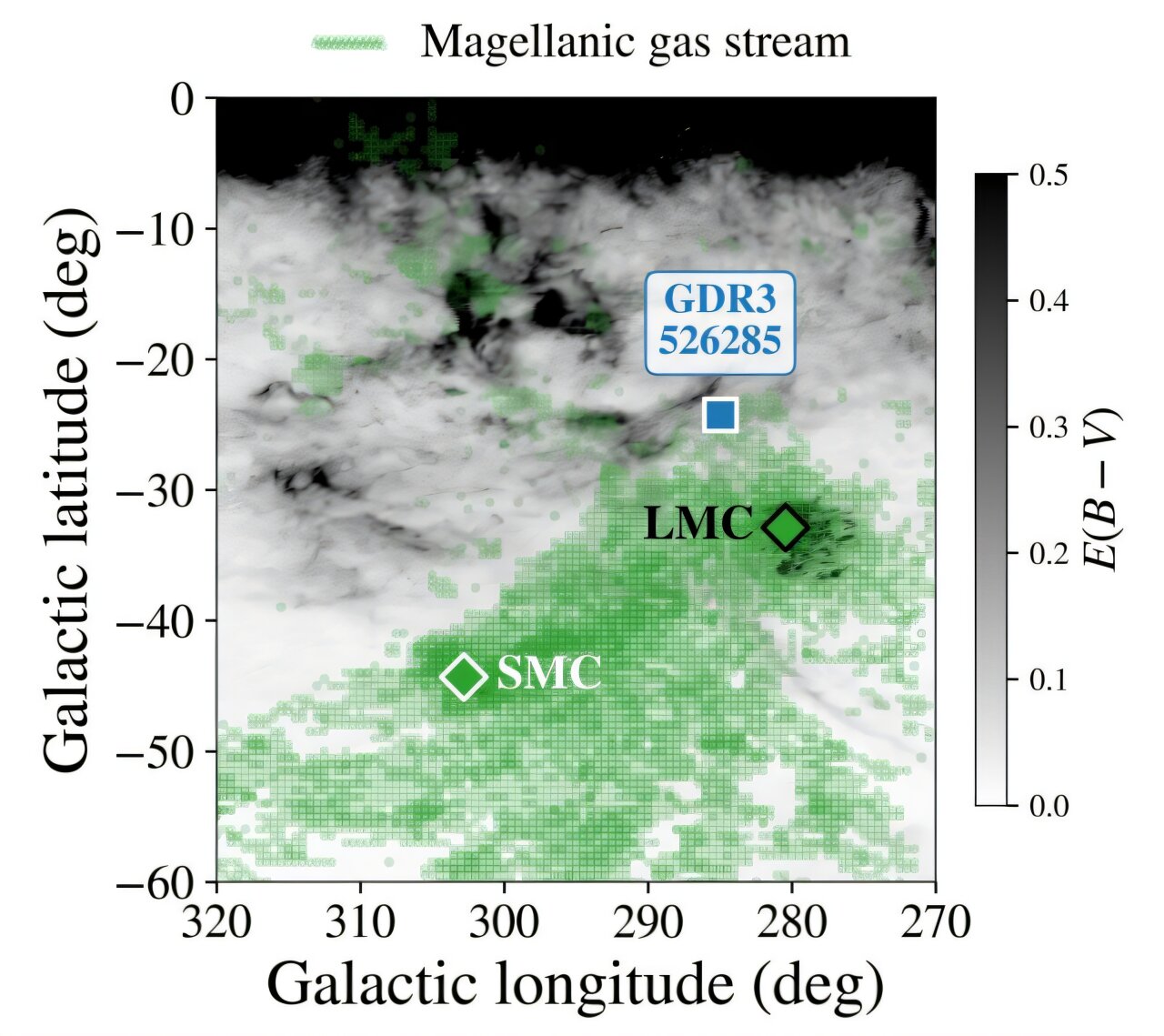
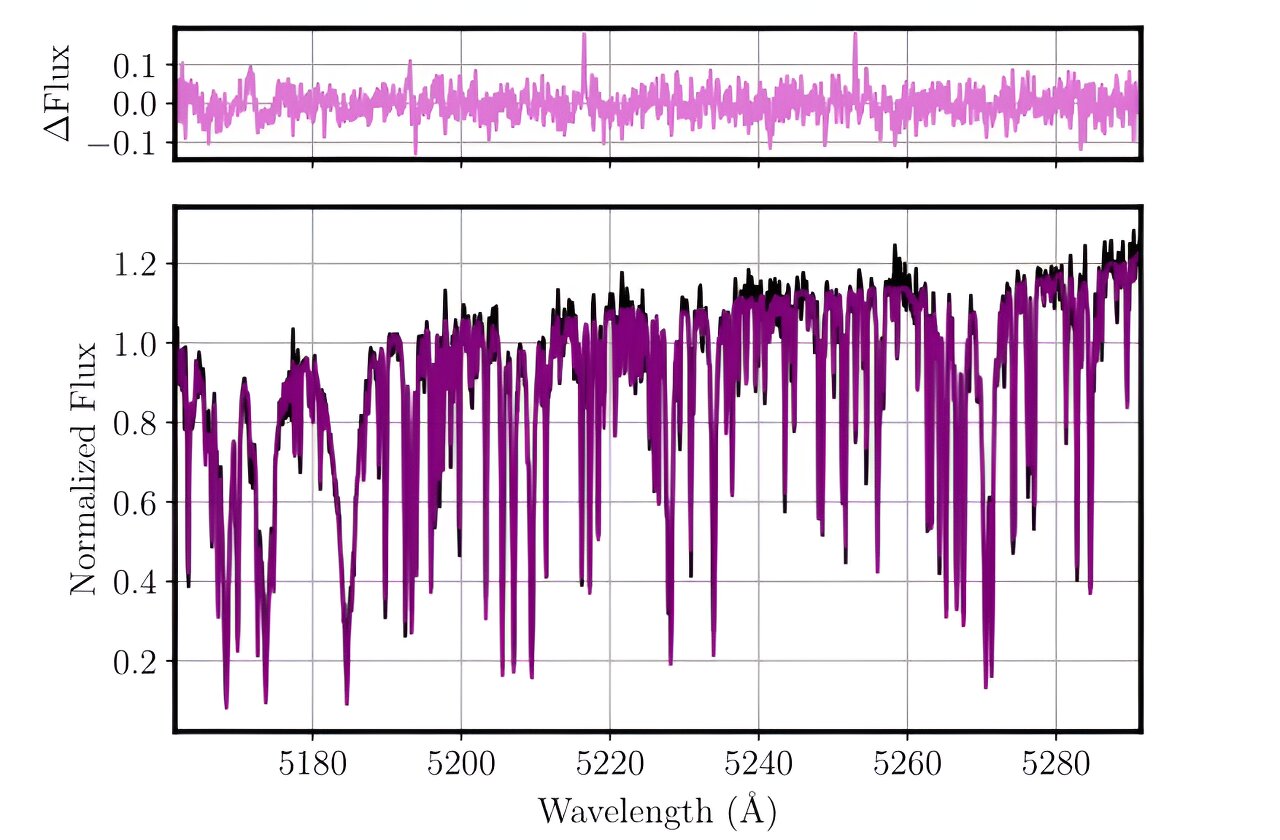
Astronomers using Gaia data have discovered GDR3_526285, an ultra-metal-poor star in the Milky Way's halo with one of the lowest iron abundances ever measured, providing insights into early universe conditions and possibly linked to the Magellanic Clouds.
Astronomers using ESA's Gaia satellite and the MMT Observatory have studied the peculiar stellar stream Theia 456, revealing it consists of about 2,100 stars with a total mass of approximately 900 solar masses. The stream, which formed as a low-density open cluster 245 million years ago, is expected to become undetectable in less than 100 million years due to its increasing dispersion.
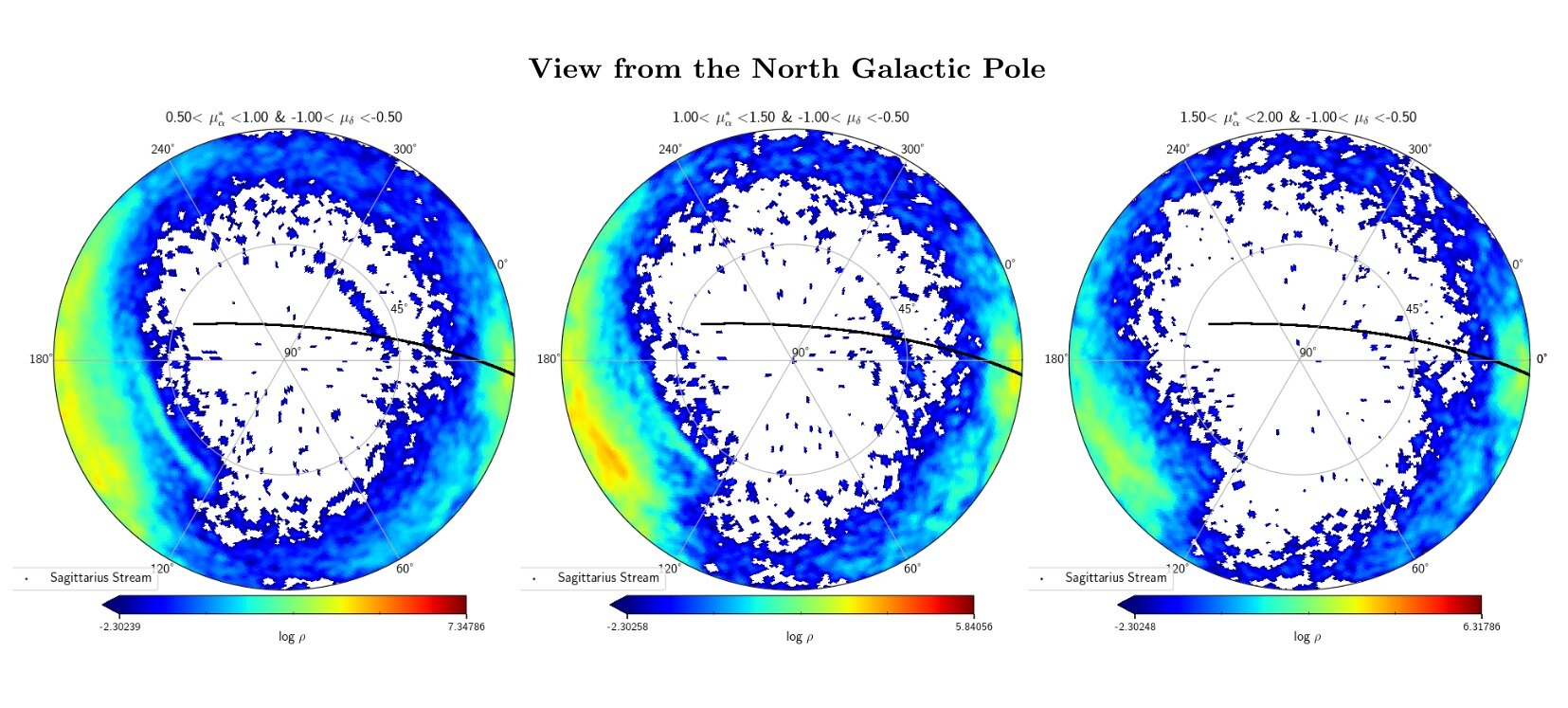
Chinese astronomers have used data from ESA's Gaia satellite to discover a new tidal stellar stream in the northern hemisphere of the Milky Way, characterized by low metallicity and high energy. The stream, approximately 80 degrees long and 1.7 degrees wide, was found at a high Galactic latitude and is associated with the merging event Sequoia. Further studies, particularly spectroscopic observations, are needed to better understand this newly detected stellar stream and its properties, with implications for the potential discovery of more such structures in the galaxy.
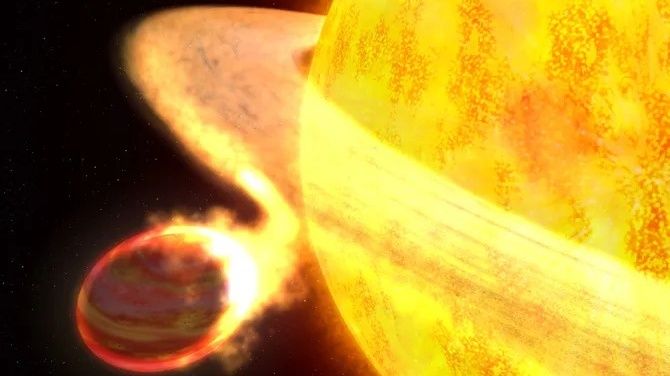
A new study suggests that about one in every 12 stars may have swallowed a planet, based on the analysis of 91 pairs of stars using the Gaia satellite and other telescopes. This finding challenges the assumption of stable planetary systems like our own solar system being the norm and raises questions about the stability of planetary systems. The research implies that planetary ingestion may occur during the normal lifetime of a star system, possibly due to rogue planets colliding with stars, and suggests that many planetary systems may be unstable.
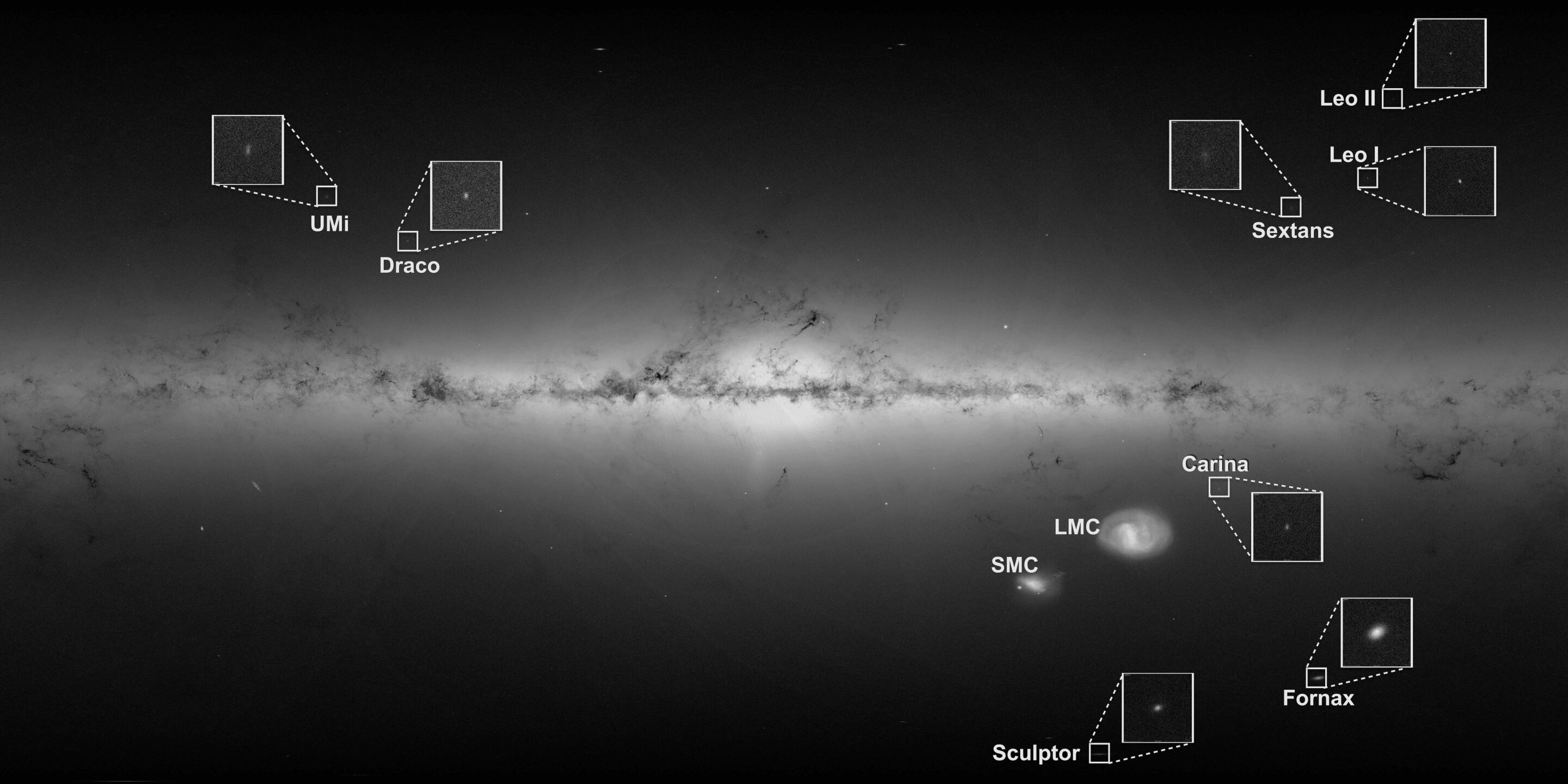
A new study using data from ESA's Gaia satellite challenges the long-held belief that dwarf galaxies surrounding the Milky Way are ancient satellites. Instead, the study suggests that most dwarf galaxies are recent arrivals and have undergone violent transformations, losing their gas and becoming out of equilibrium. This raises questions about the prevalence of dark matter in these dwarf galaxies and challenges the previous understanding of them as dark matter-dominated objects. Further research is needed to understand the implications of these findings and to determine the dark matter content of dwarf galaxies.
Researchers from the University of Leeds have discovered evidence suggesting that massive Be stars, known for their gas discs, are likely part of triple star systems rather than binary systems. This finding challenges existing theories on star formation and has implications for understanding black holes, neutron stars, and gravitational waves. The study, based on data from the Gaia satellite, reveals that the Be stars have a lower rate of companions than B stars, but further analysis suggests that a third star is involved, forcing the companion closer to the Be star and allowing mass transfer to form the characteristic gas disc. This discovery could revolutionize our understanding of stellar evolution and other astronomical phenomena.
Astronomers are using individual stars to map the structures and history of the Milky Way. The first major effort to study the galaxy's formation began in the 1960s, but new data from the Gaia satellite has revealed surprising findings. The Milky Way's bulge is peanut-shaped and part of a larger bar, the galaxy itself is warped, and the thick disk is flared. The number of spiral arms and the overall structure of the galaxy are still being debated. This new understanding challenges the traditional view of the Milky Way as a simple and well-ordered galaxy.
A recent study suggesting that the white dwarf WD 0810-353 would disrupt comets in the Solar System has been debunked by new research. The study, titled "Not So Fast, Not So Furious: Just Magnetic," concludes that WD 0810-353 is not coming as close as previously thought, and its apparent movement is due to its powerful magnetic field. The star is now believed to be moving at a much slower speed, reducing the likelihood of it disturbing comets in the future.
Astronomers are reimagining the formation and growth of the Milky Way by studying its uneven shape and ability to form planets. Using data from the Gaia satellite, astronomers have discovered that the Milky Way is not as neat and calm as previously thought. The galaxy's bulge is peanut-shaped and part of a larger bar, while the galaxy itself is warped. The thick disk is flared and may have formed before the halo. Astronomers are uncertain about the number of spiral arms the galaxy has. The Milky Way's spiral arms, including the Perseus and Norma arms, are more similar to other distant galaxies than previously believed.
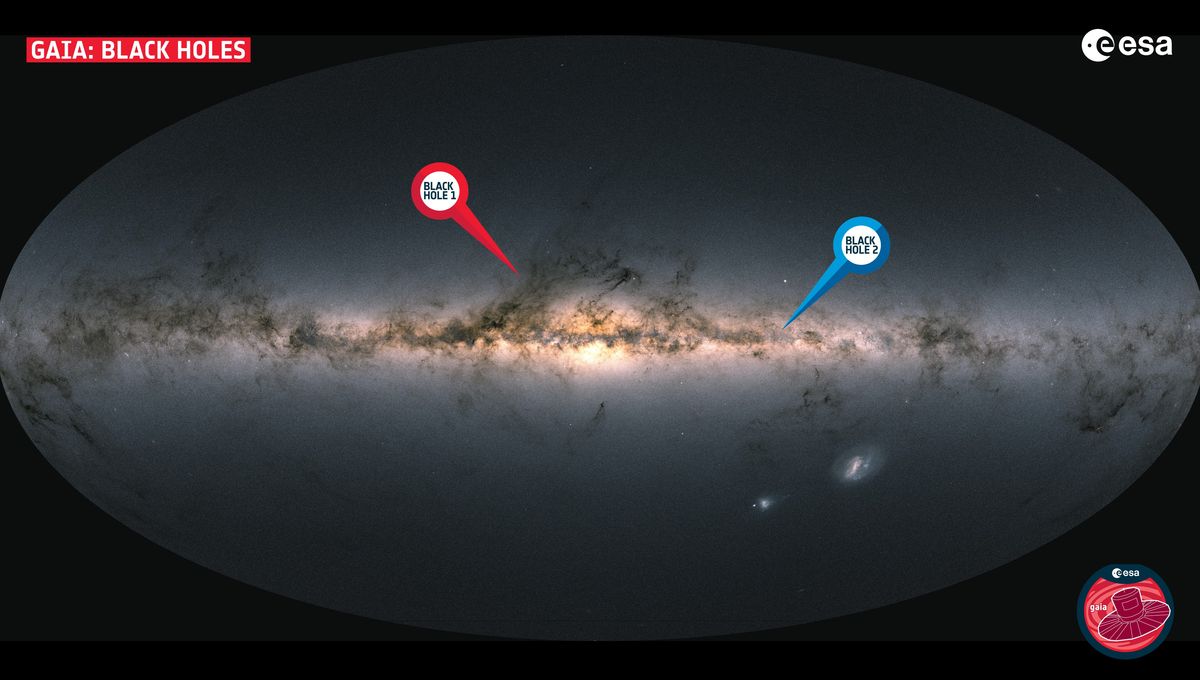
A study published in the Monthly Notices of the Royal Astronomical Society suggests the presence of black holes in the Hyades star cluster, which is the closest open cluster to our solar system. Using simulations and data from the Gaia satellite, researchers found that the properties of the Hyades cluster are best explained by the presence of two or three black holes. These black holes would be the closest ever detected to Earth, surpassing the previous candidate, Gaia BH1. The study provides insights into the distribution of black holes in the galaxy and their impact on star cluster evolution and gravitational wave sources.
Researchers have discovered an older, evolved star known as an asymptotic giant branch (AGB) passing through a young star-forming region, challenging previous assumptions. These retired AGB stars produce Aluminum-26 and Iron-60, which were delivered to our young solar system and are believed to have played a role in heating the early Earth and contributing to plate tectonics. The finding suggests that other sources, such as winds and supernovae of massive stars, may not be necessary to explain the origin of these chemical elements in our solar system. Further research will focus on identifying other evolved stars in young star-forming regions to determine their prevalence.
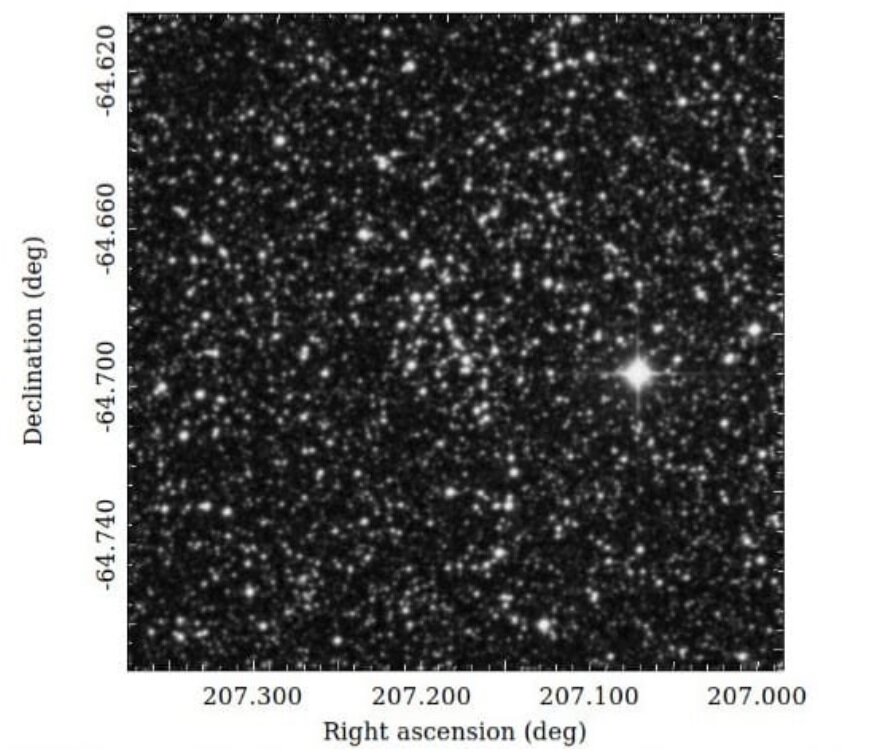
Indian astronomers have used data from ESA's Gaia satellite and the Two Micron All Sky Survey (2MASS) to investigate the properties of the poorly studied galactic open cluster NGC 5288. They identified 304 cluster members and estimated the cluster's fundamental properties, structure, and galactic orbit. The study found that NGC 5288 is approximately 510 million years old and located 9,000 light years away. The cluster is dynamically relaxed and moves in a circular orbit near the galactic disk.
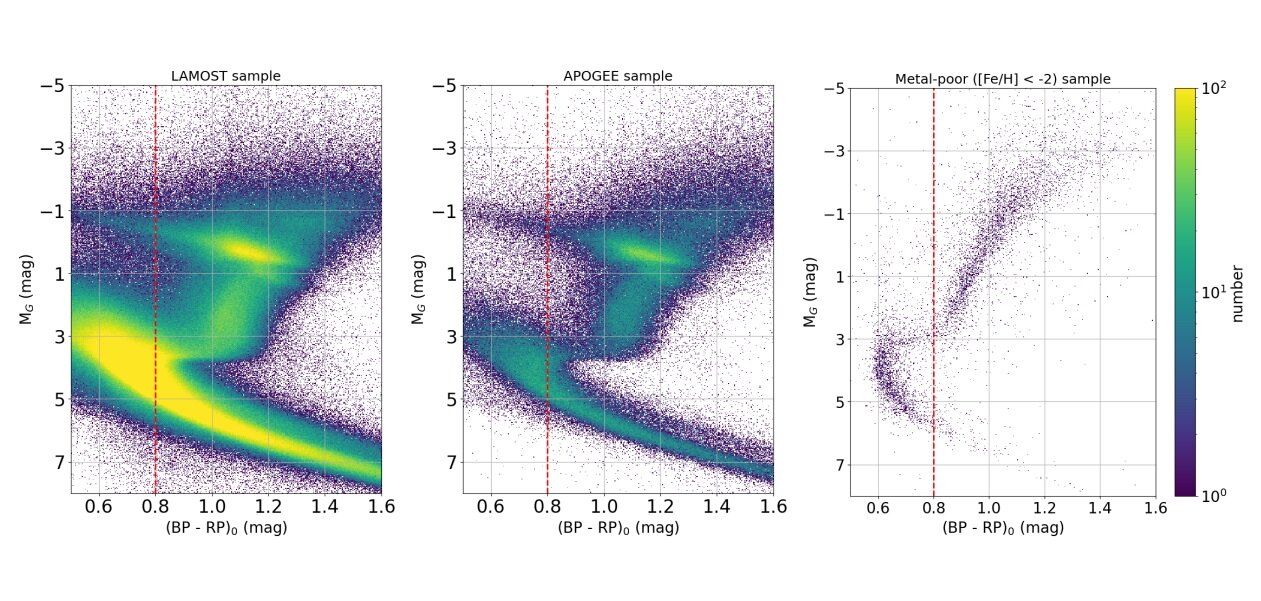
Astronomers have identified 188,002 candidate metal-poor stars by analyzing data from various astronomical surveys, including the Gaia satellite, LAMOST, and APOGEE. The discovery may help us better understand the chemical evolution of the universe. The team used the XGBoost algorithm to identify metal-poor stars in Gaia DR3 and obtained three corresponding candidate metal-poor star catalogs. The researchers managed to identify 127,096 bright and 60,906 faint candidate metal-poor stars in the Milky Way galaxy, which is around an order of magnitude larger than that from previous studies.
The Gaia satellite has discovered two of the closest black holes to Earth, named Gaia BH1 and Gaia BH2, which may be a new class of black holes due to their wide separation from their companion stars. Unlike X-ray binaries, the two black holes have a completely different formation history. The black holes were found by spotting the tiny wobble of their companion stars while orbiting around them. The mass of the black holes is about 10 times that of our Sun but they are on orbits much wider than has been seen in other X-ray binaries. The study is published in Monthly Notices of the Royal Astronomical Society.