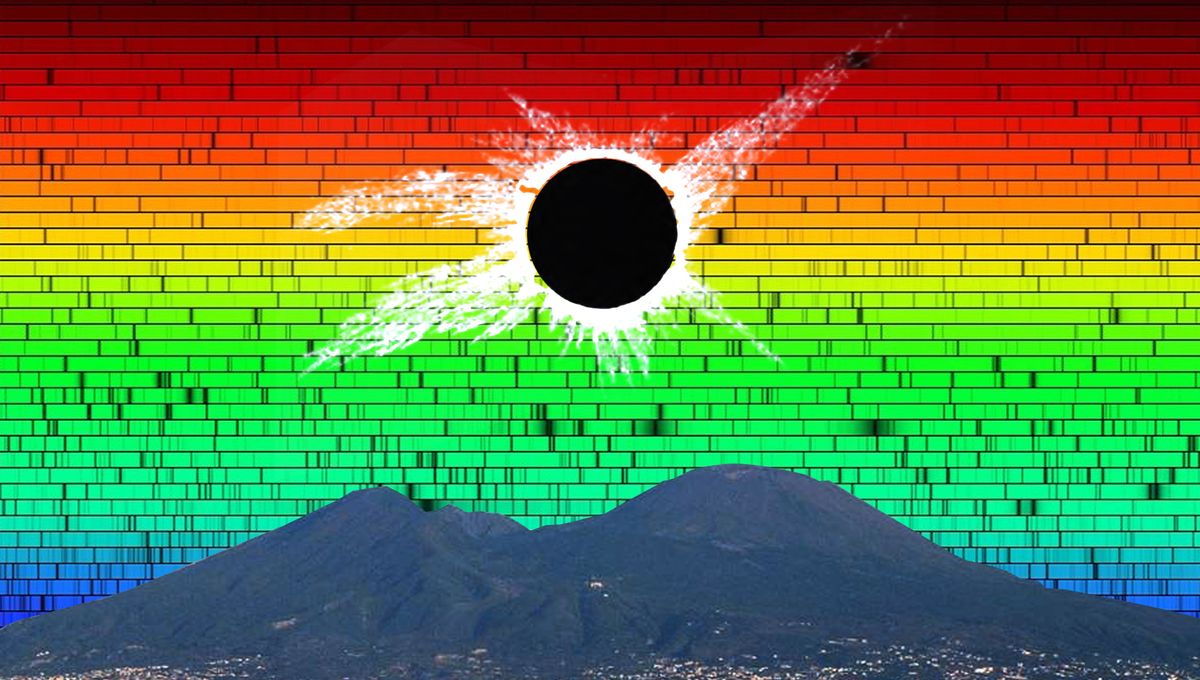
The article recounts the discovery of helium, the second most abundant element in the universe, which was first identified during the 1868 solar eclipse through spectral analysis and later found on Earth in volcanic emissions from Mount Vesuvius, highlighting its cosmic and terrestrial significance.
The James Webb Space Telescope and other observatories detected a massive explosion in space, known as GRB 230307A, which was over one million times brighter than the Milky Way Galaxy combined. This explosion, resulting from the merger of two neutron stars, created a rare kilonova and released chemical elements, including tellurium, which is used in various manufacturing processes. The James Webb Space Telescope's ability to study such stellar explosions provides valuable insights into the formation of chemical elements and the evolution of the universe.
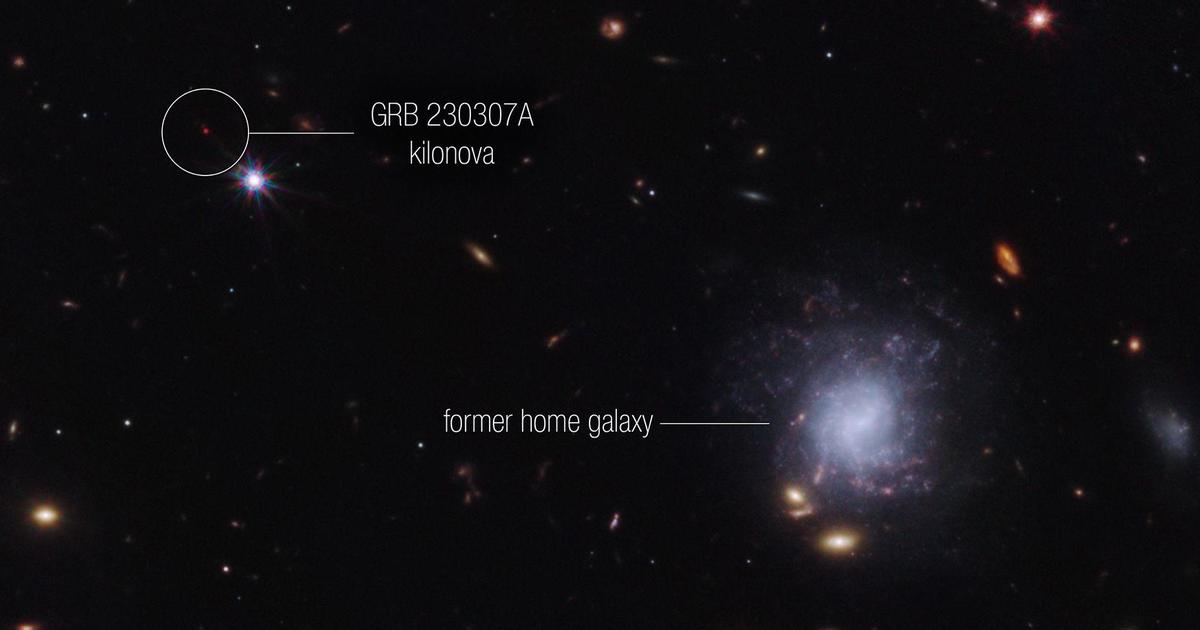
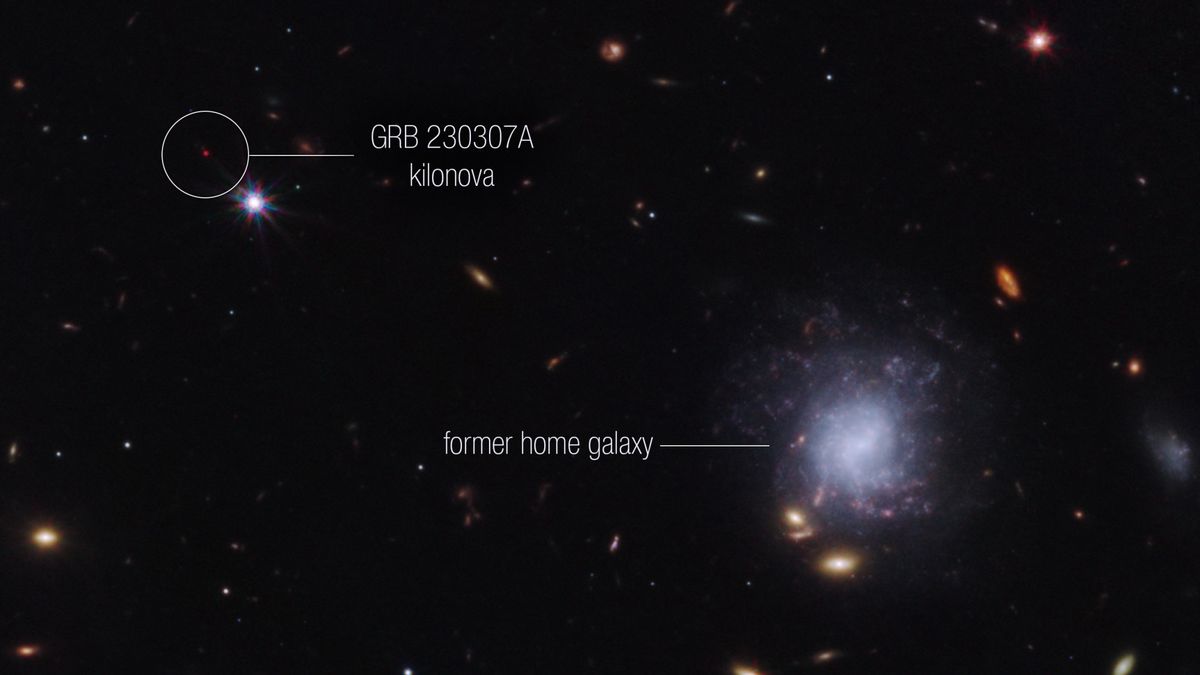
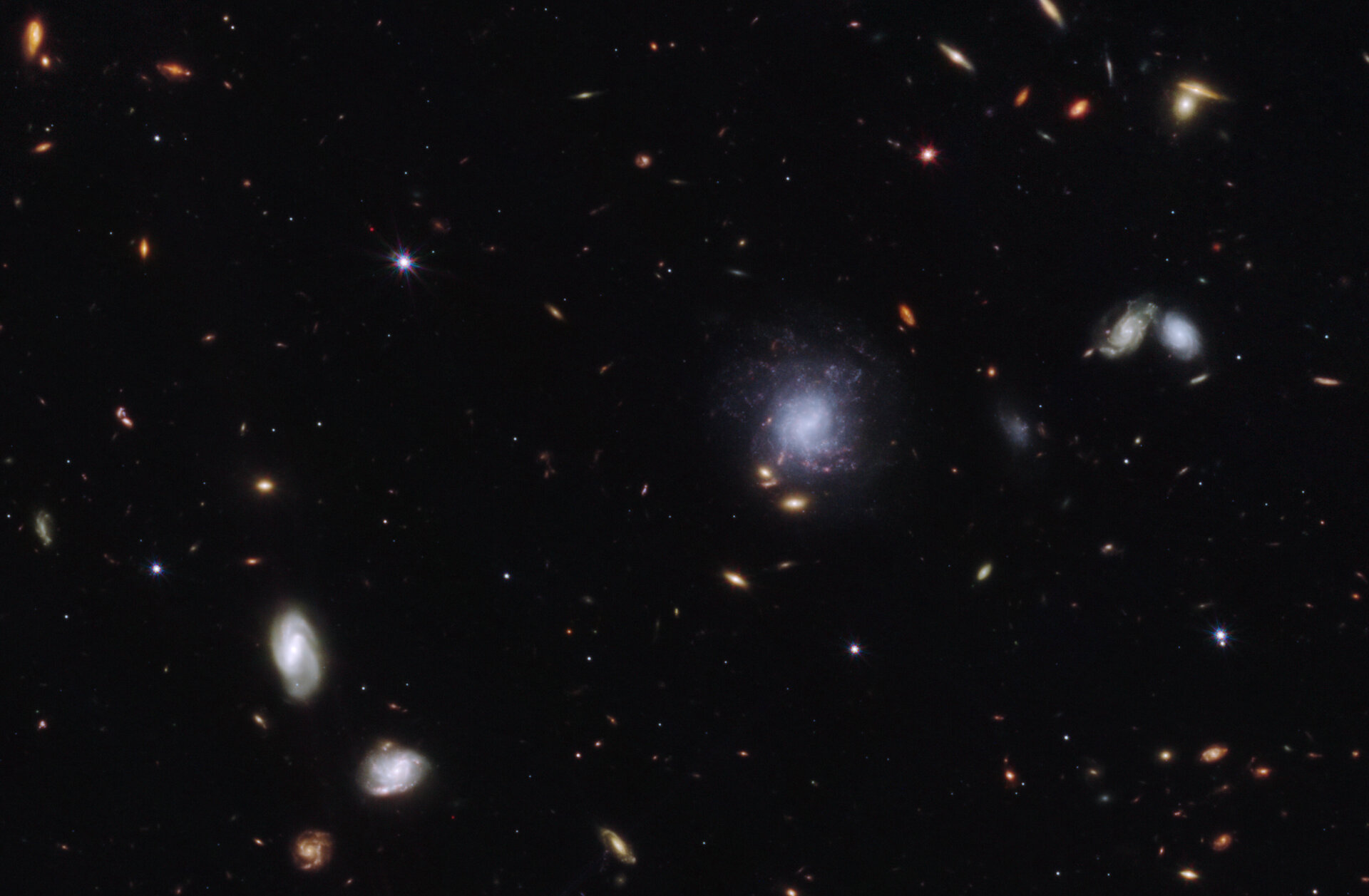
The James Webb Space Telescope (JWST) has detected the rare chemical element tellurium in the aftermath of a kilonova explosion caused by the merger of two neutron stars. The discovery could provide insights into the creation of precious chemical elements in the universe. The neutron stars were initially part of their home galaxy before being kicked out and traveling a distance of about 120,000 light-years. The JWST's observations of the aftermath of the merger helped identify tellurium, marking a significant milestone in its mission.
The James Webb Space Telescope has detected the chemical element tellurium in the aftermath of a kilonova, an explosion resulting from the merging of two neutron stars. This discovery brings scientists closer to understanding the creation of valuable and life-sustaining elements in the Universe. The observations from multiple telescopes also revealed that the neutron stars responsible for the kilonova were once part of a binary system in a spiral galaxy located 120,000 light-years away. The findings, published in the journal Nature, highlight the transformative capabilities of the Webb telescope in advancing our understanding of the Universe.
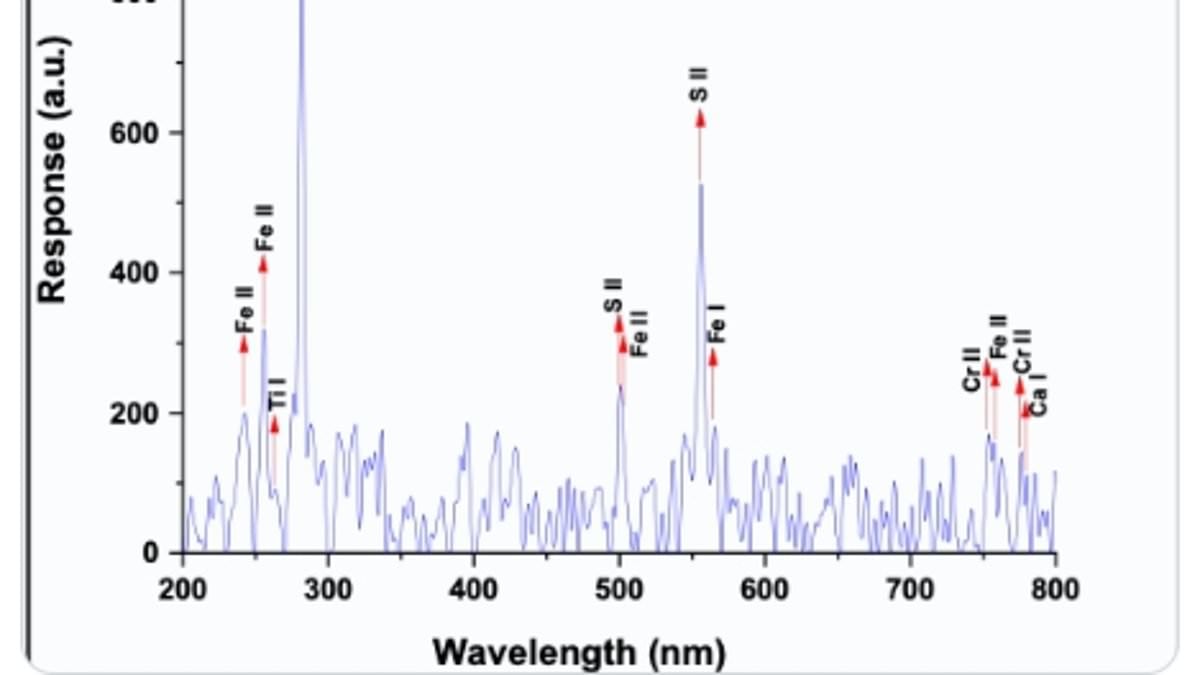
India's Chandrayaan-3 lunar rover has made history by detecting chemical elements, including sulphur, on the moon's south pole. This marks the first time sulphur has been found 'in situ' on the moon's surface. The rover has also discovered aluminium, calcium, iron, chromium, titanium, manganese, silicon, and oxygen, with the search for hydrogen ongoing. The findings have important implications for understanding the moon's evolution and could provide valuable resources for future lunar missions. Chandrayaan-3's mission is expected to last for one lunar day (14 Earth days) before the instruments lose power.
Researchers have discovered an older, evolved star known as an asymptotic giant branch (AGB) passing through a young star-forming region, challenging previous assumptions. These retired AGB stars produce Aluminum-26 and Iron-60, which were delivered to our young solar system and are believed to have played a role in heating the early Earth and contributing to plate tectonics. The finding suggests that other sources, such as winds and supernovae of massive stars, may not be necessary to explain the origin of these chemical elements in our solar system. Further research will focus on identifying other evolved stars in young star-forming regions to determine their prevalence.
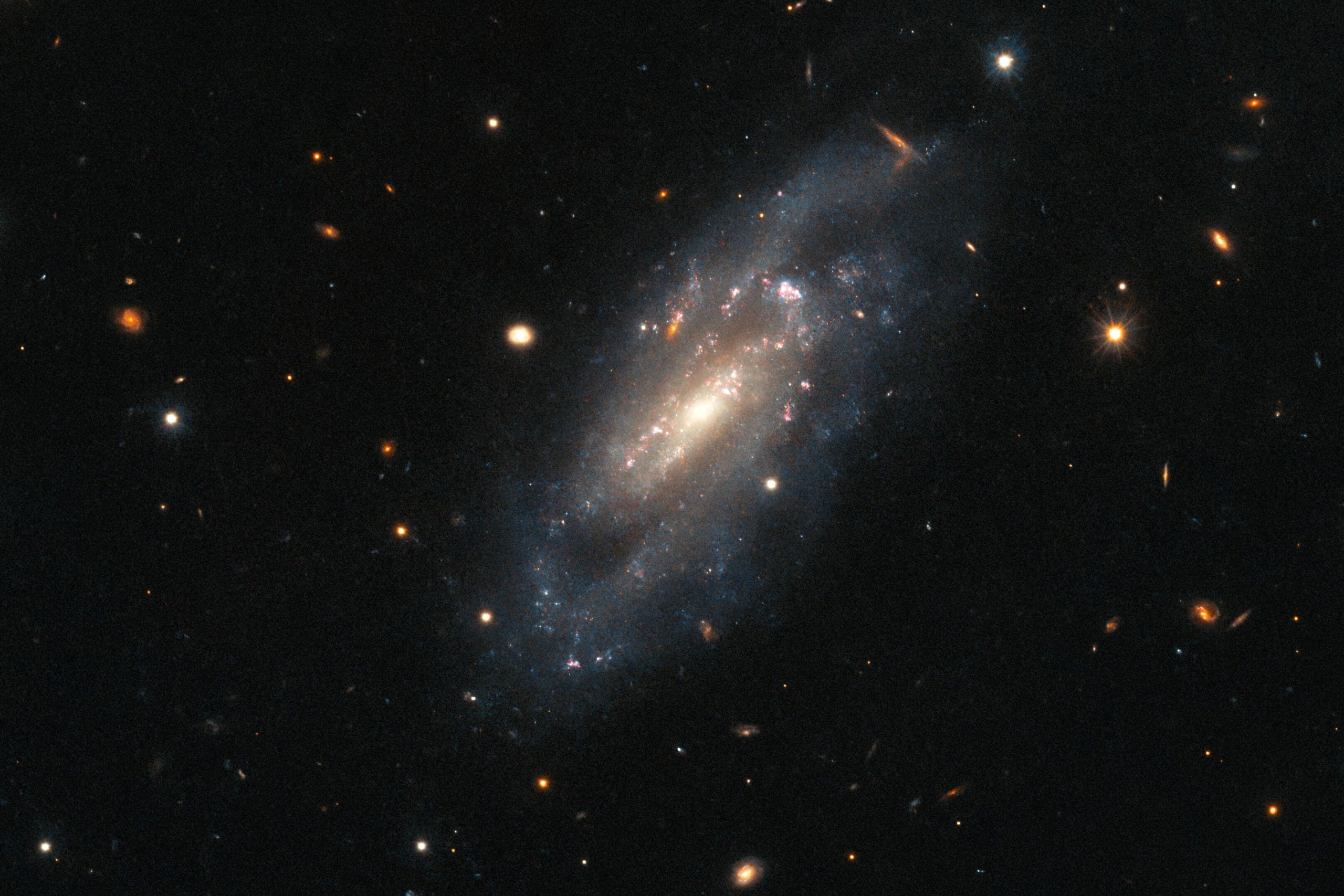
Two teams of astronomers have studied a supernova explosion detected in the spiral galaxy UGC 11860 in 2014 using the Hubble Telescope. The findings provide insights into the origins of chemical elements on Earth and highlight the value of robotic telescopes in identifying transient astronomical phenomena. Understanding the masses and compositions of progenitor star systems is crucial in explaining the origins of many chemical elements on Earth. Robotic telescopes play a significant role in detecting and capturing transient events in the night sky, allowing for further investigation by powerful telescopes like Hubble.
Astronomers are studying a spiral galaxy in the constellation Pegasus to better understand the aftermath of supernovas on star systems. The Hubble Space Telescope captured an image of the galaxy, UGC 11860, to study the remnants of a supernova explosion. Supernovas are responsible for creating elements like carbon and spreading metals across interstellar space, which contribute to the formation of new stars and planets. The research aims to understand the influence of the masses and compositions of progenitor star systems in the creation of chemical elements on Earth.
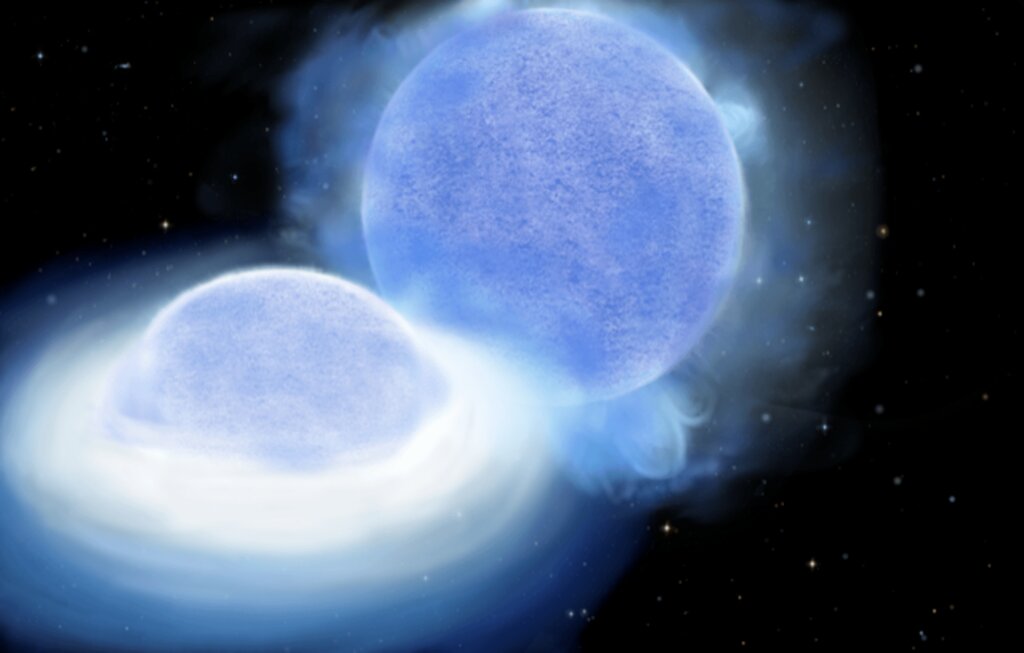
Researchers have discovered the first "stripped" star of intermediate-mass, filling a missing link in our understanding of stellar evolution. These stripped stars, which have lost most of their outer layers, are crucial for understanding the origin of heavy elements. The discovery was made by studying a binary system consisting of an intermediate-mass stripped star and a fast rotating companion. The system is located in a metal-poor galaxy, providing insights into the chemical evolution of the universe. The findings suggest that these stripped stars may retain a small amount of hydrogen, making them appear larger and cooler than expected. The discovery sheds light on the formation of double neutron star merger events, which are important for understanding the origin of elements like silver and gold.
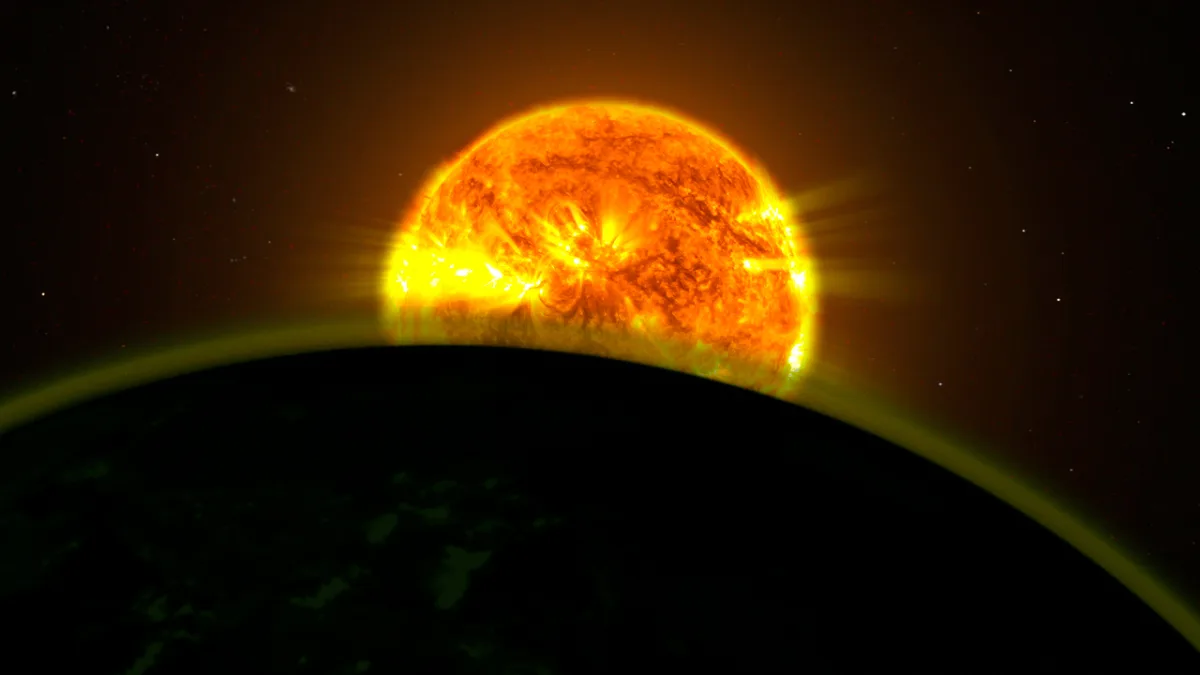
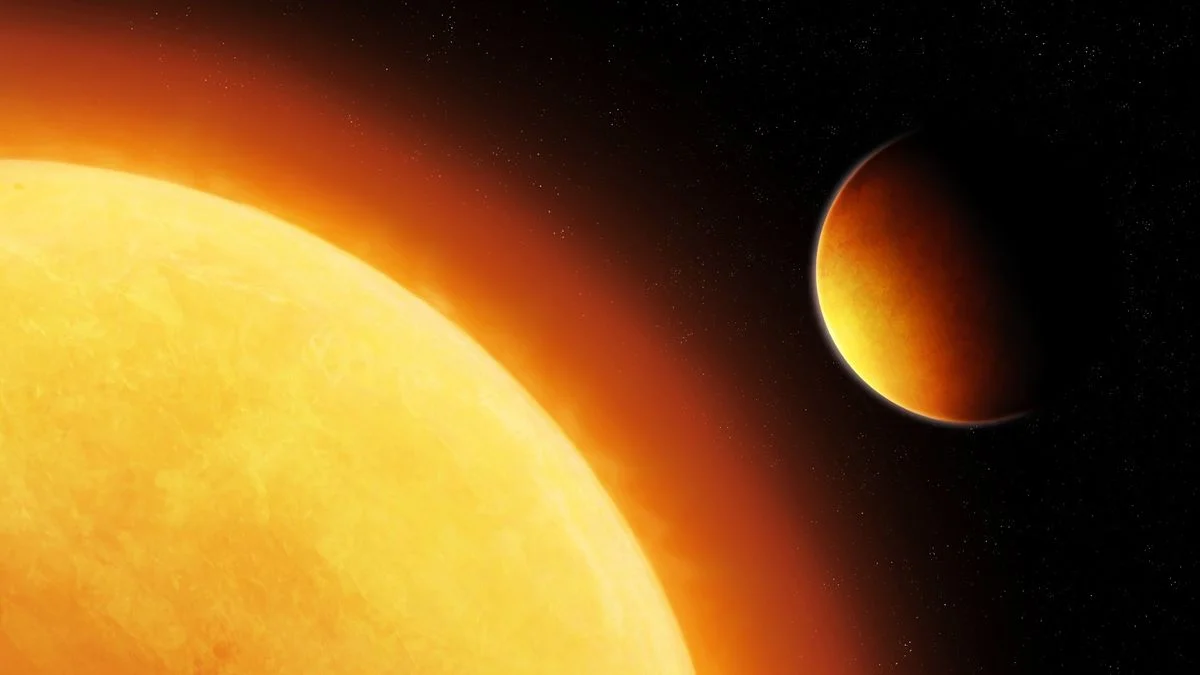
Astronomers have discovered that the ultra-hot Jupiter exoplanet, WASP-76 b, has a similar composition to its star, with the same abundances of elements heavier than hydrogen and helium. The team identified 11 chemical elements in the atmosphere of the planet, some of which haven't even been measured in the solar system gas giants Saturn and Jupiter yet. The planet's proximity to its parent star causes temperatures to soar to around 4,350 degrees Fahrenheit, hot enough to vaporize iron. The team also found a higher abundance of nickel than expected around WASP-76 b, which could imply that at some point in its history, the gas giant planet swallowed a smaller terrestrial world similar to Mercury that was rich with the element.
Astronomers have discovered that the ultra-hot exoplanet WASP-76 b has an atmosphere of vaporized rock, with temperatures soaring to around 4,350 degrees Fahrenheit. The team identified 11 chemical elements in the planet's atmosphere, some of which haven't even been measured in the solar system gas giants Saturn and Jupiter yet. The abundance of elements like manganese, chromium, magnesium, vanadium, barium, and calcium match closely with the quantities found in the sun, indicating that the composition of the planet is similar to the protoplanetary disk of material that collapsed to birth it. The team also discovered that certain elements in the atmosphere of WASP-76 b appeared to be "depleted," and the planet contains a chemical compound called vanadium oxide, which can have a big impact on hot giant planets.
The James Webb Space Telescope has helped astronomers detect the first chemical signs of supermassive stars, which are celestial monsters blazing with the brightness of millions of Suns in the early universe. The team of European researchers behind the study previously theorised the existence of supermassive stars in 2018 in an attempt to explain one of the great mysteries of astronomy. They found the chemical signs in the galaxy GN-z11, which is more than 13 billion light years away.
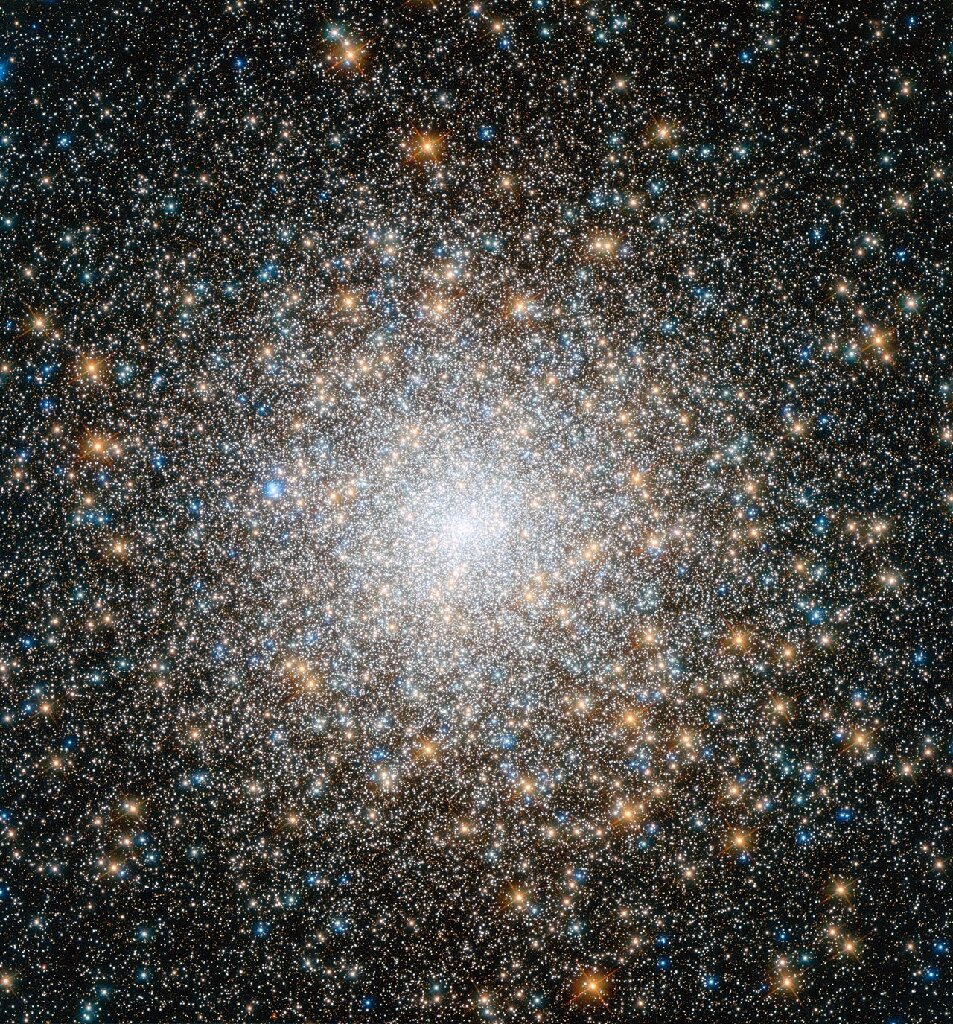
The James Webb Space Telescope has detected the first chemical signs of supermassive stars, which are "celestial monsters" that blaze with the brightness of millions of Suns in the early universe. The largest stars observed so far have a mass of around 300 times that of our Sun, but the supermassive star described in a new study has an estimated mass of 5,000 to 10,000 Suns. The researchers theorize that these huge stars are born from successive collisions in the tightly packed globular clusters, and they shoot out chemical "pollution" that feeds young forming stars, giving them a greater variety of chemicals.