Tag

Chemical Evolution

All articles tagged with #chemical evolution

"Groundbreaking Phospholipid Discovery Alters Origin of Life Narrative"

Originally Published 1 year ago — by SciTechDaily

Featured image for "Groundbreaking Phospholipid Discovery Alters Origin of Life Narrative"
Source: SciTechDaily

A recent study by Scripps Research suggests that phosphorylation may have been crucial in developing complex, functional precursors to life on Earth about 4 billion years ago, enhancing our understanding of the origins of life and the early Earth’s chemical environment. The discovery of a new phospholipid provides insight into how protocells may have first formed and chemically progressed, shedding light on the emergence and evolution of life on early Earth. This finding lays the building blocks for understanding the origins of life and how life can evolve on early Earth.


"Uncovering the Formation of Earth's First Cells: A Breakthrough in Scientific Discovery"

Originally Published 1 year ago — by indy100

Featured image for "Uncovering the Formation of Earth's First Cells: A Breakthrough in Scientific Discovery"
Source: indy100

Scientists at The Scripps Research Institute in California have proposed a groundbreaking explanation for the emergence of protocells, the precursors to modern living cells, on early Earth. Their findings suggest that phosphorylation, a key chemical process, occurred earlier than previously thought, leading to the formation of more stable protocells capable of diverse functionalities. By mimicking prebiotic conditions, the researchers demonstrated how fatty acids and glycerol may have undergone phosphorylation to create these protocells, shedding light on the chemical environments of early Earth and the origins of life.

Unraveling the Mystery of Earth's First Cells

Originally Published 1 year ago — by indy100

Featured image for Unraveling the Mystery of Earth's First Cells
Source: indy100

Scientists at The Scripps Research Institute in California have proposed a groundbreaking explanation for the emergence of protocells, the precursors to modern living cells, on early Earth. Their findings suggest that phosphorylation, a key chemical process, occurred earlier than previously thought, leading to the formation of more stable and complex protocells capable of harboring chemical reactions and dividing with a diverse range of functionalities. By mimicking prebiotic conditions, the researchers demonstrated how fatty acids and glycerol may have undergone phosphorylation to create these protocells, shedding light on the chemical environments of early Earth and the origins of life.

"Breakthrough Discovery: Astronomers Uncover Nearly 100 Ultra-Metal-Poor Galaxies"

Originally Published 2 years ago — by Phys.org

Featured image for "Breakthrough Discovery: Astronomers Uncover Nearly 100 Ultra-Metal-Poor Galaxies"
Source: Phys.org

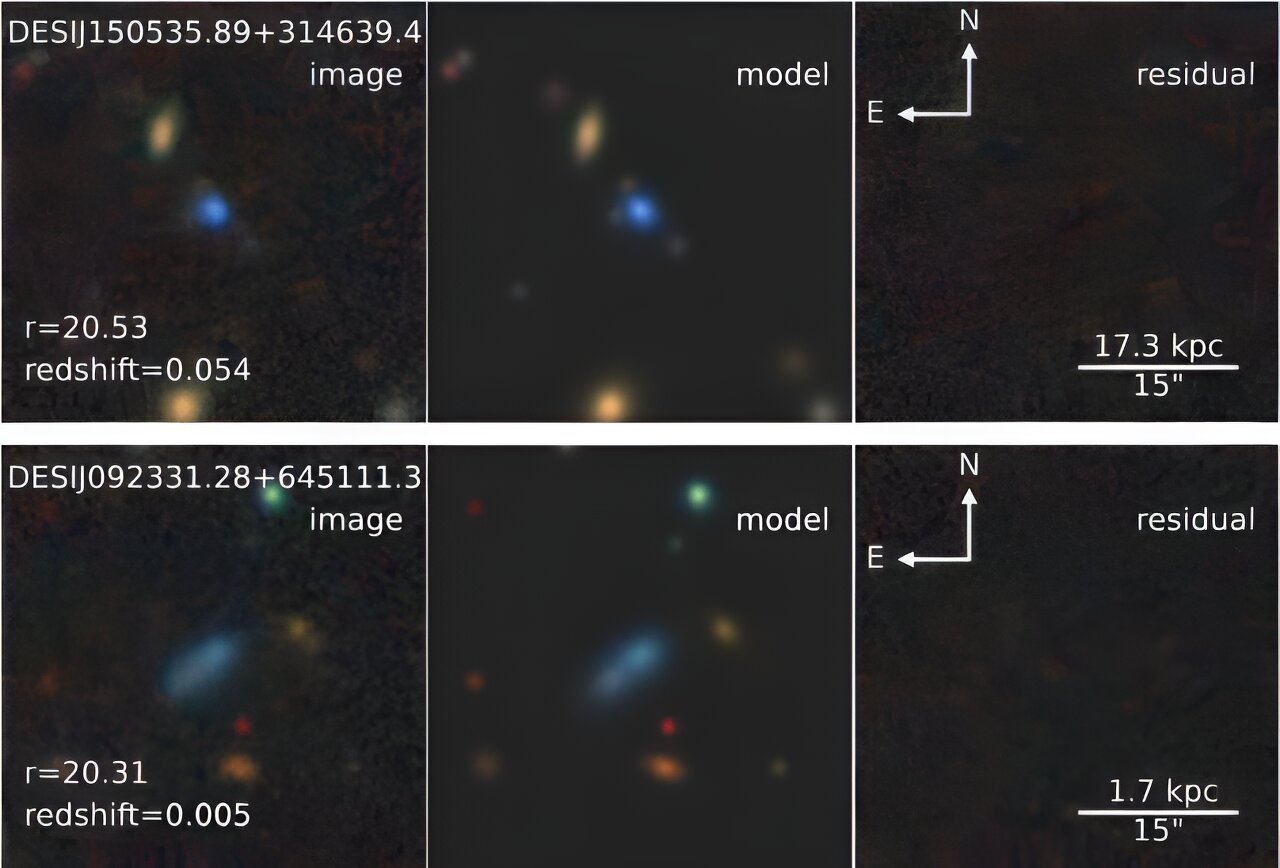
Astronomers using the Dark Energy Spectroscopic Instrument (DESI) have identified 95 new extremely metal-poor galaxies at a low redshift, providing valuable insights into the chemical evolution theories of galaxies and the early stages of their evolution. These galaxies, with metallicity below 0.1 of the solar metallicity, are difficult to observe due to their low masses. The findings suggest that these local extremely metal-poor galaxies could be analogs of primeval high-redshift young galaxies, making them excellent objects for studying the early universe.

Unveiling the Surprising Origins of Adolescent Galaxies and Supernovae

Originally Published 2 years ago — by SciTechDaily

Featured image for Unveiling the Surprising Origins of Adolescent Galaxies and Supernovae
Source: SciTechDaily

Astrophysicists using NASA's James Webb Space Telescope have discovered that teenage galaxies, formed 2-3 billion years after the Big Bang, exhibit high temperatures and unexpected elements like nickel. The research, part of the CECILIA Survey, provides new insights into the early stages of galactic development and offers a glimpse into the physics that shaped galaxies like the Milky Way. The presence of nickel, a rare and difficult-to-observe element, suggests unique conditions within these galaxies. The study also revealed that the teenage galaxies were hotter than expected, indicating a different chemical makeup compared to older galaxies.

"James Webb Space Telescope Uncovers Diamond-Like Carbon Dust in Ancient Stars"

Originally Published 2 years ago — by Yahoo! Voices

Featured image for "James Webb Space Telescope Uncovers Diamond-Like Carbon Dust in Ancient Stars"
Source: Yahoo! Voices

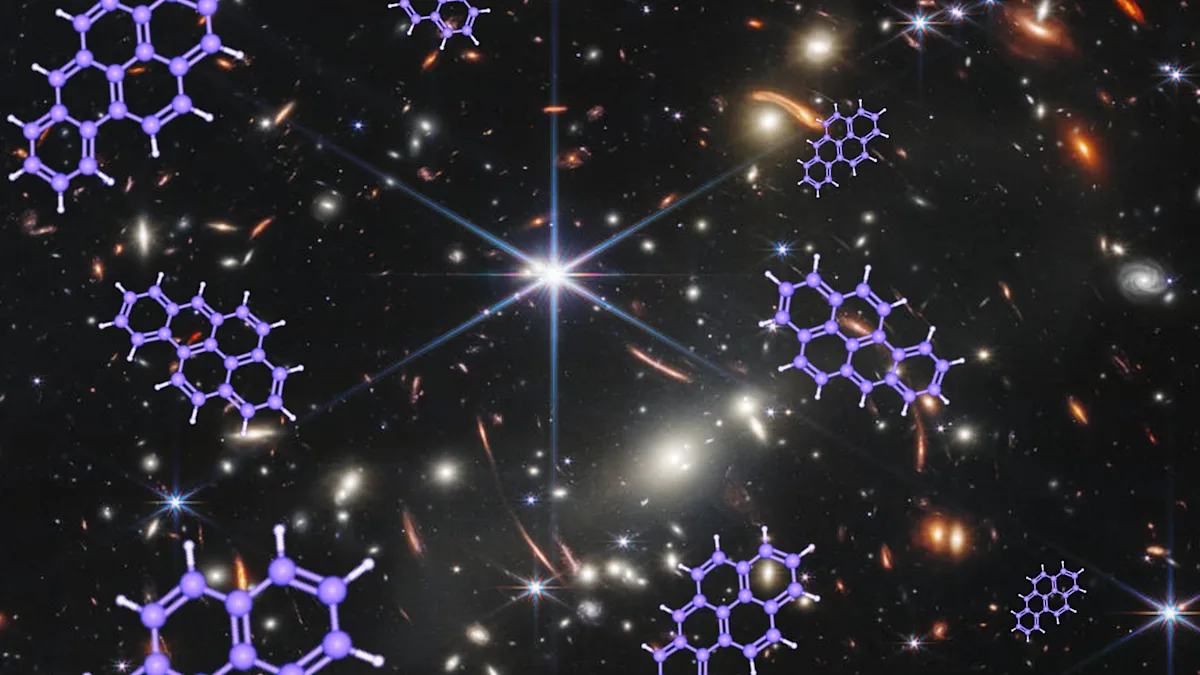
The James Webb Space Telescope (JWST) has made its first detection of carbon dust in ten different galaxies that existed as early as 1 billion years after the Big Bang. This discovery challenges conventional models of the universe's chemical evolution, as the presence of carbon dust in such young galaxies suggests a creation and dispersal method that works on a relatively short time scale. The findings highlight the capabilities of the JWST in observing and studying the early universe, and further research will explore the link between the carbon fingerprint and specific properties of galaxies.

"James Webb Space Telescope Uncovers Diamond-Like Carbon Dust in Ancient Stars"

Originally Published 2 years ago — by Space.com

Featured image for "James Webb Space Telescope Uncovers Diamond-Like Carbon Dust in Ancient Stars"
Source: Space.com

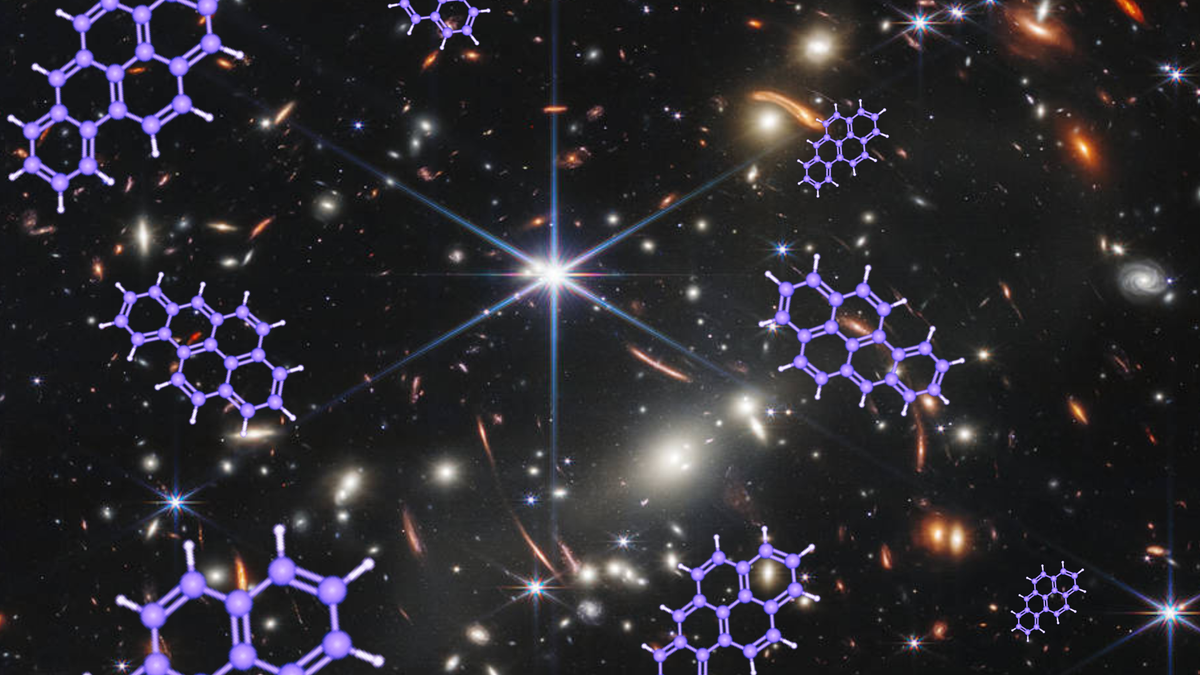
The James Webb Space Telescope has made its first detection of carbon dust in ten different galaxies that existed as early as 1 billion years after the Big Bang. This discovery challenges conventional models of the universe's chemical evolution, as the presence of carbon dust suggests a creation and dispersal method that works on a relatively short time scale. The findings highlight the capabilities of the JWST in observing distant galaxies and resolving features like carbon fingerprints. Further research will explore the link between the carbon fingerprint and specific properties of galaxies, as well as the astrophysical processes that produce carbon grains.

Astronomers discover 200,000 metal-poor stars.

Originally Published 2 years ago — by Phys.org

Featured image for Astronomers discover 200,000 metal-poor stars.
Source: Phys.org

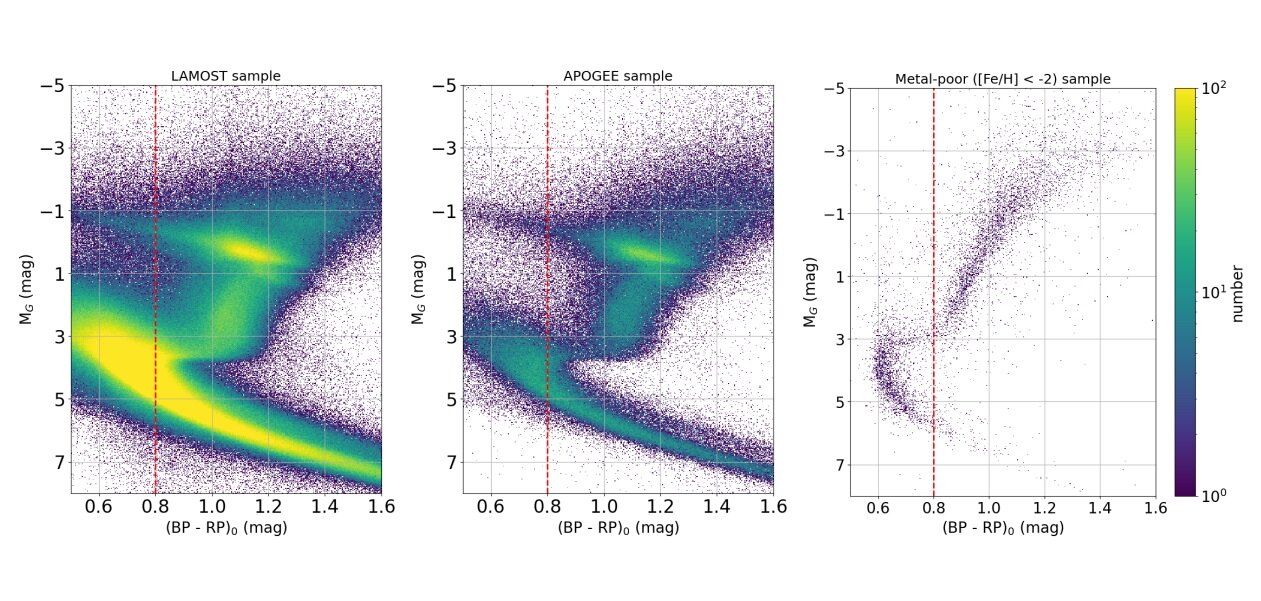
Astronomers have identified 188,002 candidate metal-poor stars by analyzing data from various astronomical surveys, including the Gaia satellite, LAMOST, and APOGEE. The discovery may help us better understand the chemical evolution of the universe. The team used the XGBoost algorithm to identify metal-poor stars in Gaia DR3 and obtained three corresponding candidate metal-poor star catalogs. The researchers managed to identify 127,096 bright and 60,906 faint candidate metal-poor stars in the Milky Way galaxy, which is around an order of magnitude larger than that from previous studies.