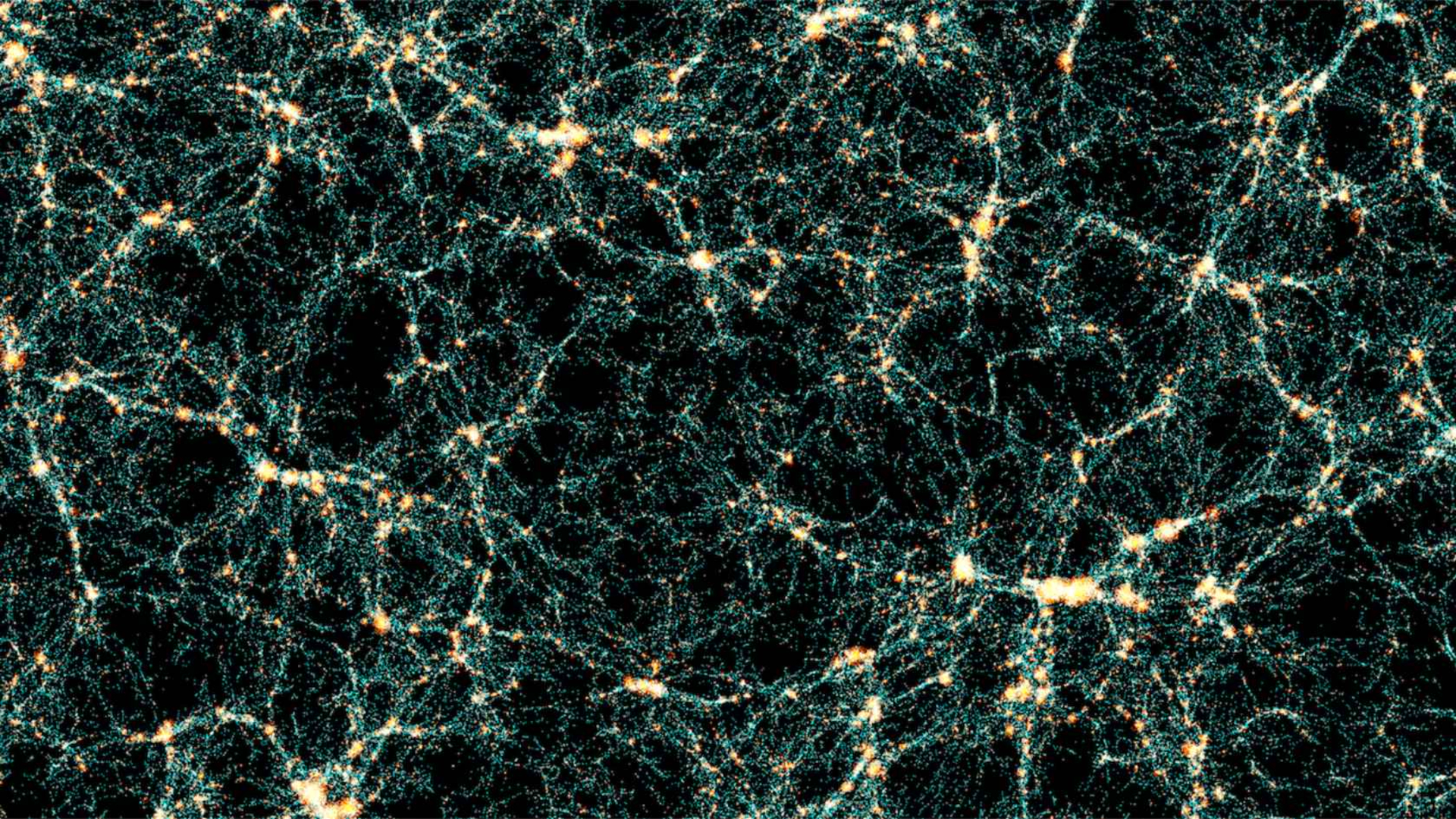
The Euclid Consortium has released the world's most extensive simulation of the universe, called Flagship 2, which maps 3.4 billion galaxies and tracks over 4 trillion particles to aid in analyzing data from the Euclid space telescope, helping to explore dark energy and test the standard cosmological model.
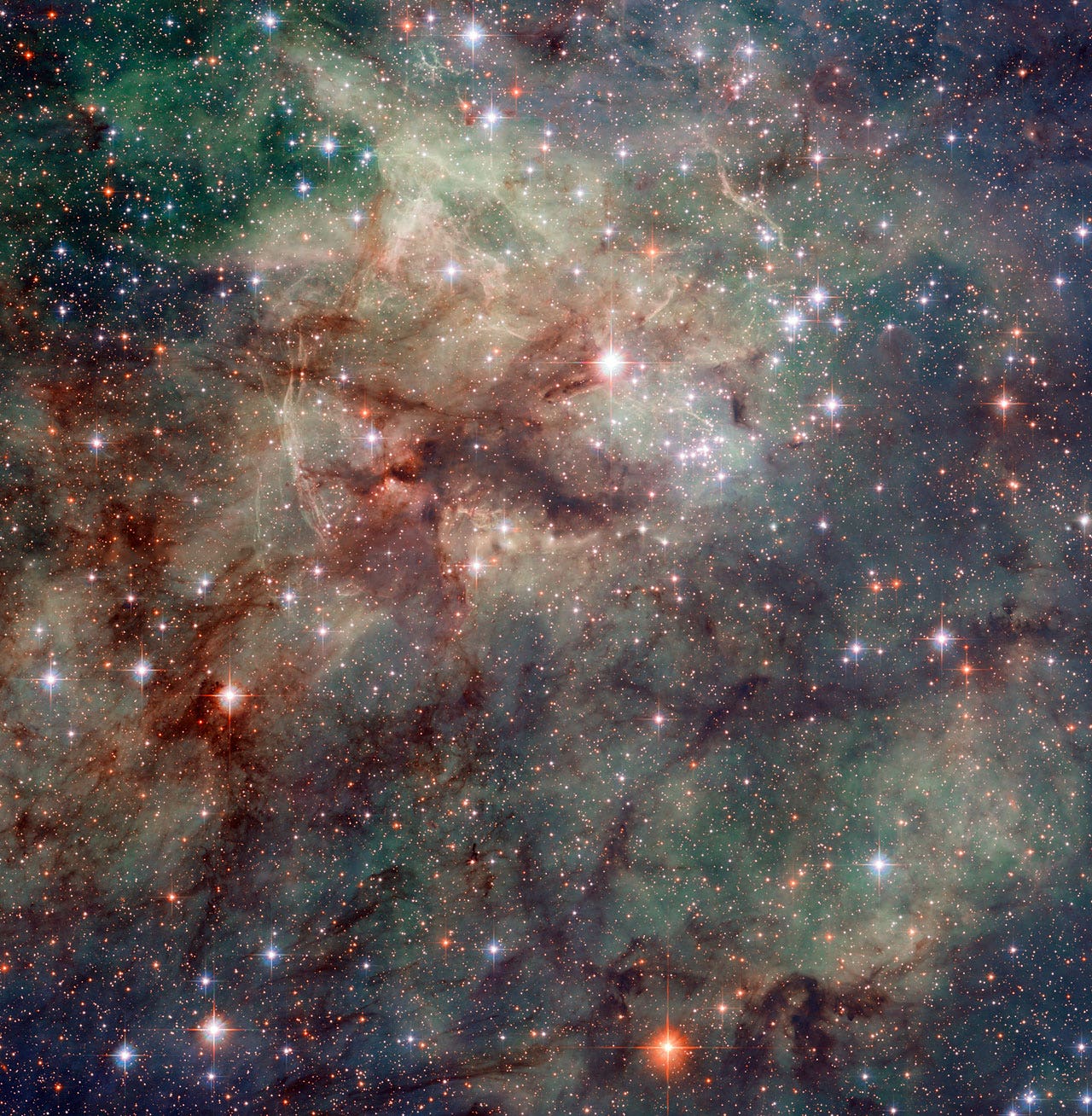
Physicists propose that the universe may be filled with particles called tachyons, capable of traveling faster than light, which could potentially make up dark matter and explain the universe's ongoing expansion. This hypothesis challenges the current cosmological model and raises fundamental questions about causality. While the evidence is limited and the existence of tachyons remains unproven, the idea offers intriguing possibilities for further research into the nature of dark matter and the fundamental phenomena governing the cosmos.
A study led by physicist Rajendra Gupta from the University of Ottawa introduces the CCC+TL model, challenging the need for dark matter in the universe. This new cosmological model combines the covarying coupling constants (CCC) and "tired light" (TL) theories, suggesting that dark matter is not necessary to explain the universe's behavior. The study provides evidence that eliminates the cosmological existence of dark matter while being consistent with key cosmological observations, potentially opening up new avenues for exploring the fundamental properties of the universe.
Astronomers have proposed a new theory suggesting that our universe's accelerating expansion may be driven by merging with smaller "baby" universes, rather than solely by dark energy. The study's mathematical model offers a potential explanation for the universe's expansion and aligns more closely with observations than the Standard Cosmological Model. The researchers also suggest that early cosmological inflation may have been caused by our young universe colliding with a larger universe, leading to the absorption of "baby" universes.
Observations of the motion of satellite galaxies around massive galaxy groups suggest that the universe may be younger than predicted by the standard cosmological model with Planck cosmological parameters. Research using data from the Sloan Digital Sky Survey (SDSS) indicates a notable excess of correlated satellite pairs, implying that massive galaxy groups are younger in the real universe compared to current simulations. These findings challenge the existing cosmological model and may provide insights into the Hubble tension problem.
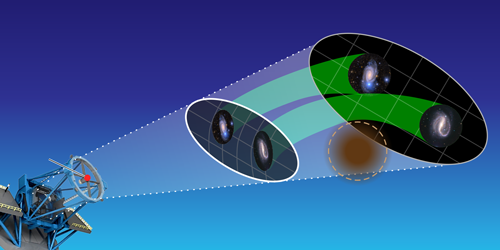
A new analysis of the distribution of matter in the Universe, conducted by the Hyper Suprime-Cam Subaru Strategic Program (HSC-SSP) weak-lensing survey, has found a discrepancy in the clumpiness of dark matter in the late and early Universe. This inconsistency, which has been observed in previous surveys as well, suggests a fundamental error in the standard cosmological model. The findings indicate a possible failure of the ΛCDM model and may require the development of new cosmological models that can explain both early and later Universe data. Upcoming observational capabilities, such as the Euclid telescope and the Vera C. Rubin Observatory, will provide enhanced capabilities for further measurements and expand our understanding of the Universe.
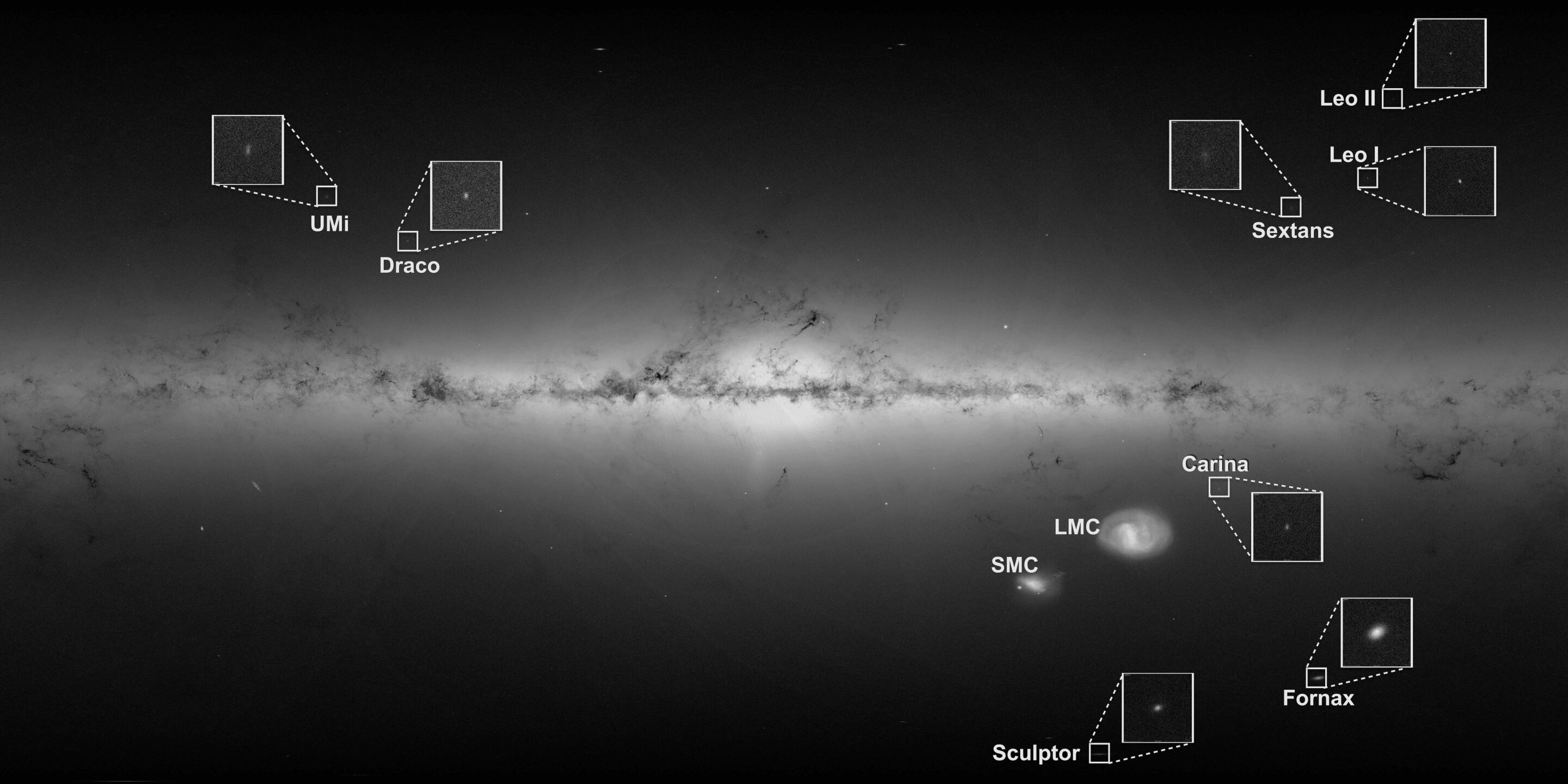
A new study using data from ESA's Gaia satellite challenges the long-held belief that dwarf galaxies surrounding the Milky Way are ancient satellites. Instead, the study suggests that most dwarf galaxies are recent arrivals and have undergone violent transformations, losing their gas and becoming out of equilibrium. This raises questions about the prevalence of dark matter in these dwarf galaxies and challenges the previous understanding of them as dark matter-dominated objects. Further research is needed to understand the implications of these findings and to determine the dark matter content of dwarf galaxies.
A newly discovered dwarf galaxy called Nube, found by chance in images gathered by the IAC Stripe82 Legacy Project, is mostly comprised of dark matter and is the largest ultra-diffuse galaxy known. While it supports the dark matter cosmological model, it doesn't match the profile of the popular variant known as cold dark matter, instead fitting a version called fuzzy dark matter. This finding suggests that there may be more dwarf galaxies made mostly of dark matter in our celestial neighborhood, waiting to be discovered.
An international team of astrophysicists and cosmologists have used data from the Hyper Suprime-Cam survey to measure the "clumpiness" of dark matter in the universe, known as S8, and found a value of 0.76, which does not align with the value of 0.83 derived from the cosmic microwave background. The team spent a year on a blinded analysis to protect the results from biases and found that the gap between the two values may indicate an error in one of the measurements or an incomplete cosmological model.