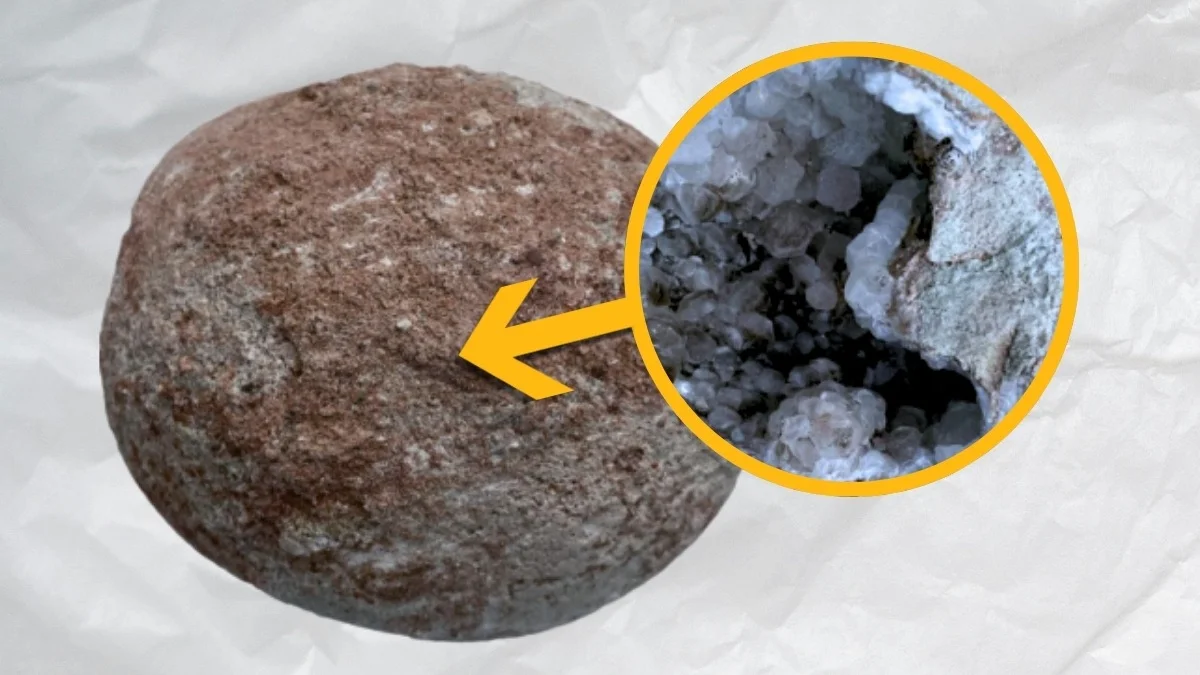
Scientists discovered a 70-million-year-old dinosaur egg in China that contained calcite crystals, transforming it into a natural geode and leading to the identification of a new species, Shixingoolithus qianshanensis, providing new insights into the microstructure, fossilization processes, and environmental conditions of the Late Cretaceous in the region.
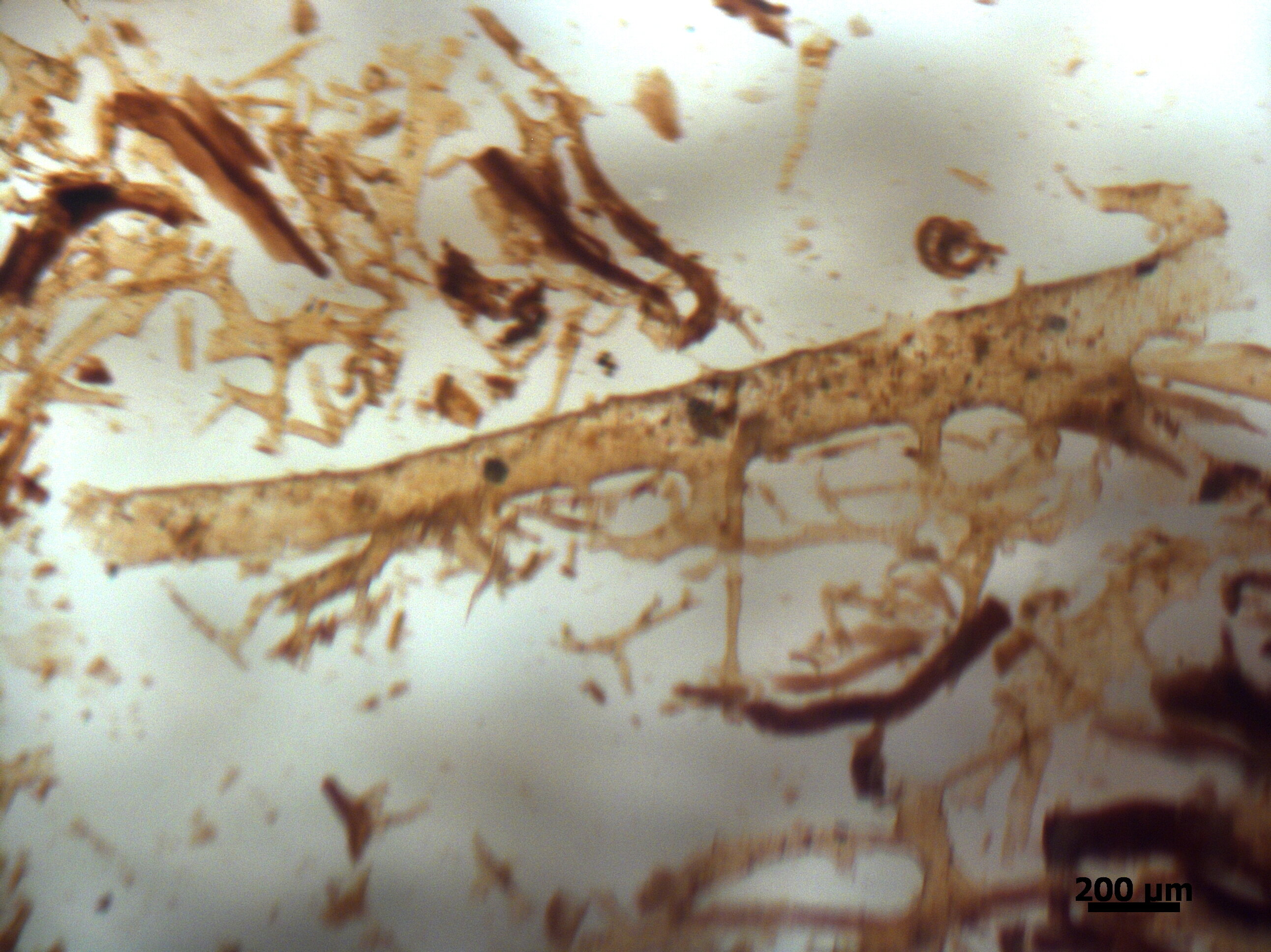
A study using Resonance Raman imaging confirms the presence and partial preservation of hemoglobin in dinosaur bones, revealing how heme degrades over millions of years and providing insights into fossilization processes.
A study shows that the decay process and resulting fossilization of animals depend heavily on the microenvironment created by microbial activity, which varies by species, size, and tissue composition, explaining why some animals fossilize while others vanish.
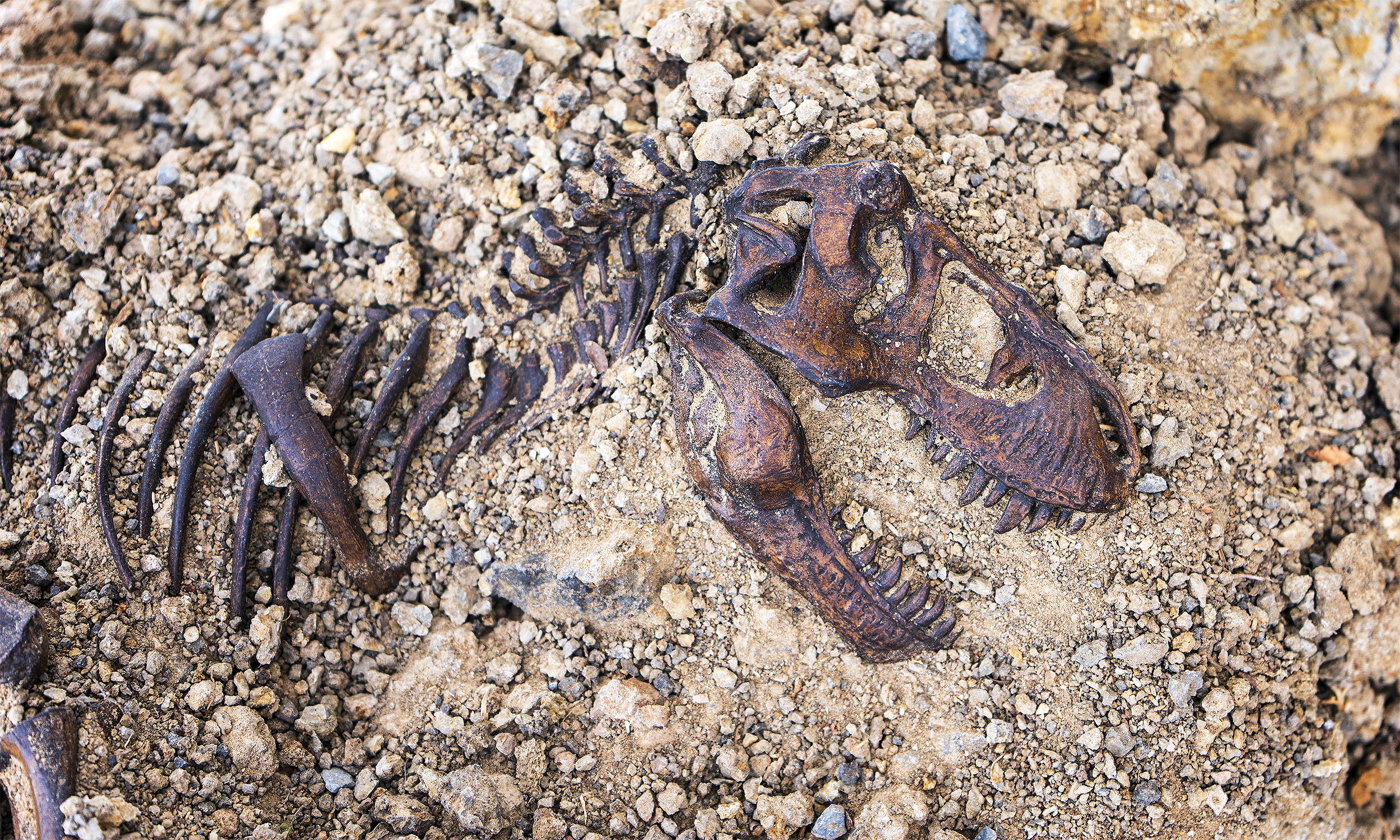
Scientists used advanced synchrotron X-ray imaging to discover preserved blood vessels in a T. rex fossil, Scotty, revealing new insights into dinosaur biology, injury healing, and fossilization processes, which could enhance future paleontological research.
Researchers discovered collagen in a 70-million-year-old dinosaur fossil, challenging the long-held belief that organic molecules cannot survive fossilization, thanks to advanced spectrometry techniques, which could revolutionize our understanding of ancient life and fossil preservation.
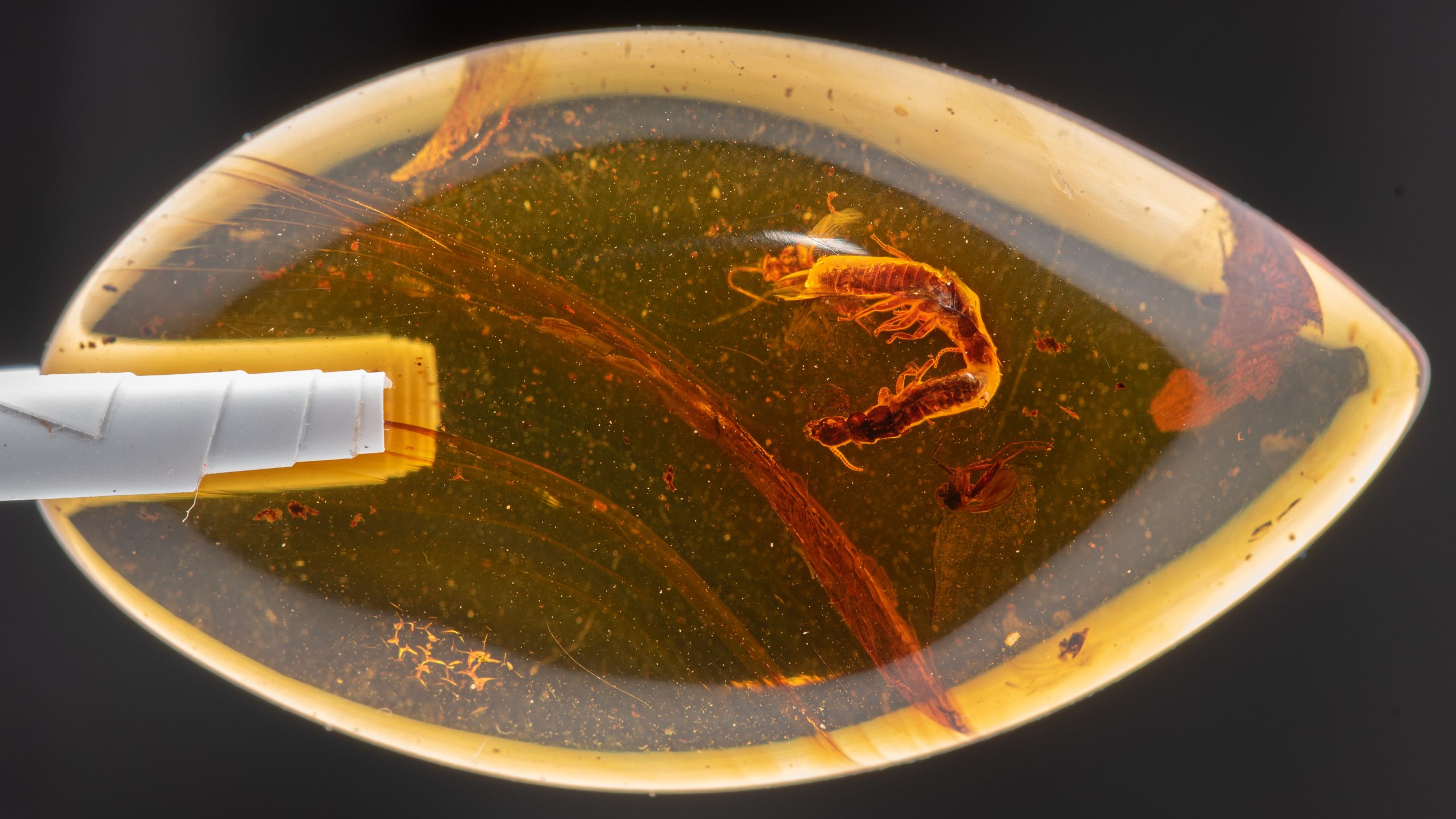
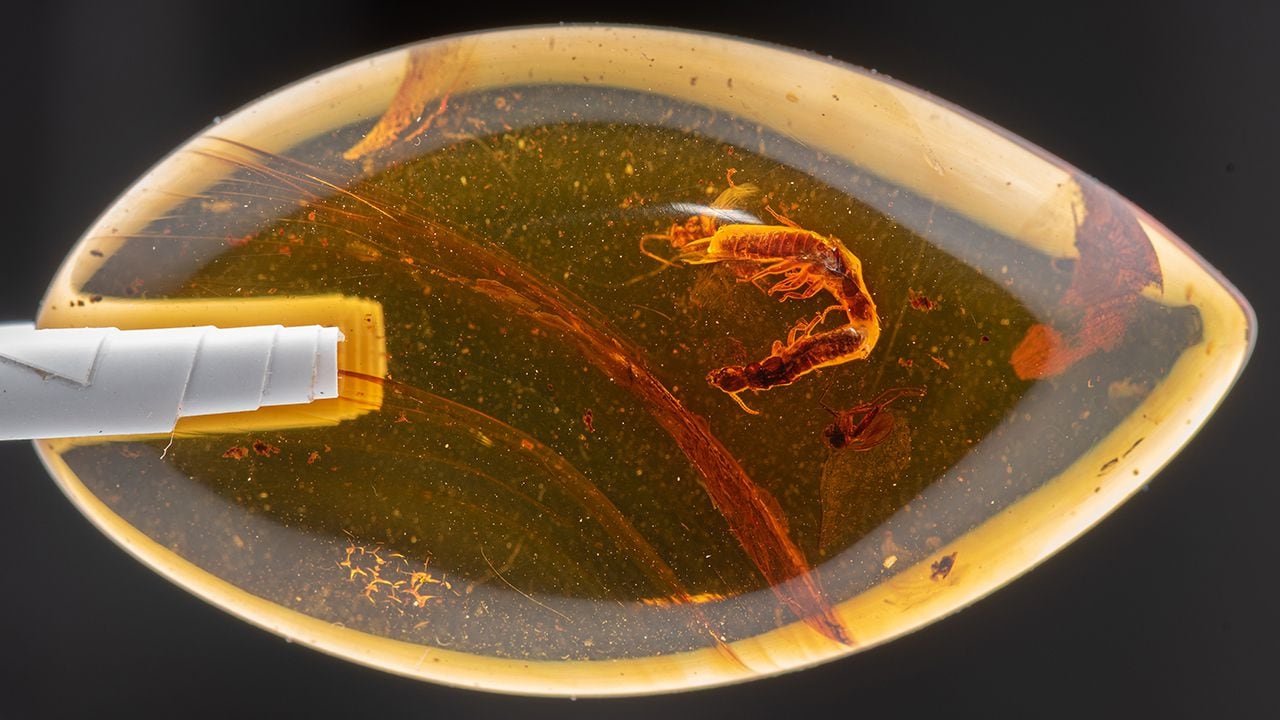
Biologist Nobuaki Mizumoto and colleague Aleš Buček discovered a rare Baltic amber fossil of two ancient termites engaged in a courtship ritual, providing potential insight into the behavior of ancient insects. The researchers experimentally modeled the fossilization process and found that the termites' entrapment likely occurred gradually, challenging previous assumptions about instantaneous fossilization. While some caution is needed in inferring behavior from fossils, the detailed preservation in amber offers valuable glimpses into ancient animal behavior, shedding light on collective behavior and courtship rituals in termites.
A pair of fossilized termites, believed to be 38 million years old, has been found in amber in a mating position, providing insight into the behavior of ancient insects. Researchers, including Auburn University Assistant Professor Nobuaki Mizumoto, studied the rare find and believe the termites were engaged in a tandem run when they became trapped in tree sap, which eventually hardened into amber. The team's findings, published in Proceedings of the National Academy of Science, offer a unique glimpse into the mating behavior of an extinct termite species and shed light on the fossilization process.
Fossilized dinosaur bones can endure for millions of years due to fossilization, where the animal is quickly encased in sediment and minerals replace organic materials within the bone. Soft tissues typically decompose fairly quickly, and the decomposition ecosystem plays a role in breaking down animal remains. Fossils can be any trace or remains of past life, not just bones, and animal bones eventually decompose after several years.
Paleontologist Evan Saitta and his team are exploring the potential of using dinosaur hormones to determine the sex of fossils. Initial research suggests that sex hormones can survive the fossilization process, as evidenced by experiments with estradiol, a form of estrogen. The team successfully identified estrogen "fingerprints" in modern animal bones and have begun testing dinosaur fossils, with varying results. This breakthrough could significantly advance evolutionary research by providing a method to sex dinosaur fossils.
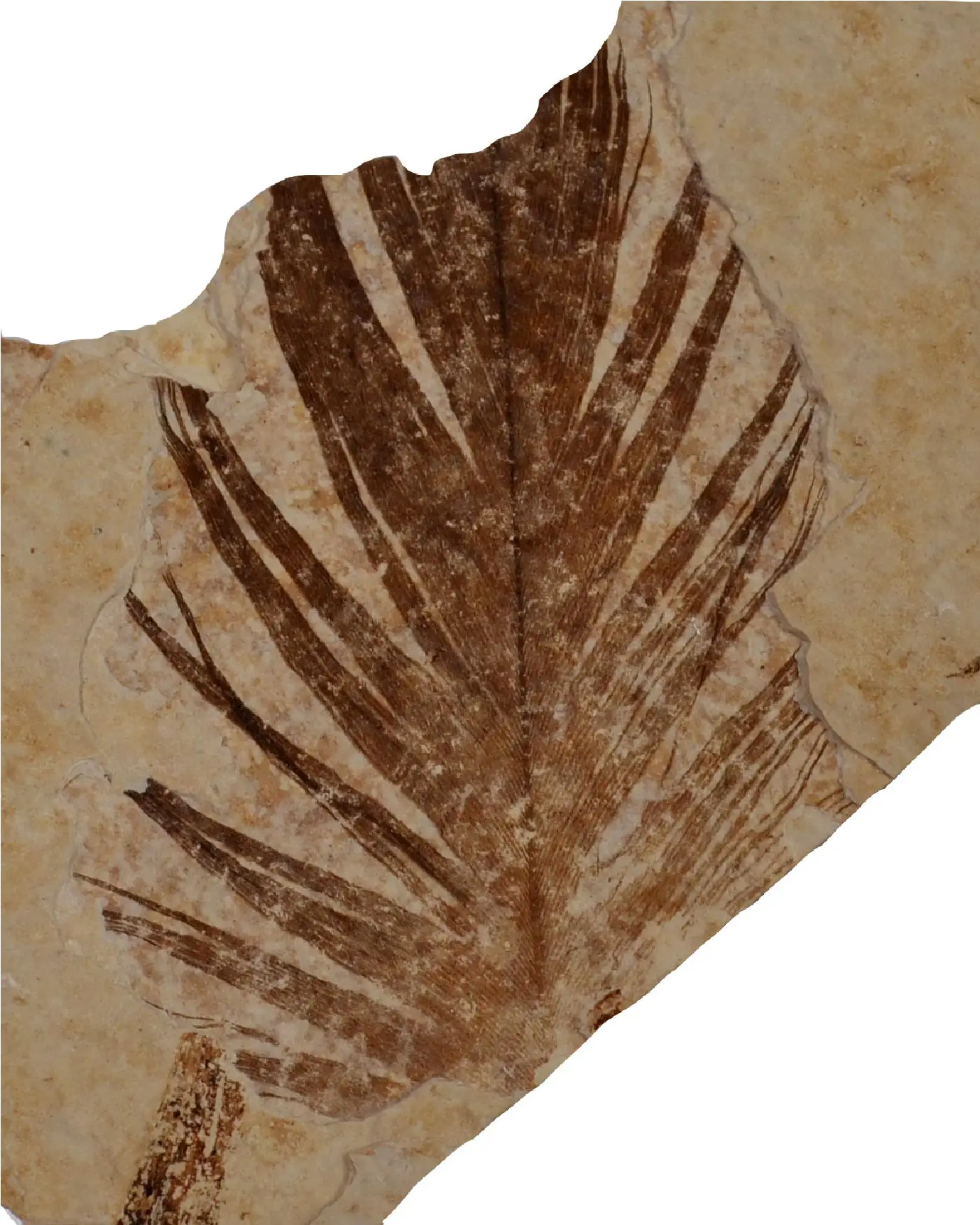
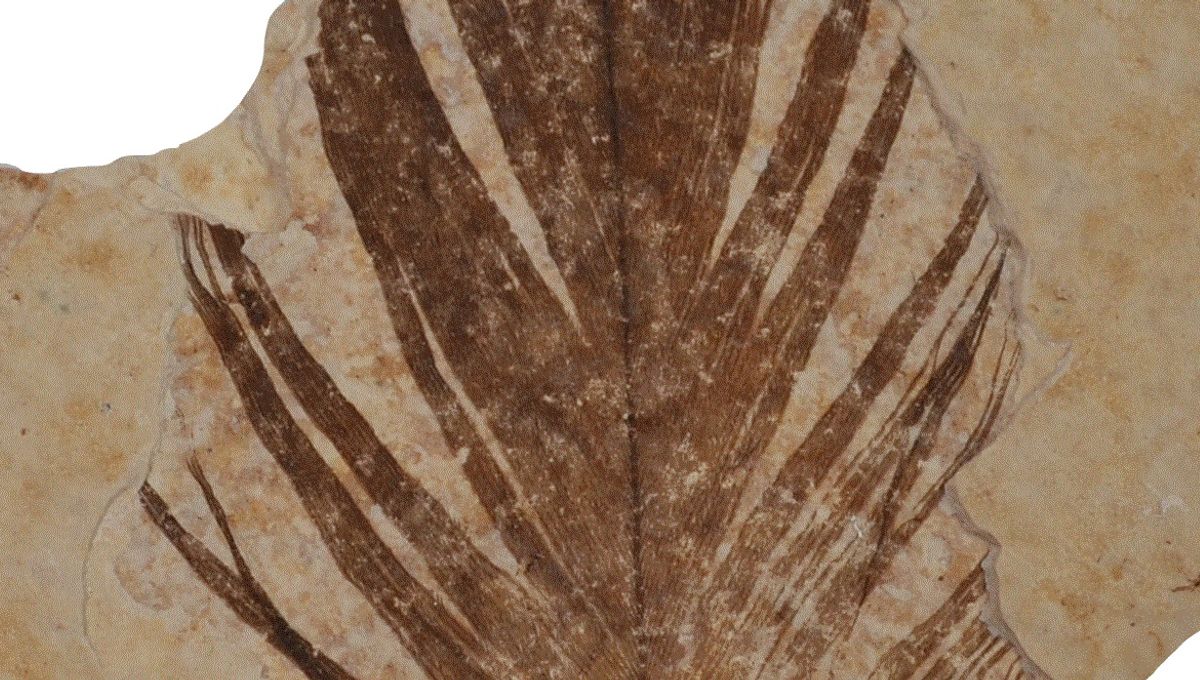
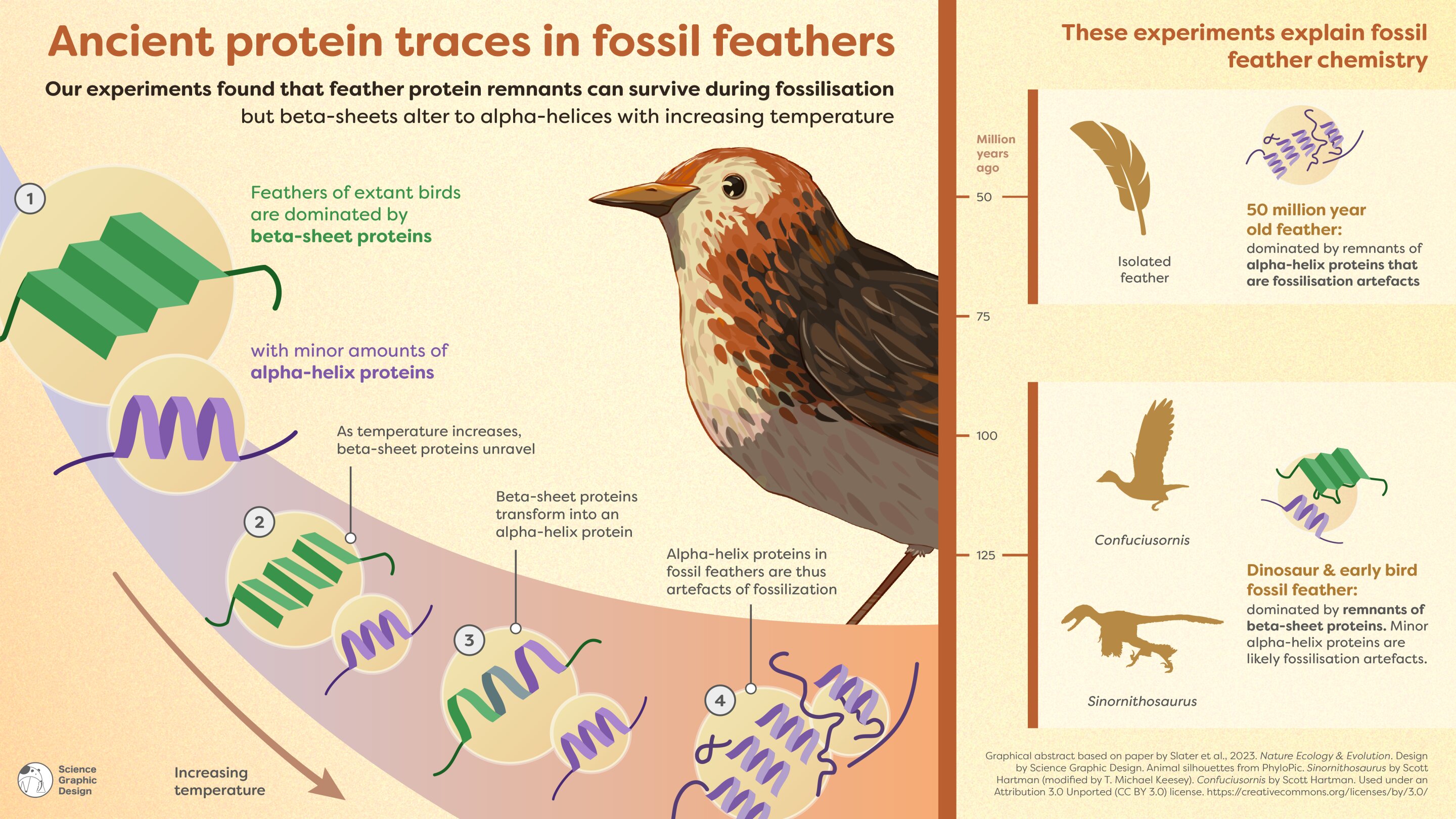
Paleontologists at University College Cork have discovered X-ray evidence of proteins in 125-million-year-old dinosaur feathers, revealing that the protein composition of modern-day feathers was also present in the feathers of dinosaurs and early birds. The research challenges previous studies suggesting that ancient feathers had a different composition and confirms that the chemistry of feathers originated much earlier than previously thought. The team developed a new method to detect traces of ancient feather proteins and found that feathers from the dinosaur Sinornithosaurus contained beta-proteins, similar to modern bird feathers. The study also sheds light on the fossilization process and the preservation of biomolecules in deep time.
A study conducted by scientists from University College Cork, Linyi University, and the Stanford Synchrotron Radiation Light Source has revealed that the protein composition of dinosaur feathers is similar to that of modern birds, suggesting that the modern feather may have evolved much earlier than previously thought. By analyzing 125-million-year-old fossil feathers, the researchers found traces of beta-keratin, indicating that alpha-keratin was likely formed through degradation during the fossilization process. The study also highlights the need for a more holistic analysis of ancient fossils and their biomolecules, as well as the development of new tools to understand the chemical secrets of fossils.
Paleontologists at University College Cork have discovered X-ray evidence of proteins in fossil feathers, revealing that the protein composition of modern-day feathers was also present in the feathers of dinosaurs and early birds. The research confirms that the chemistry of feathers originated much earlier than previously thought and helps answer questions about the preservation of ancient biomolecules. The study provides new insights into feather evolution and the fossilization process.
Paleontologists have discovered that dinosaurs and their relatives evolved a hyper-efficient breathing system known as postcranial skeletal pneumaticity, which involves air sacs within bones that enable unidirectional breathing. This system, also found in birds, allowed for rapid oxygen intake and heat extraction. Through the study of fossil microstructure, researchers determined that this respiratory adaptation evolved independently in three lineages of extinct species. The evolution of air sacs likely began in the Triassic period, and it may have been driven by the hot climate at the time. The findings shed light on the convergent evolution of breathing systems and the role they played in the success and size of dinosaurs.
Scientists from The University of Texas at Austin have discovered that the golden shimmer of fossils from Germany's Posidonia shale is not due to pyrite (fool's gold) as previously believed, but rather a blend of minerals. The fossils, which are among the world's best-preserved specimens of sea life from the Early Jurassic, primarily consist of phosphate minerals. This finding provides insights into the fossilization process and the role of oxygen in their formation. The research challenges long-standing theories about exceptional fossil preservation and highlights the importance of oxygenation in enhancing preservation.
Researchers at the State University of Campinas in Brazil have discovered that air sac structures in the ancient dinosaur Macrocollum itaquii played a crucial role in the evolution of dinosaurs. These air sacs, similar to those found in modern birds, allowed dinosaurs to capture more oxygen, regulate body temperature, and survive harsh conditions. The presence of air sacs gave dinosaurs an evolutionary advantage, enabling them to grow into massive creatures like the Tyrannosaurus rex and Brachiosaurus. The study challenges previous assumptions about air sac evolution and sheds light on the remarkable diversity of dinosaurs during the Jurassic and Cretaceous periods.