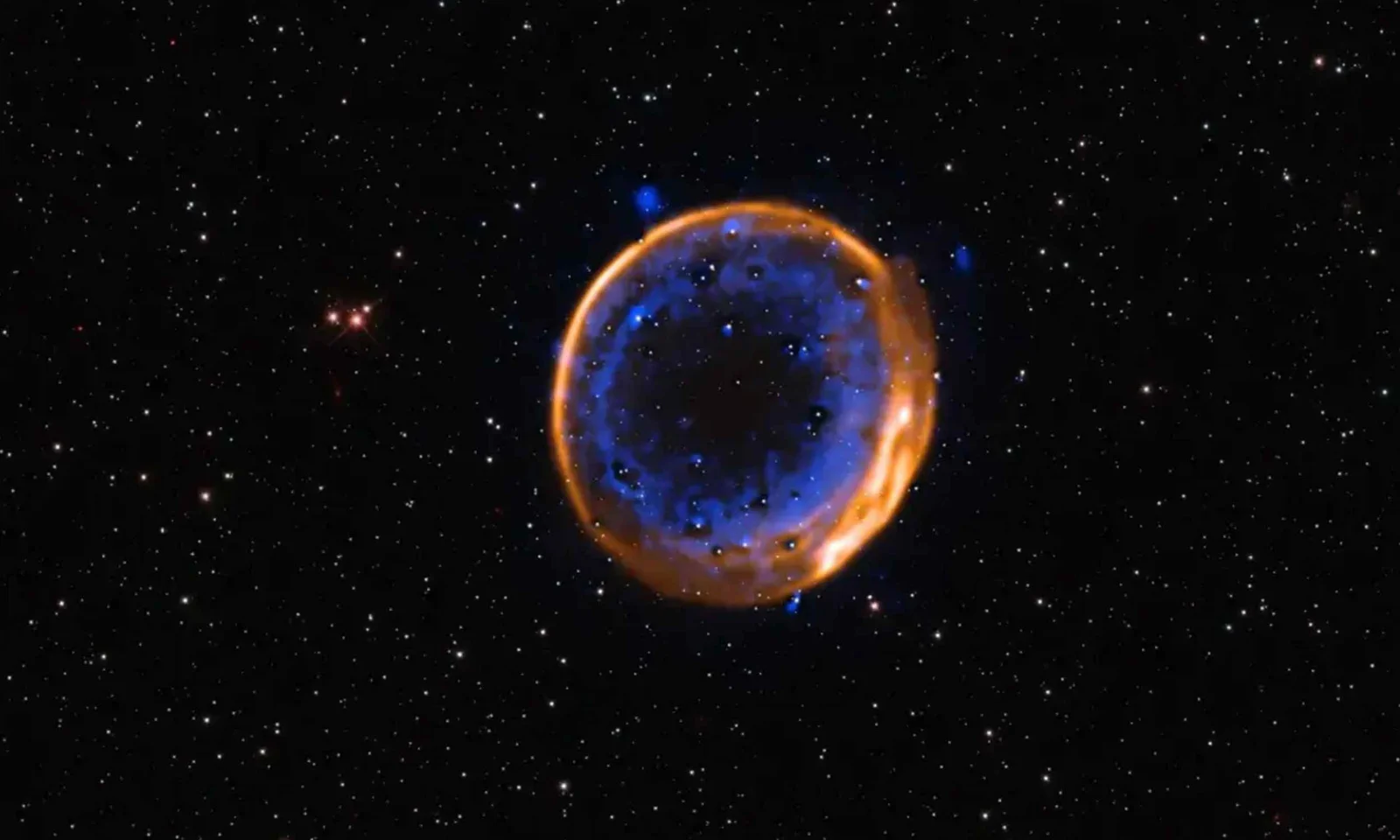
Astronomers have captured the first clear image of a star that exploded twice, providing direct evidence for a double detonation mechanism in Type Ia supernovae, which has implications for understanding cosmic distances and the universe's expansion.
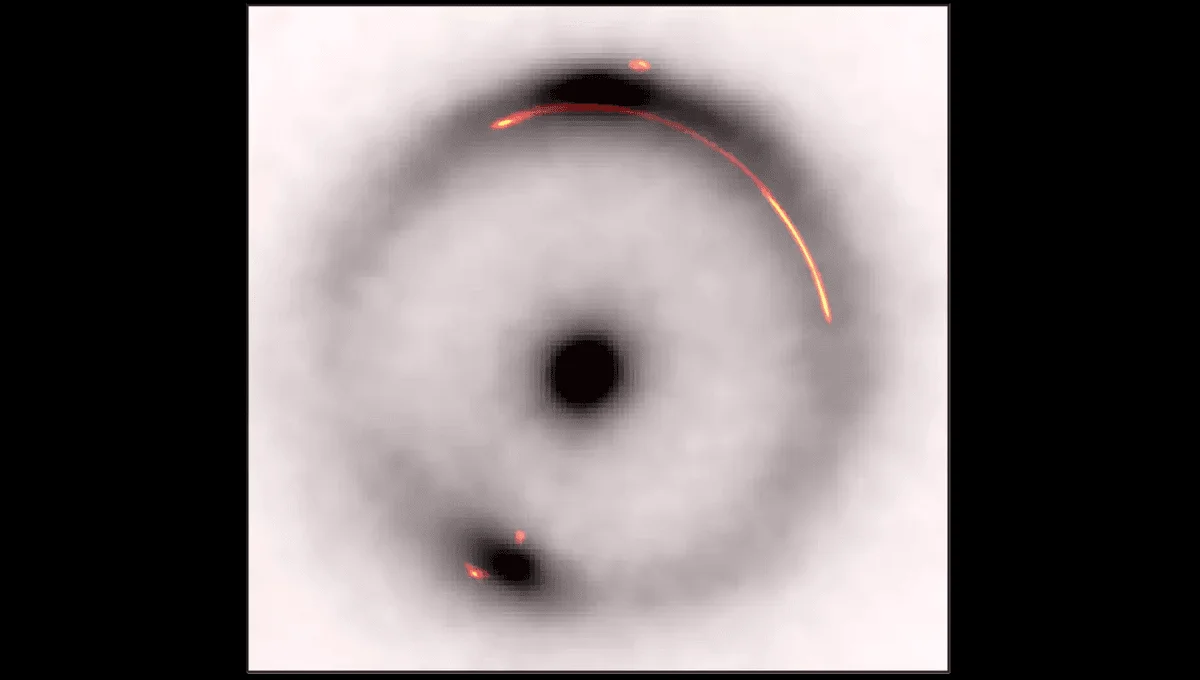
Astronomers used high-resolution radio observations to detect a tiny dark object, about a million times the Sun's mass, acting as a gravitational lens in a distant galaxy, providing new insights into dark matter and galaxy formation.
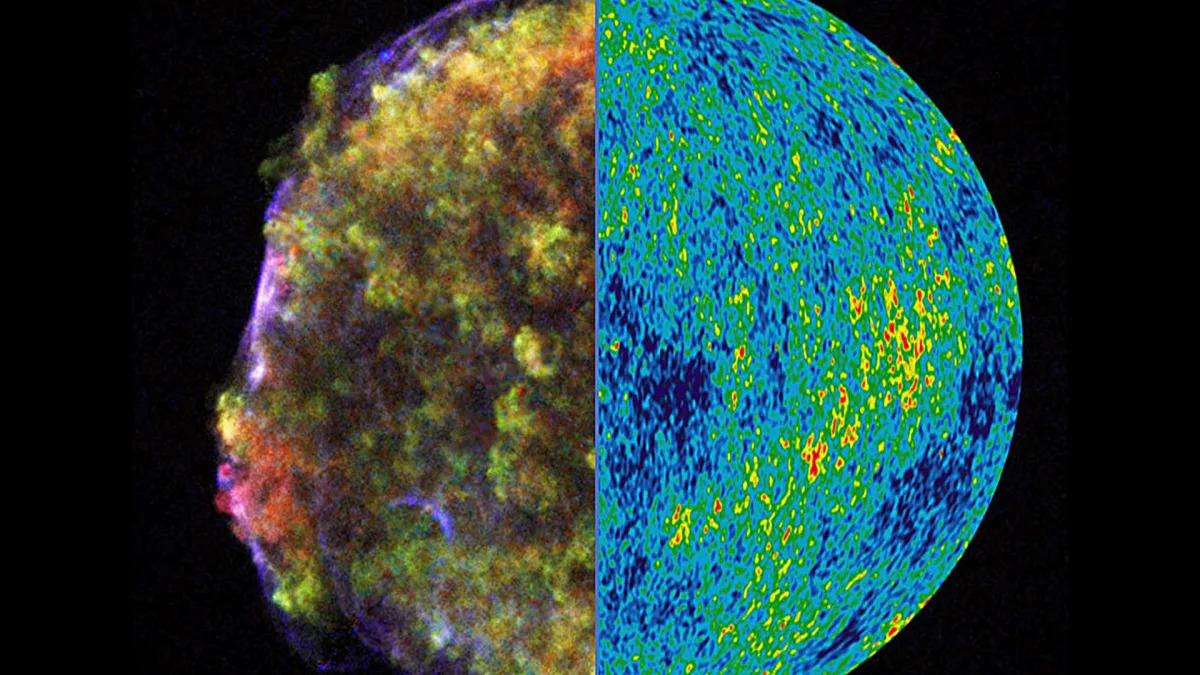
Scientists propose using the collision and merger of neutron stars, known as kilonovas, as a third method to determine the Hubble constant and resolve the discrepancy between supernova and cosmic microwave background measurements. The symmetrical and spherical nature of kilonovas allows for precise calculations of their luminosity, which can be used to determine the distance to galaxies hosting these explosions. This method bypasses uncertainties associated with supernova measurements and provides a "clean" system to study cosmic distances, although more examples are needed to establish a robust result.