Tag

Cultural Evolution

All articles tagged with #cultural evolution

science1 year ago

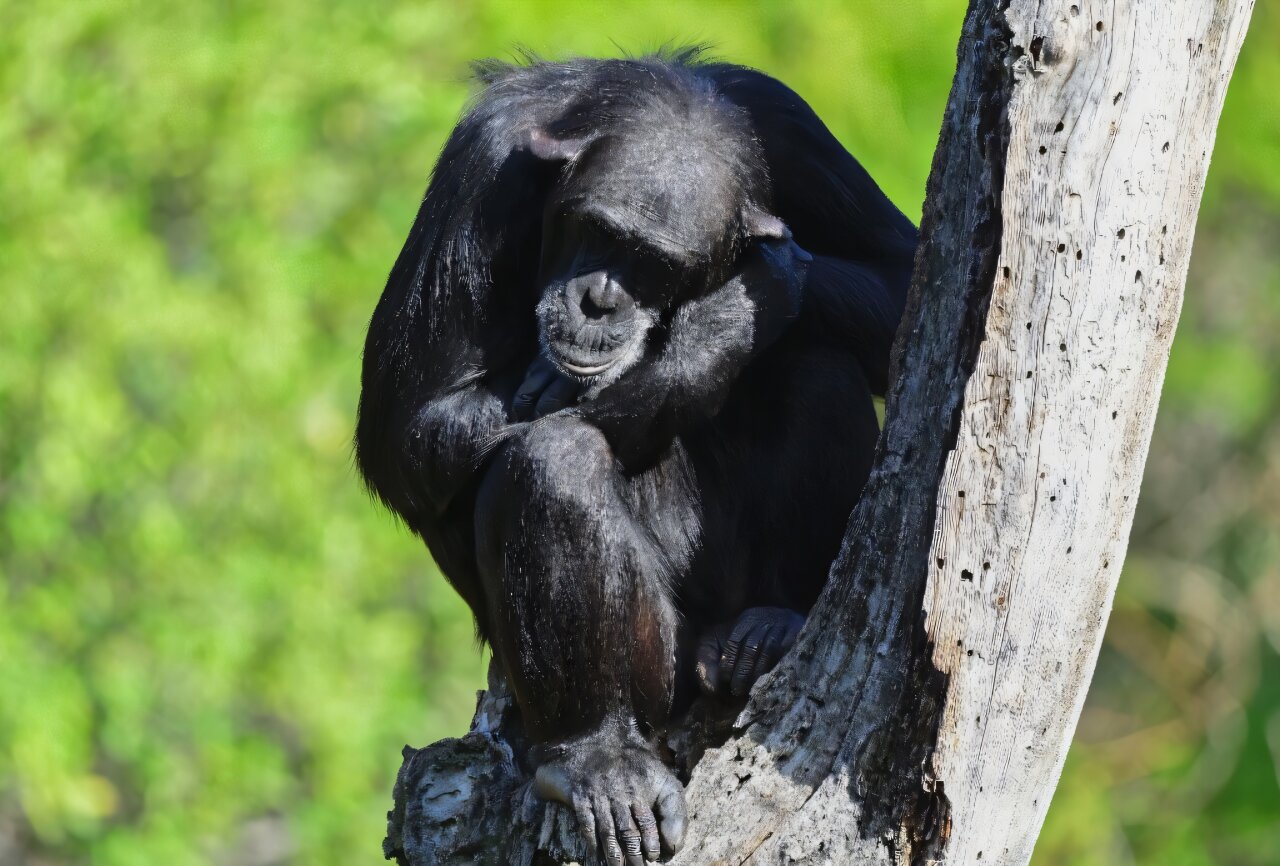
Chimpanzees Show Humanlike Cultural and Technological Advancements

A new study published in Science reveals that chimpanzees are gradually enhancing their tool-using skills through cultural exchanges facilitated by migrations between populations over millennia. This process mirrors early human technological advancements, suggesting that social connections have historically played a crucial role in the development of complex behaviors. The study highlights that advanced tool use in chimps is linked to genetic exchanges, with the most complex behaviors observed in areas where different subspecies overlap.

science1 year ago

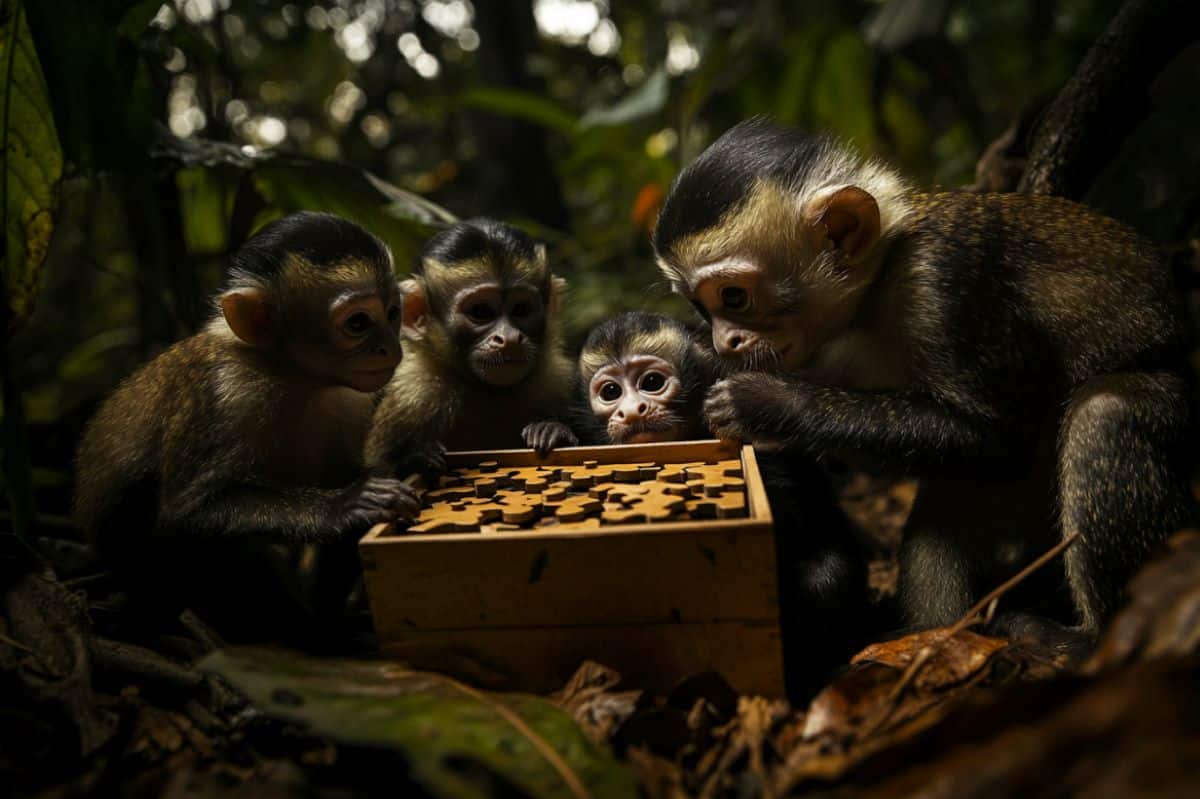
Social Tolerance Enhances Learning in Capuchin Monkeys

Researchers from Durham University found that social tolerance and group dynamics significantly influence problem-solving and learning in wild bearded capuchin monkeys. By observing interactions with a puzzle-box, they discovered that monkeys learn from tolerant group members and high-status individuals, highlighting the role of social hierarchy in cultural transmission. This study sheds light on the evolution of cultural abilities in primates, including humans.

history1 year ago

"Merging Anthropology and Psychedelics: Margaret Mead's LSD Exploration"

Margaret Mead, a renowned 20th-century scientist, became involved in early LSD experiments in the 1950s, considering psychedelics as a potential catalyst for cultural evolution. Her interest in LSD and its potential impact on society led her to contemplate taking the drug herself, but ultimately, she decided against it due to concerns about maintaining control and the potential risks to her personal life and career. Her involvement in psychedelic research sheds light on a lesser-known aspect of her legacy and the potential impact she could have had on the history of drugs in the 20th century.

archaeologyanthropology1 year ago

"Modern Human Dispersals: The Evolution of Stone Tool Technology"

A study led by researchers at the Nagoya University Museum challenges traditional beliefs about the cultural evolution of Homo sapiens during their dispersal across Eurasia 50,000 to 40,000 years ago. The study suggests that the increase in stone tool productivity did not occur before or at the beginning of Homo sapiens' dispersals, but rather after, coinciding with the development of bladelet technology in the Early Upper Paleolithic. This challenges the view of a sudden cultural revolution and suggests a more nuanced and complex process of cultural evolution involving multiple stages.

climate-change-human-evolution1 year ago

"Evolutionary Barriers to Solving Climate Change"

Researchers studying human evolution in the context of climate change found that while humans have a track record of solving problems, our evolutionary traits may hinder efforts to address climate change on a global scale. The study emphasizes the need for truly global solutions, as our past problem-solving approaches may not be sufficient for the current environmental crisis. Additionally, the researchers highlight the necessity of addressing human competitiveness and conflict in order to ensure long-term survival, pointing towards the development of systems of self-limitation and market regulation as potential solutions.

anthropology2 years ago

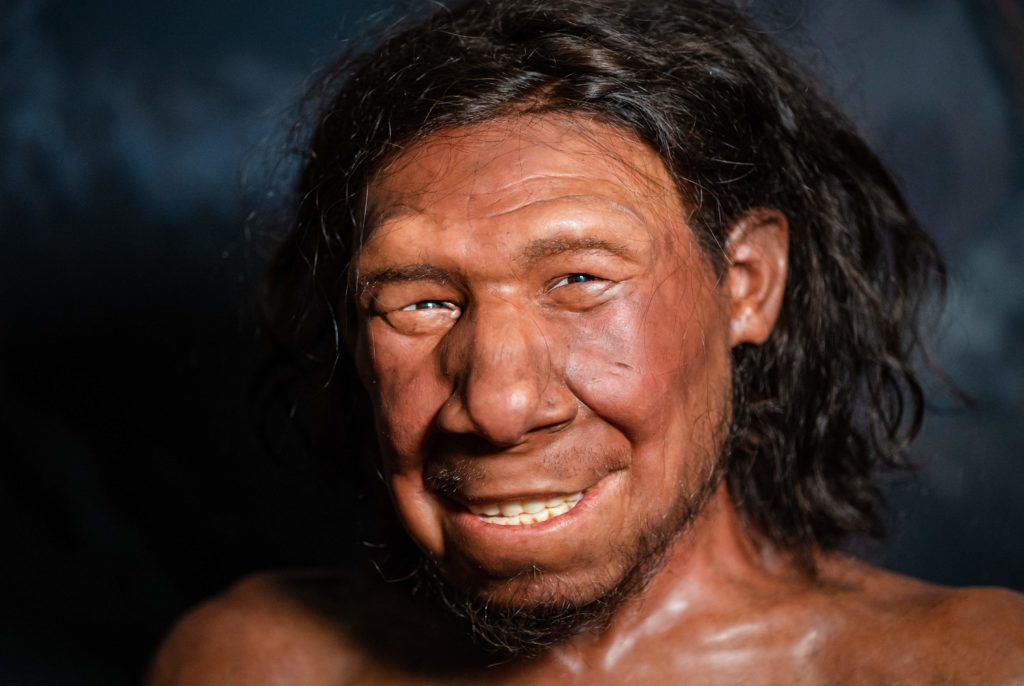
Unveiling Neanderthals: New Discoveries Shed Light on Their Enigmatic Past

Recent discoveries have shed new light on the lives of Neanderthals, our closest-known relatives. Archaeological findings have revealed evidence of Neanderthals engaging in creative activities such as making rope, using pigments for body adornment, and creating jewelry. Studies of the Neanderthal genome have confirmed that interbreeding occurred between Neanderthals and Homo sapiens. Research on brain development genes suggests potential cognitive differences between the two species. Neanderthals likely had a shorter childhood and smaller social networks compared to Homo sapiens. The decline of Neanderthals may have been influenced by factors such as environmental fluctuations and competition with Homo sapiens. However, their genetic legacy lives on in modern humans.

neuroscience2 years ago

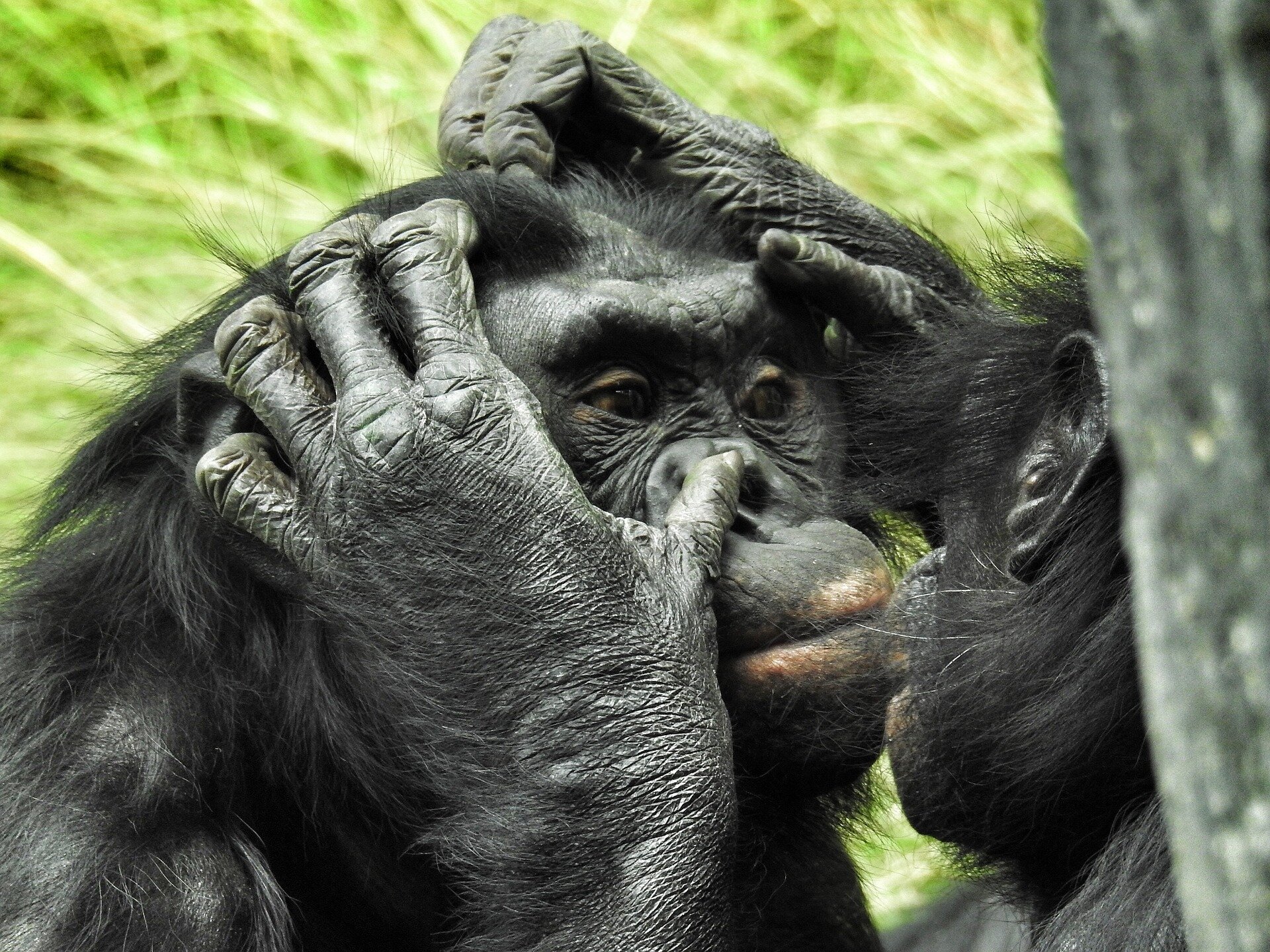
The Uniqueness of Sequential Memory Sets Humans Apart

New research suggests that humans possess a unique ability to recognize and remember sequential information, which is not shared by our closest relatives, bonobos. This finding sheds light on the cognitive distinctions between humans and other animals, explaining why only humans possess certain cultural abilities like language and advanced planning. The study supports the hypothesis that sequential memory is a foundational block behind many uniquely human behaviors and capabilities.

science2 years ago

"The Unique Human Trait: Sense of Order Sets Us Apart from Animals"

A new study published in the journal PLoS ONE suggests that the ability to recognize and remember sequential information is likely unique to humans. The study tested the memory abilities of bonobos, one of humans' closest relatives, and found that they struggled to learn the order of stimuli. In contrast, humans were able to quickly distinguish between short sequences. The findings support the hypothesis that the ability to remember and process sequences evolved in humans, contributing to language, planning ability, and sequential thinking.

science-and-culture2 years ago

The Cultural Significance of Body-Based Measurements.

Researchers at the University of Helsinki analyzed body-based measurement systems across cultures using data from the Human Relations Area Files database and found that body-based measurements are used by all cultures, though it is used more often in some areas of interest than others. The most well-known body measures—cubits, spans and fathoms—were also the most common. The team concludes by suggesting that body-based measurements are most commonly still used today in projects that involve ergonomic design, which makes them more personalized.