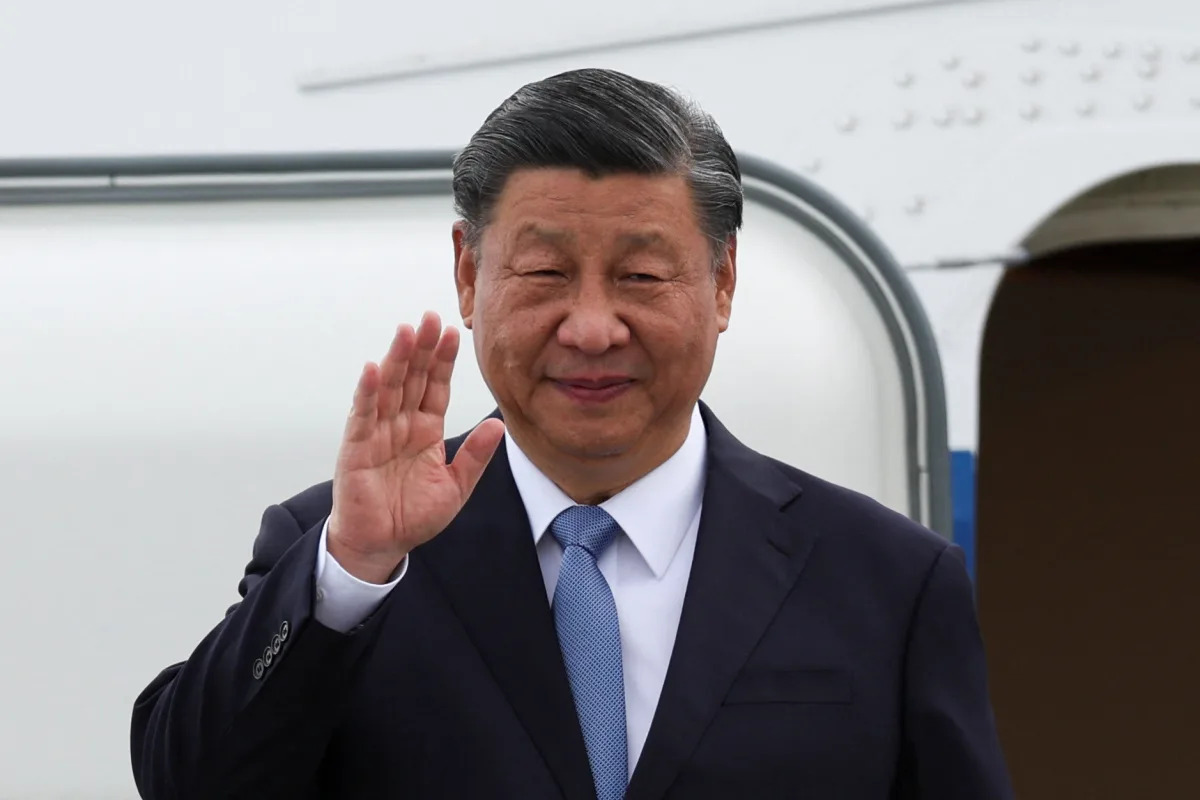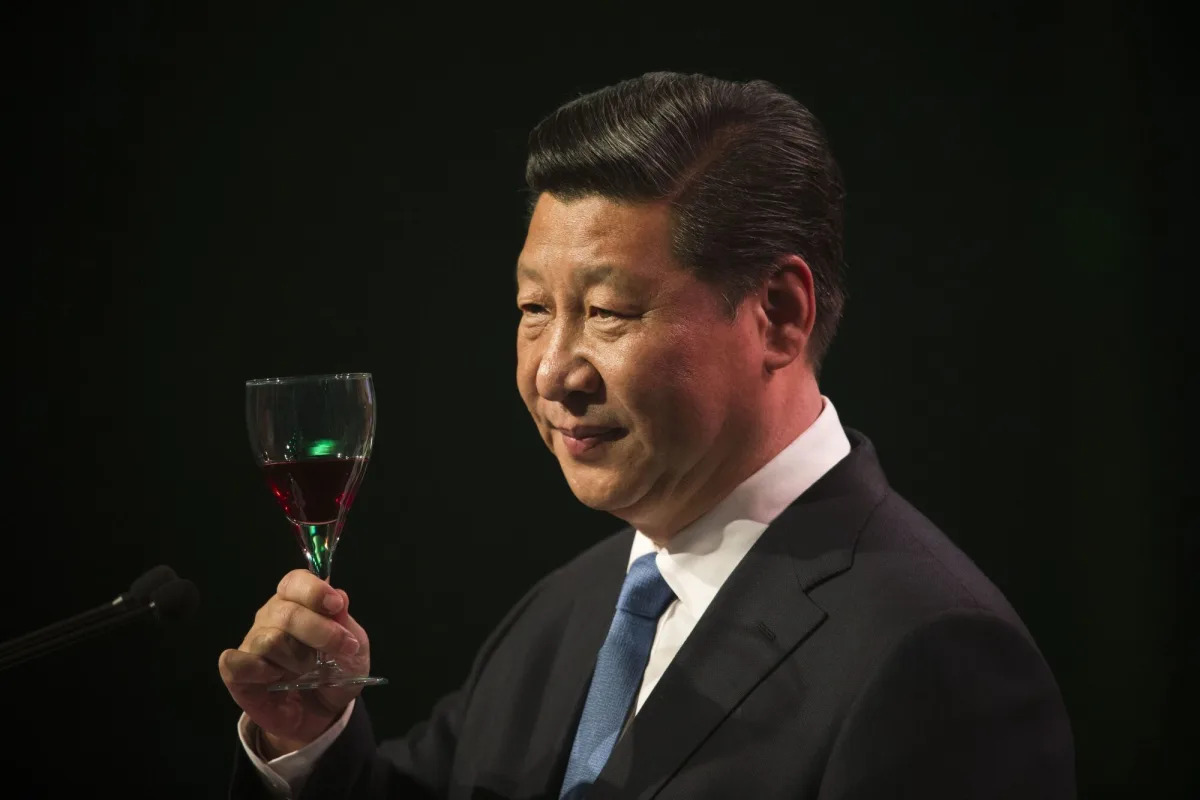
Chinese President Xi Jinping met with a group of American business executives in Beijing to boost confidence in China's economy and maintain stable relations with the US. The meeting aimed to show China's openness to foreign businesses despite tensions with the US and economic challenges. China is seeking to achieve an annual growth target of around 5% and has pledged to hold regular meetings with foreign companies to address their concerns. However, investors have expressed concerns about the dual goals of development and security, as well as a structural economic slowdown.
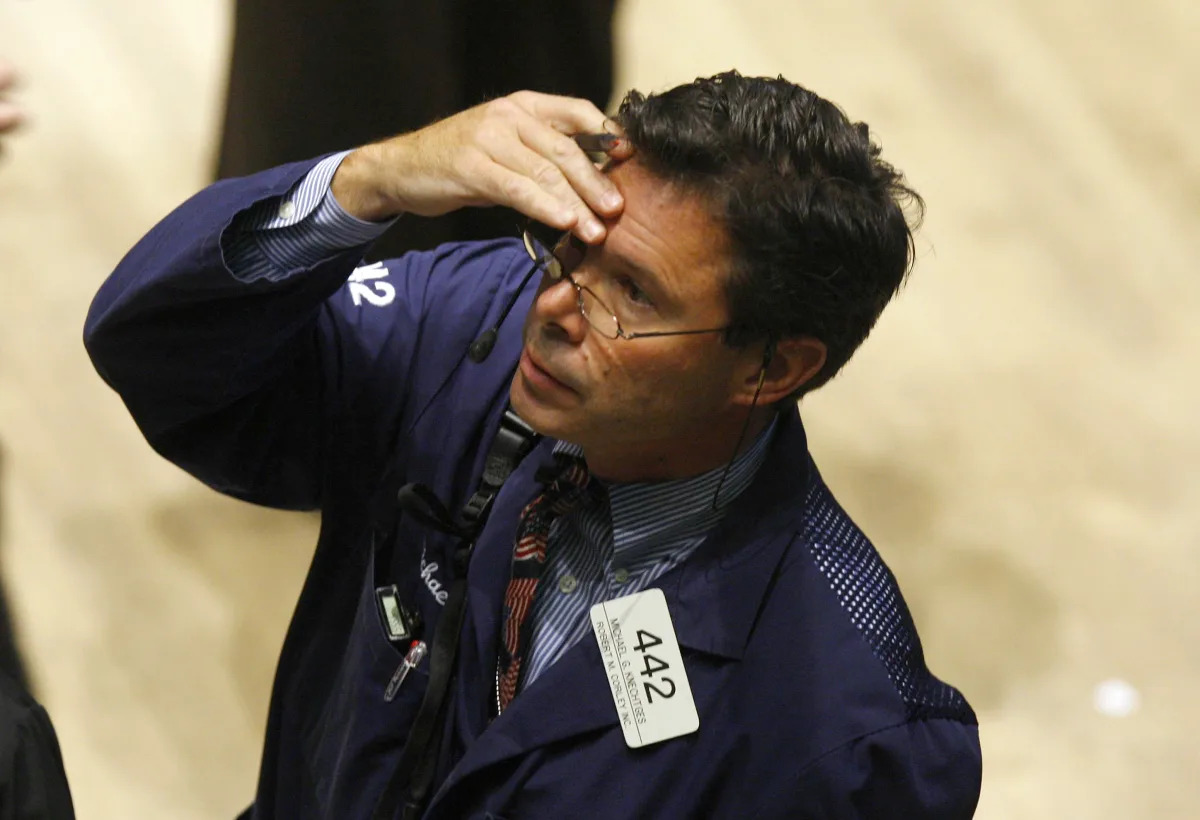
US stocks fell as investors' optimism for interest rate cuts was tempered by warnings from central bankers, and concerns grew about China's economy. Despite disappointing GDP data from China, December retail sales in the US showed resilient consumer spending. Meanwhile, Spirit stock tumbled after a planned merger was blocked, and homebuilders' confidence rose as mortgage rates fell. Markets are now pricing in a lower chance of a March rate cut by the Federal Reserve.
US stock futures fell as investors' optimism for interest rate cuts was tempered and concerns about China's economy grew. Policymakers are pushing back against expectations of imminent rate cuts, and disappointing GDP data from China added to the worries. Hopes now rest on quarterly earnings and the release of the December retail sales report, with a focus on regional bank fourth quarter results.
The top global risks for 2024 include the possibility of lingering inflation, rate hikes offsetting rate cuts, a rebound in China's economy, a potential productivity boost from artificial intelligence, and election surprises. Inflation may not be as controlled as expected, and potential causes include tight labor markets, volatile energy prices, and supply chain problems. Rate hikes in Japan could offset rate cuts by other major central banks. China's growth outlook has been revised lower, but there is potential for it to defy expectations. Artificial intelligence could boost productivity, and election outcomes may encourage nationalist policies that hinder trade. It is important to be prepared for these risks and have a well-balanced, diversified portfolio.
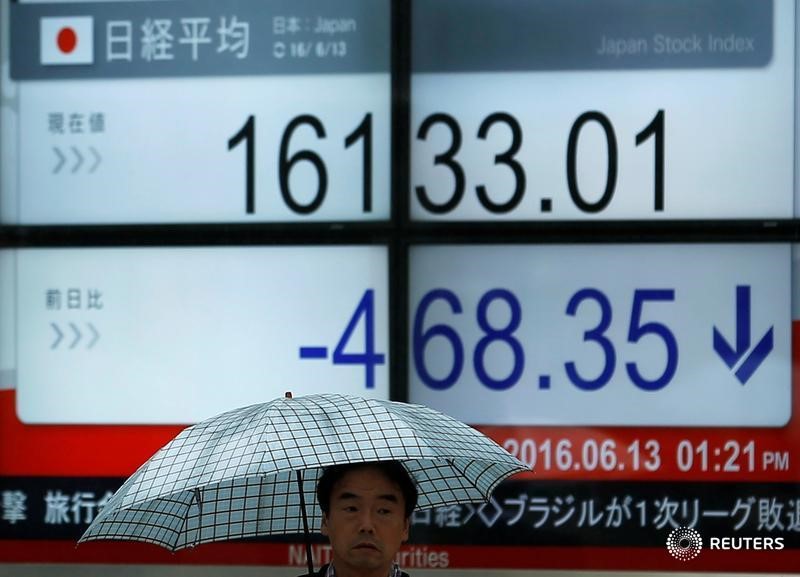
Asian stocks were mixed as investors awaited the Federal Reserve's final policy decision of the year, with concerns over softening demand and oversupply causing oil prices to slump to six-month lows. Market expectations are for the Fed to keep rates on hold, but attention will be on Fed Chair Jerome Powell's press conference and the dot plot of future policy trajectory. Chinese blue-chip stocks sank as investors were disappointed by the lack of strong stimulus measures from Beijing to support the country's economic recovery. The U.S. dollar was on the defensive, while gold slipped to a more than three-week low.
Asian markets are ending the week on a positive note, with a flurry of Purchasing Managers Index (PMI) data and key indicators from Japan, South Korea, and Indonesia expected to drive market movement. November was a strong month for some Asian stock markets, but caution is warranted due to the month-end reversal in the dollar and bonds. China's economy and financial markets continue to face challenges, with a survey showing that no public pension or sovereign wealth funds have a positive outlook for China's economy. However, Asian currencies are gaining favor among investors, except for the Chinese yuan. Key developments to watch include PMIs for various countries, Japan's unemployment data, and Indonesia's inflation figures.
Global markets pause as Wall Street's VIX index hits its lowest level since before the COVID-19 pandemic, raising concerns about a potential demand for options hedging. Bond market volatility measures also drop to their lowest since September. Despite the upcoming auction of new U.S. Treasury notes, Treasury yields have slightly increased. The Federal Reserve maintains that it is too early to discuss interest rate cuts. Chinese stock benchmarks continue to underperform, while profit growth at China's industrial firms slows, indicating a need for further policy support. Small cap Chinese stocks rise as the Beijing Stock Exchange implements a new policy preventing major shareholders from selling stock.
Chinese President Xi Jinping is meeting with American CEOs amid rising skepticism from the US business community regarding China's tighter business controls and concerns about its slowing economy. In contrast to his previous visit in 2015, where American CEOs were optimistic about China's integration into the global economic system, the current sentiment is more skeptical. Ongoing geopolitical issues between the US and China, as well as concerns about China's domestic policies, are weighing down business sentiment. Xi's challenge is to counter the narrative that China has become "uninvestable" and to maintain and attract foreign investment. However, experts predict that CEOs may not be receptive to Xi's message, as they have become aware of China's prioritization of state control. The meeting between Xi and US President Joe Biden is not expected to offer breakthroughs on economic concerns.
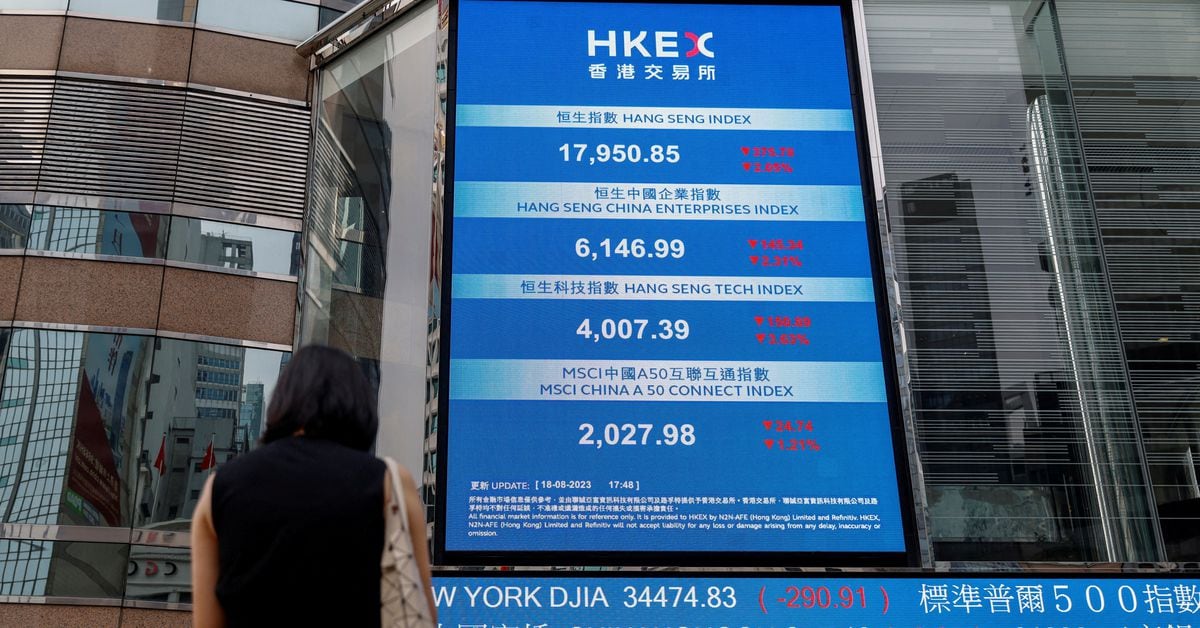
Asian stocks declined as concerns over U.S. interest rates resurfaced, with weak earnings from major tech companies like Softbank and SMIC adding to the downward pressure. Tech-heavy indexes were hit the hardest, with Hong Kong's Hang Seng Index leading losses. SMIC, China's largest chipmaker, reported an 80% slump in its third-quarter profit, signaling weak global chip demand. Other chipmaking stocks, including Samsung Electronics and TSMC, also suffered losses. SoftBank Group Corp. tumbled over 6% after disappointing earnings, while concerns over slowing demand for U.S. debt pushed up Treasury yields. Additionally, disappointing economic data from China further dampened sentiment, with the country's stock indexes ending the week on a flat note.
Major U.S. indexes rallied on Monday as investors grew optimistic about strong earnings reports. Asian markets also traded higher, led by South Korean indexes. Former head of FTSE Russell, Mark Makepeace, predicts China's economic growth will return next year despite current challenges. If Republican Rep. Jim Jordan becomes speaker of the U.S. House, tech giants like Google, Apple, and Amazon may benefit as he opposes using antitrust regulations to break up companies. U.S. President Joe Biden will visit Israel to address the Israel-Hamas conflict and work on establishing safe passage for humanitarian aid to Gaza. Rising oil prices could boost non-energy European stocks. The Russell 2000 had its best day since July, indicating a potential broadening of the market.
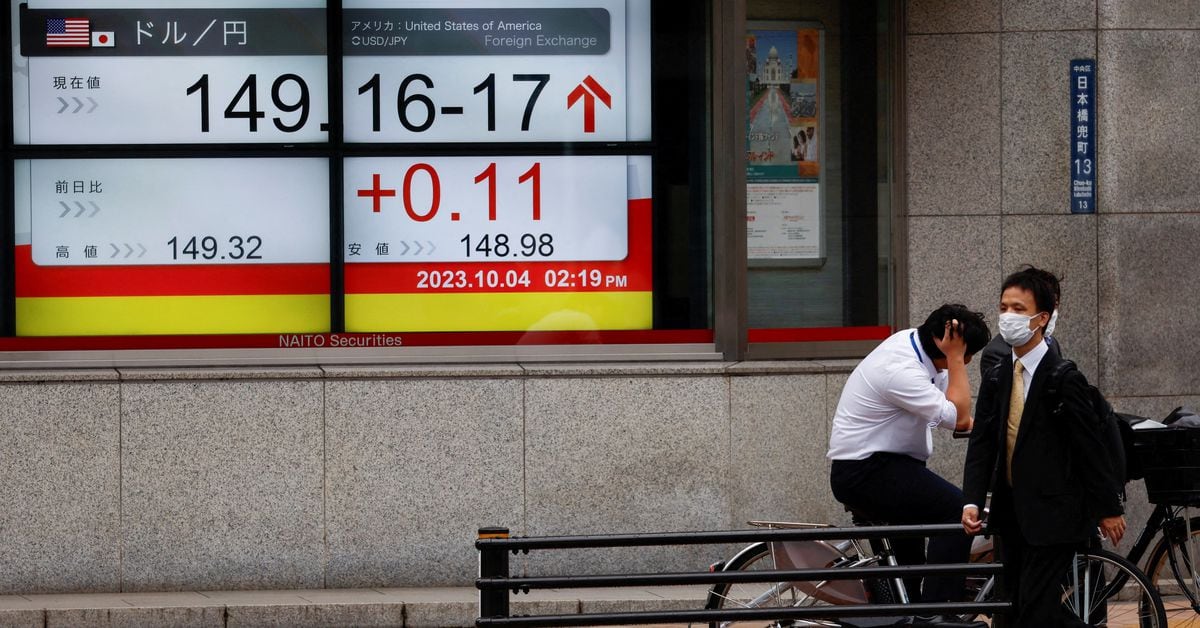
Asian shares fell, led by China, as central banks reinforced the message of higher interest rates. Investors are awaiting inflation data from the US and Europe. The yen remained near the 150 per dollar level amid intervention fears after the Bank of Japan maintained its dovish monetary policy. China's economic growth forecast for 2023 was lowered by S&P to 4.8% from 5.2%. Bond investors are still adjusting to the US Federal Reserve's more hawkish rate projections. US data, including inflation results, will be closely watched. The US dollar held near a six-month high, while oil prices remained near 10-month highs.
Global equities dropped as weak service sector data raised concerns about China's post-pandemic economy, while Australia's central bank kept interest rates unchanged, leading to a decline in the Australian dollar. European equity indexes opened lower, and Asian shares also fell. The recent rally in China shares is losing steam as a private-sector survey showed that China's services activity expanded at the slowest pace in eight months. Investors are hoping for more substantial policy stimulus from Beijing to stabilize the Chinese economy. The Australian dollar experienced its biggest daily drop in a month after the central bank's decision, and markets are pricing in a high chance of the Fed keeping rates unchanged this month.
Gold prices are down and hit a five-month low as U.S. Treasury yields continue to rise, reaching their highest level in 15 years. The strengthening U.S. dollar index is also contributing to the bearish sentiment. The minutes from the Federal Reserve's last meeting indicated a commitment to reducing U.S. inflation, further pushing up Treasury yields and the dollar. Additionally, China's central bank announced plans to provide stimulus to its economy and prevent further depreciation of the yuan, which has been impacting the precious metals market due to weaker demand concerns.
Despite a large crude oil inventory decline of 6 million barrels, oil prices moved slightly lower due to concerns about China's faltering economy and its potential impact on oil demand. Refinery runs data from China indicated strong and growing demand, but the latest economic data suggested a slowdown in growth. Mixed changes were reported in gasoline and middle distillate inventories.
As China's economy continues to struggle, with disappointing readings for industrial production and retail sales, the country's central bank has cut lending rates and the yuan has slid to its lowest level since 2023. In contrast, the U.S. economy appears to be in a better position, with fund managers predicting a soft landing or no landing at all. U.S. Treasury yields are climbing, and the dollar is gaining strength against currencies in emerging economies. The retail sales report in the U.S. is expected to reinforce the robust readings for the economy, while Home Depot's earnings update will provide insight into the performance of big retailers.