US new home sales surged by 20.5% in August to the fastest pace in three years, driven by builder discounts and falling mortgage rates, but overall housing market activity remains cautious due to affordability issues and market volatility.
In August, new-home sales in the U.S. surged by 20.5% to a three-year high, driven by builder discounts and lower mortgage rates, despite some economist skepticism about the sustainability of this spike. The median price of new homes increased slightly, and the sales increase was most notable in the Northeast, indicating a potential rebound in housing activity amid improved affordability.
US new-home sales unexpectedly surged by 20.5% in August to the fastest pace since early 2022, driven by aggressive price cuts and sales incentives from builders, reducing inventory and boosting median prices, despite ongoing affordability concerns and a volatile monthly data trend.
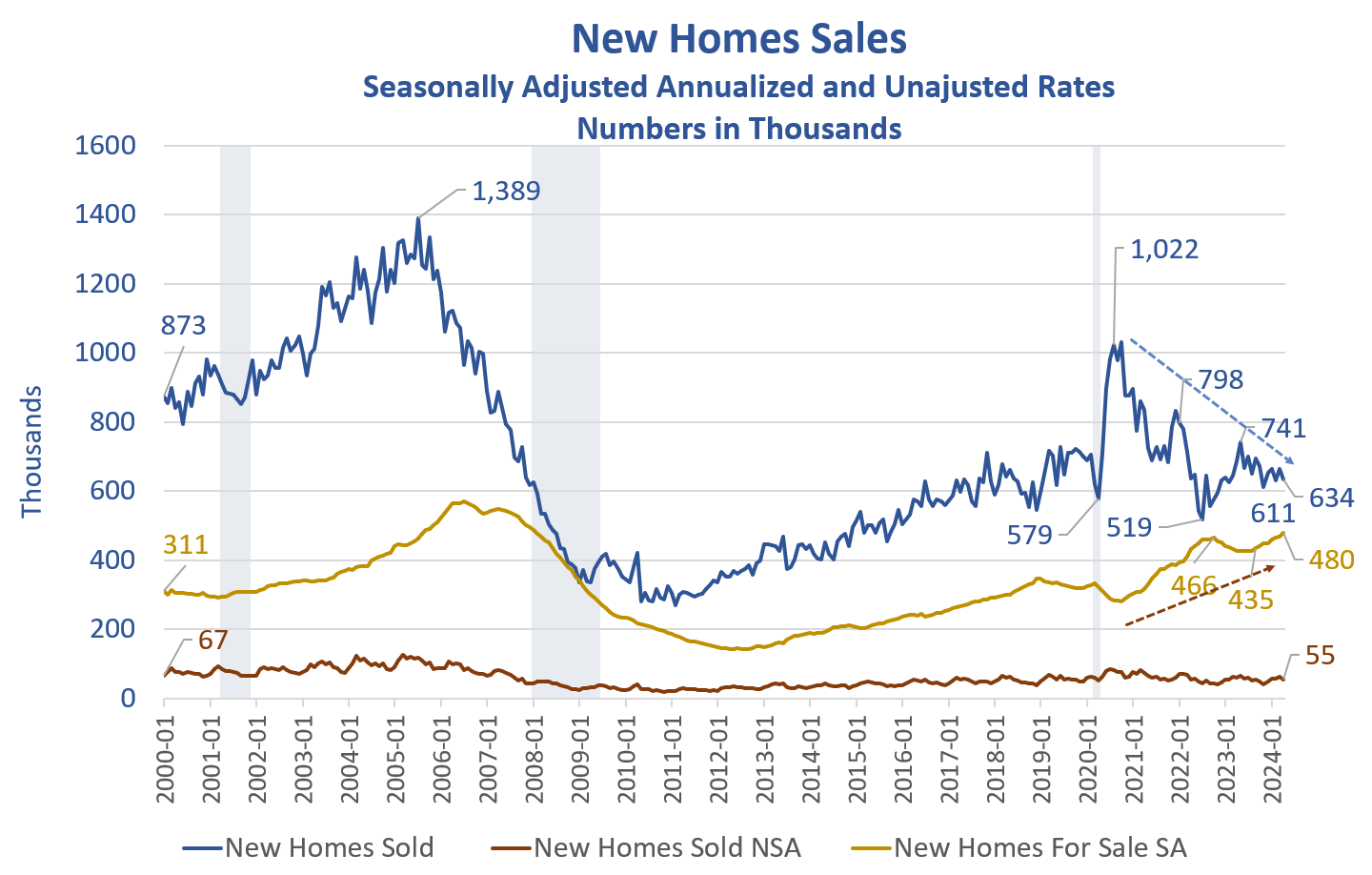
The U.S. new home market is experiencing a slowdown with declining sales, rising inventory, and falling prices, driven by high mortgage rates and economic uncertainty, leading to a buyer's market with increased negotiating power for purchasers.
US new home sales declined by 13.7% in May, falling more than expected due to high mortgage rates, leading to an increase in unsold homes to the highest level since 2007, amid economic uncertainty and rising construction costs.
US new-home sales in May dropped by 13.7%, the largest decline since 2022, due to high mortgage rates, rising costs, and economic uncertainty, leading to increased inventories and a slowdown in construction, with prices slightly rising and regional sales varying.
Sales of new homes in the U.S. plummeted by 13.7% in May, reaching the lowest level since 2019, due to high mortgage rates and declining consumer confidence, leading to a significant increase in housing supply to a three-year high.
New home sales dropped 4.7% in April 2024, with significant negative revisions to previous months' data. The median sales price was $433,500, and the inventory represents a 9.1-month supply. High mortgage rates and record prices are impacting affordability, and existing-home sales have also declined.
Sales of newly built homes fell 4.7% in April from March and 7.7% year-over-year due to rising mortgage rates and home prices, with the average 30-year fixed mortgage rate reaching 7.5% in April. High costs for land, labor, and materials prevent builders from lowering prices, and while large builders like D.R. Horton and Toll Brothers report strong earnings, overall new home sales remain below the 5-year average. Affordability challenges persist, especially for low-income families, amid a nationwide housing shortage.
Sales of new U.S. single-family homes fell 0.3% in February, with the median new home price dropping 7.6% from a year ago, marking the lowest in over 2-1/2 years. The housing market remains strong amid a shortage of previously owned houses, with builders offering price cuts and incentives to make housing more affordable. Despite a rise in mortgage rates, new home sales are up 5.9% year-on-year, and the overall housing market is showing signs of improvement, although supply remains inadequate, keeping house prices elevated.
Despite a sluggish housing market characterized by high prices and low inventory, new home sales are on the rise as developers rush to meet demand, offering buyers like Joel Adler, a retired teacher, more options in gated communities like Valencia Sound in Boynton Beach, Florida.
Sales of newly built homes in the U.S. surged 8% in December to an annual rate of 664,000, exceeding expectations, as falling mortgage rates dipped below 7%, sparking increased home-buying interest. The median sales price of a new home fell to $413,200, and the supply of new homes for sale decreased. New-home sales are up 4.4% compared with last year, with the Northeast leading the increase. Economists predict that new-home sales will continue to rise in 2024, reaching their highest level since the beginning of 2022, as the housing market relies on newly built homes amid a persistent lack of resale home listings.
Global markets pause as Wall Street's VIX index hits its lowest level since before the COVID-19 pandemic, raising concerns about a potential demand for options hedging. Bond market volatility measures also drop to their lowest since September. Despite the upcoming auction of new U.S. Treasury notes, Treasury yields have slightly increased. The Federal Reserve maintains that it is too early to discuss interest rate cuts. Chinese stock benchmarks continue to underperform, while profit growth at China's industrial firms slows, indicating a need for further policy support. Small cap Chinese stocks rise as the Beijing Stock Exchange implements a new policy preventing major shareholders from selling stock.
Despite high mortgage rates and rising home prices, new residential home sales surged in September while existing home sales stagnated. The lack of existing homes on the market has forced buyers to turn to new construction, where builders are offering discounted mortgages and other incentives such as covering closing costs. Mortgage rate buydowns, where builders lower the mortgage rate for the entire life of the loan, are particularly popular. Builders are also constructing more speculative homes to provide buyers with a better idea of their mortgage rate at the time of purchase. The surge in new home sales is attributed to a combination of limited options in the existing home market and attractive incentives offered by builders.
New residential home sales in the US surged in September, while existing home sales stagnated due to owners being reluctant to move and buy another home at higher mortgage rates. The lack of existing homes on the market has forced buyers to opt for new construction, and builders are sweetening the deal by offering discounted mortgages and other incentives. Mortgage rate buydowns, where builders pay the difference between market rates and the rates offered, are the most desired incentive. Builders are also covering closing costs and constructing more speculative homes to provide buyers with a clearer idea of their mortgage rates. The surge in new home sales is attributed to a combination of incentives and low existing home inventory.