Tag

Xmm Newton

All articles tagged with #xmm newton

science-and-exploration2 months ago

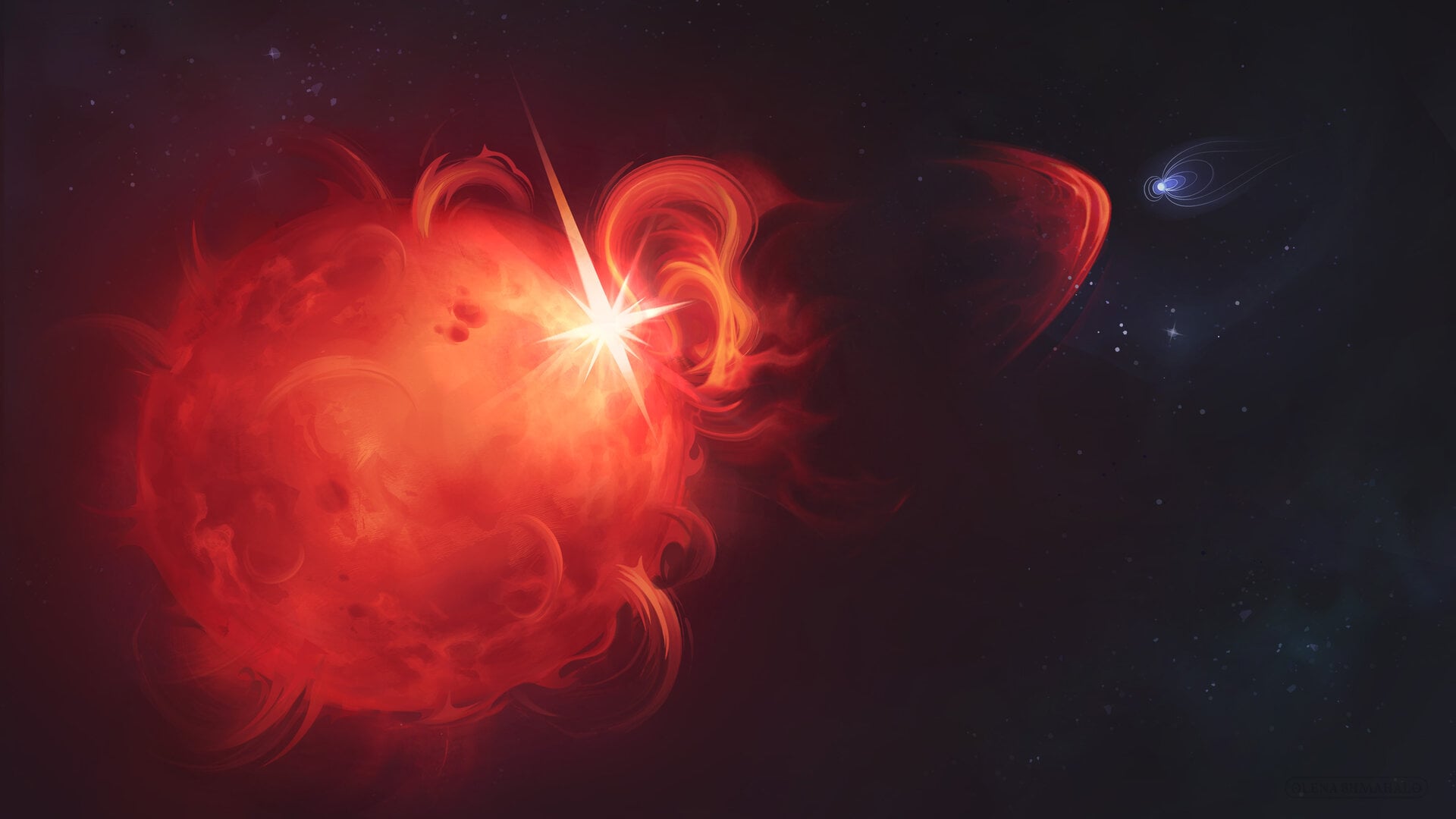
Scientists Detect First Explosive Burst from Nearby Star

Astronomers have confirmed the first observation of a coronal mass ejection (CME) from a star other than the Sun, using ESA's XMM-Newton and LOFAR telescopes. The CME, originating from a red dwarf star 130 light-years away, was extremely fast and dense, capable of stripping away planetary atmospheres, which has significant implications for the habitability of planets orbiting active stars.
astronomy1 year ago

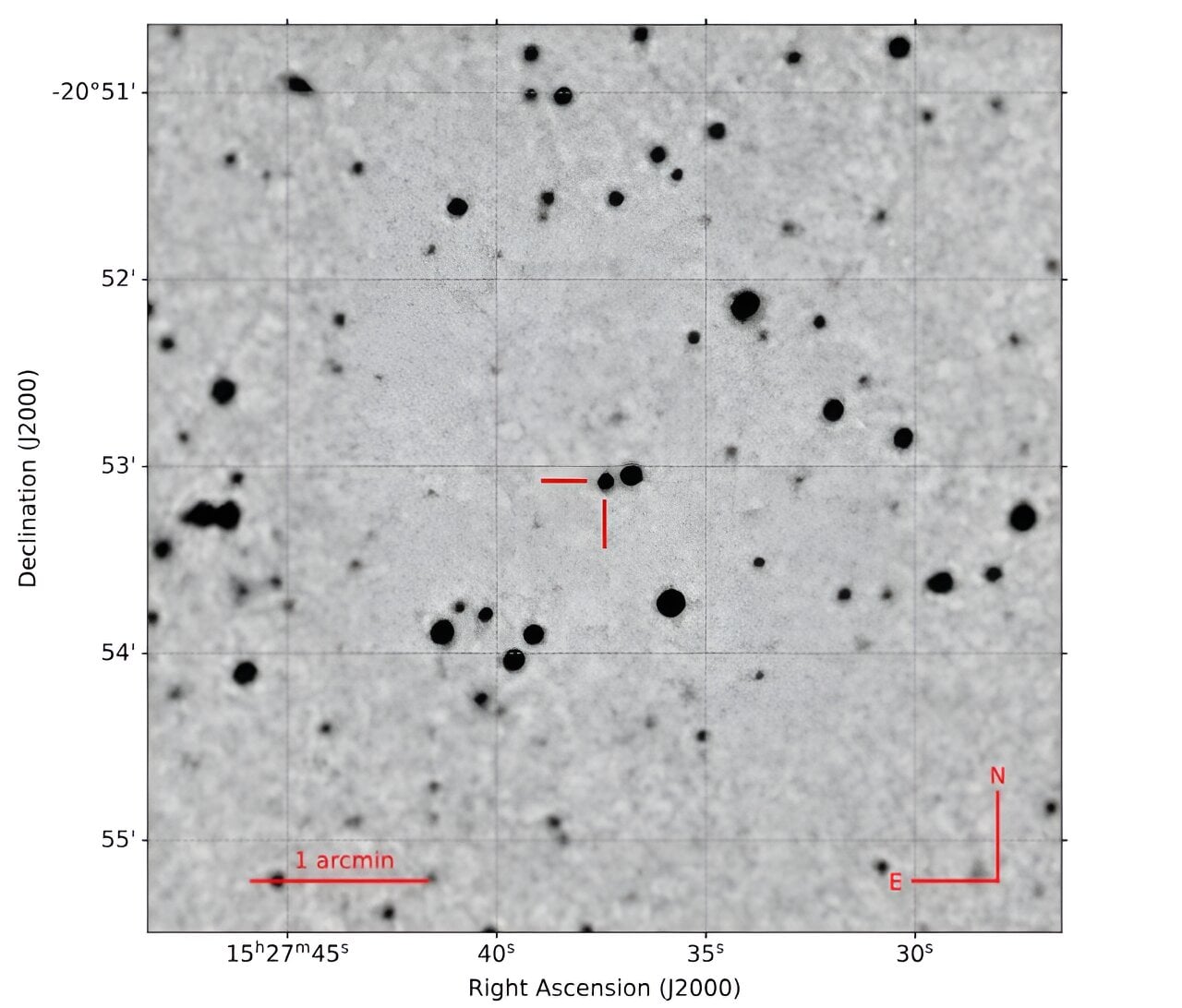
"Astronomers Uncover New Cataclysmic Variable"

Astronomers have discovered a new magnetic cataclysmic variable system, likely of the polar type, designated as XMM J152737.4-205305.9 (or XMM 152737). By analyzing data from ESA's XMM-Newton and Gaia satellites, the system was found to exhibit characteristics consistent with polars, including a strong magnetic field, synchronous rotation, and prominent emission lines of hydrogen and helium. Further observations are needed to determine the origin of observed dips and confirm its polar classification.

astronomy1 year ago

"Galactic Tantrums: Unraveling the Mysteries of Black Hole Winds"

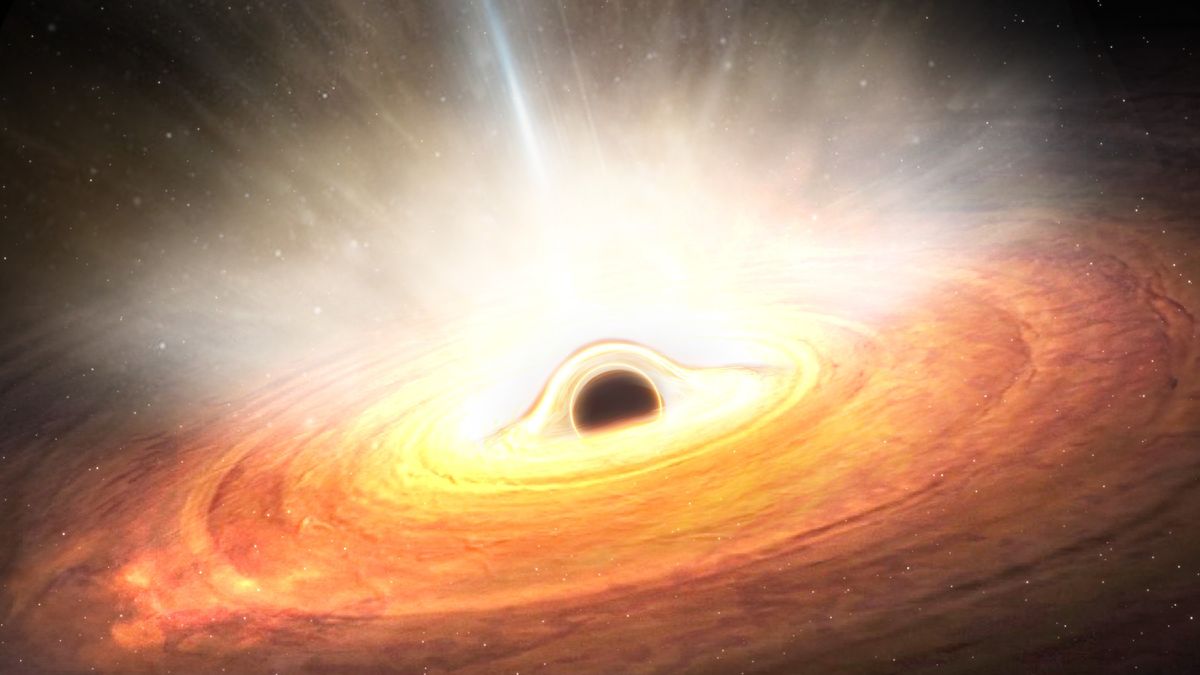
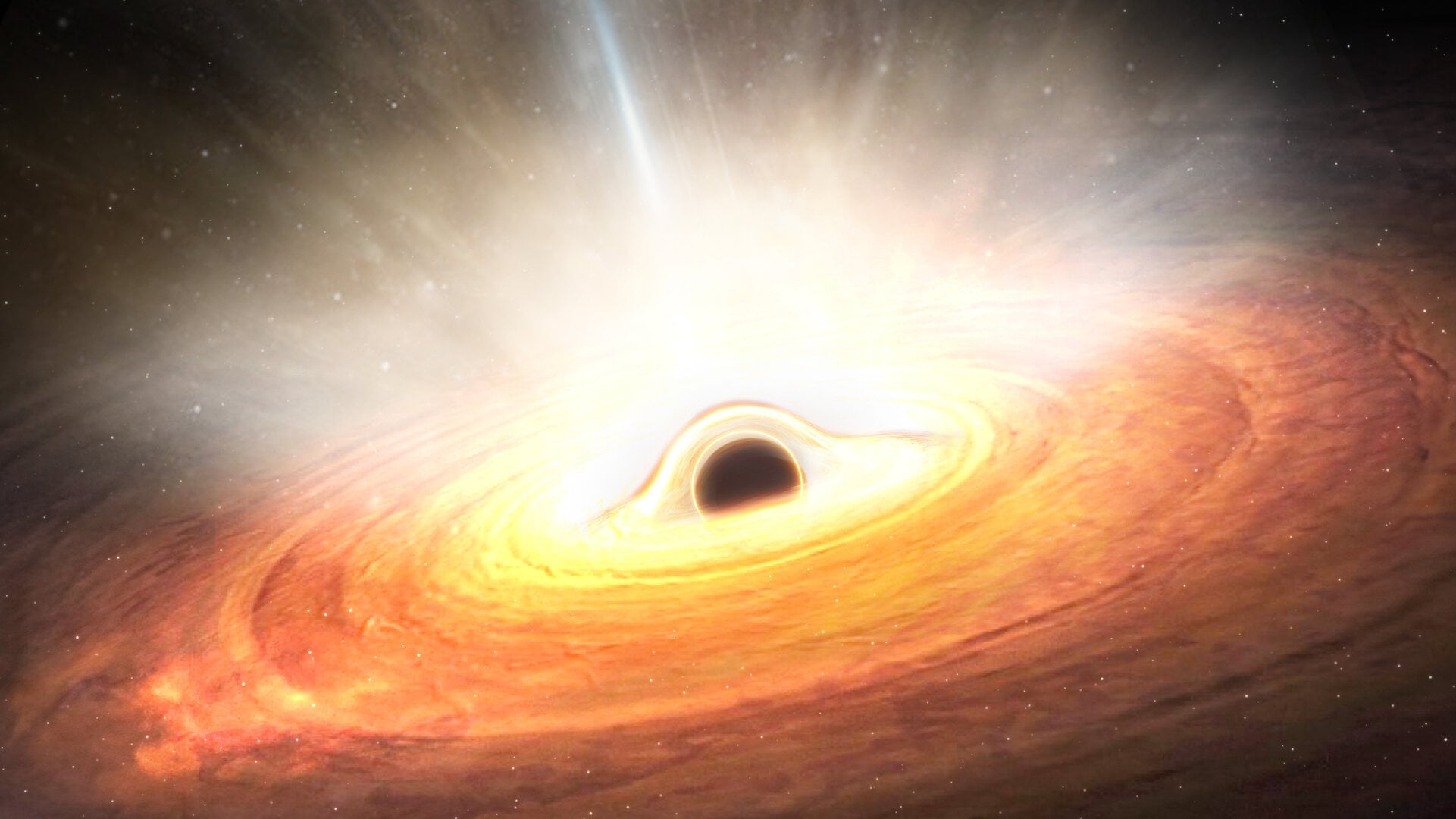
Researchers have observed a supermassive black hole in the distant galaxy Markarian 817 expelling a sustained gust of ultrafast cosmic wind, which cleared a region around the black hole of dust and hindered star formation for several hundred days. This finding suggests that black holes can significantly reshape the galaxies they inhabit, shedding light on the process of galaxy formation. The study, conducted using data from NASA's Swift Observatory and the European Space Agency's XMM-Newton mission, could also explain the peculiar bald patch surrounding the Milky Way's own supermassive black hole, Sagittarius A*.

science-and-exploration1 year ago

"Rampaging Black Hole: XMM-Newton Observations Uncover Unprecedented Activity"

ESA's XMM-Newton has observed a black hole, located in the galaxy Markarian 817, emitting ultra-fast winds that are disrupting the formation of new stars in its vicinity. This discovery sheds light on the intricate relationship between black holes and galaxies, suggesting that black holes may have a more significant impact on their host galaxies than previously thought. The study, led by undergraduate researcher Miranda Zak, utilized data from XMM-Newton's EPIC instrument, as well as observations from NASA's Swift and NuSTAR missions, to uncover this phenomenon.

astronomy2 years ago

"Uncovering a Galactic Fossil: Insights into Universe's Evolution"

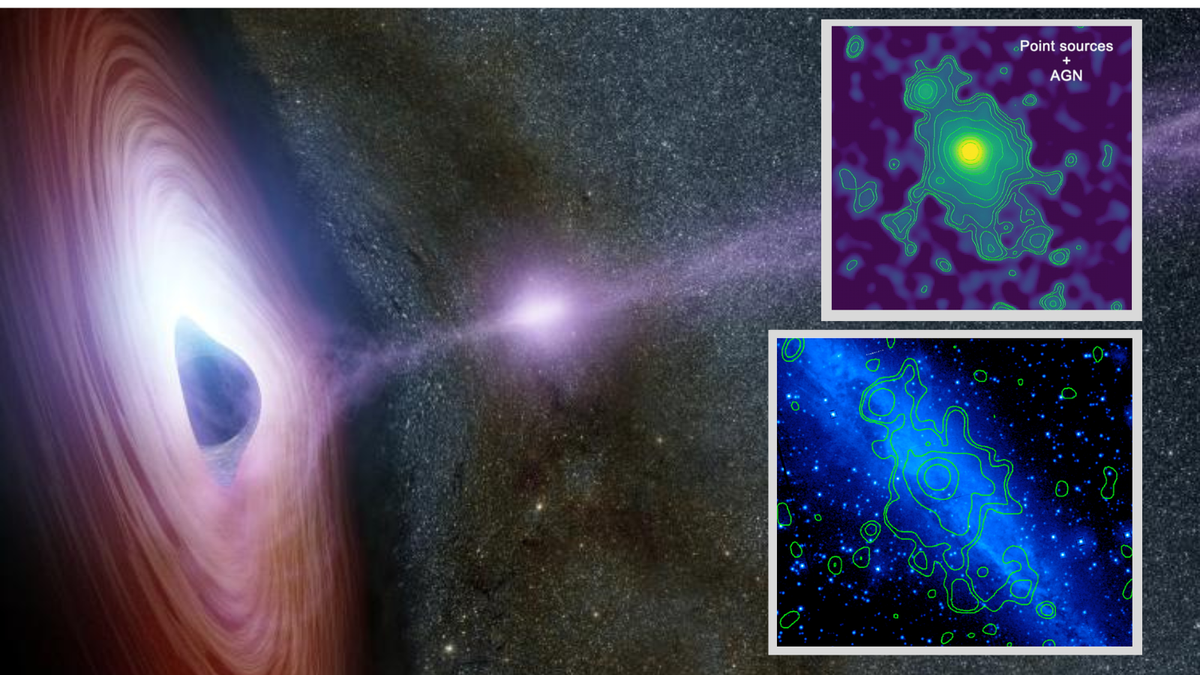
NASA scientists have discovered a cosmic fossil created by a supermassive black hole eruption over 5 million years ago in the spiral galaxy NGC 4945. Using the XMM-Newton space telescope, they observed X-rays outlining cold gas clouds, providing insight into how supermassive black holes influence their surroundings and guide galactic evolution. The galaxy, undergoing intense star formation, exhibits features of an active galactic nucleus, and the team theorizes that the black hole's eruption triggered this starburst period. Further observations will focus on understanding the black hole's influence on the galaxy's evolution and its potential role in quenching star formation.

astronomy2 years ago

"Unveiling the Mysteries of Galaxy Cluster G113: European Astronomers Lead the Way"

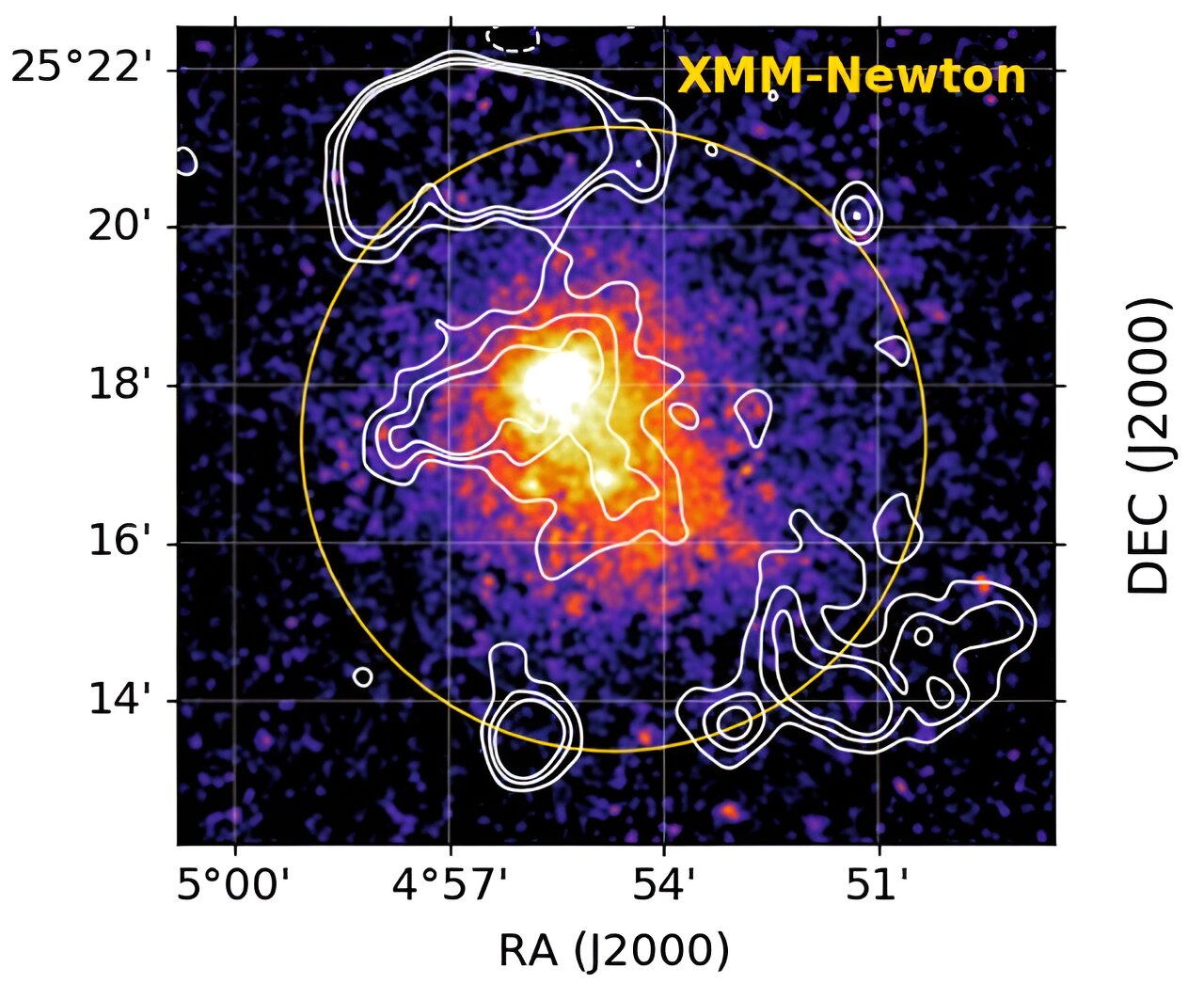
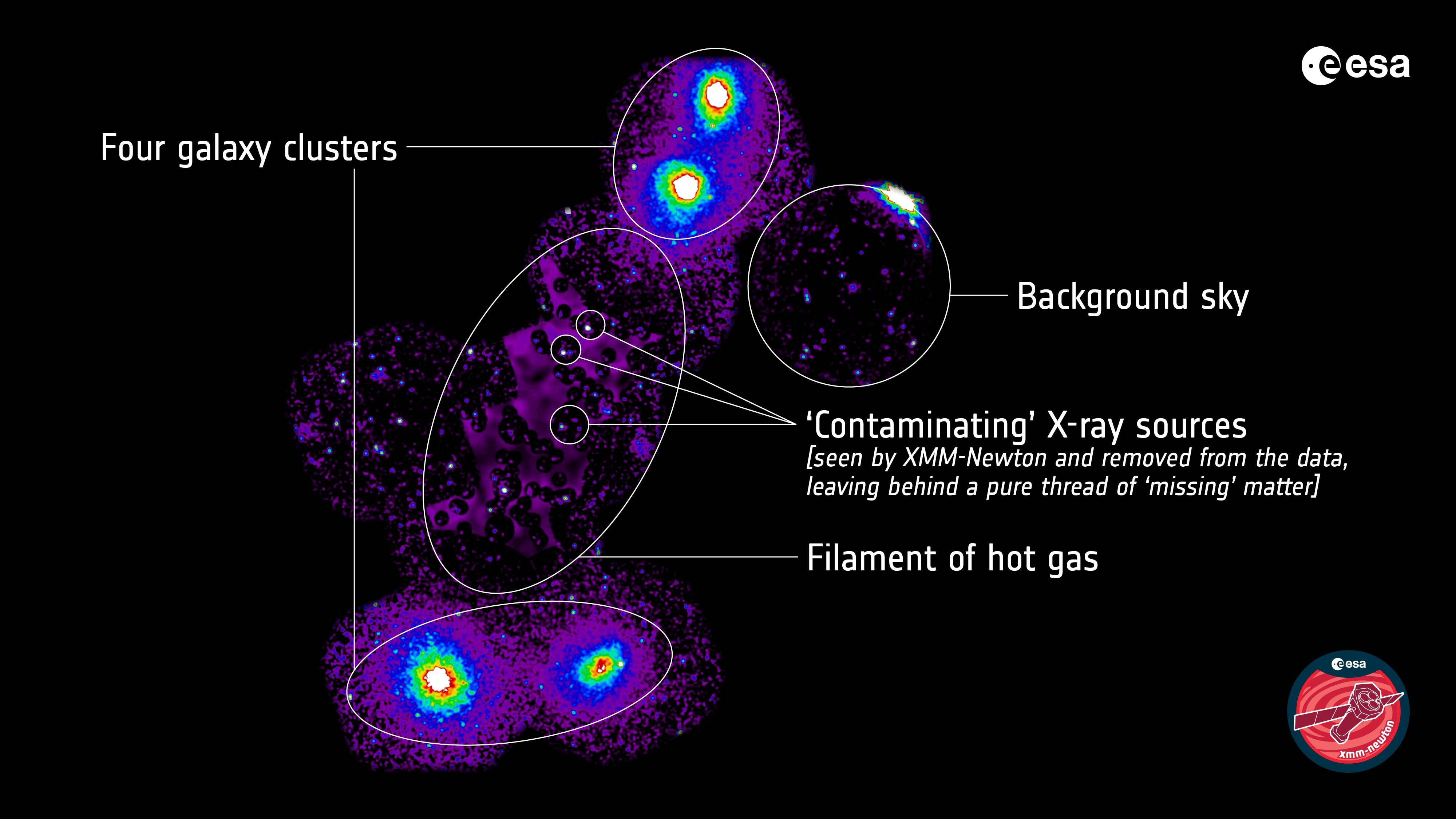
European astronomers have used ESA's XMM-Newton satellite and the Low-Frequency Array (LOFAR) to study the galaxy cluster PSZ2G113.91-37.01 (G113). The observations revealed that G113 is undergoing a merger and confirmed the presence of a radio halo and two radio relics. The study also identified a cold front and a cold region within the cluster. Further analysis found a strong correlation between X-ray and radio emissions in the halo region, while an anti-correlation was observed in the relic region. The researchers propose further observations to understand the physical processes behind these findings.