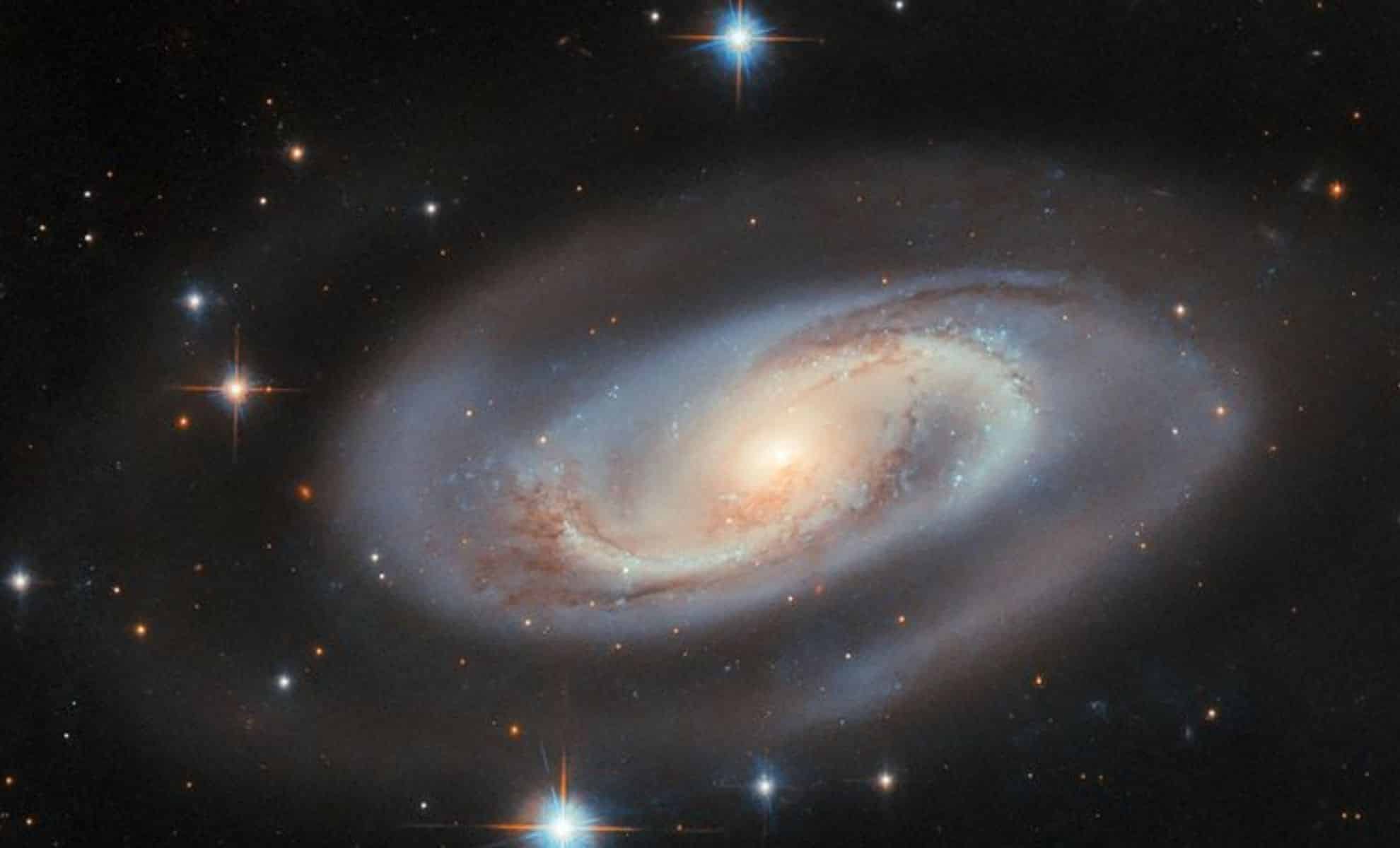
Hubble has observed the galaxy UGC 11397, located 250 million light-years away, revealing an active supermassive black hole at its center, classified as a Type 2 Seyfert galaxy, providing insights into black hole growth and galaxy evolution.
The galaxy SDSS1335+0728 has been observed undergoing dramatic brightness changes due to the activation of its central supermassive black hole, providing a rare opportunity to study the transition to an active galactic nucleus. This event, first detected by the Zwicky Transient Facility, offers valuable insights into the behavior of black holes and their impact on host galaxies, enhancing our understanding of galactic evolution.
Astronomers have observed a supermassive black hole in the distant galaxy SDSS1335+0728 transition from an inactive to an active state, emitting various types of radiation over four years. This unprecedented event, possibly due to a tidal disruption event or a new phenomenon, provides new insights into the processes that fuel active galactic nuclei and the evolution of supermassive black holes.
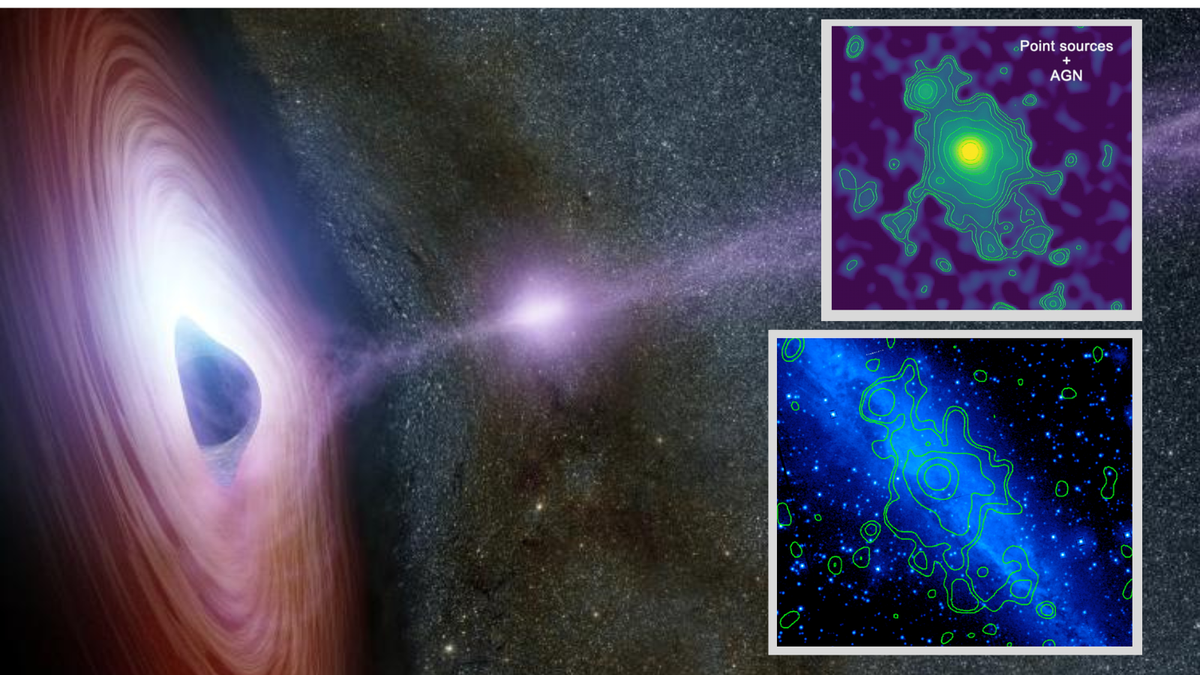
NASA scientists have discovered a cosmic fossil created by a supermassive black hole eruption over 5 million years ago in the spiral galaxy NGC 4945. Using the XMM-Newton space telescope, they observed X-rays outlining cold gas clouds, providing insight into how supermassive black holes influence their surroundings and guide galactic evolution. The galaxy, undergoing intense star formation, exhibits features of an active galactic nucleus, and the team theorizes that the black hole's eruption triggered this starburst period. Further observations will focus on understanding the black hole's influence on the galaxy's evolution and its potential role in quenching star formation.
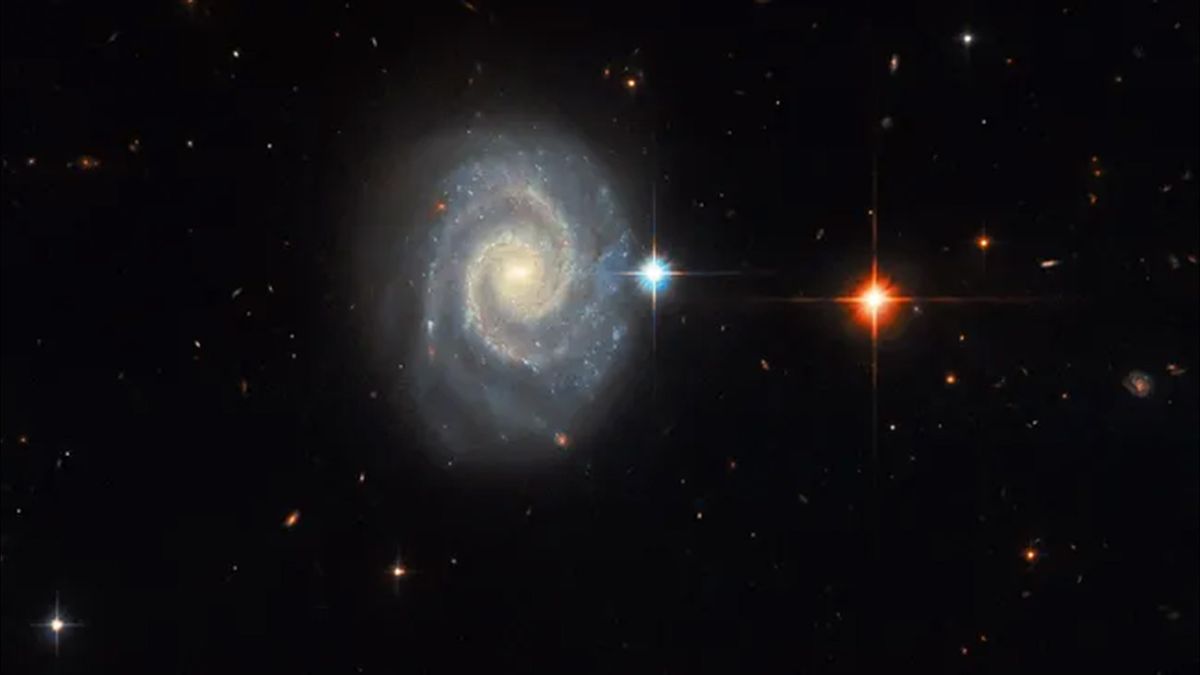
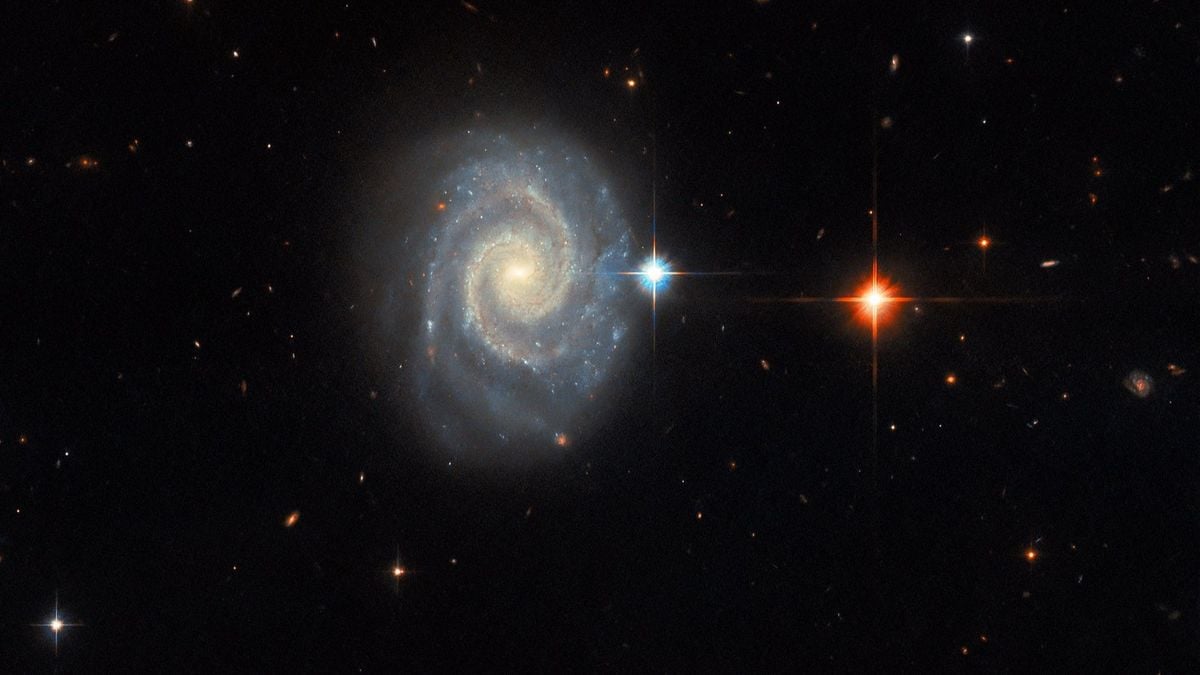
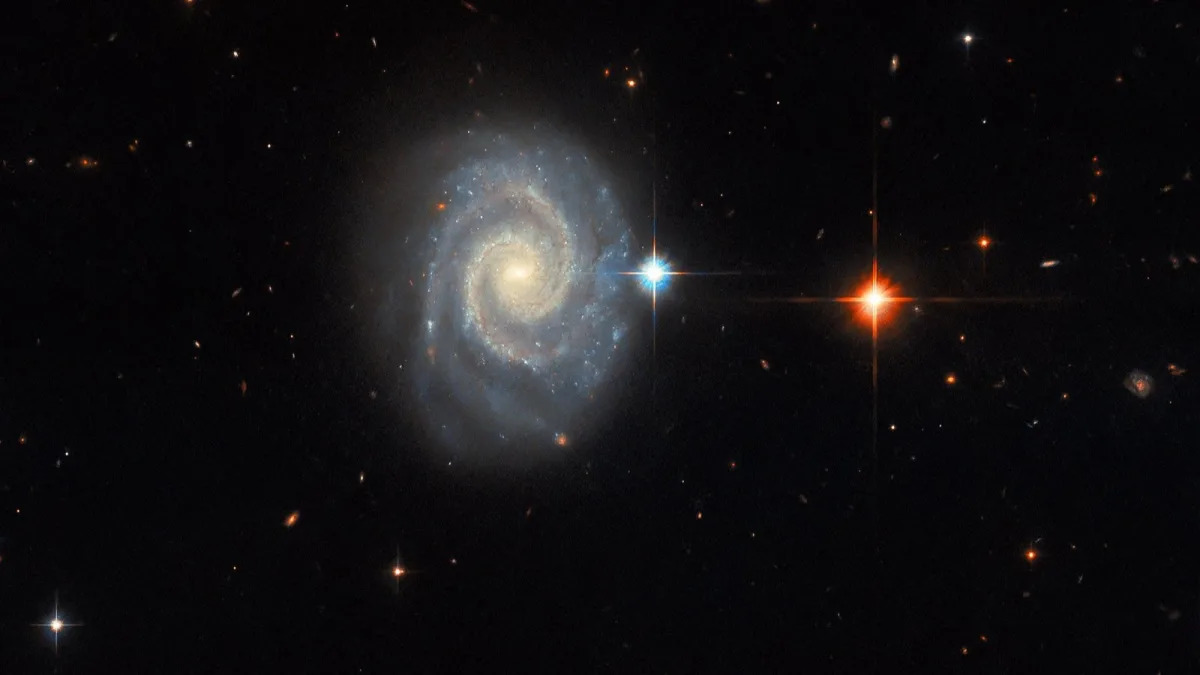
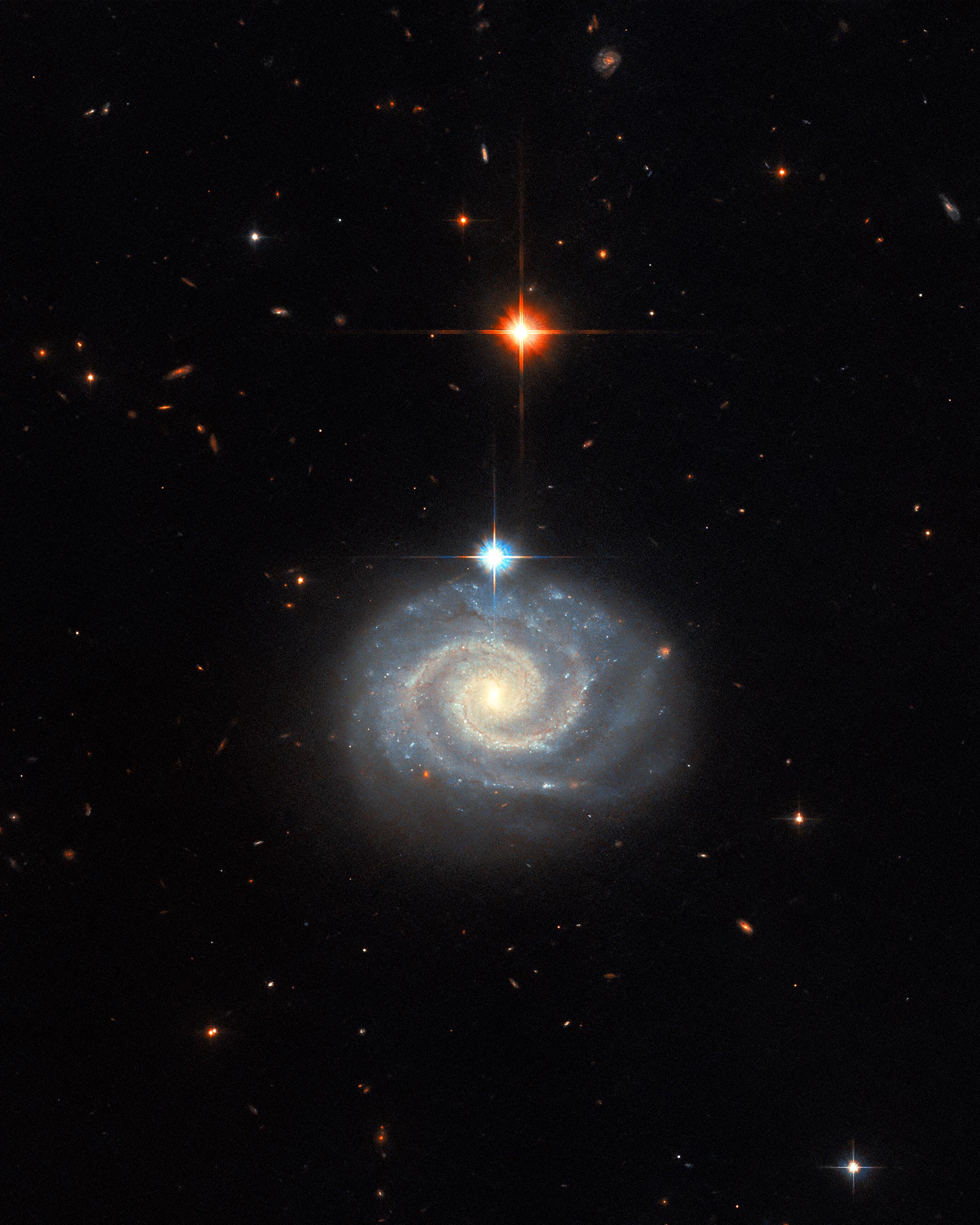
The Hubble Space Telescope has captured a stunning image of the spiral galaxy MCG-01-24-014, located 275 million light-years away from Earth. The galaxy, seen face-on, exhibits two well-defined spiral arms and an active galactic nucleus. MCG-01-24-014 is classified as a Type-2 Seyfert galaxy, emitting "forbidden" light that defies the rules of quantum physics. The image showcases the galaxy's bright light, with two large stars in the foreground and distant galaxies in the background.
The Hubble Space Telescope has captured a stunning image of the spiral galaxy MCG-01-24-014, located 275 million light-years from Earth. The galaxy, seen face-on, exhibits two well-defined spiral arms and an active galactic nucleus. MCG-01-24-014 is classified as a Type-2 Seyfert galaxy, known for its bright core. The galaxy emits "forbidden" light, which is observed in space but does not occur under normal conditions on Earth due to the rules of quantum physics. The Hubble image showcases the galaxy's radiant light, with additional distant galaxies scattered across the backdrop of space.
The Hubble Space Telescope has captured a stunning image of a distant spiral galaxy, MCG-01-24-014, showcasing its "forbidden" light. This Type-2 Seyfert galaxy exhibits two well-defined spiral arms and an energetic glowing core known as an active galactic nucleus (AGN). Seyfert galaxies emit spectral lines associated with "forbidden" emissions, which defy certain rules of quantum physics. The Hubble image reveals the galaxy's bright light, with two large stars in the foreground and other distant galaxies in the background.
The Hubble Space Telescope has captured an image of MCG-01-24-014, a spiral galaxy located 275 million light-years away. This galaxy is classified as a Type-2 Seyfert galaxy, characterized by its unique spectra and "forbidden" emissions. These emissions, which defy the rules of quantum physics, occur in the energetic core of the galaxy known as the active galactic nucleus. The "forbidden" light emitted by the galaxy challenges our understanding of quantum physics and provides valuable insights into the nature of Seyfert galaxies.
Researchers have discovered a supermassive black hole in a galaxy that existed only half a billion years after the Big Bang. The black hole is estimated to account for about half of the galaxy's mass, a remarkably high fraction compared to modern galaxies. This finding challenges the traditional understanding of how supermassive black holes form, suggesting that they may have formed directly without an intermediate step involving a star. The discovery was made using the James Webb Space Telescope and confirmed with the Chandra X-ray Observatory, which detected X-ray emissions from the black hole.
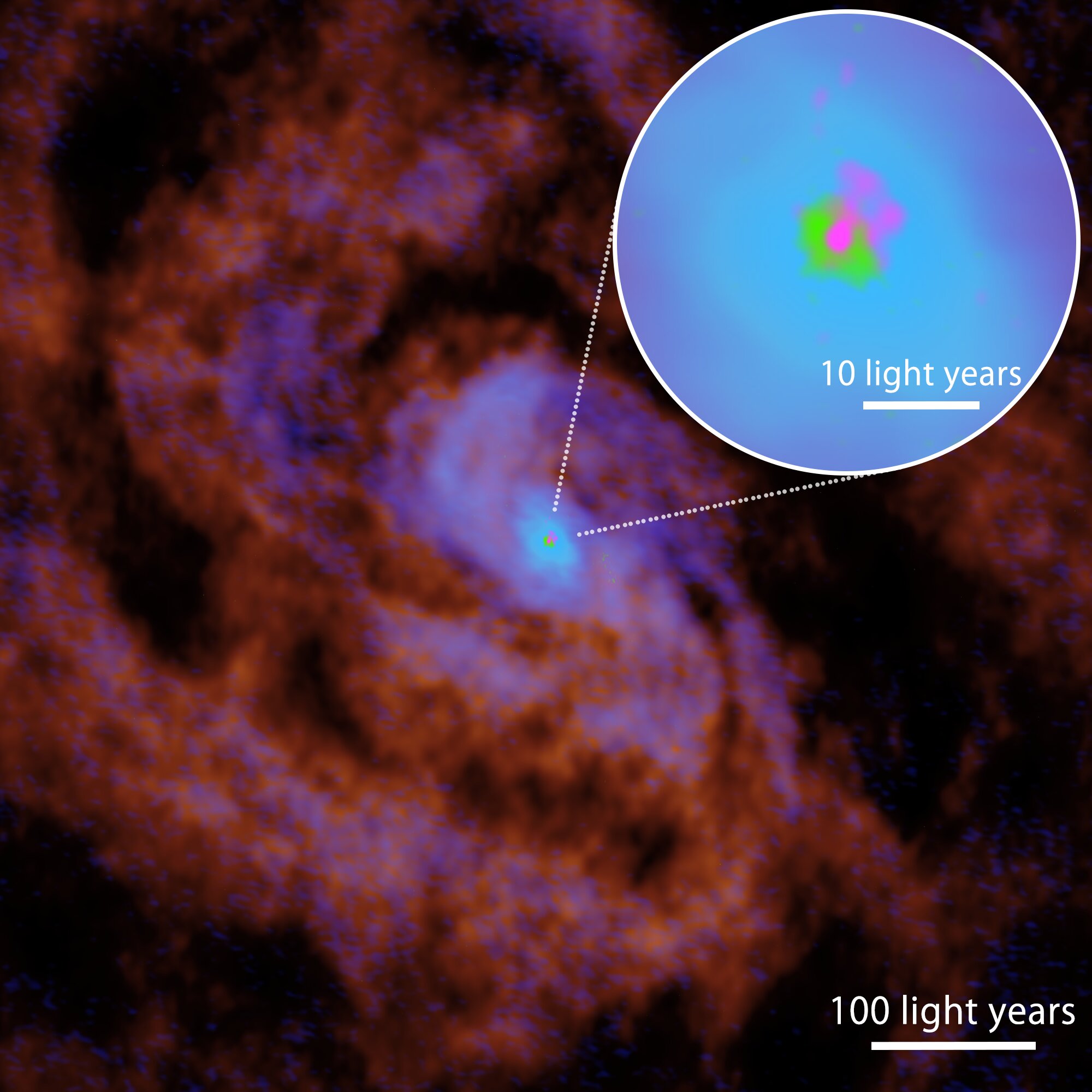
Astronomers have made a groundbreaking observation of a nearby active galactic nucleus using the Atacama Large Millimeter/submillimeter Array (ALMA), capturing gas flows and structures in the immediate vicinity of a supermassive black hole on sub-parsec scales. The study reveals the accretion flow towards the black hole, driven by gravitational instability, and the expulsion of most of the gas as atomic or molecular outflows. These outflows eventually return to the gas disk, completing a gas recycling process. The findings provide crucial insights into the growth mechanisms of supermassive black holes.
The James Webb Space Telescope (JWST) has revealed that there were fewer feeding supermassive black holes in the early universe than previously thought. Using the Mid-Infrared Instrument (MIRI), astronomers studied a region of space called the Extended Groth Strip and found a scarcity of rapidly growing supermassive black holes. This suggests that black holes may be growing at a slower rate than estimated and that their feeding rates may have been miscalculated by previous telescopes. The findings also indicate that these black holes may not have significantly impacted their host galaxies during the early universe. Additionally, the study discovered a lack of dust in the galaxies studied, challenging previous assumptions about lower mass galaxies containing substantial amounts of dust. The research could have implications for understanding the growth and origins of black holes.
Astronomers have discovered a supermassive black hole, known as J221951, that suddenly "switched on" and became one of the most dramatic bursts of brightness ever seen. The black hole was found using various telescopes and instruments, including NASA's Swift Observatory and the Hubble Space Telescope. The observations revealed that J221951 is located about 10 billion light-years away and is not associated with a previously-detected gravitational wave event. The researchers believe that the black hole consumed surrounding material rapidly, causing a huge release of energy. This discovery adds to our understanding of the active role supermassive black holes play in a galaxy's star formation.
Astronomers have observed a supermassive black hole, named J221951, suddenly flare to life in a distant galaxy. This event, occurring 10 billion years ago, is one of the most dramatic instances of a black hole feeding on vast amounts of material. The flare's brightness suggests that the black hole transitioned from a quiescent state to an active galactic nucleus or experienced a tidal disruption event. Further observations will help determine the cause of this sudden feeding activity.
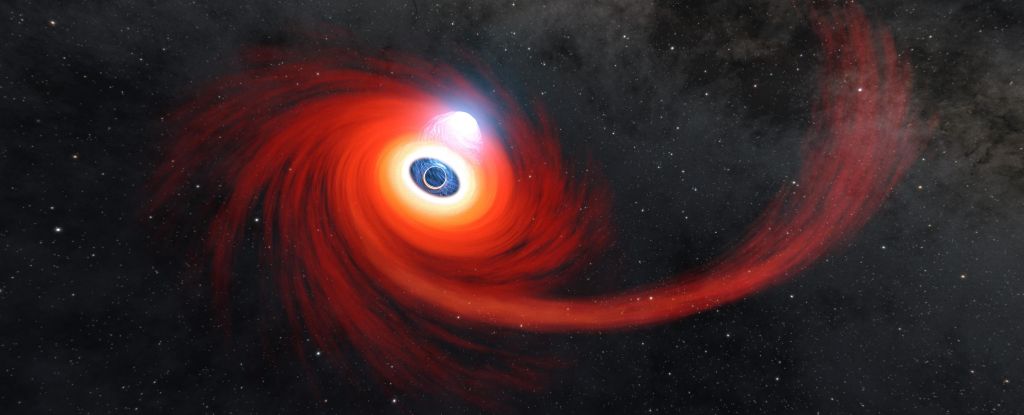
Astronomers searching for the counterpart of a gravitational wave event stumbled upon an incredibly bright and long-lasting transient event. The event, originating from a supermassive black hole named J221951, has been ongoing for 10 months and is estimated to have released over 10 times the energy the Sun will release in 10 billion years. The event could be either a tidal disruption event, where a star or gas cloud is ripped apart by the black hole's gravitational pull, or the initial phases of an active galactic nucleus. Further research is needed to determine the cause of this unusual event.
Astronomers have observed one of the most dramatic "switches on" of a black hole ever seen. The black hole, known as J221951, appeared suddenly and shone brightly, indicating rapid feeding on surrounding material. The source is located around 10 billion light years away and is one of the most luminous transients ever detected. Two possible mechanisms for this extreme feeding are a tidal disruption event or the activation of an active galactic nucleus. Continued monitoring will help determine the nature of this event.