
Scientists Detect First Explosive Burst from Nearby Star
TL;DR Summary
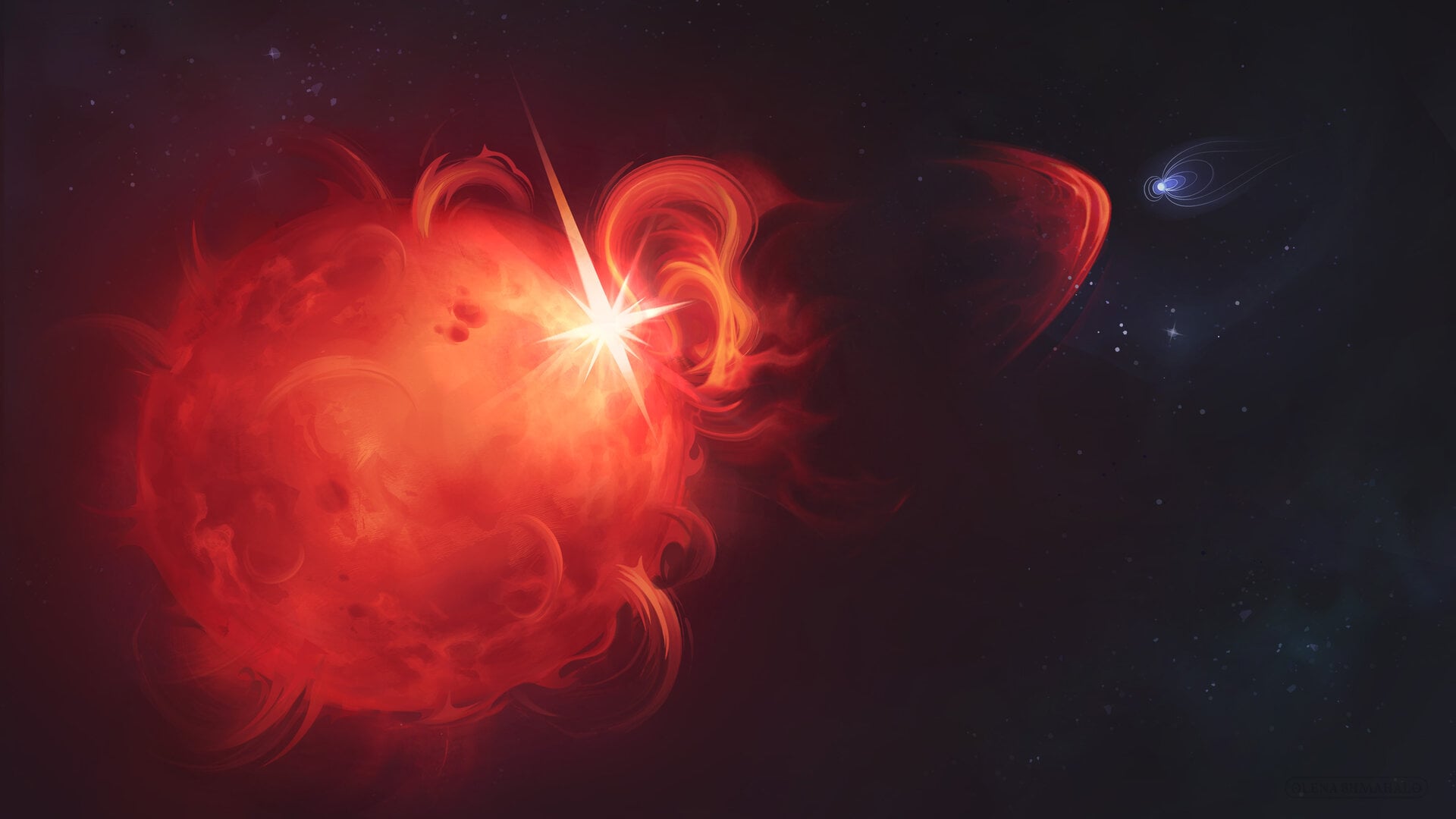
Astronomers have confirmed the first observation of a coronal mass ejection (CME) from a star other than the Sun, using ESA's XMM-Newton and LOFAR telescopes. The CME, originating from a red dwarf star 130 light-years away, was extremely fast and dense, capable of stripping away planetary atmospheres, which has significant implications for the habitability of planets orbiting active stars.
Topics:science#cme#exoplanets#science-and-exploration#space-weather#stellar-coronal-mass-ejection#xmm-newton
- First confirmed sighting of explosive burst on nearby star European Space Agency
- What a monster explosion detected on a star could mean for life beyond Earth The Washington Post
- Astronomers spot 1st coronal mass ejection from an alien star – and that's bad news in the search for life Space
- Scientists detect monster blast from nearby star powerful enough to rip the atmosphere off a planet Live Science
- Radio burst from a stellar coronal mass ejection Nature
Reading Insights
Total Reads
0
Unique Readers
9
Time Saved
5 min
vs 6 min read
Condensed
94%
1,010 → 59 words
Want the full story? Read the original article
Read on European Space Agency