Tag

Wolf Rayet Star

All articles tagged with #wolf rayet star

science1 year ago

Astronomers Witness Star's Destruction by Black Hole

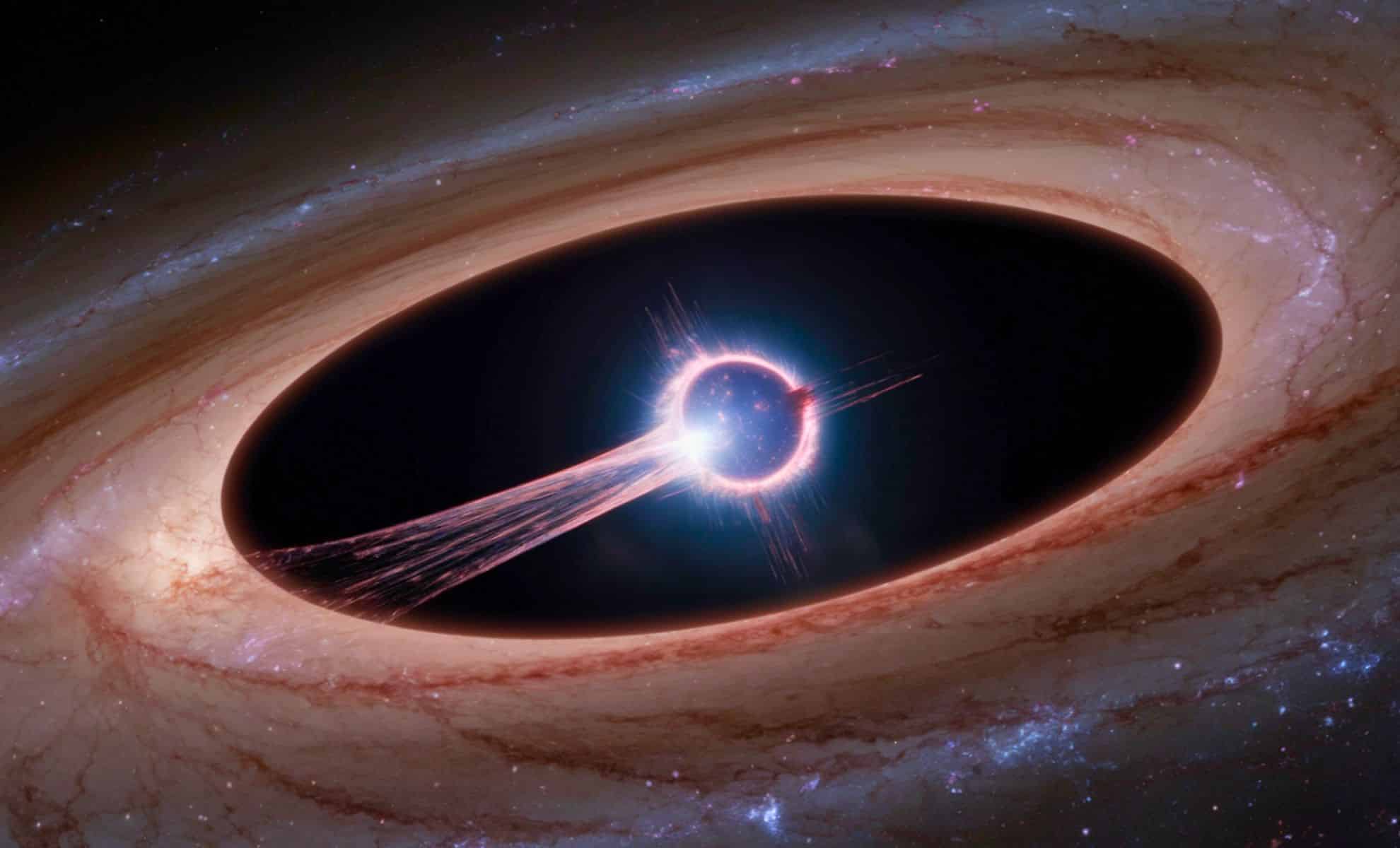
Scientists have observed a massive Wolf-Rayet star in the Cygnus X-3 system being torn apart by a suspected black hole, located 32,000 light-years away. Using the XRISM telescope, a collaboration between Japan's JAXA and NASA, researchers captured detailed data on the interaction between the star and the compact object, revealing extreme energy phenomena and blueshift effects in the gas ejected by the star. While the data supports the presence of a black hole, the true nature of the compact object remains uncertain, prompting further analysis to confirm its identity.

astronomy1 year ago

"How a Wolf-Rayet Star Stages a Dazzling Light Spectacle"

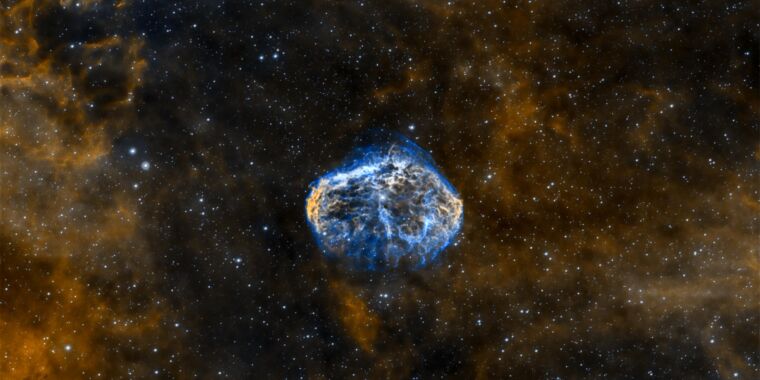
The Crescent Nebula, located 5,000 light-years away in the Cygnus constellation, is formed by the energetic stellar wind from a Wolf-Rayet star colliding with slower-moving material. This nebula is expected to go supernova, creating a spectacular event, although it is unlikely that we will be alive to witness it. A stunning photo of the nebula was captured by an Ars reader using a telescope in rural southwestern Washington.

astronomy2 years ago

Cosmic Transformations: From Wolf-Rayet Star to Magnetar, and the Mystery of Spiral Arms Unveiled

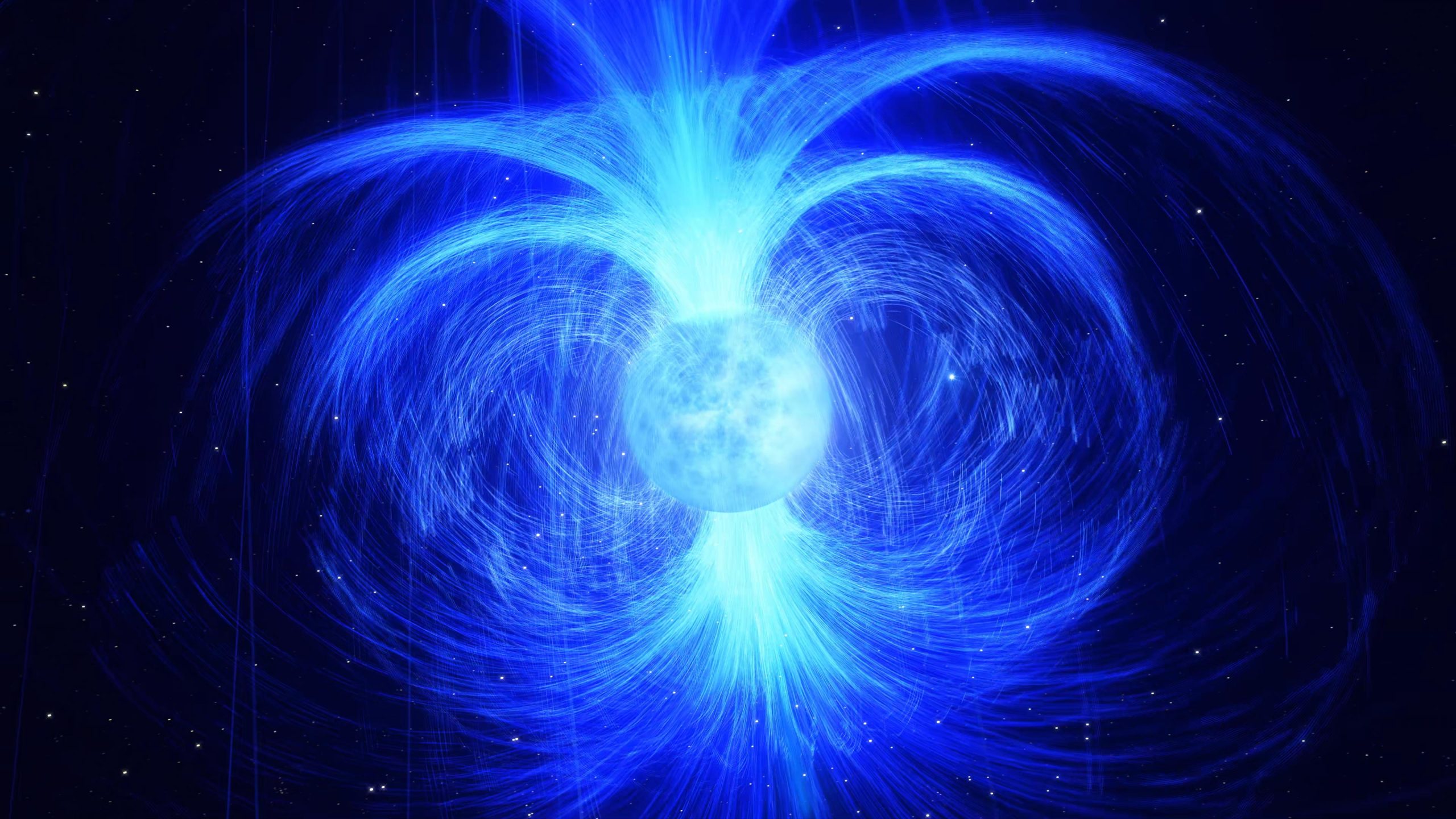
New research suggests that a hot, helium-rich Wolf-Rayet star, HD 45166, with a powerful magnetic field of 43,000 gauss, could potentially evolve into a magnetar during a supernova explosion. Magnetars are neutron stars characterized by extremely strong magnetic fields, and their origins have remained unclear. By studying the Wolf-Rayet star and using stellar evolution models, researchers have determined that the star's collapse into a neutron star would amplify its magnetic field, placing it within the range observed for magnetars. This discovery provides valuable insights into the formation process of these highly magnetic entities in the universe.

science-and-astronomy2 years ago

Betelgeuse: A Chaotic Star Nearing Its Violent End.

Astronomers have observed a chaotic star, BELLS 1, in the Triangulum galaxy that is transitioning into a highly unstable Wolf-Rayet star. The star has begun beaming a new signal indicating that it is churning either carbon or iron deep within it through nuclear fusion, and is inching closer to its eventual fate of exploding into a spectacular supernova. BELLS 1 is shedding about 10 solar masses' worth of star matter every million years or so, which is pumped back into the nearby universe, triggering the formation of future generations of stars and enriching them with recycled elements.

astronomy2 years ago

Webb Telescope Captures Prelude to Supernova in New NASA Image

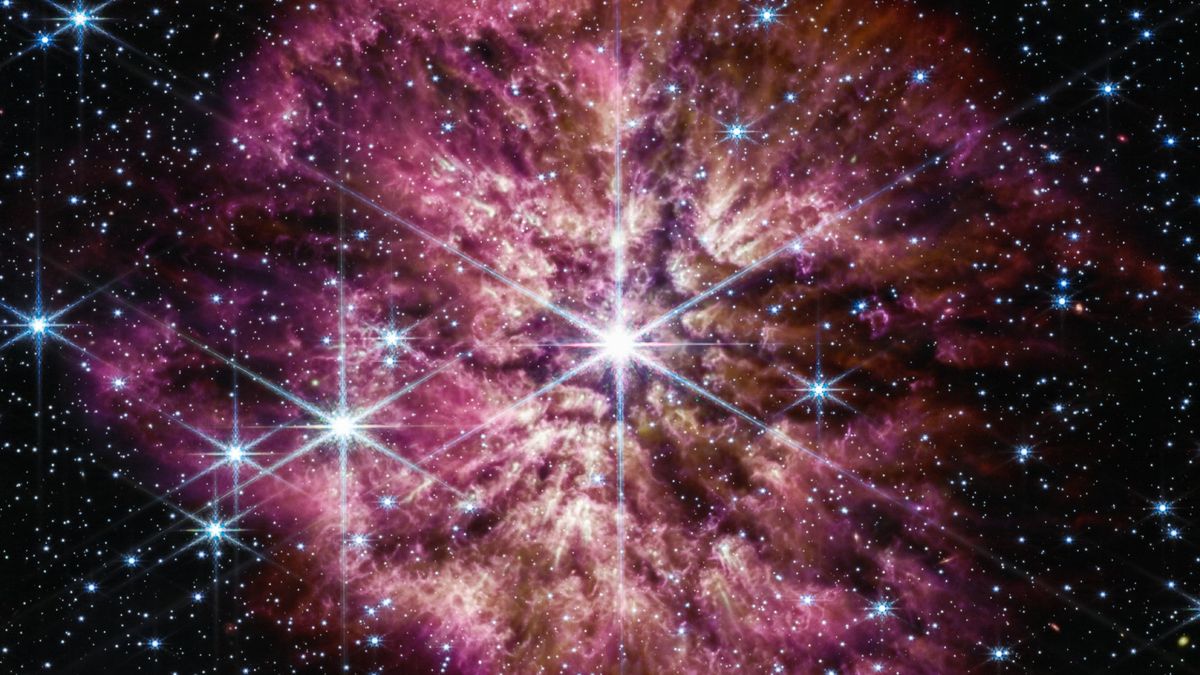
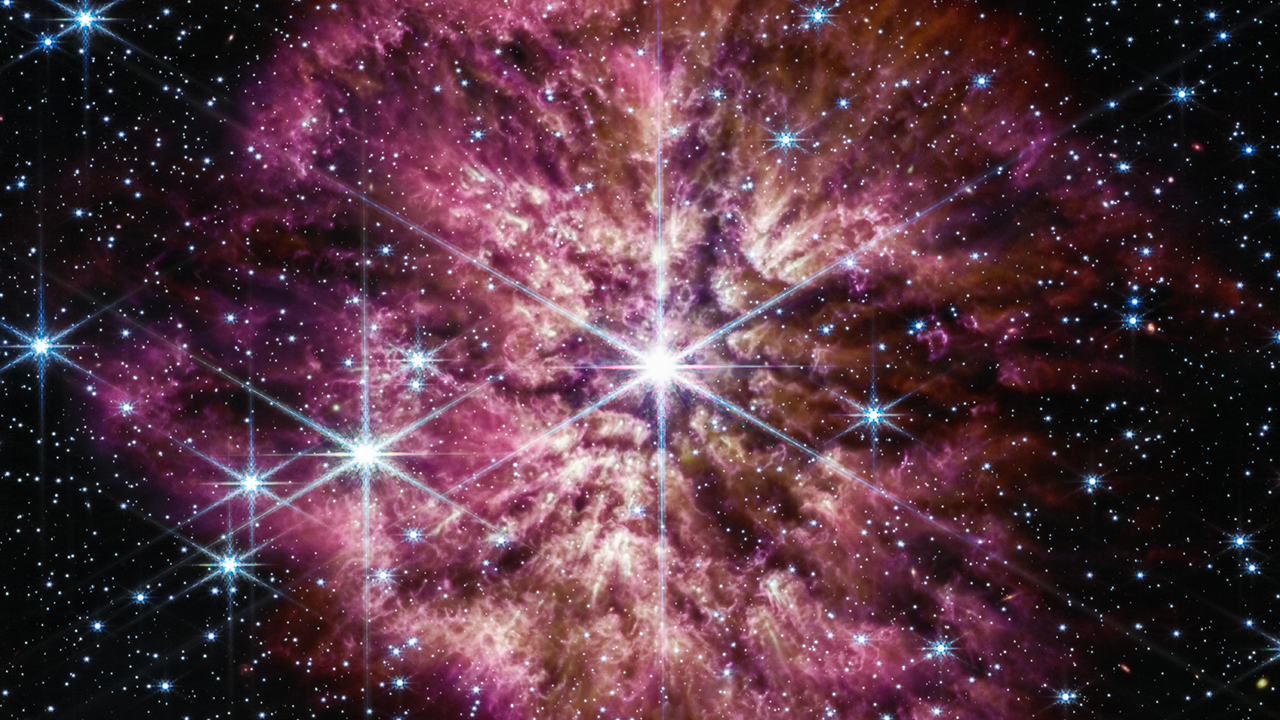
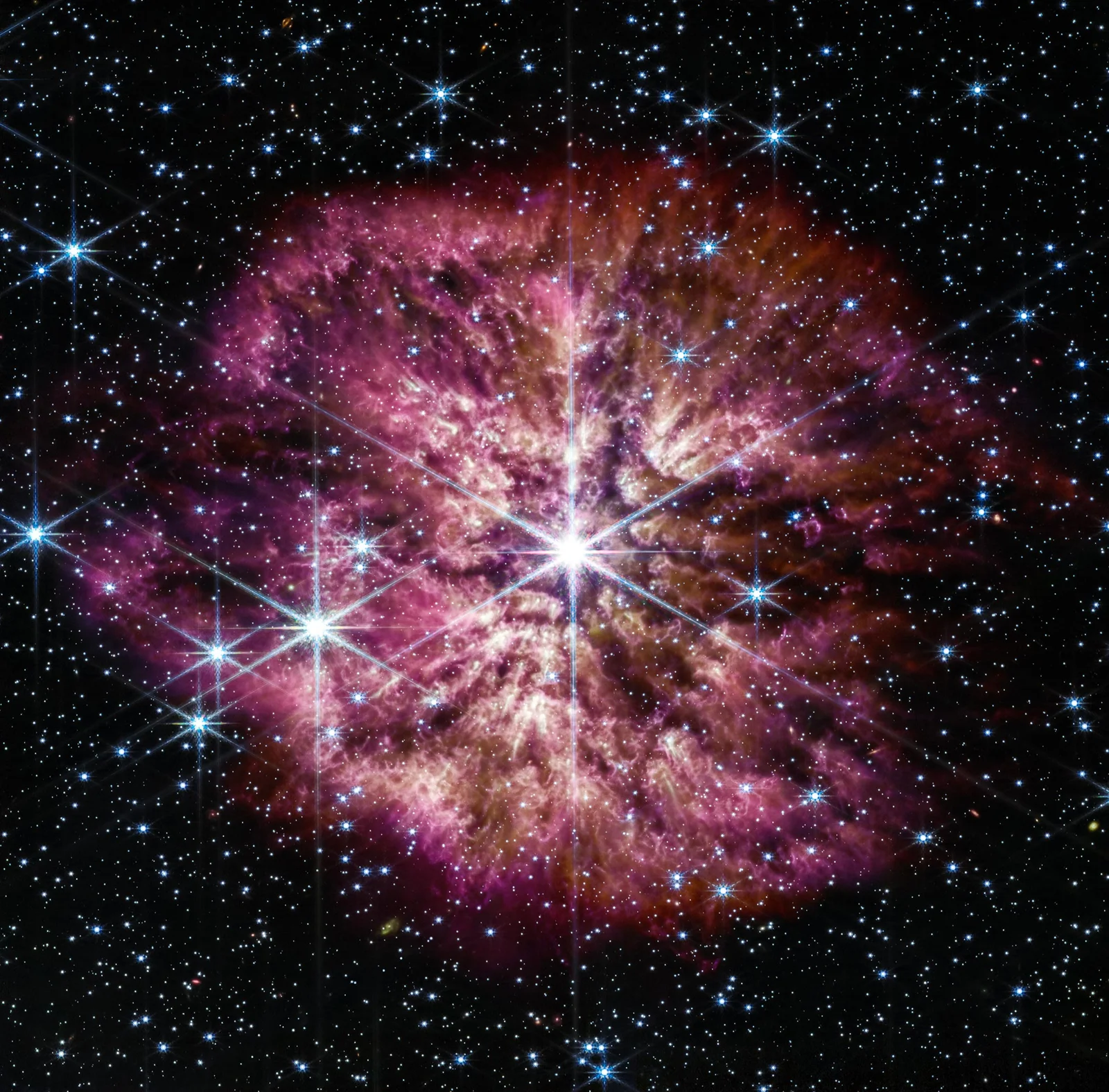
The James Webb Space Telescope has captured a rare image of a Wolf-Rayet star, shedding a halo of gas and dust, which is seeding the cosmos with elements necessary for forming other stars, planets, and the building blocks of life. The star is 30 times the mass of the sun and has shed material equivalent to 10 suns. The glowing cloud of gas and dust surrounding the star spans 10 light-years across. Webb's huge size and sensitive instruments should yield new insights into how dust is created in the universe, particularly in hard-to-see environments like Wolf-Rayet stars.

science2 years ago

James Webb Telescope Captures Rare Supernova of Dying Star

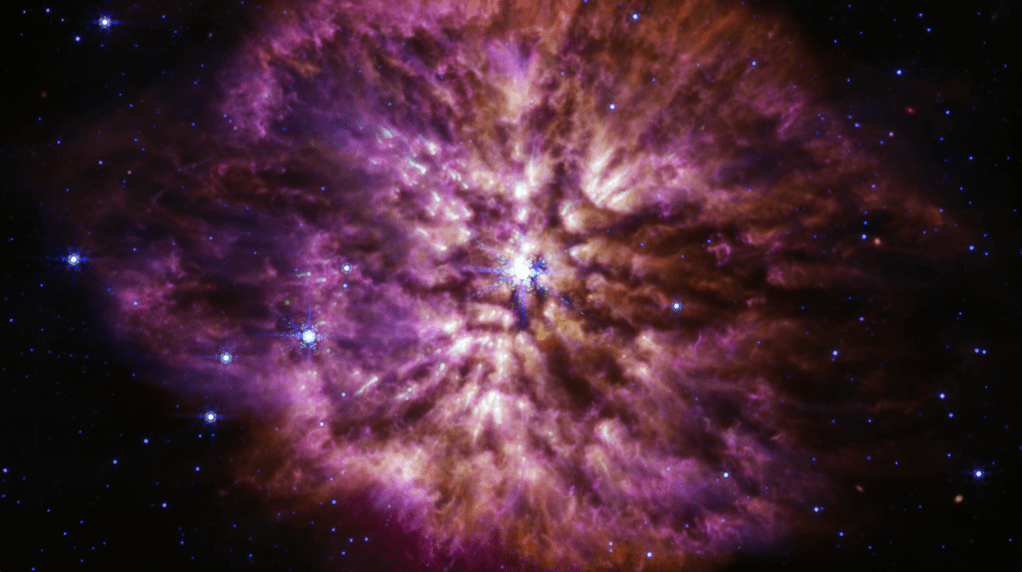
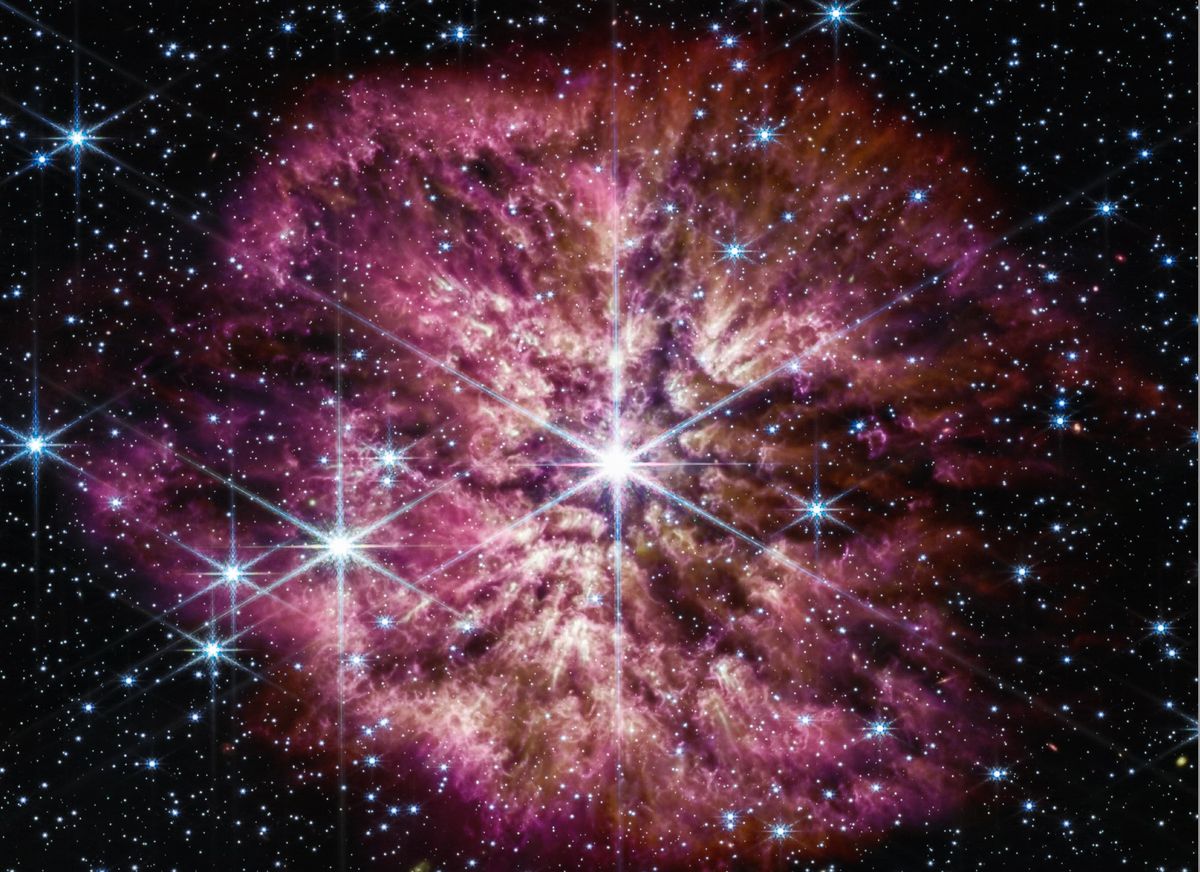
NASA's James Webb Space Telescope has captured an image of a rare Wolf-Rayet star, 30 times the mass of our Sun, that has entered the final stage of its life prior to exploding in a spectacular supernova. The star will eject a colossal amount of material, responsible for creating the spectacular cosmic cloud seen in the new composite image surrounding the bright central star. Astronomers estimate that WR 124 has already cast off the equivalent of 10 Suns worth of mass from its outer layers.

science-and-technology2 years ago

"Webb Telescope Captures Stunning Image of Star on Brink of Supernova"

NASA's James Webb Space Telescope captured the rare sight of a Wolf-Rayet star exploding in unprecedented detail with its powerful infrared instruments. The star, WR 124, is 15,000 light-years away and is said to have shed 10 suns' worth of material. The gas ejected from the star cools and forms cosmic dust, which is essential for forming stars, planets, and molecules. The image captured by JWST shows the infrared light and will help astronomers understand a crucial period in the universe's early history.

astronomy2 years ago

NASA's Webb Telescope Captures Impending Supernova

NASA's James Webb Space Telescope captured the rare sight of a Wolf-Rayet star, WR 124, in unprecedented detail. The star is 15,000 light-years away in the constellation Sagittarius and is in the process of casting off its outer layers, resulting in its characteristic halo of gas and dust. The star sheds 10 Suns' worth of material, and as the ejected gas moves away from the star and cools, cosmic dust forms and glows in the infrared light detectable by Webb. The origin of cosmic dust that can survive a supernova blast and contribute to the universe's overall "dust budget" is of great interest to astronomers for multiple reasons.

science-and-astronomy2 years ago

James Webb Telescope Detects Impending Supernova.

NASA's James Webb Space Telescope has captured images of WR 124, a rare Wolf-Rayet star that is about to go supernova. The star, which is 30 times more massive than our sun, has ejected more than 10 solar masses' worth of gas and dust into space. The telescope's observations could help shed light on the mysterious "dust budget surplus" in the universe, as cosmic dust is best studied in infrared wavelengths, the type of light that JWST is optimized to observe.