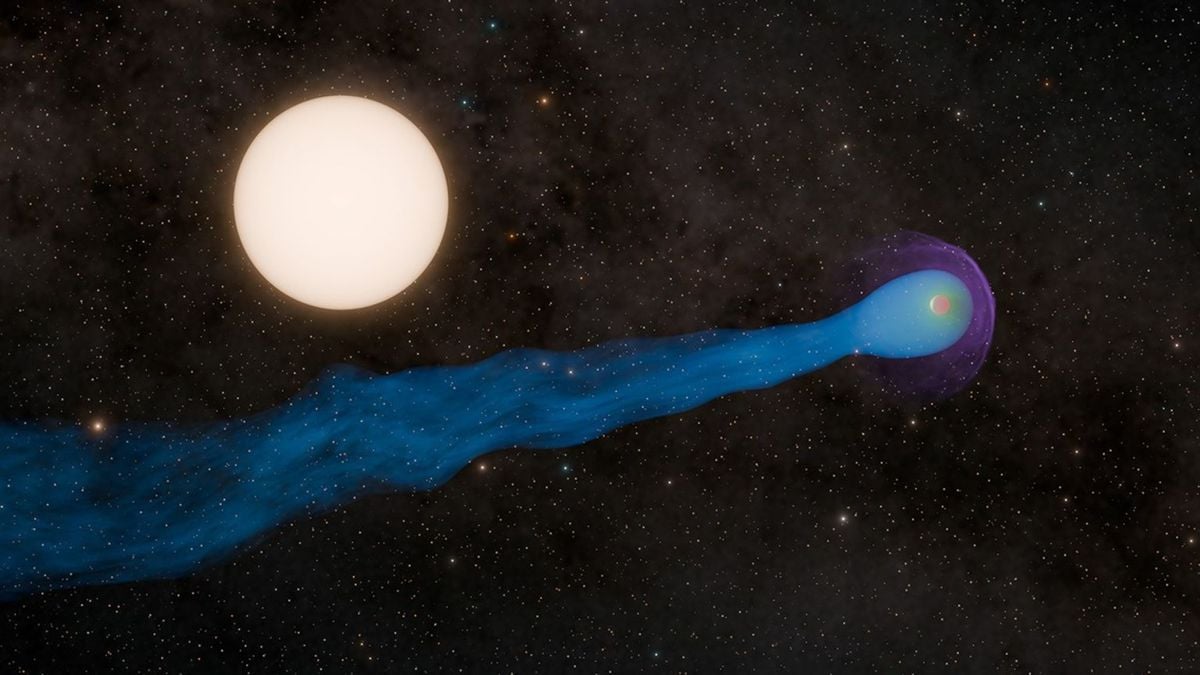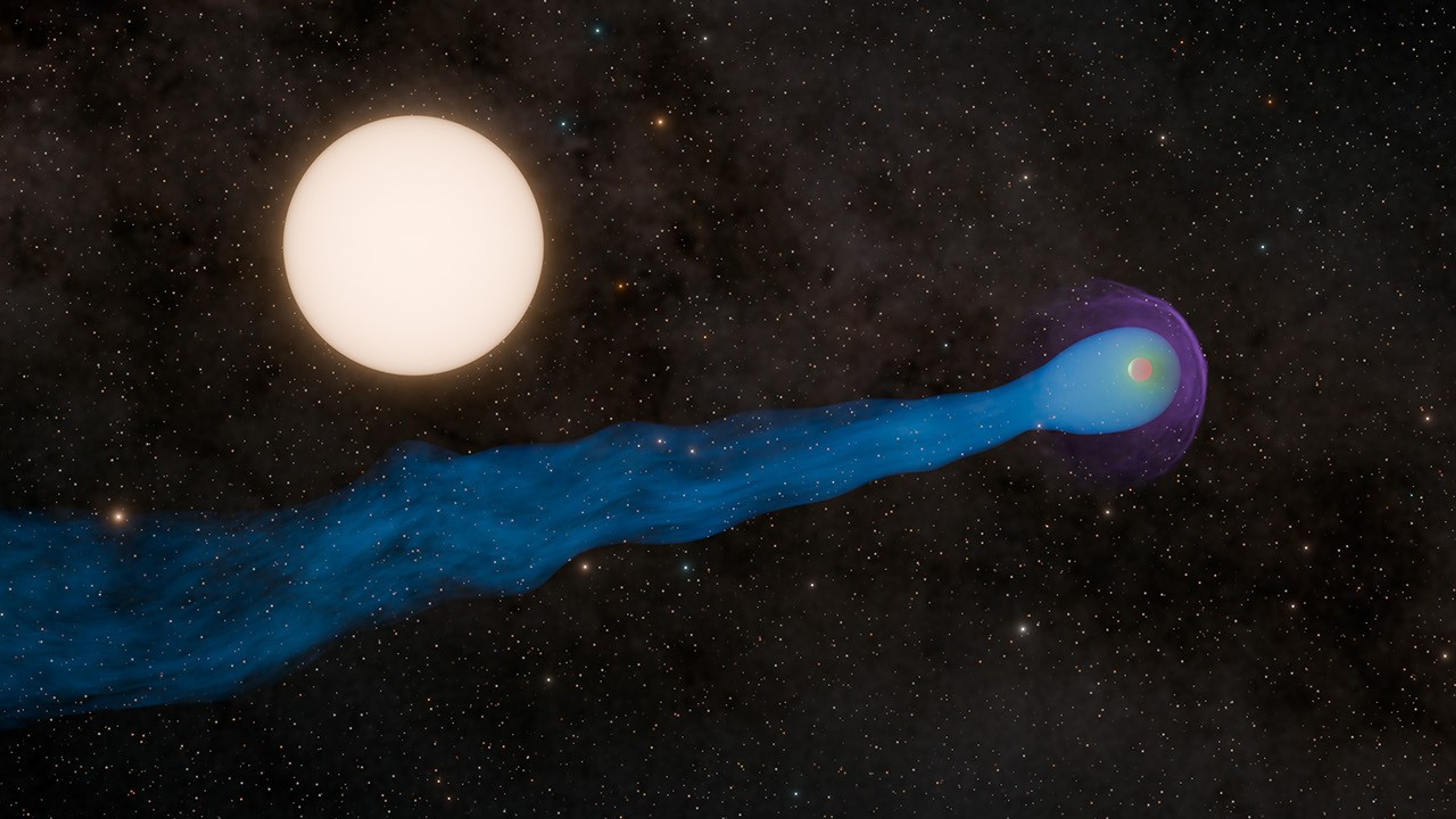
The exoplanet WASP-69 b, a gas giant similar in size to Jupiter, has been found to have a 350,000-mile-long tail of gas, primarily helium, trailing behind it due to its close orbit around its star and the influence of stellar wind. This tail, acting like a 'stellar windsock,' provides insights into the interactions between the planet's atmosphere and stellar winds, offering a unique opportunity to study these phenomena. The discovery was confirmed using data from the W. M. Keck Observatory.
The exoplanet WASP-69 b, a hot Jupiter, is losing its atmosphere, creating a 'tail' of gas shaped by the stellar wind from its host star. This tail, similar to a comet's, is formed as light gases like hydrogen and helium escape due to photoevaporation. The tail's length, observed to be over 350,000 miles, can change with variations in the stellar wind. This phenomenon offers insights into the interactions between stellar and planetary atmospheres and could help understand stellar behavior.
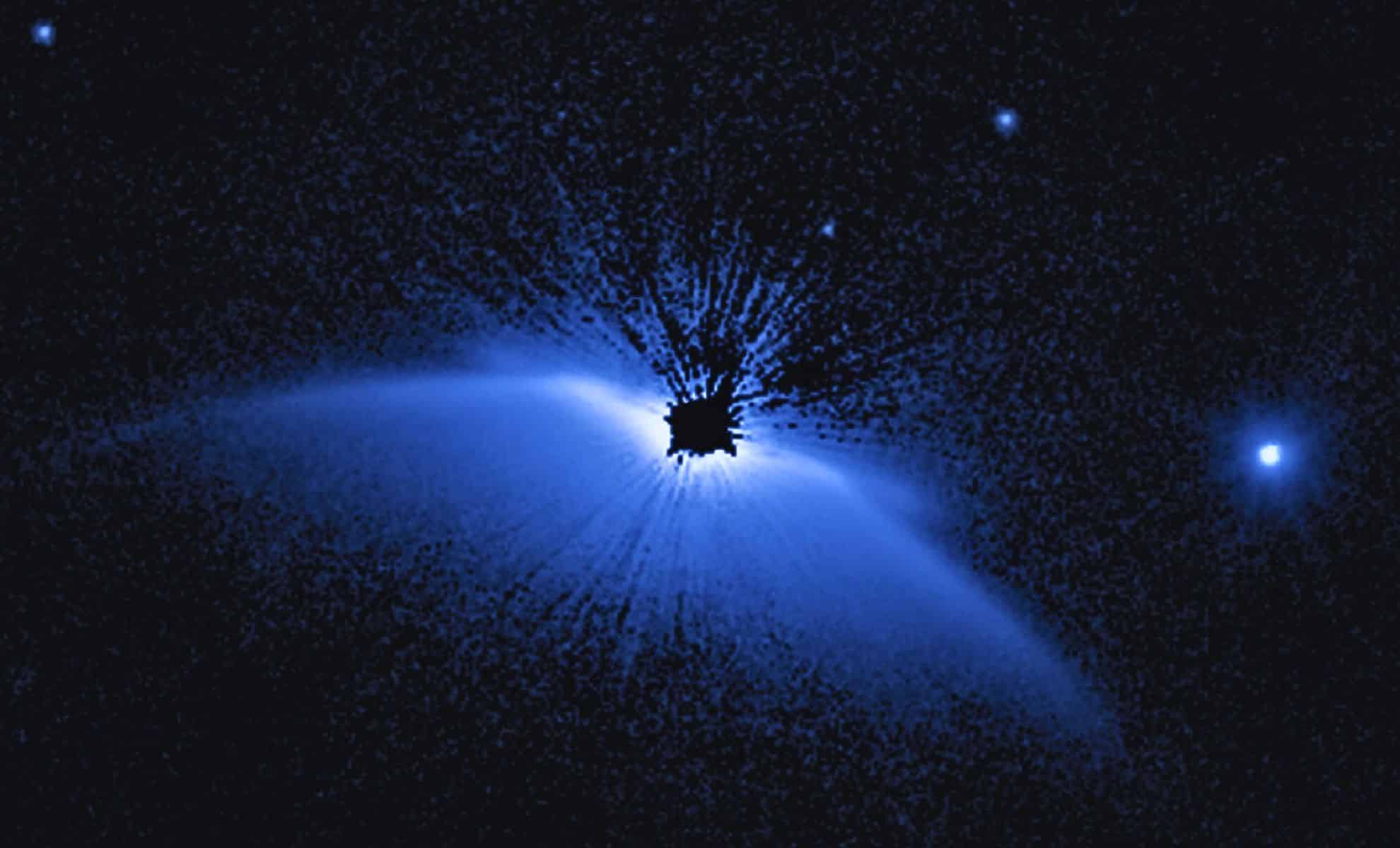
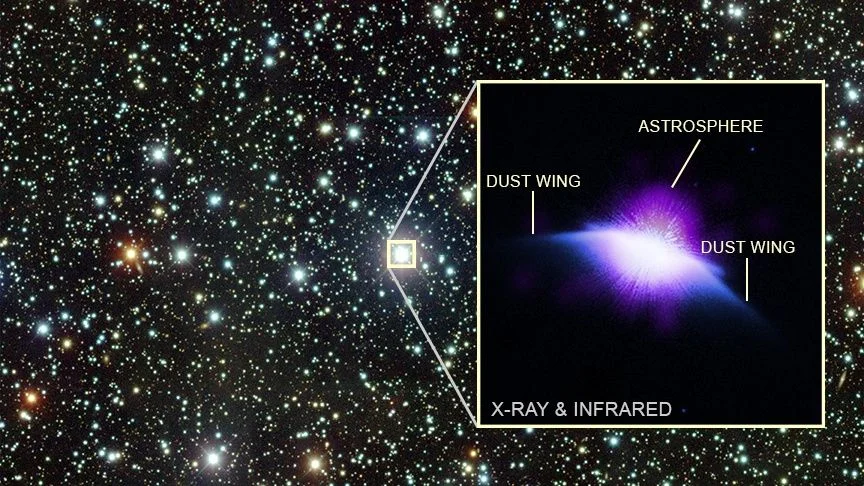
Astronomers have detected the first-ever astrosphere around a sunlike star, HD 61005, known as "The Moth." This discovery, made using the Chandra X-ray Observatory, reveals a bubble of hot gas created by the star's stellar wind, extending far beyond the Sun's heliosphere. The finding provides insights into the early conditions of our Sun and the role of astrospheres in shielding planets from cosmic rays, enhancing our understanding of potential life-hosting environments around similar stars.
Astronomers have discovered the gas giant exoplanet WASP-69b, located 160 light-years away, with a comet-like tail seven times longer than the planet itself. The tail is formed as the planet's atmosphere is stripped away due to its close proximity to its star, and observations from the WM Keck Observatory in Hawaii have provided valuable insights into the planet's atmospheric mass-loss in real time. Despite losing large amounts of hydrogen and helium, the massive exoplanet is not in danger of losing its entire atmosphere within the star's lifetime.
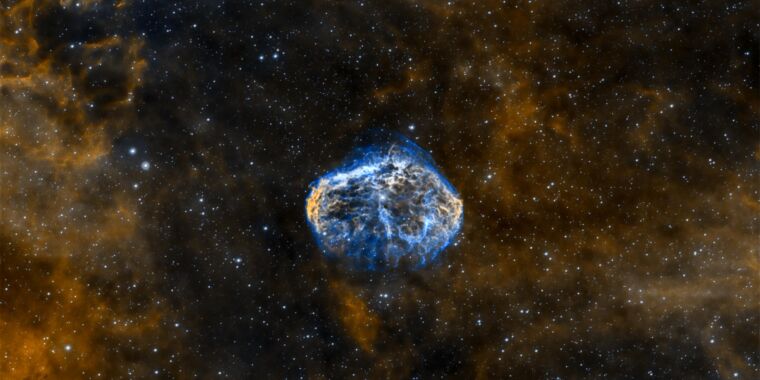
The Crescent Nebula, located 5,000 light-years away in the Cygnus constellation, is formed by the energetic stellar wind from a Wolf-Rayet star colliding with slower-moving material. This nebula is expected to go supernova, creating a spectacular event, although it is unlikely that we will be alive to witness it. A stunning photo of the nebula was captured by an Ars reader using a telescope in rural southwestern Washington.
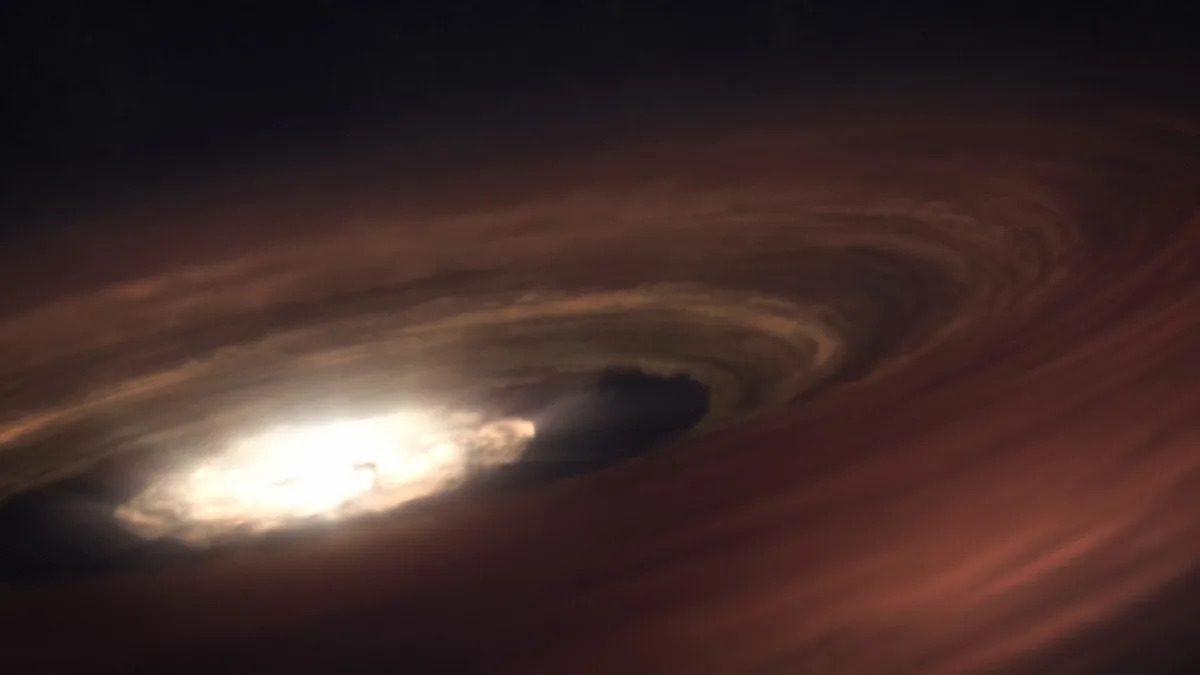
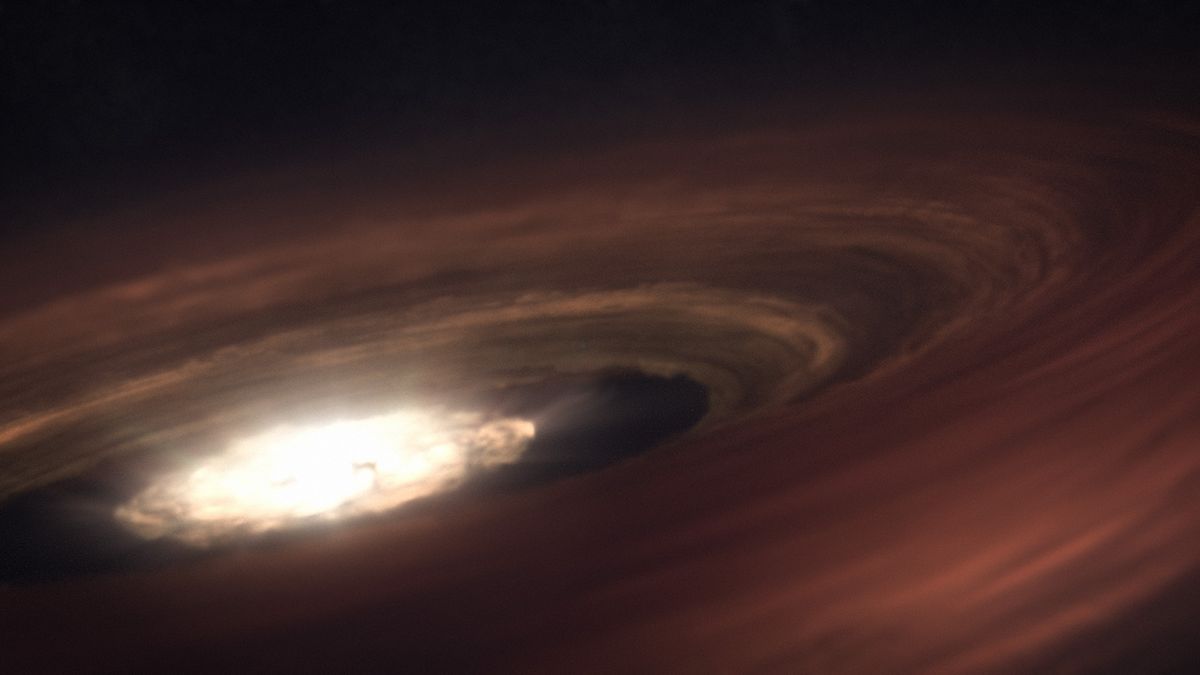
The James Webb Space Telescope has made its first discovery by observing a planet-forming disk changing substantially. The observations suggest that the amount of ionized neon gas in these disks can indicate how quickly planets must form before the disk disappears. The presence of doubly ionized neon in the disk initially implied that extreme ultraviolet (EUV) radiation was dominant, but the recent observations show that X-ray radiation has become the dominant radiation field. This finding could have significant implications for understanding the timescale in which planets form before their birthing disk dissipates. Further studies are planned to gather more information and investigate the fluctuations in the stellar wind.
The James Webb Space Telescope has made its first discovery by observing a planet-forming disk around a young star. The observations suggest that the amount of ionized neon gas in these disks can indicate how quickly planets must form before the disk disappears. The presence of doubly ionized neon in the disk initially implied that extreme ultraviolet (EUV) radiation was dominant, but the recent observations show that X-ray radiation has become the dominant radiation field. This finding could have significant implications for understanding the timescale in which planets form before their birthing disk dissipates. Further studies are planned to gather more information and investigate the fluctuations in the stellar wind.