Tag

Interstellar Dust

All articles tagged with #interstellar dust

science2 months ago

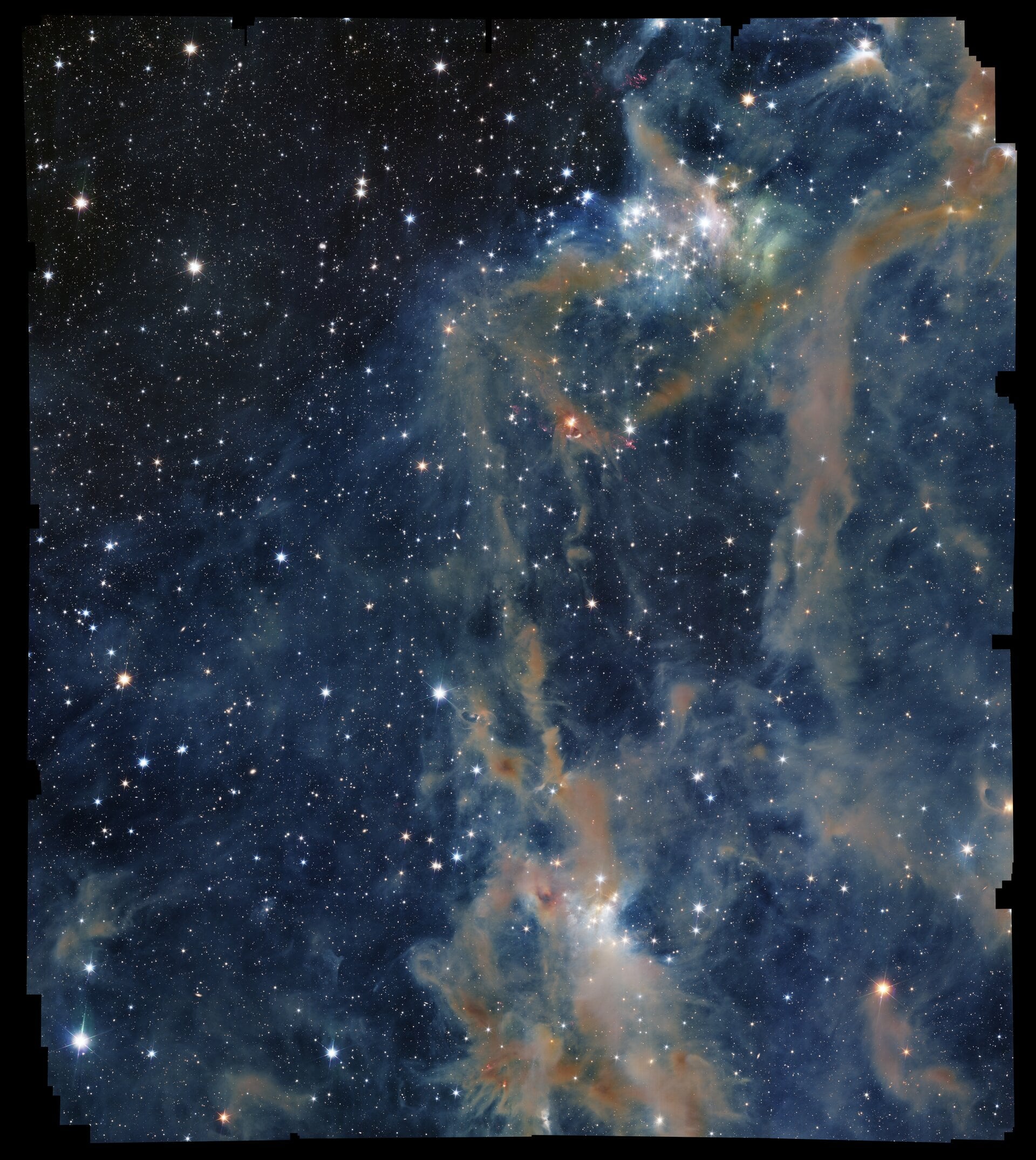
Euclid Unveils Secrets of the Dark Universe and Stellar Nurseries

The European Space Agency's Euclid telescope captured a detailed infrared image of the dark cloud LDN 1641 in Orion, revealing numerous young stars and star-forming activity hidden behind dust, while also testing its precise pointing capabilities for future large-scale sky surveys aimed at understanding dark matter and dark energy.

astronomy1 year ago

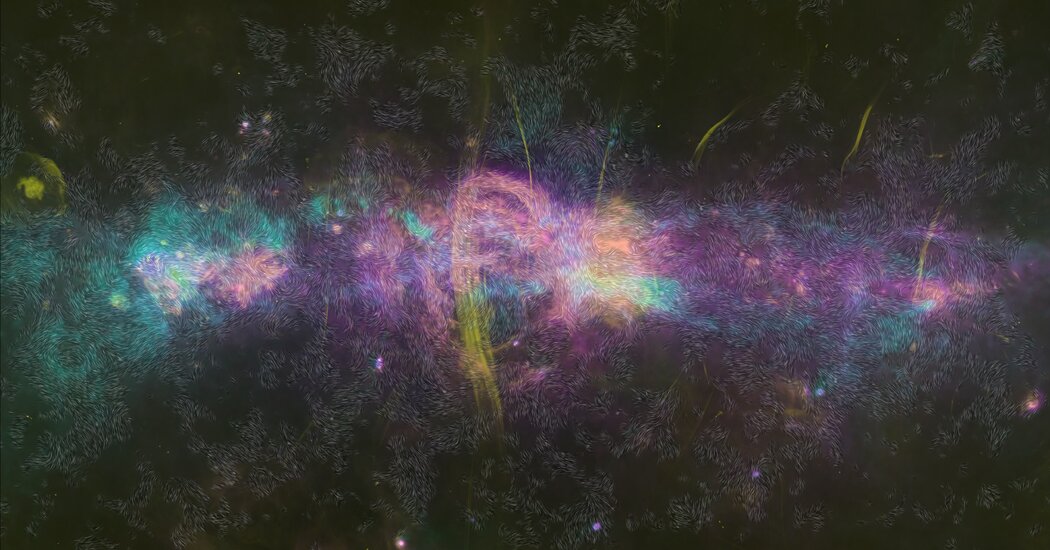
"Dusty Magnets: A Closer Look at the Milky Way"

An international team of astronomers, as part of the FIREPLACE project, has produced a celestial image revealing previously unseen details of the central Milky Way, including magnetic field lines and jets of hot ionized gas. The image, created using infrared light polarization measurements aboard the Stratospheric Observatory for Infrared Astronomy, offers insights into the role of magnetic fields in the cycle of stellar birth and death, potentially guiding the development of new astronomical exploration and theories.

astronomy1 year ago

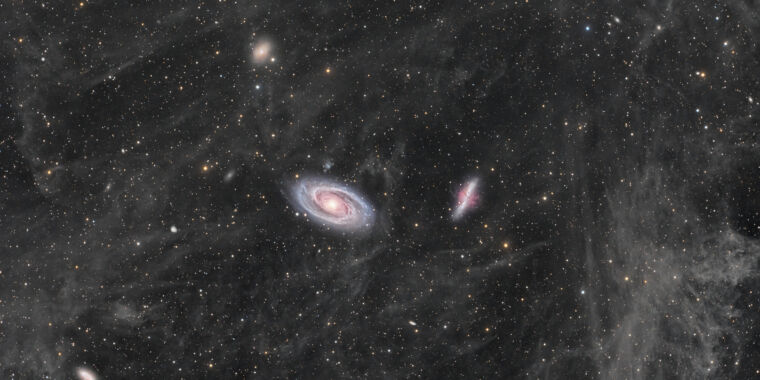
"Galactic Giants: Navigating Through Interstellar Dust"

A stunning image captured by Chris McGrew from central Texas features Bode's galaxy and the Cigar galaxy, showcasing interstellar gas illuminated by the light of our own galaxy. McGrew expressed fascination with the image, pondering the potential civilizations in those galaxies gazing back at the Milky Way. This captivating glimpse into the universe offers a reminder that space, despite its appearance, is not truly empty.

space2 years ago

"NASA's IMAP Probe Set to Launch in 2025 to Capture Interstellar Dust"

NASA's Interstellar Mapping and Acceleration Probe (IMAP) is set to launch in 2025 to study interstellar dust particles entering our solar system, with the goal of understanding the heliosphere's protective role. The spacecraft will carry 10 science instruments, including the Interstellar Dust Experiment (IDEX), designed to capture and analyze these tiny particles. Despite their small size and high speed, capturing these particles will provide valuable insights into the formation of galaxies, molecular clouds, and planets. IMAP is scheduled for launch in April or May next year.

science-and-technology2 years ago

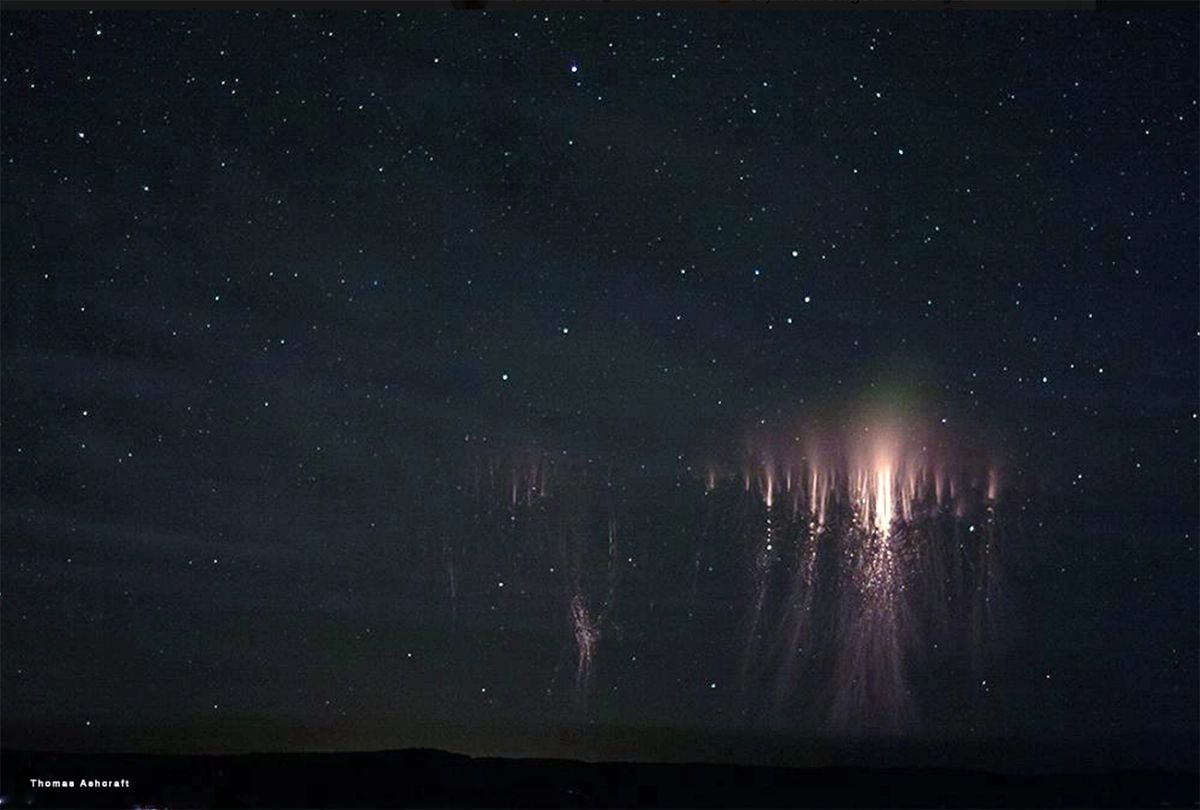
Unveiling the Enigmatic Origins of Atmospheric Green Ghosts

The origin of mysterious green "ghosts" in the sky, a type of transient luminous phenomenon, has been discovered by a team of Spanish scientists. These green lights, which occasionally appear above red sprites, are caused by the presence of metals, particularly iron and nickel, from interstellar dust entering the atmosphere. The scientists used a spectrograph to analyze the light and found that while there is some oxygen involved, the majority of the emissions are from iron. The discovery could explain why these green ghosts are so rare.

astronomy2 years ago

"Hubble Telescope Captures Mesmerizing Glowing Galactic Disk in Deep Space"

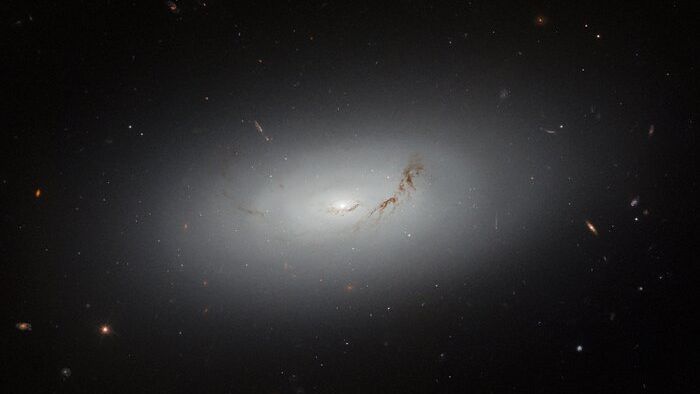
The Hubble Space Telescope has captured a stunning image of the distant galaxy NGC 3156, located 73 million light-years away in the Sextans constellation. NGC 3156 is a lenticular galaxy, characterized by a bright central bulge and no distinct spiral arms. The image reveals faint concentric ovals that grow brighter towards the galaxy's core, as well as two threads of dark red interstellar dust circling the central bulge. The sparse surrounding area suggests few cosmic neighbors. The Sextans constellation is named after the astronomical tool used to measure angular distances in the sky, and the Hubble photo highlights the historical significance of sextants in astronomy.

science-and-astronomy2 years ago

"Hubble telescope captures breathtaking image of dazzling globular cluster"

The Hubble Space Telescope has captured a stunning new photo of the globular cluster Terzan 12, located 15,000 light-years from Earth in the constellation of Sagittarius. The cluster appears bright red due to interstellar dust and gas that obscure our view. The photo reveals a higher concentration of stars near the center of Terzan 12, shining extra bright. The image was taken as part of an initiative to study the relationship between age and composition of globular clusters in the innermost region of the Milky Way.

astronomy2 years ago

"Dust: Unveiling the Mysteries of the Early Universe"

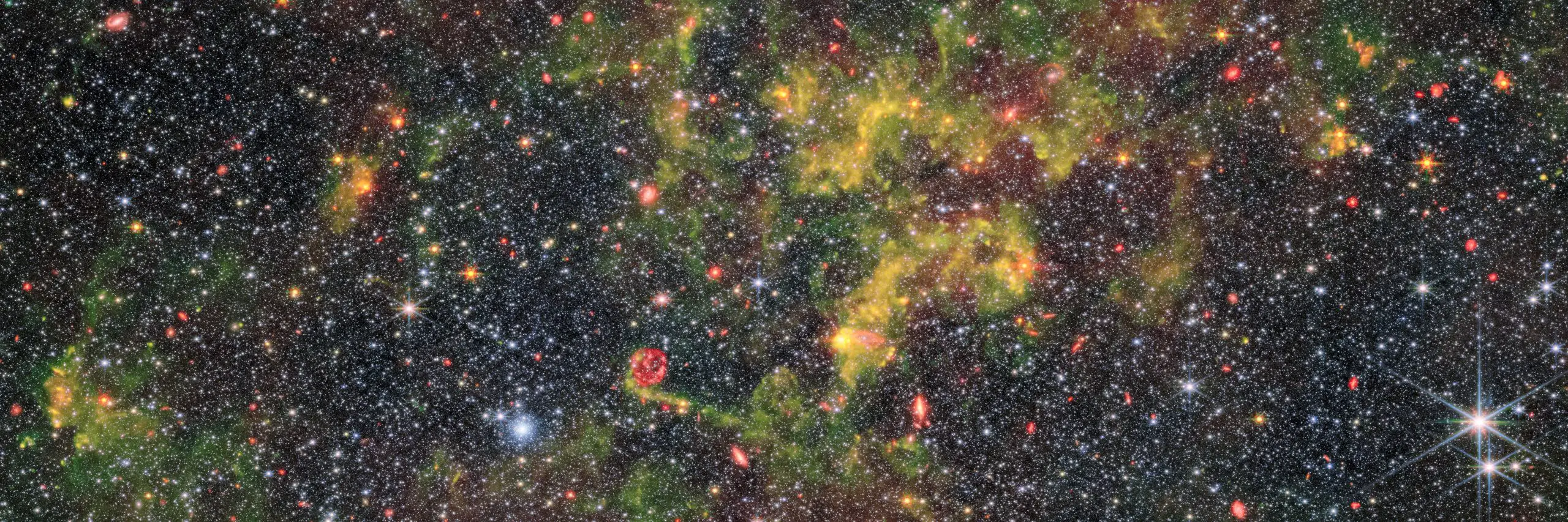
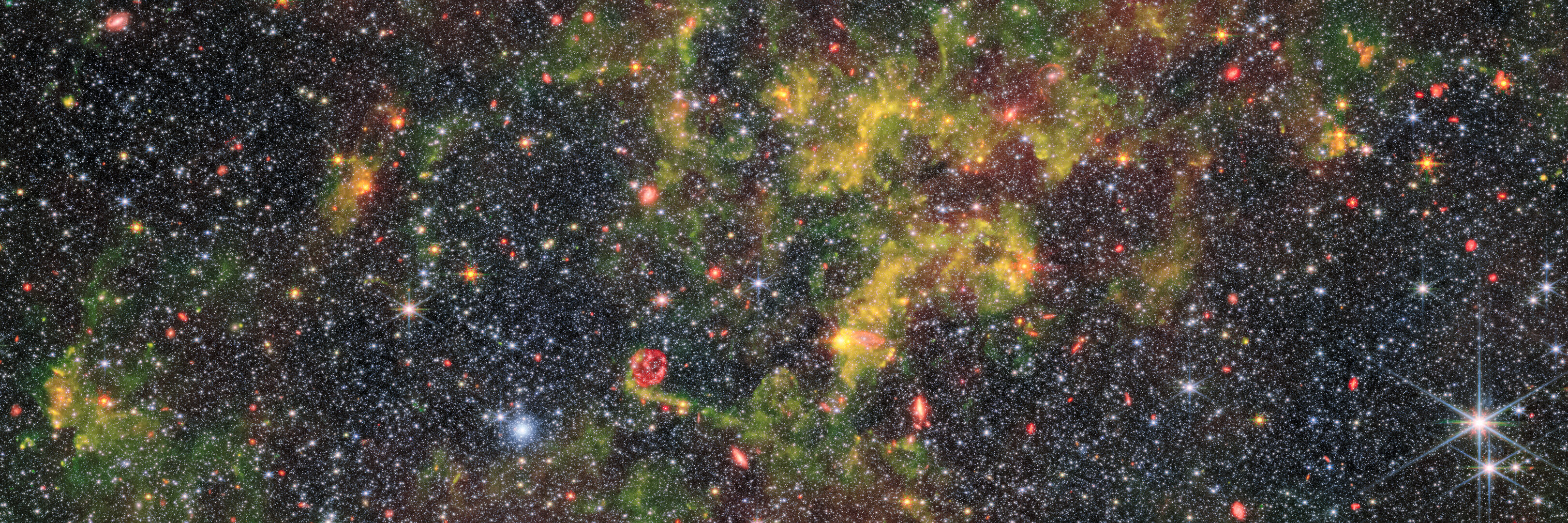
The James Webb Space Telescope's observation of the irregular galaxy NGC 6822 provides valuable insights into early Universe processes such as stellar evolution and the life cycle of interstellar dust. NGC 6822, discovered in 1884 by E. E. Barnard and later studied by Edwin Hubble, is the nearest galactic neighbor to the Milky Way that is not a satellite. With its low metallicity, NGC 6822 offers a glimpse into the conditions of the early Universe and helps scientists understand the formation of stars and the evolution of dust in low-metallicity environments.

astronomy2 years ago

"Dust: Unveiling the Enigmatic Journey of ESA"

The James Webb Space Telescope has observed the irregular galaxy NGC 6822, the Milky Way's nearest galactic neighbor that is not a satellite. NGC 6822 has low metallicity, making it an object of interest for understanding the early Universe. The study of this galaxy dates back to its discovery in 1884 and has contributed to our evolving understanding of the Universe. The observations with Webb aim to better understand star formation and the evolution of interstellar dust in low-metallicity environments.

astronomy2 years ago

Webb Telescope Captures Prelude to Supernova in New NASA Image

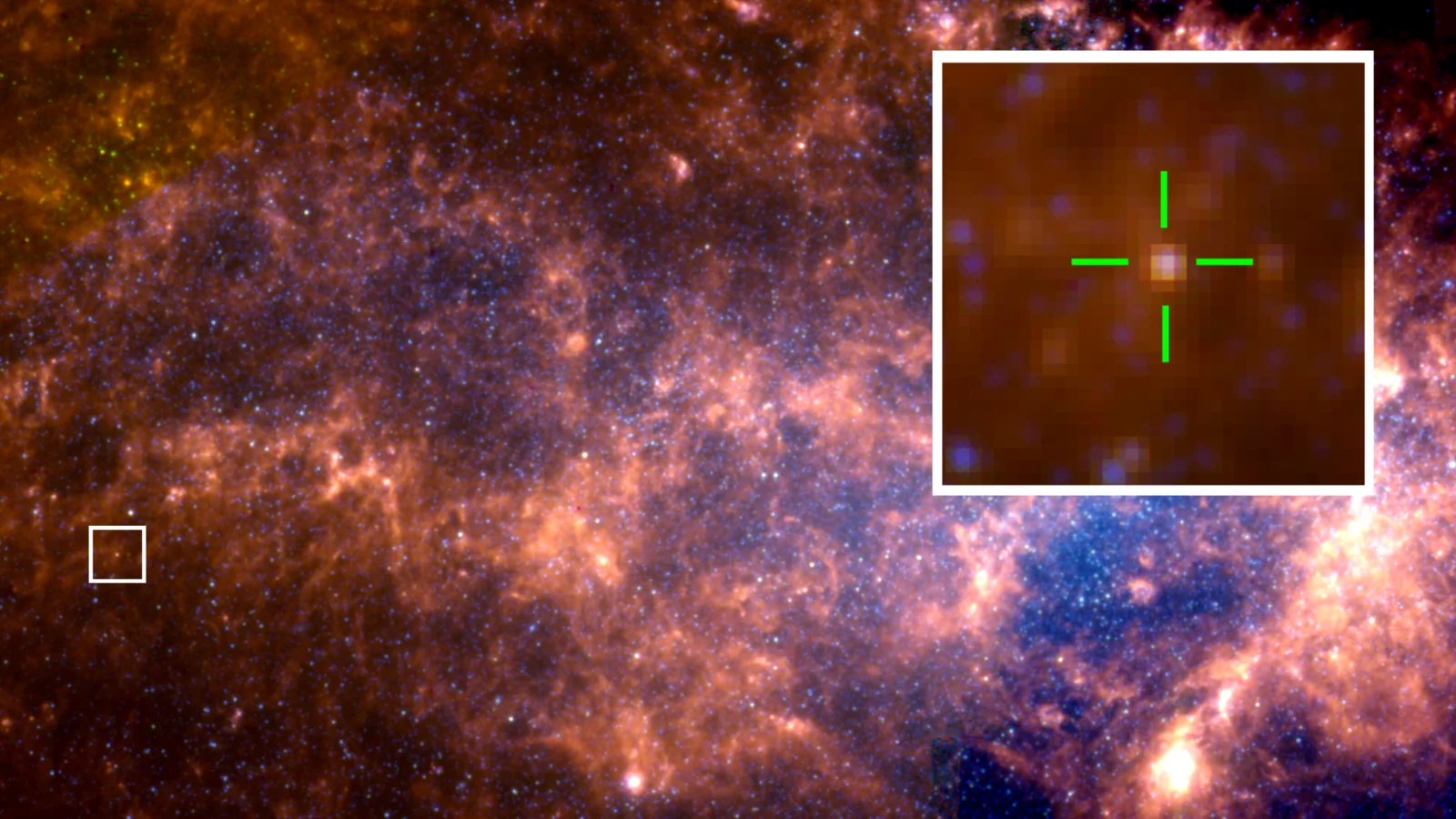
The James Webb Space Telescope has captured a rare image of a Wolf-Rayet star, shedding a halo of gas and dust, which is seeding the cosmos with elements necessary for forming other stars, planets, and the building blocks of life. The star is 30 times the mass of the sun and has shed material equivalent to 10 suns. The glowing cloud of gas and dust surrounding the star spans 10 light-years across. Webb's huge size and sensitive instruments should yield new insights into how dust is created in the universe, particularly in hard-to-see environments like Wolf-Rayet stars.