Tag

Tumor Growth

All articles tagged with #tumor growth

Selective 'mirror' amino acid inhibits specific tumor growth

Originally Published 2 months ago — by Medical Xpress

Featured image for Selective 'mirror' amino acid inhibits specific tumor growth
Source: Medical Xpress

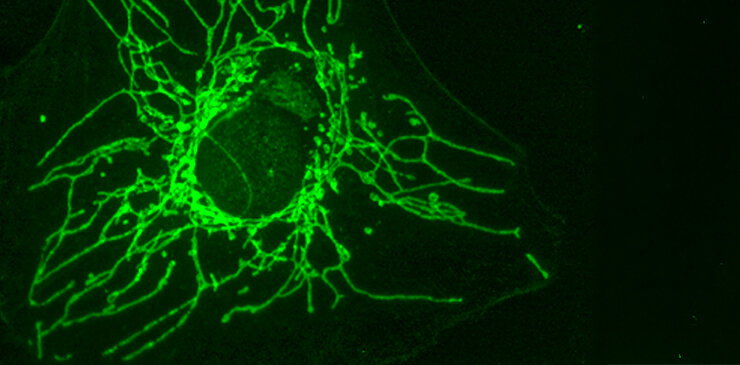
Researchers have discovered that D-cysteine, a mirror form of the amino acid cysteine, selectively inhibits the growth of certain cancer cells by blocking a key mitochondrial enzyme, showing promise for targeted cancer therapies with minimal effects on healthy cells, as demonstrated in mouse models.
New Pathway for β-Hydroxybutyrate in Cancer Cell Metabolism

Originally Published 4 months ago — by Nature

Featured image for New Pathway for β-Hydroxybutyrate in Cancer Cell Metabolism
Source: Nature

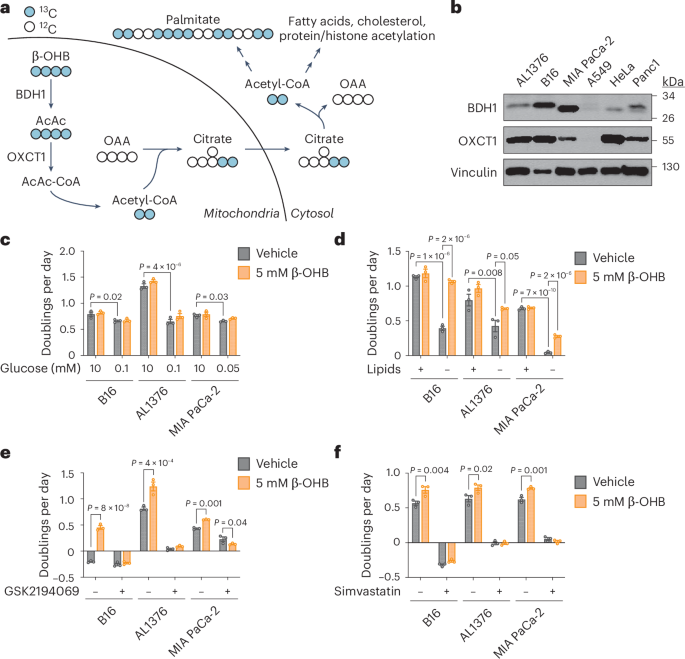
The study reveals that cancer cells can produce cytosolic acetyl-CoA from β-hydroxybutyrate (β-OHB) via two pathways: the mitochondrial citrate-dependent route involving OXCT1 and a citrate-independent route involving AACS, supporting tumor growth especially under nutrient-limited conditions.

Fructose's Role in Cancer Growth: Liver's Lipid Conversion Under Scrutiny

Originally Published 1 year ago — by SciTechDaily

Featured image for Fructose's Role in Cancer Growth: Liver's Lipid Conversion Under Scrutiny
Source: SciTechDaily

Recent research from Washington University in St. Louis reveals that the liver converts dietary fructose into nutrients that promote tumor growth in cancers like melanoma, breast, and cervical cancer. This study suggests that high-fructose consumption, primarily from high-fructose corn syrup, indirectly fuels cancer by increasing lipid availability in the blood, which tumors use for growth. The findings highlight the potential for dietary strategies and therapeutic approaches targeting fructose metabolism to combat cancer.

Fructose's Role in Fueling Cancer Growth via Liver Conversion

Originally Published 1 year ago — by Medical News Today

Featured image for Fructose's Role in Fueling Cancer Growth via Liver Conversion
Source: Medical News Today

A study from Washington University in St. Louis suggests that high dietary fructose, particularly from processed foods containing high-fructose corn syrup, may promote cancer tumor growth in animal models. While fructose naturally found in fruits and vegetables is not harmful, excessive intake from processed foods can lead to increased lipid production, which may feed tumors. Experts emphasize the importance of understanding food labels and choosing natural sugars over processed ones to potentially reduce cancer risk.

Fructose Conversion in Liver Accelerates Cancer Growth

Originally Published 1 year ago — by Newsmax

Featured image for Fructose Conversion in Liver Accelerates Cancer Growth
Source: Newsmax

New research suggests that fructose, a sugar prevalent in high-fructose corn syrup, may accelerate cancer growth by being converted into lipids that cancer cells consume. Unlike glucose, fructose is metabolized only in the small intestine and liver, where it is transformed into compounds that support tumor growth. The study, published in Nature, highlights the potential impact of dietary fructose on cancer progression and suggests that reducing fructose intake could be beneficial for cancer patients. However, avoiding fructose is challenging due to its widespread presence in many foods.

Fructose's Role in Cancer Growth Linked to Liver Lipid Conversion

Originally Published 1 year ago — by Futurity: Research News

Featured image for Fructose's Role in Cancer Growth Linked to Liver Lipid Conversion
Source: Futurity: Research News

A study published in Nature reveals that dietary fructose, commonly found in high-fructose corn syrup, promotes tumor growth in animal models by being converted into nutrients by the liver, rather than directly fueling tumors. This conversion increases circulating lipids, which cancer cells use to grow. The research suggests that reducing fructose intake could be beneficial for cancer patients and opens up potential therapeutic avenues targeting the metabolism of healthy cells to combat cancer. The study was funded by the National Institutes of Health.

"Link Between Oral Bacteria and Accelerated Colon Cancer Growth Uncovered"

Originally Published 1 year ago — by Yahoo! Voices

Featured image for "Link Between Oral Bacteria and Accelerated Colon Cancer Growth Uncovered"
Source: Yahoo! Voices

Research shows that a specific subtype of the oral bacterium Fusobacterium nucleatum, known as Fna C2, is linked to the growth of colon tumors and is more prevalent in colon cancer patients. This finding could lead to new insights into fighting colon cancer and the development of targeted therapies. The discovery of this bacterial subtype's association with colorectal cancer is crucial for the development of effective preventive and treatment methods.

"Link Between Oral Bacteria and Accelerated Colorectal Cancer Growth Identified"

Originally Published 1 year ago — by UPI News

Featured image for "Link Between Oral Bacteria and Accelerated Colorectal Cancer Growth Identified"
Source: UPI News

A study has found that a specific subtype of the oral bacterium Fusobacterium nucleatum, known as Fna C2, can travel from the mouth to colon tumors and accelerate their growth. This discovery could lead to new insights into combating colon cancer, which claims over 52,000 lives in the U.S. annually. The presence of Fna C2 was linked to poorer prognosis in colorectal cancer patients, and researchers suggest that targeting this bacterial subgroup could improve treatment and prevention methods, potentially through microbe-based cellular therapies.

"Promising Results: Daily Pills Halt Tumor Growth in Aggressive Cancer Patients"

Originally Published 1 year ago — by Daily Mail

Featured image for "Promising Results: Daily Pills Halt Tumor Growth in Aggressive Cancer Patients"
Source: Daily Mail

An experimental drug called ceralasertib has shown promise in stopping tumor growth in patients with aggressive, incurable cancers, with more than half experiencing halted tumor growth and some seeing no progression for at least three years. The drug works by preventing tumor cells from repairing themselves, causing them to die, and could potentially be combined with immune-boosting cancer treatments to enhance their effectiveness. Early results are promising, with one patient reporting stable cancer and no side effects since starting the treatment, offering hope for improved cancer therapies in the future.

"Breast Cancer Cells: Fueling Up by Consuming Surroundings, Study Finds"

Originally Published 2 years ago — by Medical Xpress

Featured image for "Breast Cancer Cells: Fueling Up by Consuming Surroundings, Study Finds"
Source: Medical Xpress

A new study suggests that breast cancer cells consume the matrix surrounding them to obtain nutrients and support their growth, revealing a previously unknown mechanism of cancer cell survival. The cells take up and break down extracellular matrix through a process called macropinocytosis, and rely on the metabolic conversion of key amino acids to energy-releasing substrates. Targeting this process could represent a novel therapeutic approach for breast cancer treatment.

"Breakthrough Discovery: Controlling Breast Cancer Metastasis with an On/Off Switch"

Originally Published 2 years ago — by Medical Xpress

Featured image for "Breakthrough Discovery: Controlling Breast Cancer Metastasis with an On/Off Switch"
Source: Medical Xpress

Researchers at Stanford University and the Arc Institute have discovered that a protein called ENPP1 acts as an on/off switch for breast cancer metastasis and resistance to immunotherapy. High levels of ENPP1 are associated with poor patient response to immunotherapy and increased metastasis. The findings could lead to the development of more effective immunotherapies and improved prediction of patient response to existing treatments. ENPP1 inhibitors are already in clinical development, and the researchers believe that ENPP1 may play a critical role in other "cold" tumors as well.

Unveiling the Role of the 'Gates of Heaven' Calcium Channel in Oral Cancer

Originally Published 2 years ago — by Medical Xpress

Featured image for Unveiling the Role of the 'Gates of Heaven' Calcium Channel in Oral Cancer
Source: Medical Xpress

A study led by researchers at New York University College of Dentistry has found that the ORAI1 calcium channel, which acts as a gatekeeper for calcium entering cells, promotes the growth of oral cancer and generates pain. The overexpression of the ORAI1 gene was observed in oral cancer tumors but not in healthy tissue. Activating the ORAI1 calcium channel caused an influx of calcium into cancer cells, leading to the secretion of matrix metalloprotease 1 (MMP1), which is associated with cancer metastasis and poor prognosis. Removing the ORAI1 gene from oral cancer cells resulted in slower tumor growth and reduced pain. Targeting the ORAI1 channel could provide a new approach to treating oral cancer and alleviating pain.