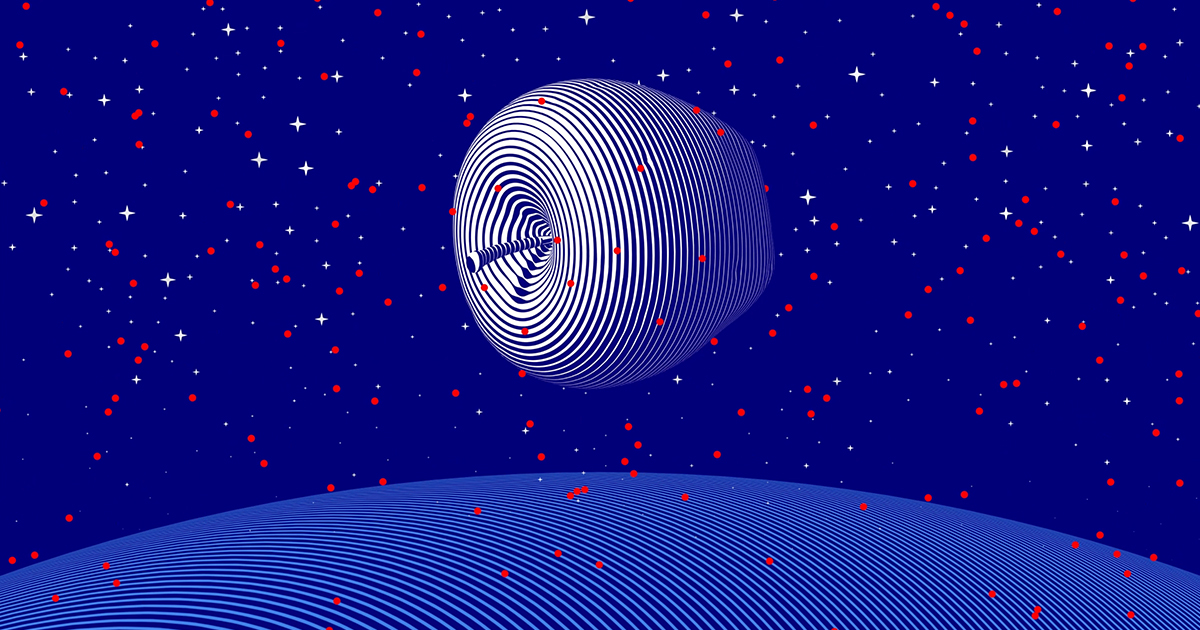
A new theory proposes that mass may originate from the geometry of unseen, evolving dimensions beyond our familiar four-dimensional spacetime, potentially influencing cosmic expansion and offering an alternative perspective to the Higgs field, though it remains highly speculative and untested.
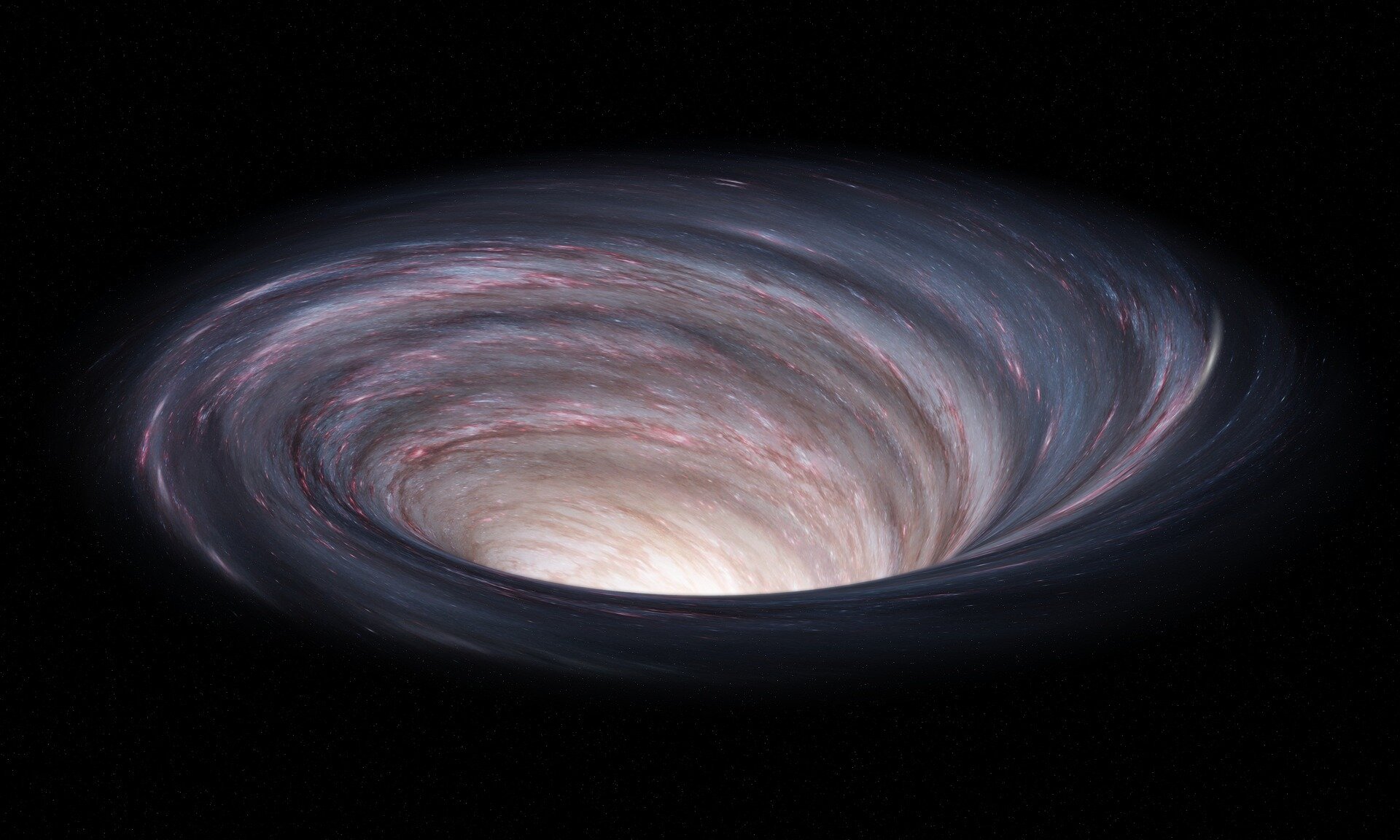
A new theoretical study suggests that the interior of entangled black holes may contain a long, bumpy wormhole called the 'Einstein-Rosen caterpillar,' supporting the idea that quantum entanglement and wormholes are interconnected and challenging the firewall paradox.
Physicists are debating whether gravity can produce quantum entanglement, with recent proposals suggesting that gravity might have quantum effects without being a quantum theory itself, challenging traditional views and opening new avenues for understanding the fundamental nature of gravity and quantum mechanics.
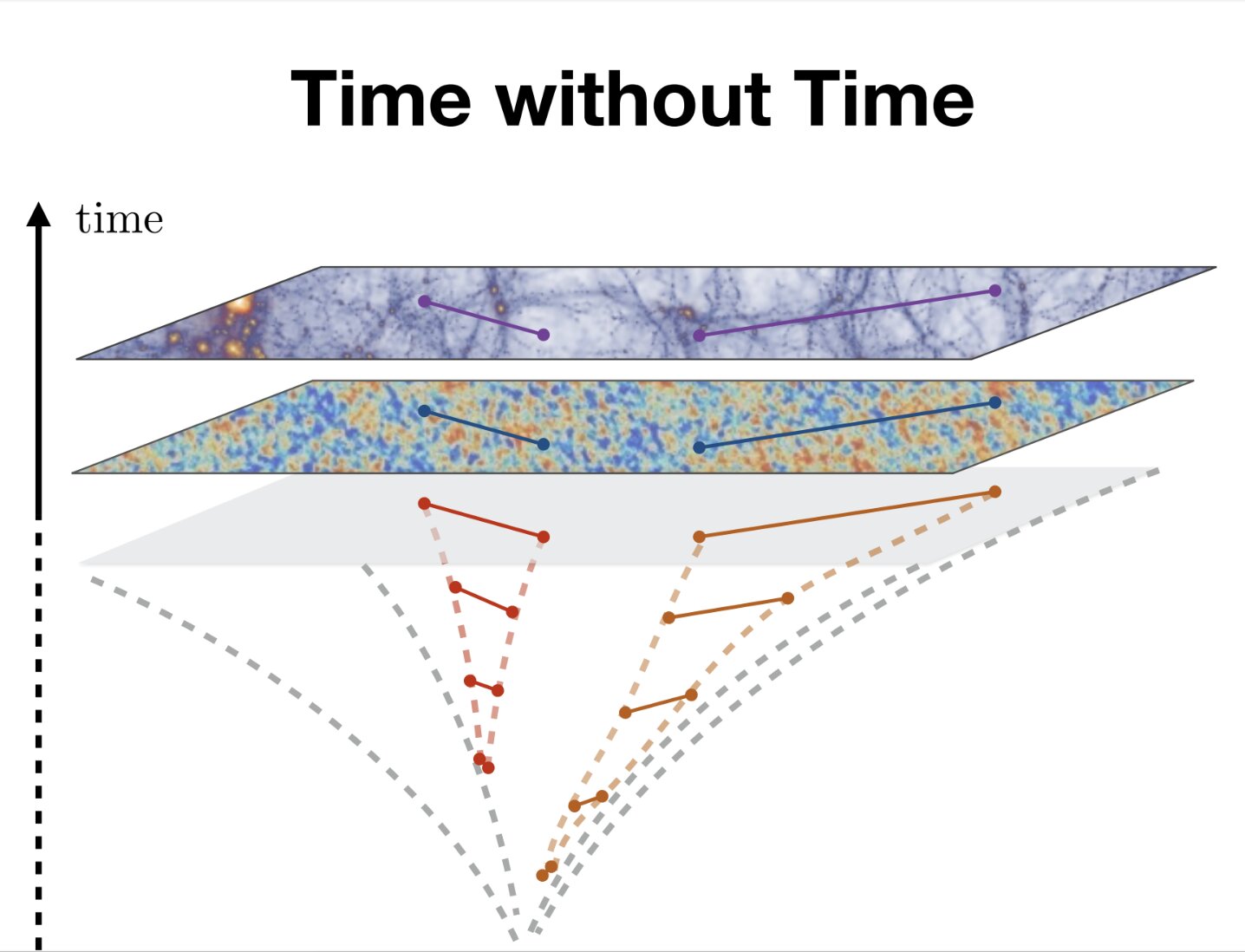
Researchers have developed a new framework called 'kinematic flow' to better understand how cosmological correlations in the early universe are influenced by kinematic parameters, offering a potentially timeless approach to cosmology that could unify concepts across physics disciplines.
Researchers are making significant advances in quantum physics with the aim of reconciling it with gravity, a longstanding challenge in physics. New experiments and theories, including testing quantum entanglement via gravity and observing space-time wobble, are promising steps toward understanding whether gravity is quantum in nature. Although many experiments are still in development, the field is entering a new era of potential breakthroughs.
Physicist Stefano Profumo proposes two unconventional theories for the origin of dark matter: one involving a mirror universe with dark particles similar to protons and neutrons, and another suggesting dark matter formed at the cosmic horizon during the universe's rapid expansion after the Big Bang. These hypotheses, based on current physics, offer new avenues for understanding dark matter, which remains undetectable directly but influences gravity across the cosmos.
A team led by Raúl Jiménez proposes a new model for the Universe's origins that does not rely on the traditional inflationary paradigm or speculative fields, instead suggesting that gravitational waves and quantum fluctuations in space-time alone could have seeded the formation of cosmic structures, offering a simpler and verifiable alternative to existing theories.
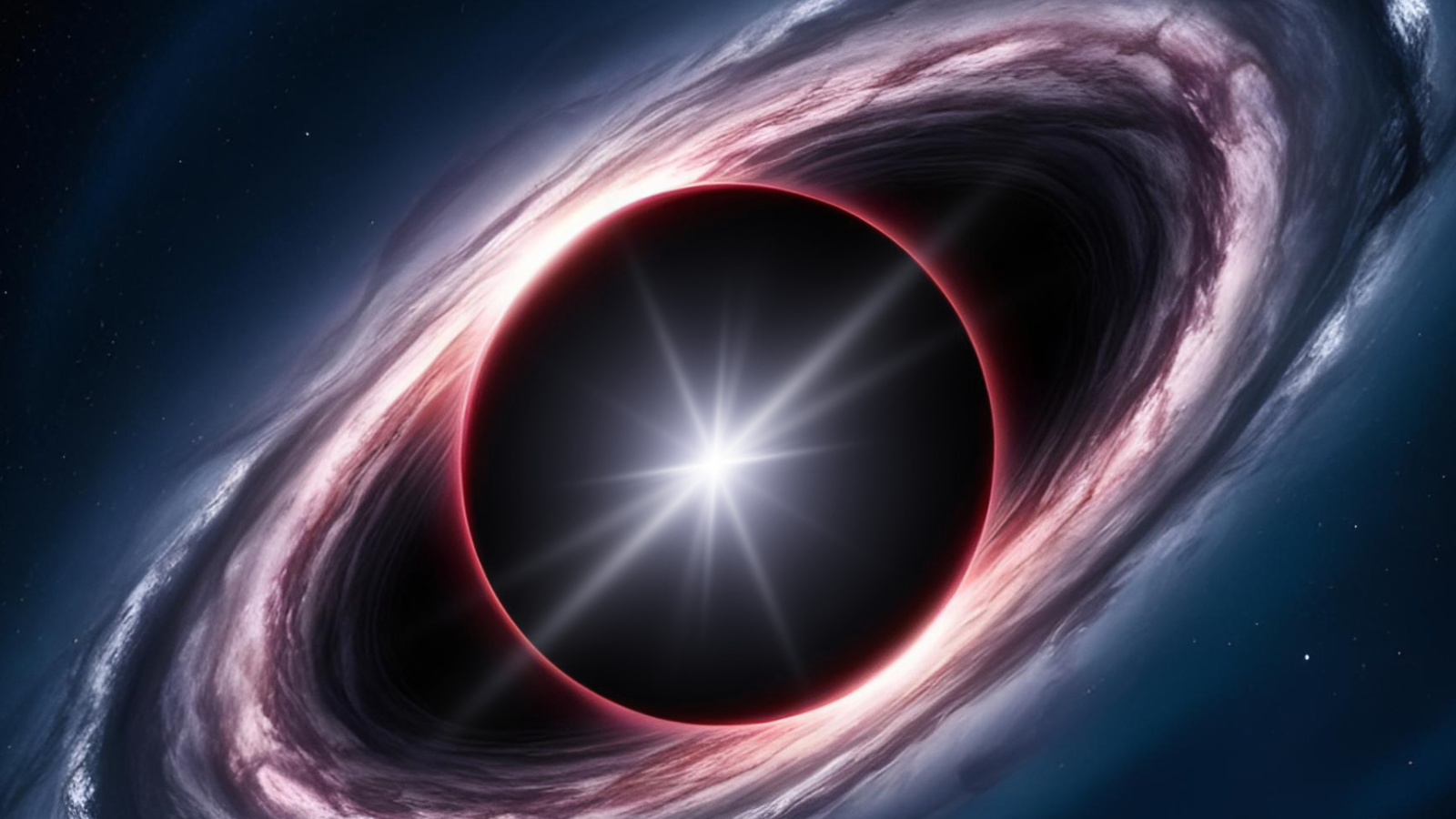
New research suggests that quantum corrections to Einstein's theory of gravity could lead to new solutions for black holes, potentially offering a pathway to understanding quantum gravity, the long-sought unification of general relativity and quantum physics, although experimental verification remains challenging.
A recent study proposes a new framework where tachyons, particles faster than light, could exist within Einstein's relativity without causing paradoxes, potentially revolutionizing our understanding of time, causality, and the universe's fundamental laws.
Physicists are revisiting the idea that gravity might be an emergent phenomenon resulting from entropy and swarm behavior of microscopic particles, rather than a fundamental force, with new models suggesting testable predictions that could reshape our understanding of gravity's nature.
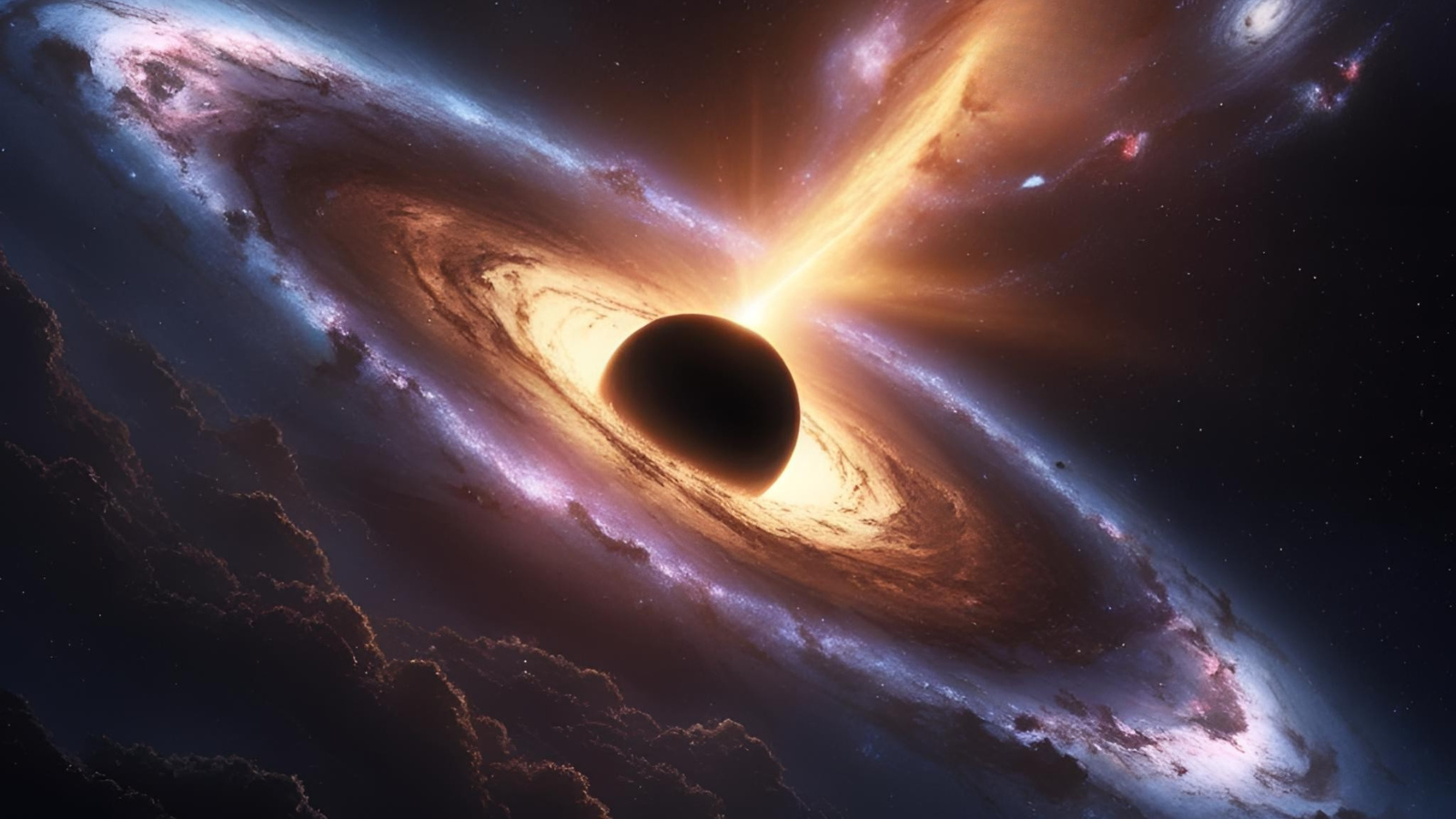
Recent research attempting to eliminate the singularity at black holes' centers by modifying gravity theories has faced significant scientific criticism, highlighting ongoing challenges in understanding black hole interiors and the laws of physics.
Originally Published 7 months ago — by Hacker News
Research suggests that the Big Bang may have occurred inside a black hole, with some theories proposing our universe is a gravitational bounce within a higher-dimensional parent universe, challenging traditional views and opening new avenues for testable predictions in cosmology.
Caspar A. Jacobs challenges the common assumption that the breakdown of low-energy quantum gravity theories occurs precisely at the Planck scale, arguing that this scale is more of a heuristic than an absolute limit, and our current understanding cannot definitively pinpoint where our theories fail due to the inaccessibility of such high energies.
Physicists have proposed a new, simpler approach to quantum gravity that reformulates gravity using four interrelated fields similar to those in quantum field theory, avoiding the need for extra dimensions or unknown particles, and aligning with the Standard Model, though it remains in early development and untested experimentally.
Physicists propose a new, simpler approach to quantum gravity that reformulates gravity using four interrelated fields similar to those in quantum field theory, avoiding extra dimensions and additional particles, and aligning with known physics, though experimental verification remains challenging.