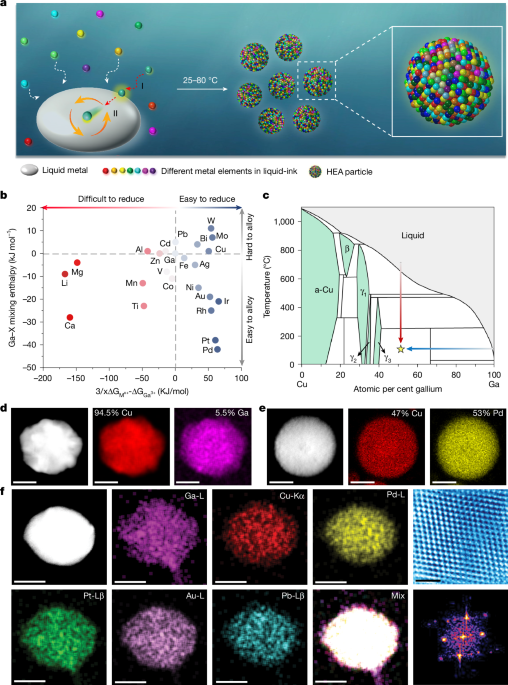
The article discusses a novel method of synthesizing high-entropy alloys using isothermal solidification, supported by in situ TEM experiments and extensive characterization, highlighting advances in nanoparticle synthesis and materials engineering.
Chinese scientists have successfully recreated rare hexagonal meteorite diamonds, known as lonsdaleite, in the laboratory, demonstrating their superior hardness and potential applications in industry and electronics, thus settling a long-standing scientific debate about their existence and stability.
Scientists have developed a method to create diamonds at room temperature and pressure in just 15 minutes, using a gallium-silicon mix in a special chamber. This new technique, led by Rodney Ruoff, eliminates the need for high-pressure, high-temperature conditions and a starter gem, making diamond synthesis more efficient. Although the diamonds produced are too small for jewelry, they hold potential for technological applications. The breakthrough could significantly impact the commercial production of synthetic diamonds in the future.
Japanese researchers have successfully reverse-engineered antibiotic molecules originally found in a Cameroonian volcanic crater, using retrosynthetic analysis to synthesize β- and γ-naphthocyclinone. This breakthrough allows for the production of these compounds in larger quantities without relying on natural sources, potentially aiding in the fight against infections. The methods developed could also be applied to synthesize other complex molecules in future research.
Scientists have developed a new technique to synthesize diamonds in just 15 minutes at normal atmospheric pressure without needing a starter gem. This breakthrough, detailed in a study published in Nature, uses gallium and silicon in a graphite crucible with super-hot carbon-rich methane gas. While the process still requires refinement, it promises to make diamond creation more accessible and eliminate several drawbacks of traditional synthesis methods.
Chemists have recently made breakthroughs in synthesizing cyclocarbons, a new carbon allotrope, which has led to a reevaluation of the concept of aromaticity. These cyclocarbons have been created on surfaces using advanced single-atom manipulation techniques, revealing unexpected aromatic properties. The next challenge is to stabilize cyclocarbons under ambient conditions and explore their potential applications in creating new carbon materials and unique chemistry. Despite the lack of immediate practical applications, the study of cyclocarbons deepens our understanding of fundamental chemical concepts and has the potential to open up new avenues in molecular engineering.
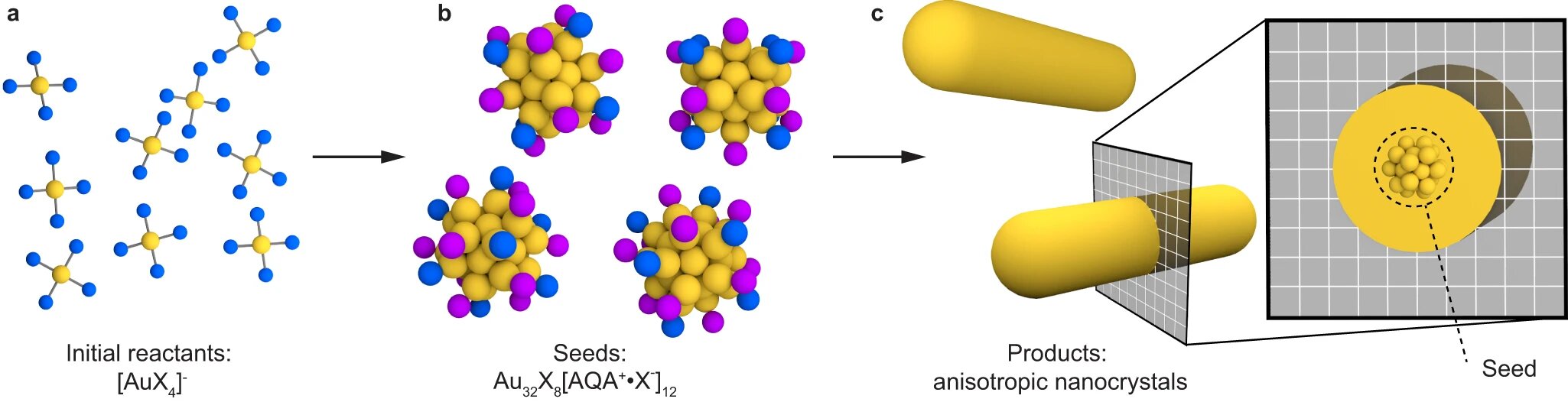
Chemists at Rice University have discovered that the tiny gold "seed" particles commonly used in nanoparticle synthesis are actually gold buckyballs, 32-atom spherical molecules. This finding could help researchers understand the mechanisms behind nanoparticle synthesis and improve control over particle shape and properties. The distinction between nanoparticles and molecules is crucial for advancing nanoscience and achieving precise control over matter.
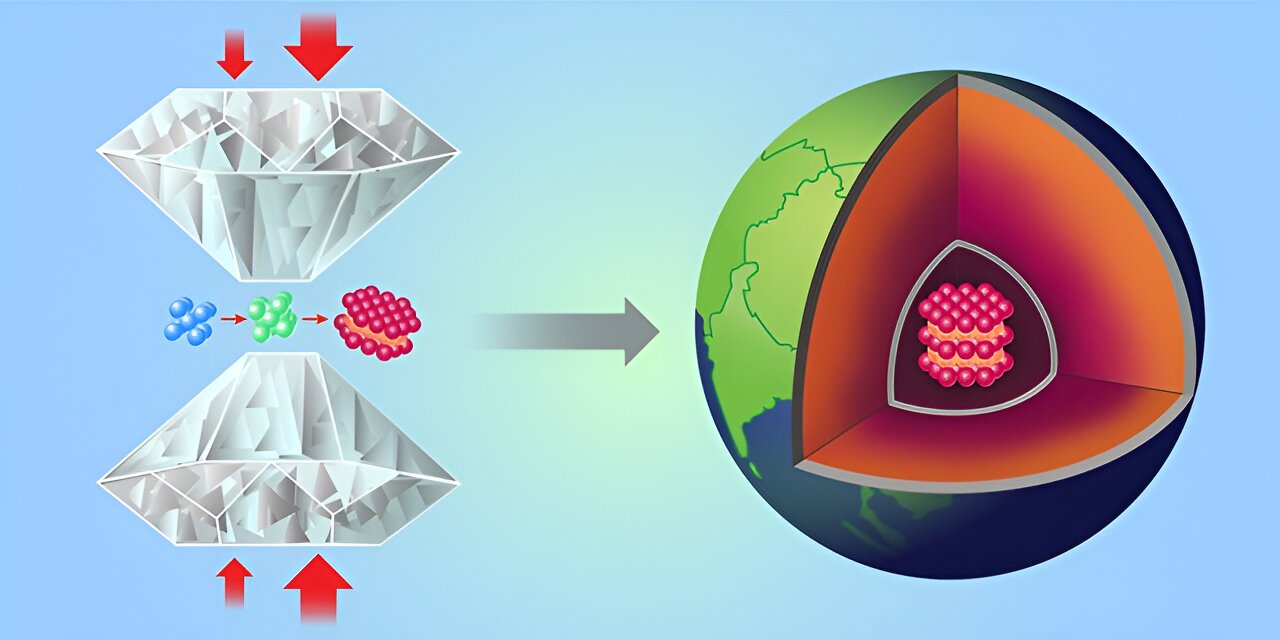
Physicists and geologists have successfully synthesized single-crystalline iron in a form that is likely found in Earth's core. By compressing a specific crystalline orientation of iron, the researchers were able to create pure single-crystalline ε-iron, which exhibits similar properties to iron in the Earth's core. This breakthrough could help answer questions about the structure and composition of the core and provide insights into Earth's internal composition.
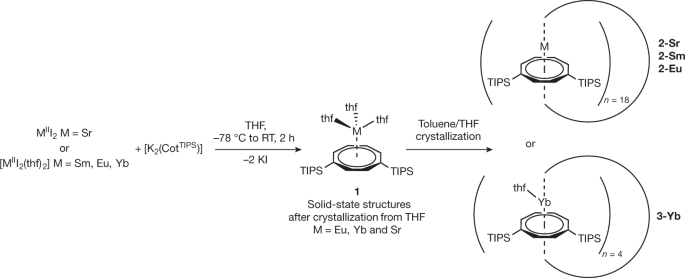
Researchers have synthesized and studied various cyclic sandwich compounds, including multidecker lanthanide-cyclooctatetraene clusters, lanthanide organometallic sandwich nanowires, and transition metal-benzene sandwich polymers. These compounds exhibit interesting properties such as ferromagnetism and potential for spin transport. The synthesis and characterization of these compounds provide insights into their electronic structures and bonding. Additionally, the study of cyclic ferrocene tetramers and other related compounds has contributed to the understanding of their reactivity and potential applications.
Chemists at the University of Basel have developed a new synthesis method for creating chiral helicenes, which are crucial for the advancement of organic light-emitting diodes (OLEDs). By controlling the three-dimensional structure of these compounds, the researchers have paved the way for improved light sources. The team utilized a C-H activation reaction to create helicenes with the desired chirality, demonstrating the potential of this strategy for synthesizing complex functional molecules. The synthesized products strongly absorb and emit circularly polarized light, an important characteristic for the development of new materials in OLEDs.
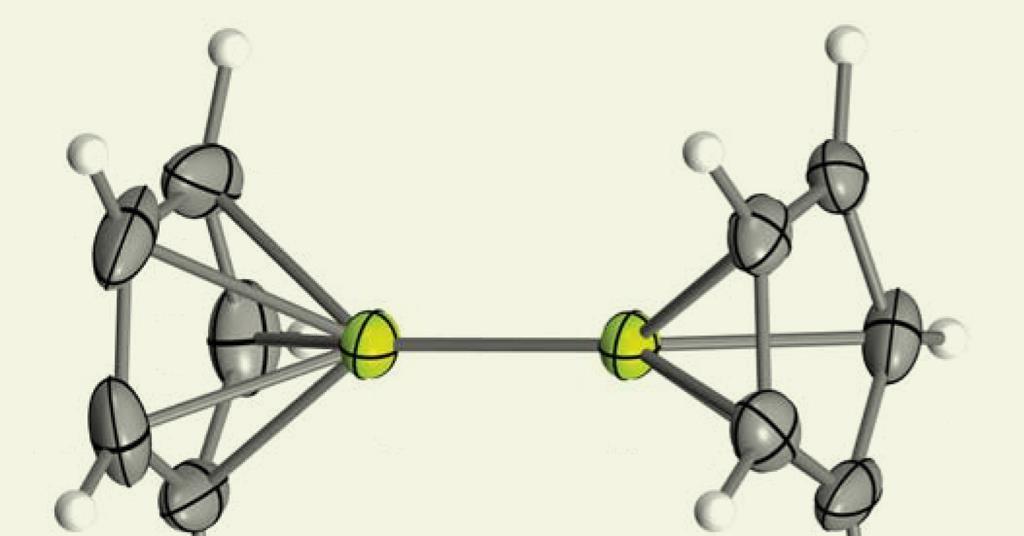
Researchers at the University of Oxford have successfully isolated the first stable compound with a beryllium-beryllium bond, diberyllocene, using a dimeric magnesium(I) complex. The synthesis of diberyllocene will help answer questions about the fundamental nature of beryllium-beryllium bonding that were posed over a century ago. The compound features two half-sandwich (cyclopentadienyl)beryllium units linked through a beryllium-beryllium bond, which was found to be 2.05Å in length. The researchers also concluded that diberyllocene was a reductant that could be used to synthesise other beryllium-metal bonds.
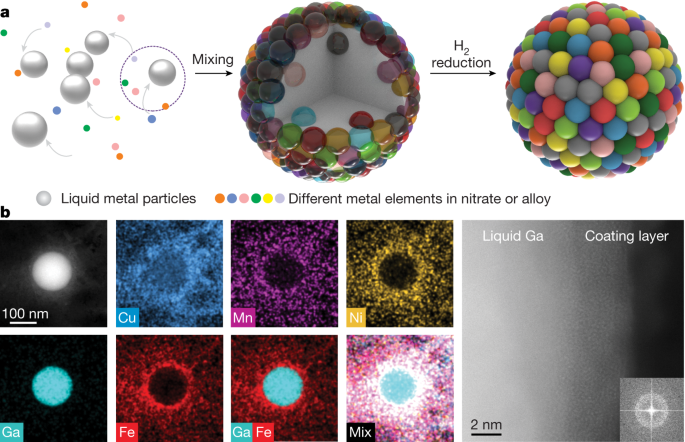
Researchers have developed a new method for synthesizing high-entropy alloy nanoparticles using liquid metal. The method involves mixing the liquid metal with a solution containing the desired metal precursors, which then undergoes a chemical reaction to form the nanoparticles. The resulting nanoparticles have a high degree of compositional complexity and can be used as catalysts in a variety of applications. This new approach offers a promising avenue for the development of high-performance materials with unique properties.
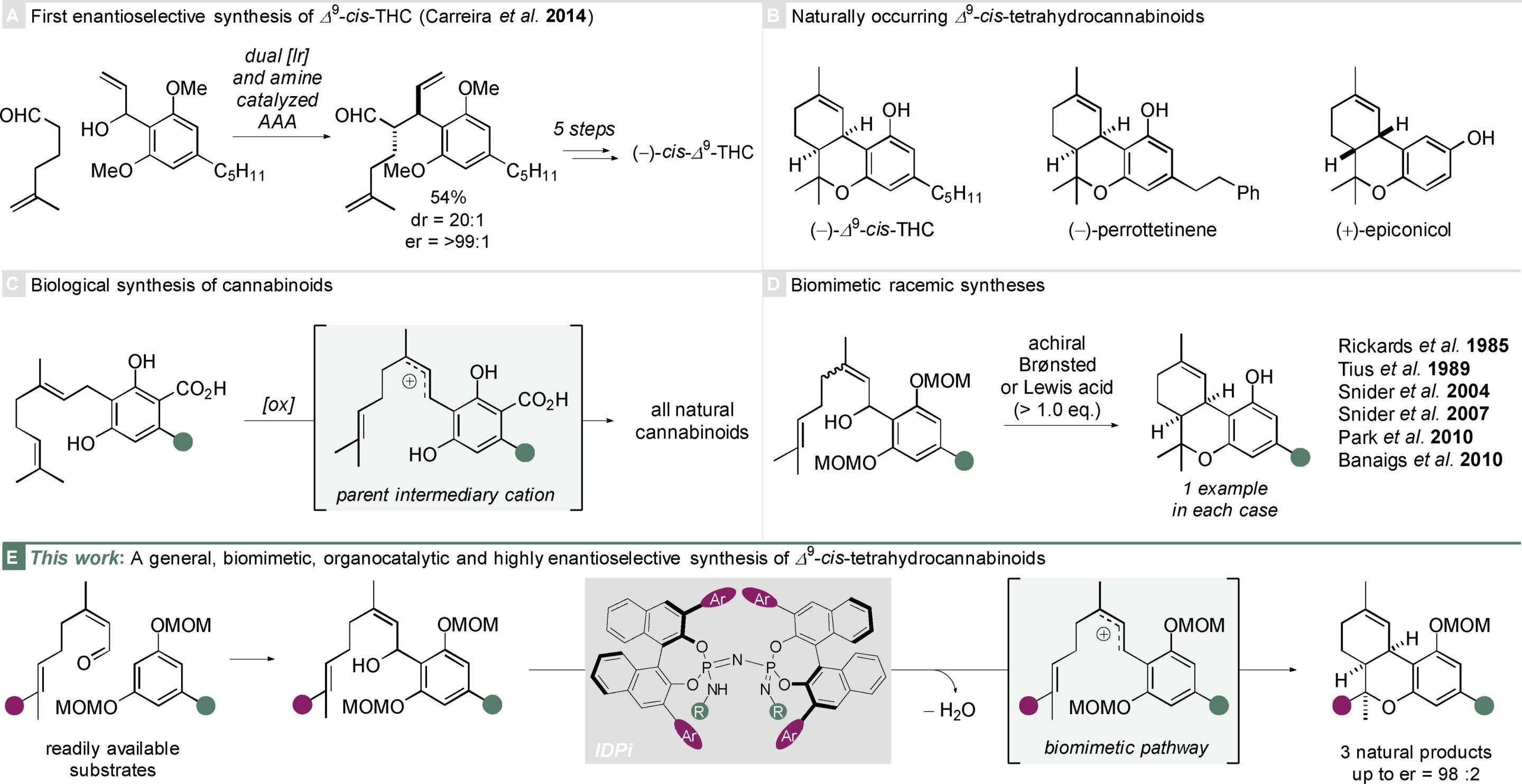
Researchers at Leipzig University have developed a new, simple, and inexpensive method for synthesizing cis-tetrahydrocannabinol (cis-THC), a natural substance found in the cannabis plant that produces the characteristic psychoactive effect and has many potential applications, including in the pharmaceutical industry. The new method allows for the production of cis-tetrahydrocannabinoids and testing them for their biological activity, which was not possible before. The substance can be synthesized with high overall yields and excellent optical purities using the new method, and it requires very small amounts of catalyst, which is highly attractive from an environmental perspective in terms of saving energy and resources and minimizing by-products.