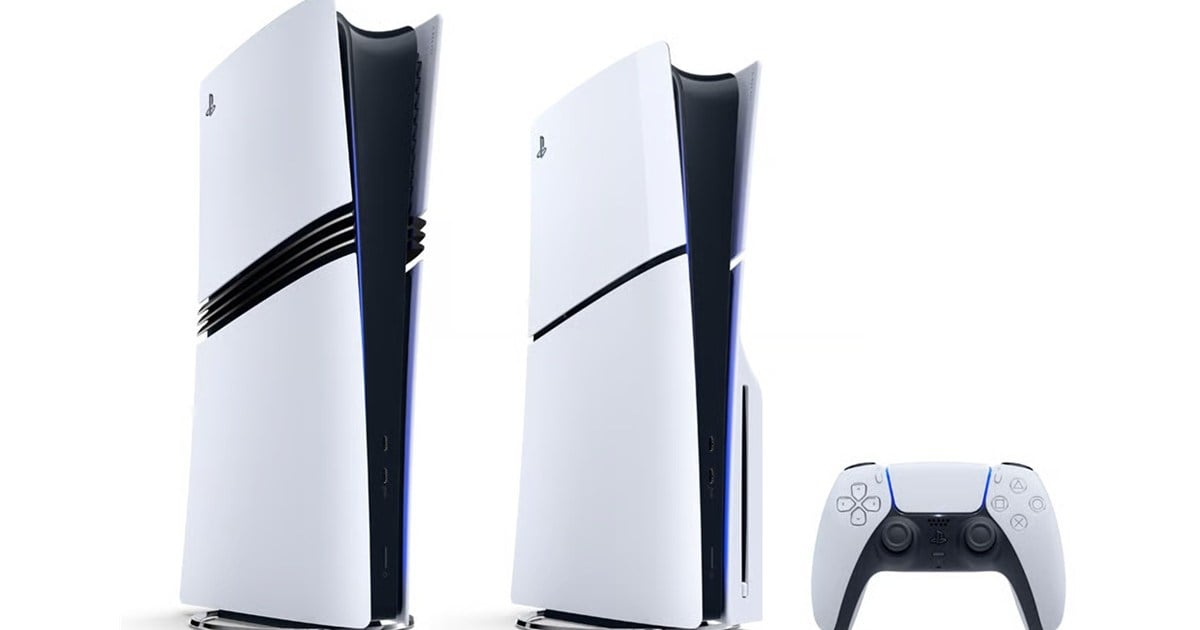
Sony has addressed the liquid metal leakage issue in certain PS5 models by adopting a new heatsink design from the PS5 Pro, which prevents spillage and improves cooling, extending the console's lifespan. The update is available for specific models like CFI-2100, CFI-2200, and CFI-2116 B01Y, while older models may still experience issues.
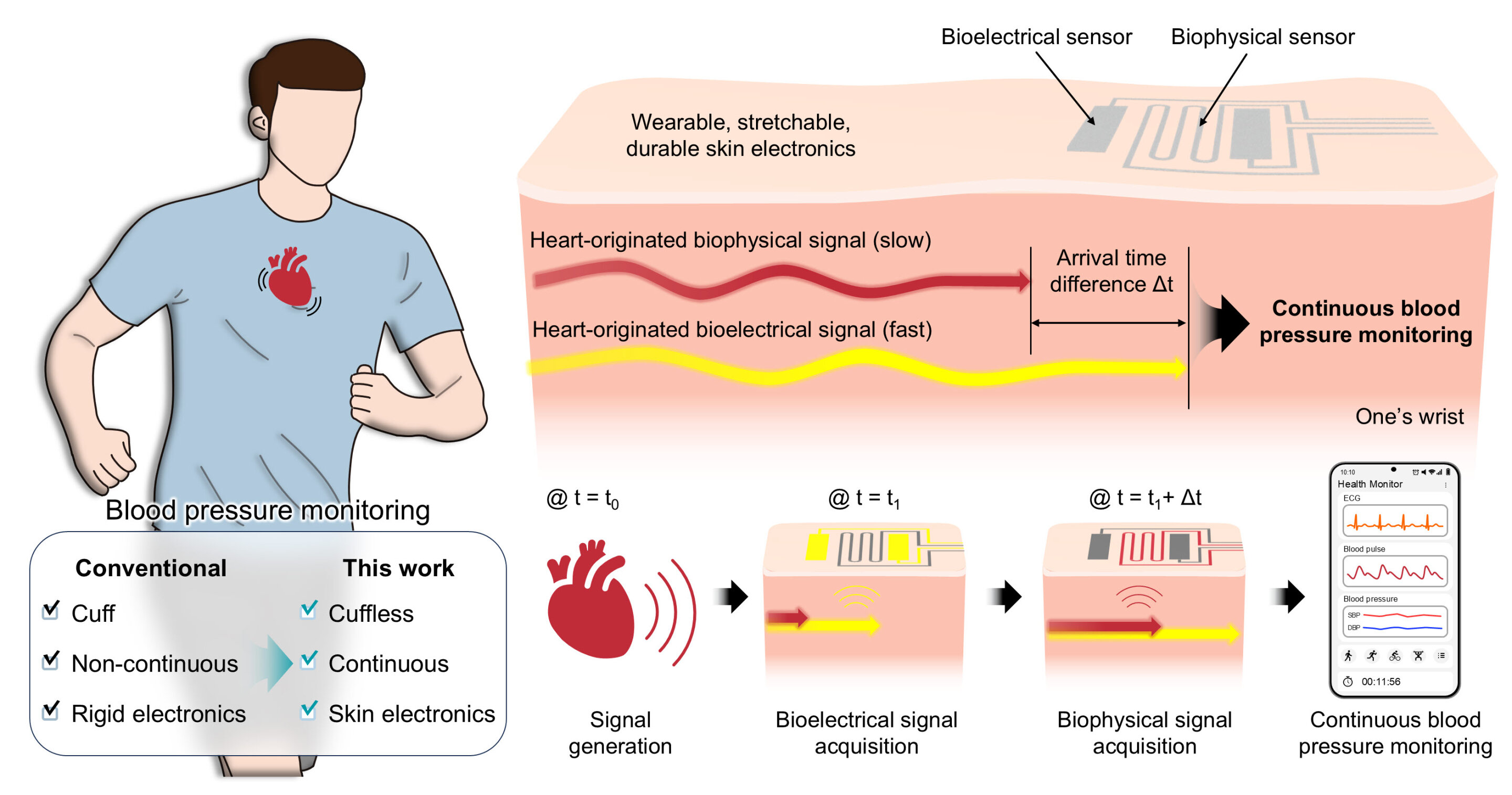
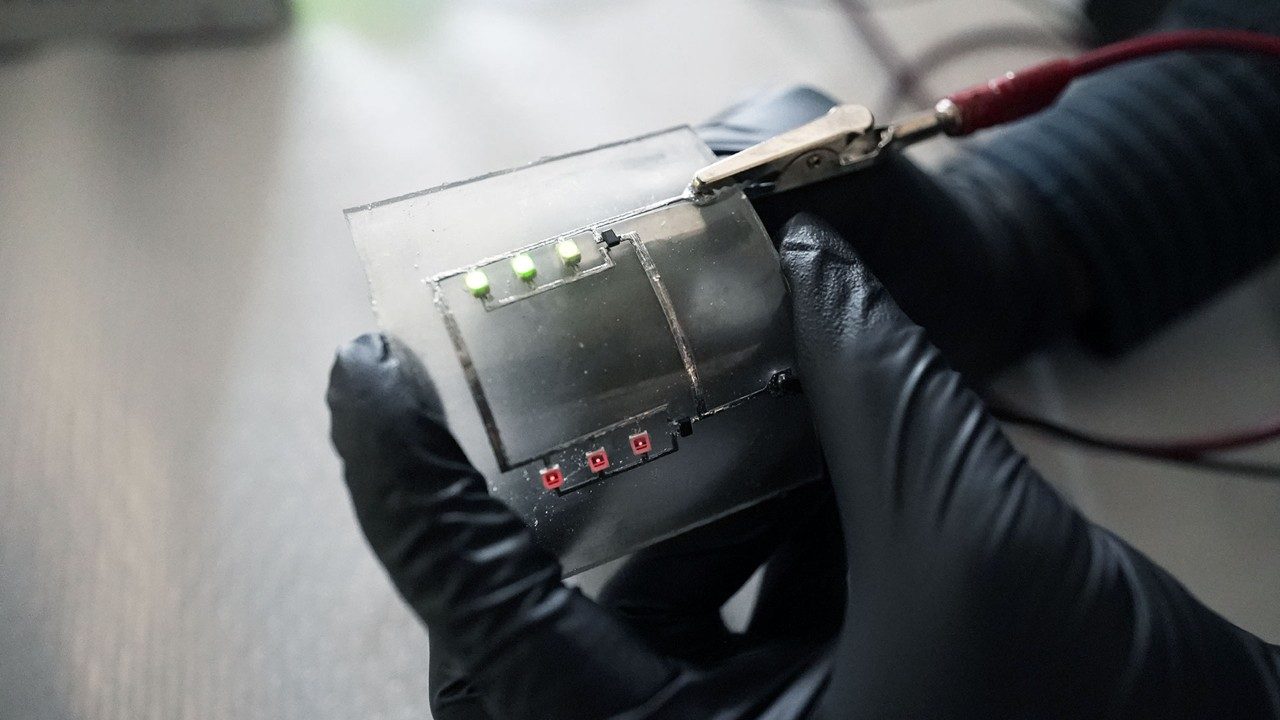
Researchers at Seoul National University have developed a flexible, bandage-like wearable device that uses liquid metal circuits and a novel laser sintering process to enable real-time, continuous blood pressure monitoring, offering a more comfortable and accurate alternative to traditional cuff-based methods, with potential applications in healthcare, fitness, and daily health management.
Scientists have developed a new type of self-healing, reconfigurable circuit board using vitrimer and liquid metal droplets, which can withstand damage, be reshaped with heat, and are recyclable, offering a sustainable alternative to traditional, non-recyclable circuit boards and addressing the growing issue of electronic waste.
The PS5 is experiencing overheating issues due to a design flaw involving liquid metal cooling, especially in launch models and when placed vertically, which can lead to hardware failure over time. Sony attempted to address this by adding ridges to the heatsink to improve liquid metal distribution, but users are advised to keep their consoles horizontal to mitigate the risk.
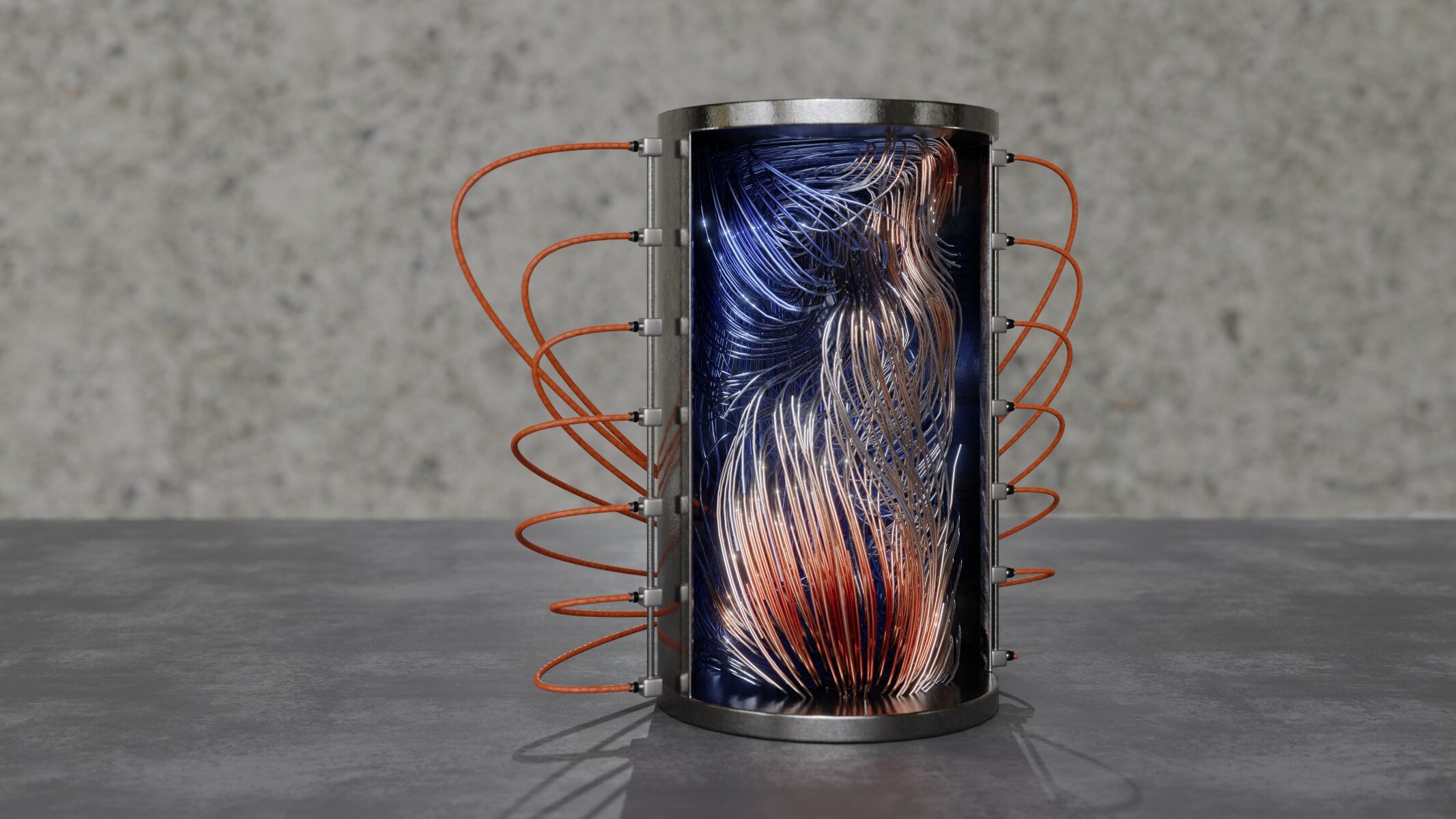
Researchers at the Helmholtz-Zentrum Dresden-Rossendorf have successfully visualized a detailed three-dimensional image of turbulent temperature-driven liquid metal flow using a self-developed method called contactless inductive flow tomography (CIFT). This breakthrough could provide insights into geophysical and astrophysical flow phenomena and industrial applications, such as the casting of liquid steel. The team overcame challenges in measuring the small flow-induced magnetic fields and aims to further develop the measurement method for increased accuracy and deeper insights into turbulent liquid metal flows.
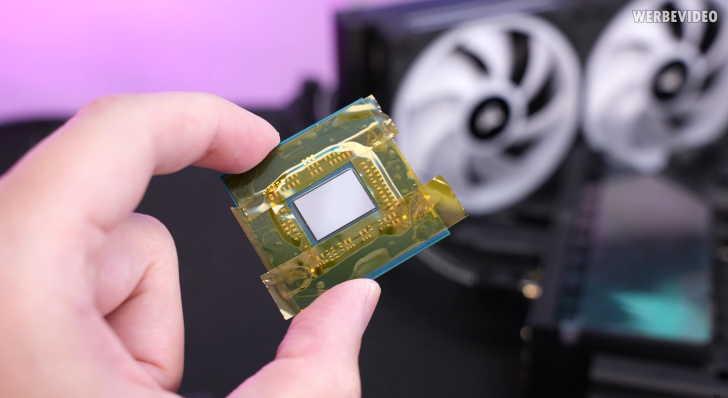
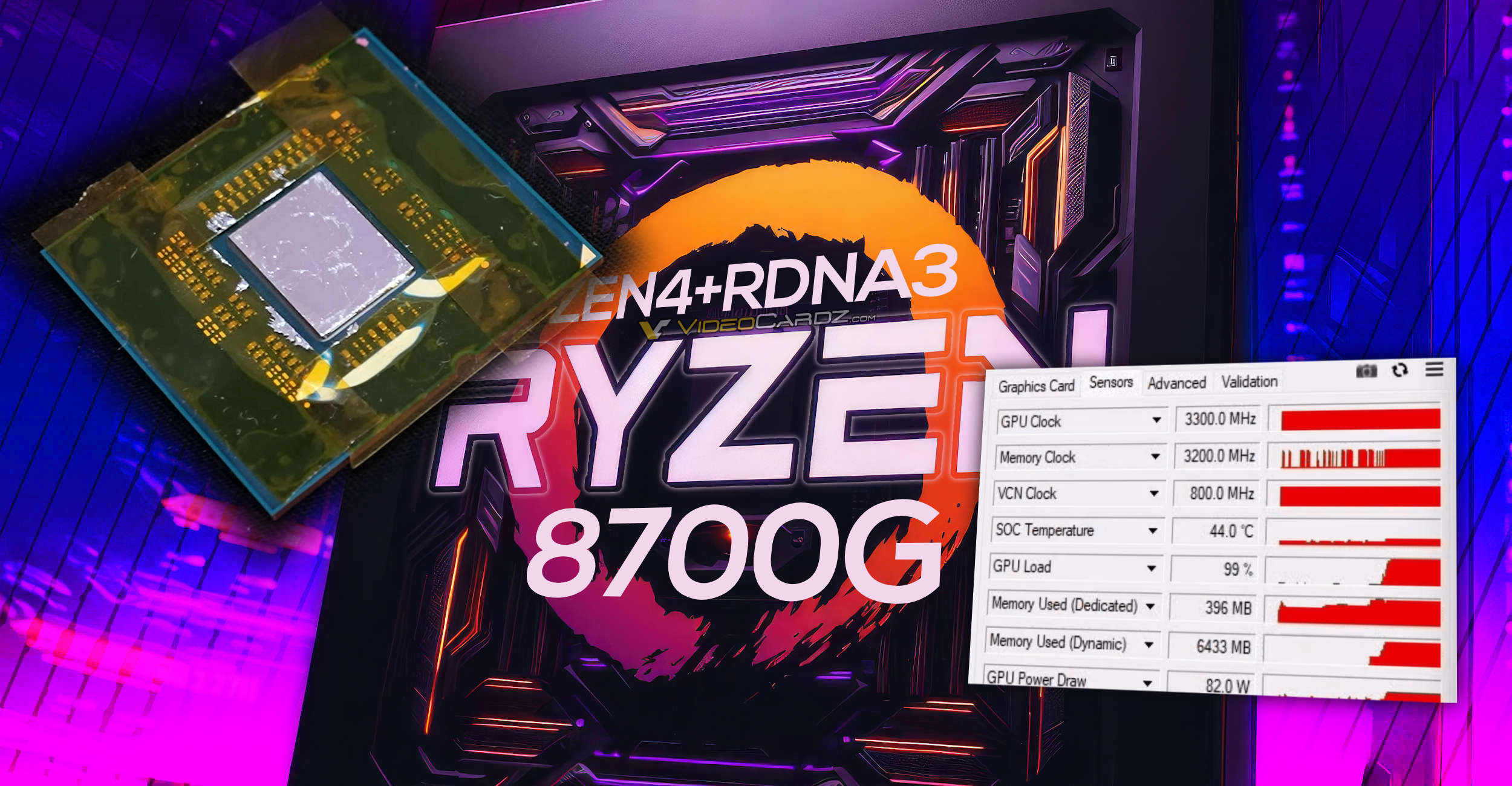
Hardware expert Der8auer delidded the AMD Ryzen 7 8700G APU, revealing its die and achieving a significant temperature reduction of up to 25 degrees by applying liquid metal. The delidding process involved using a delidding tool from Thermal Grizzly, and despite the APU's lower die height, thermal performance improved with the use of graphene thermal pads and liquid metal. While delidding may not have widespread market potential, it proved beneficial for reducing thermals and increasing clock speeds in constrained cooling setups.
Overclockers have successfully boosted the AMD Ryzen 7 8700G APU's RDNA3 graphics to 3.3 GHz, achieving stable performance with a voltage of 1.25. Additionally, using liquid metal instead of thermal compound has significantly reduced temperatures, with results showing a decrease from 85°C to just above 60°C during 5.0 GHz overclocking across all cores. The APU offers substantial overclocking potential, particularly for graphics, and replacing the conductive material underneath the integrated heatspreader can greatly enhance cooling efficiency and performance.
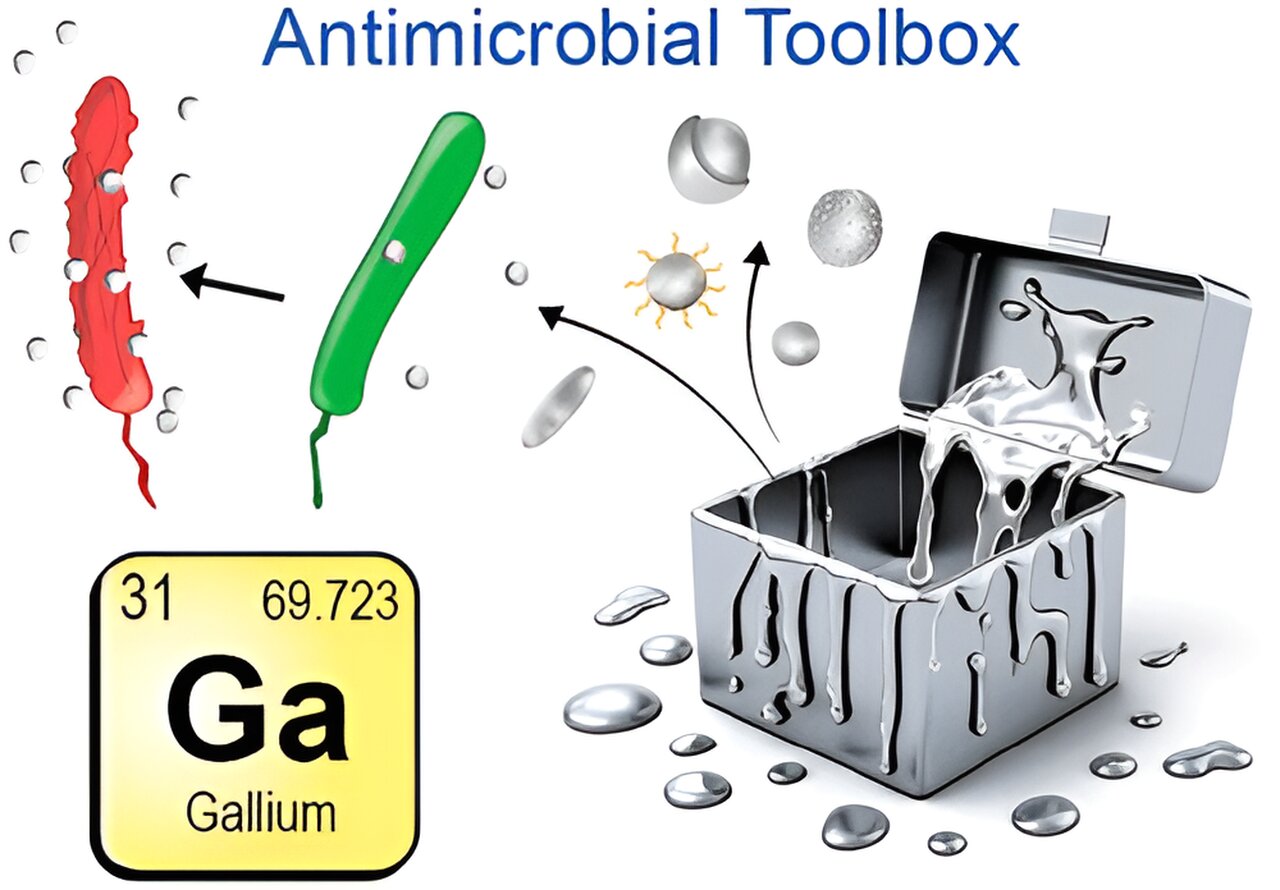
Scientists have developed a liquid metal coating treatment called GaLM, which shows promise as an antimicrobial agent. GaLM particles have improved biocompatibility and low cytotoxicity, making them suitable for use in bandages, medical devices, and drug nanoparticles. The liquid state of GaLM allows for easy combination with other components, creating more efficient antimicrobial metals. GaLMs can be activated by external stimuli and offer potential as the next generation of antimicrobial and anti-inflammatory agents. This research is part of a global effort to combat antimicrobial resistance.
Scientists at Tsinghua University have developed a liquid metal coating that can transform ordinary paper into self-adhesive gadgets capable of conducting heat and electricity. The researchers successfully formulated a liquid alloy and applied it to paper using a stamping technique, eliminating the need for adhesives. This breakthrough opens up new possibilities for creating lightweight, flexible smart objects and soft robots that can operate autonomously in various environments.
Scientists have developed a liquid metal coating that can be applied to paper and other materials without an adhesive, allowing them to be turned into smart objects. The metal coating conducts heat and electricity and can be used to create origami shapes that can re-fold themselves. The researchers also built 3D structures out of individual pieces of flat, metal-coated paper that could keep their shape without falling apart. The self-adhesive liquid metal coating could be an asset to soft robots in alien environments and could provide a new route for designing space explorers.
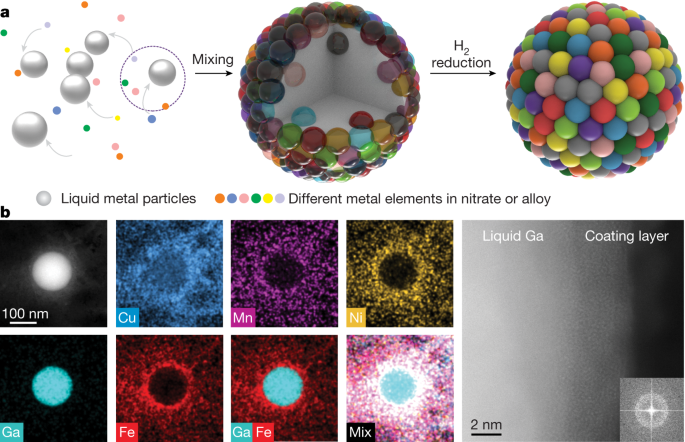
Researchers have developed a new method for synthesizing high-entropy alloy nanoparticles using liquid metal. The method involves mixing the liquid metal with a solution containing the desired metal precursors, which then undergoes a chemical reaction to form the nanoparticles. The resulting nanoparticles have a high degree of compositional complexity and can be used as catalysts in a variety of applications. This new approach offers a promising avenue for the development of high-performance materials with unique properties.
Chinese researchers have developed a technique to apply liquid metal coatings to surfaces that typically resist bonding with the substance, allowing for the transformation of ordinary materials like paper and plastic into electronic "smart gadgets". The method has potential for large-scale use, opening doors to wearable testing platforms, flexible technology, and potentially soft robotics. However, the longevity of the liquid metal coating after application is still uncertain, and researchers plan to expand the method's applicability to a wider range of surfaces and construct innovative smart devices.
Chinese scientists have developed a new method of applying liquid metal to surfaces such as paper and plastic, transforming these everyday materials into potential “smart devices.” The method involves adjusting pressure rather than using a binding material, enabling the liquid metal to adhere to surfaces, a previously challenging task due to high surface tension. The technique may have applications in wearable testing platforms, flexible devices, and soft robotics. The researchers plan to broaden the application to diverse surfaces and construct smart devices from materials treated by this method.
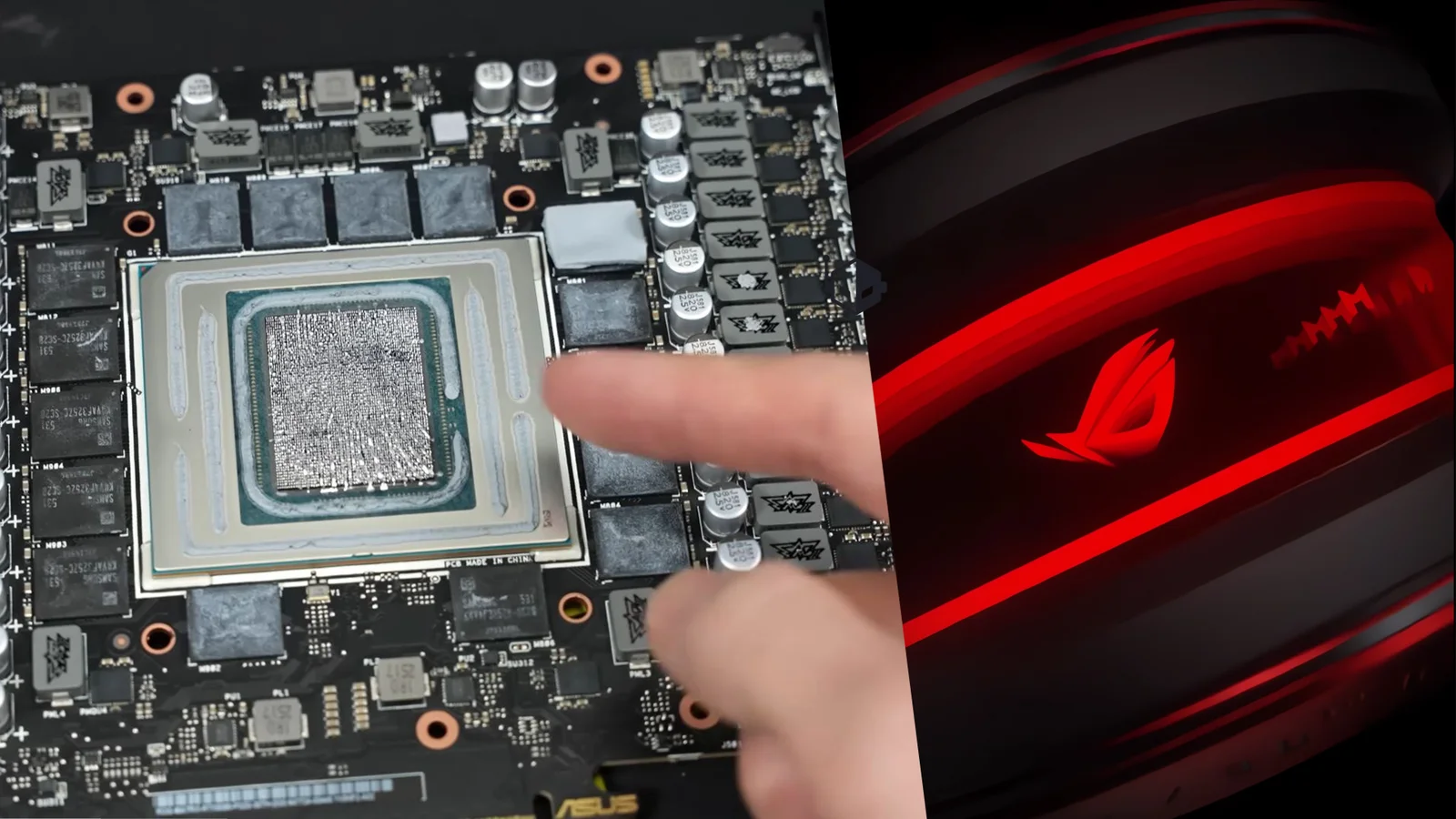
ASUS has announced the ROG Matrix GeForce RTX 4090 GPU, featuring an All-in-One cooling solution with a 360mm radiator and liquid metal on the die. The custom-designed coldplate will cover the GPU, memory, and VRM section, ensuring no liquid metal spill will happen. The graphics card will launch next quarter as a collector's edition with pricing close to $2000.
ASUS has launched its most powerful Ada design yet, the GeForce RTX 4090 ROG Matrix graphics card, featuring the best binned AD102 GPUs from NVIDIA, a seamless metal frame, and a 360mm AIO cooling solution. The card also uses liquid metal thermal compound, a custom-engineered coldplate, and ROG MF-12S ARGB fans. It has the highest boost clocks of any RTX 4090 on the market and comes with a dual BIOS switch. The card will be a limited edition and is expected to cost over $2000 US when it goes on sale in Q3 2023.