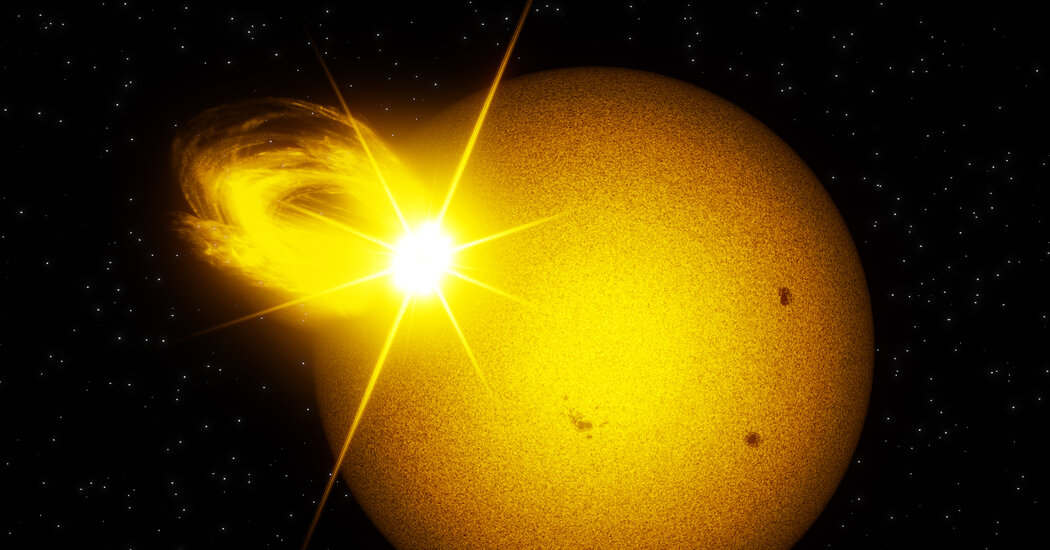
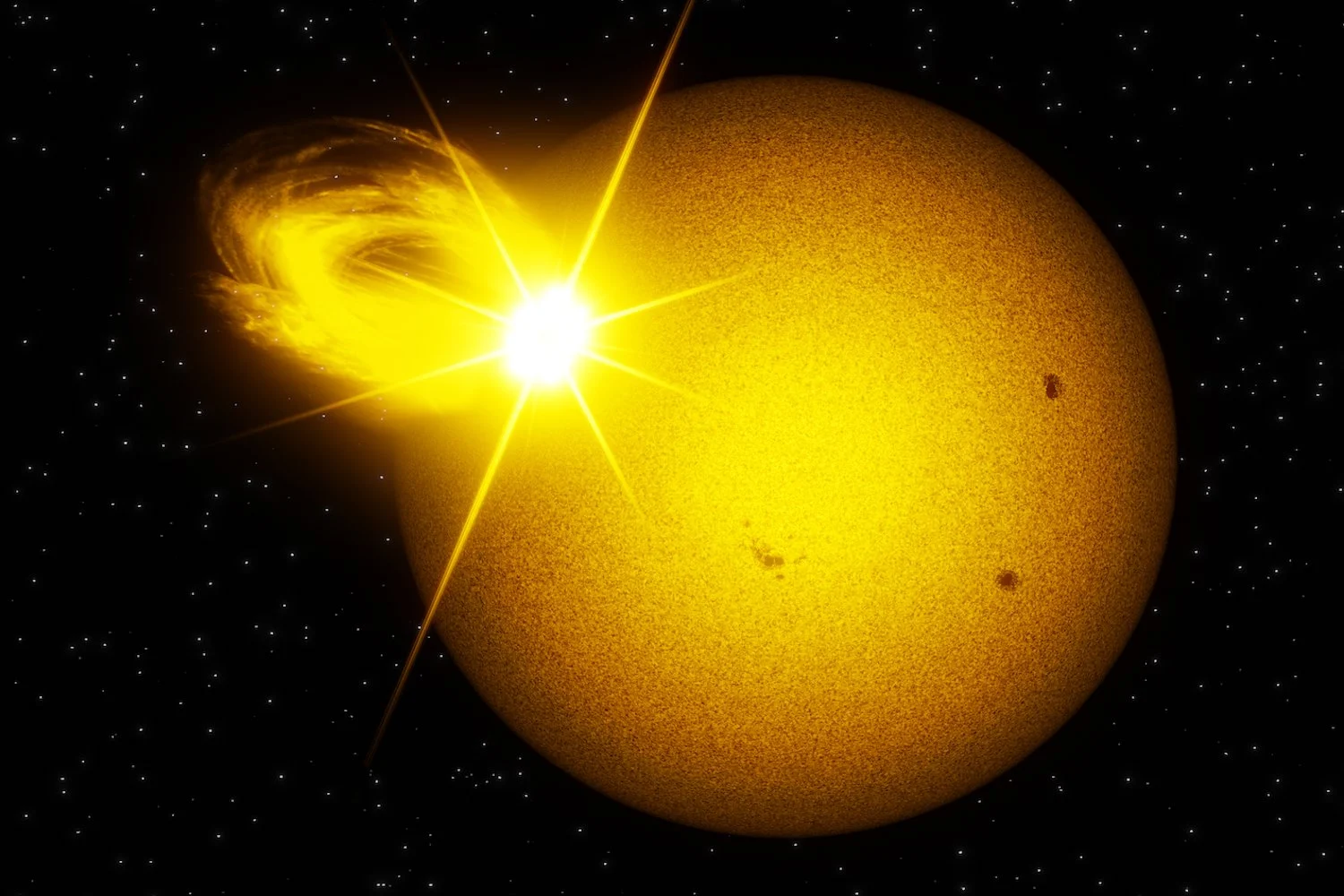
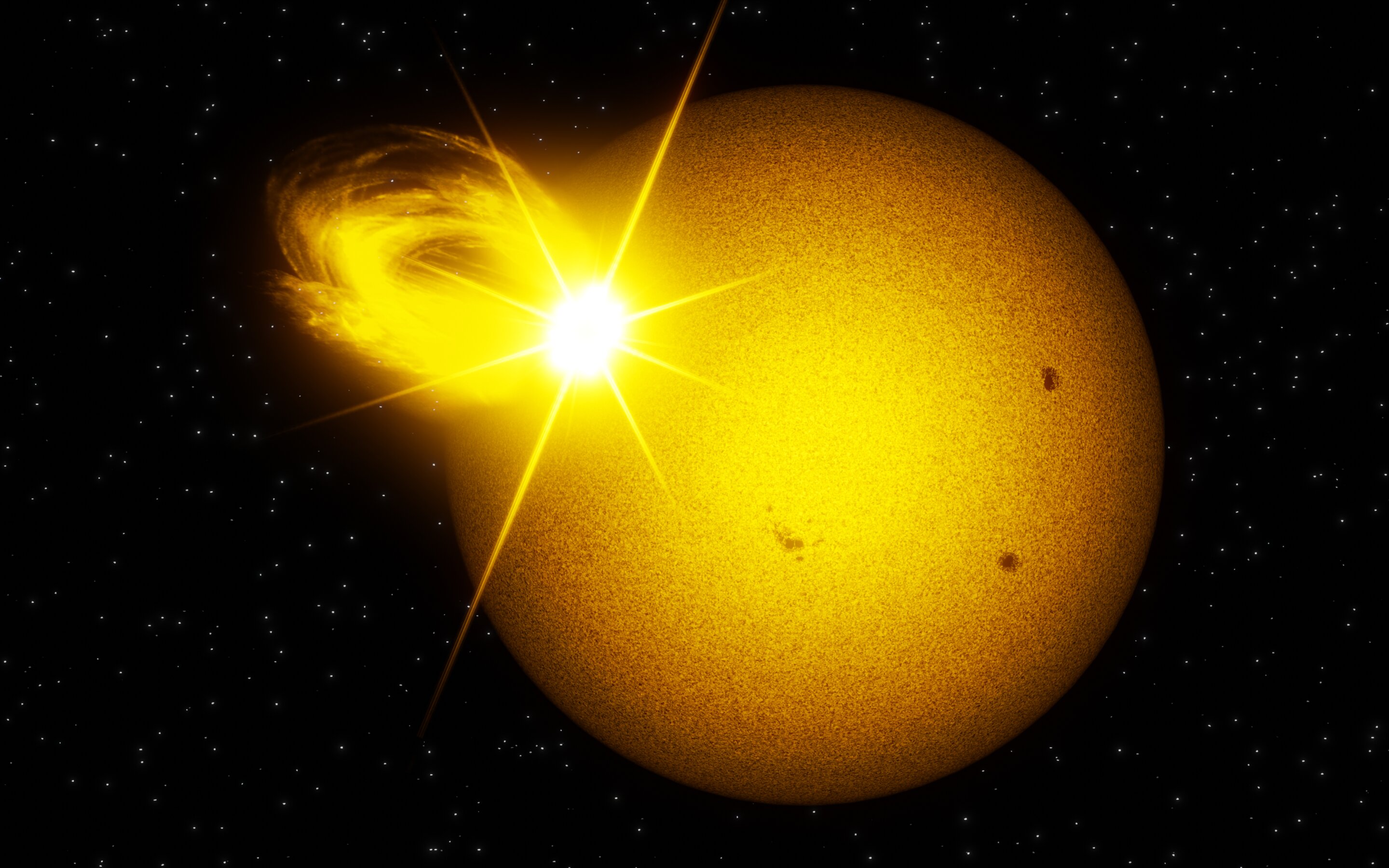
Research indicates that stars similar to our Sun experience superflares approximately once every 100 years, which could have significant implications for understanding solar activity and its potential impact on Earth.
A new study reveals that powerful superflares, which are tens of thousands of times more intense than typical solar flares, erupt from sun-like stars approximately every 100 years, much more frequently than previously thought. These superflares could have significant impacts on Earth's technological systems and biosphere, though their exact effects remain uncertain. The research, conducted by the Max Planck Institute for Solar System Research, analyzed data from NASA's Kepler space telescope, suggesting that the mechanisms behind solar and stellar flares are consistent across sun-like stars.
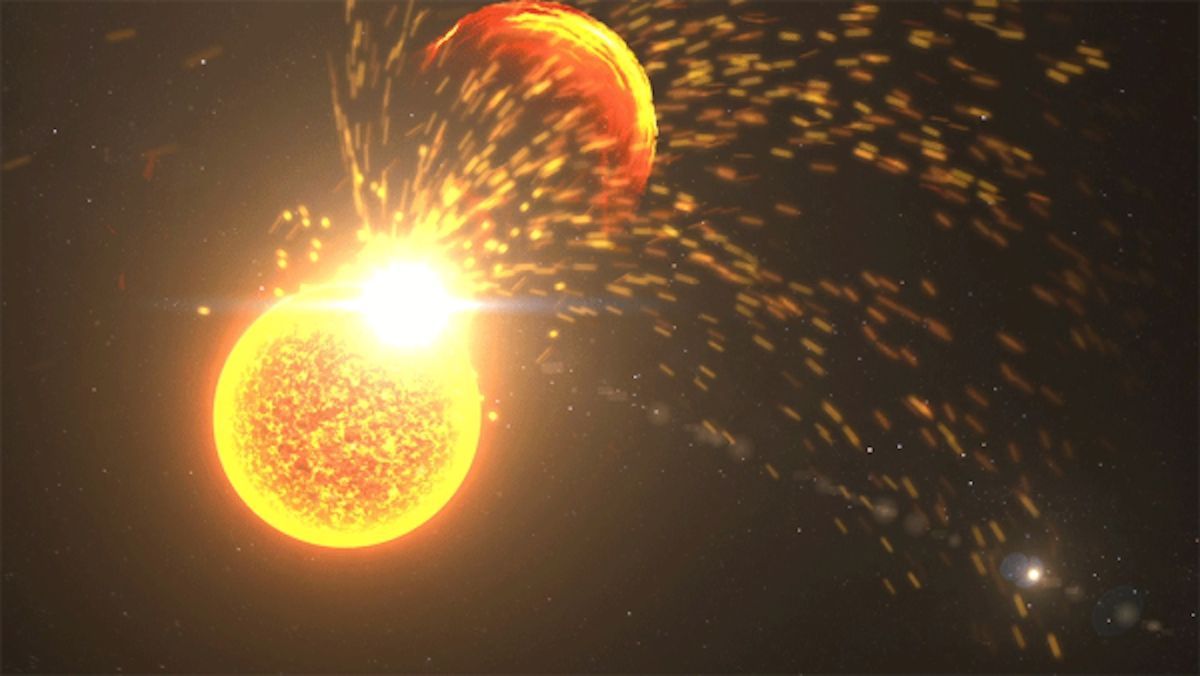
A study analyzing data from 56,000 Sun-like stars suggests that stars similar to our Sun produce superflares, which are thousands of times more powerful than regular solar flares, approximately once every century. While no superflares have been recorded on the Sun, the research indicates a potential for such events, which could cause extreme geomagnetic storms on Earth. The findings, published in Science, help scientists better understand solar activity and predict geomagnetic storms that affect Earth's technology.
A new study published in Science reveals that sun-like stars emit superflares approximately once per century, challenging previous estimates of longer intervals. By analyzing data from NASA's Kepler telescope, researchers identified 2,889 superflares on 2,527 stars similar to the sun. This finding suggests that such stars are more prone to superflares than previously thought, with implications for understanding solar activity and forecasting space weather. The study highlights the need for further investigation into the relationship between superflares and extreme solar particle events.
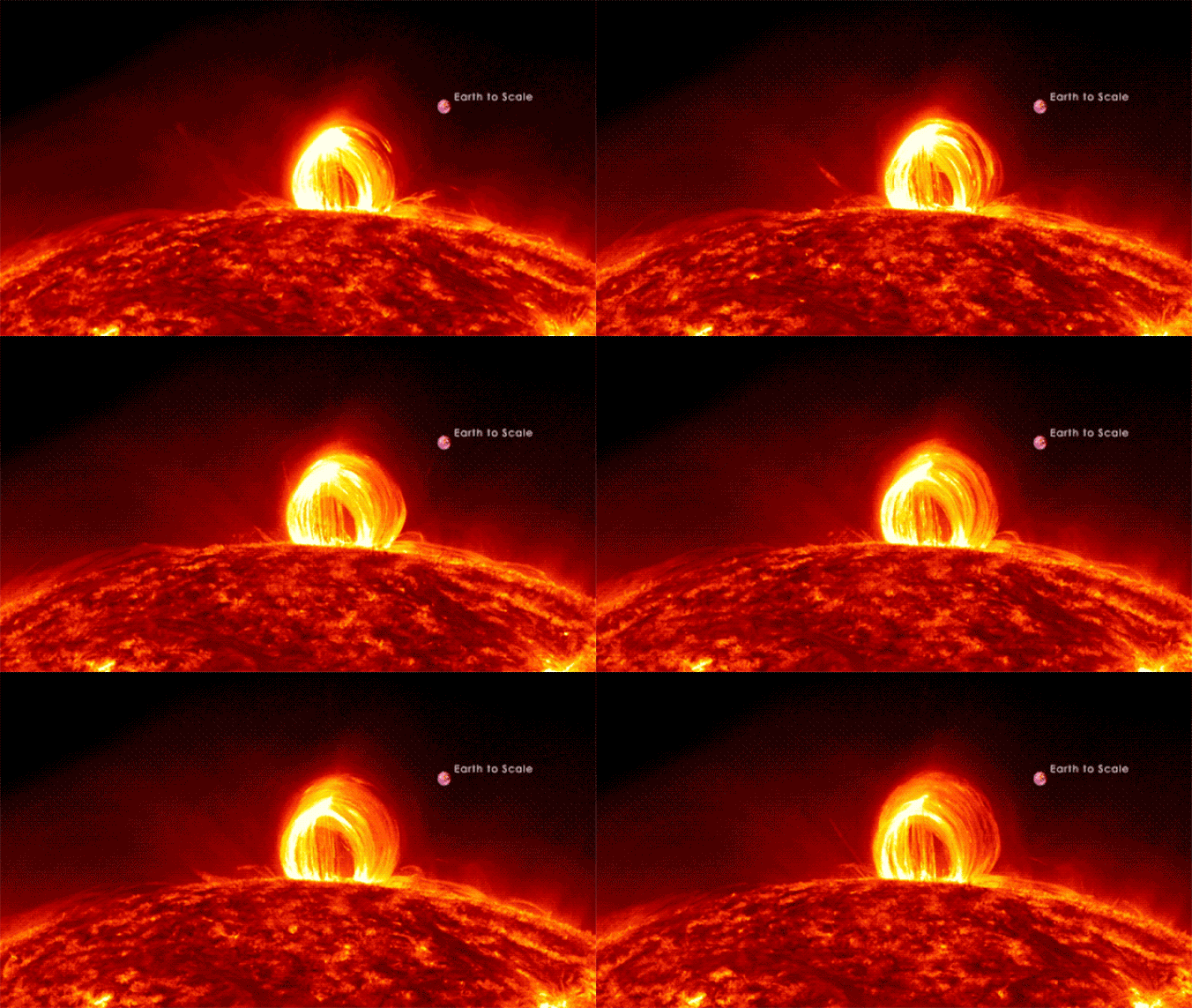
Scientists have used solar flares as a proxy to study the physics behind massive and violent "superflares" that occur on stars thousands of times brighter than the sun. By applying what they have learned about solar flares to other stars, researchers were able to identify the underlying physical mechanisms driving these superflares. They found that the presence of coronal loops, massive hoops of plasma following magnetic field lines, could explain the observed "peak bump" in the light curves of distant stars. Computer simulations showed that these loops would increase in density and contribute to visible light emissions, resulting in a distinct secondary emission peak. The team also found that the late-time "bump" flaring of light in distant stars' spectra is caused by super-hot plasma cooling down and falling back to the star, heating up the atmosphere in the process.
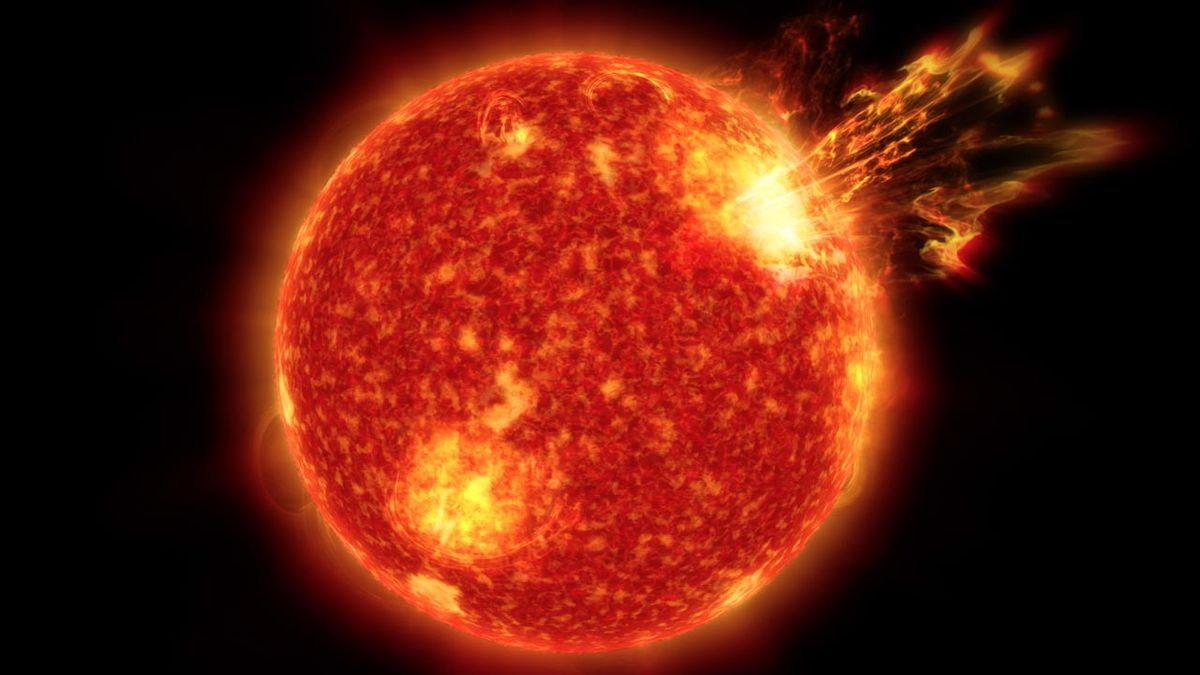
Superflares from a hyperactive young sun may have sparked life on Earth by firing charged particles found in the solar wind at a concoction of gases present in Earth's early atmosphere, forming significant quantities of amino acids and carboxylic acids — the building blocks for proteins and all organic life. A new study has used a particle accelerator to find that cosmic rays from fiercely energetic superflares could have provided the necessary jump-start for life on Earth. Superflares of this kind typically only erupt once every 100 years or so, but during Earth's first 100 million years, the sun was 30% dimmer, yet superflares burst from its surface every three to 10 days.