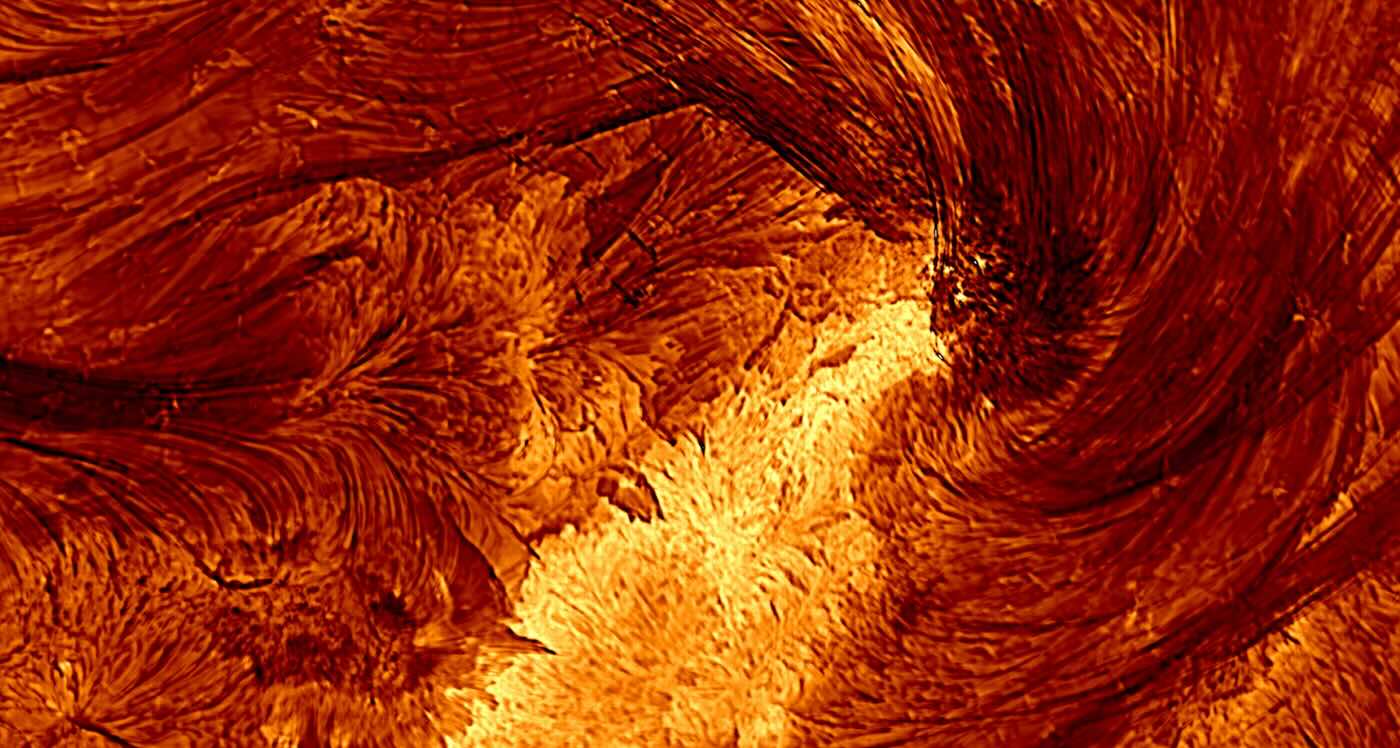
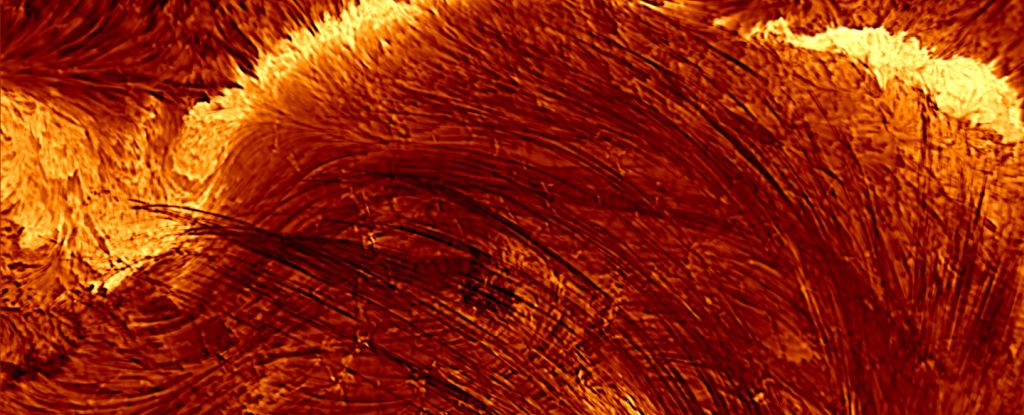
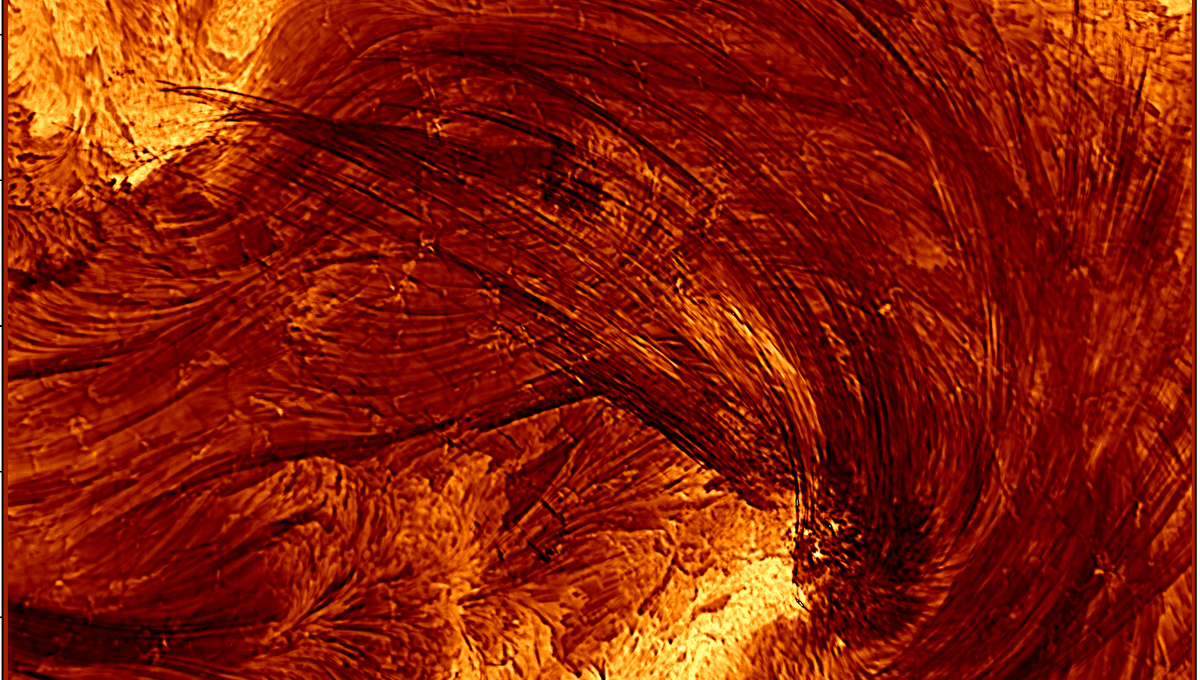
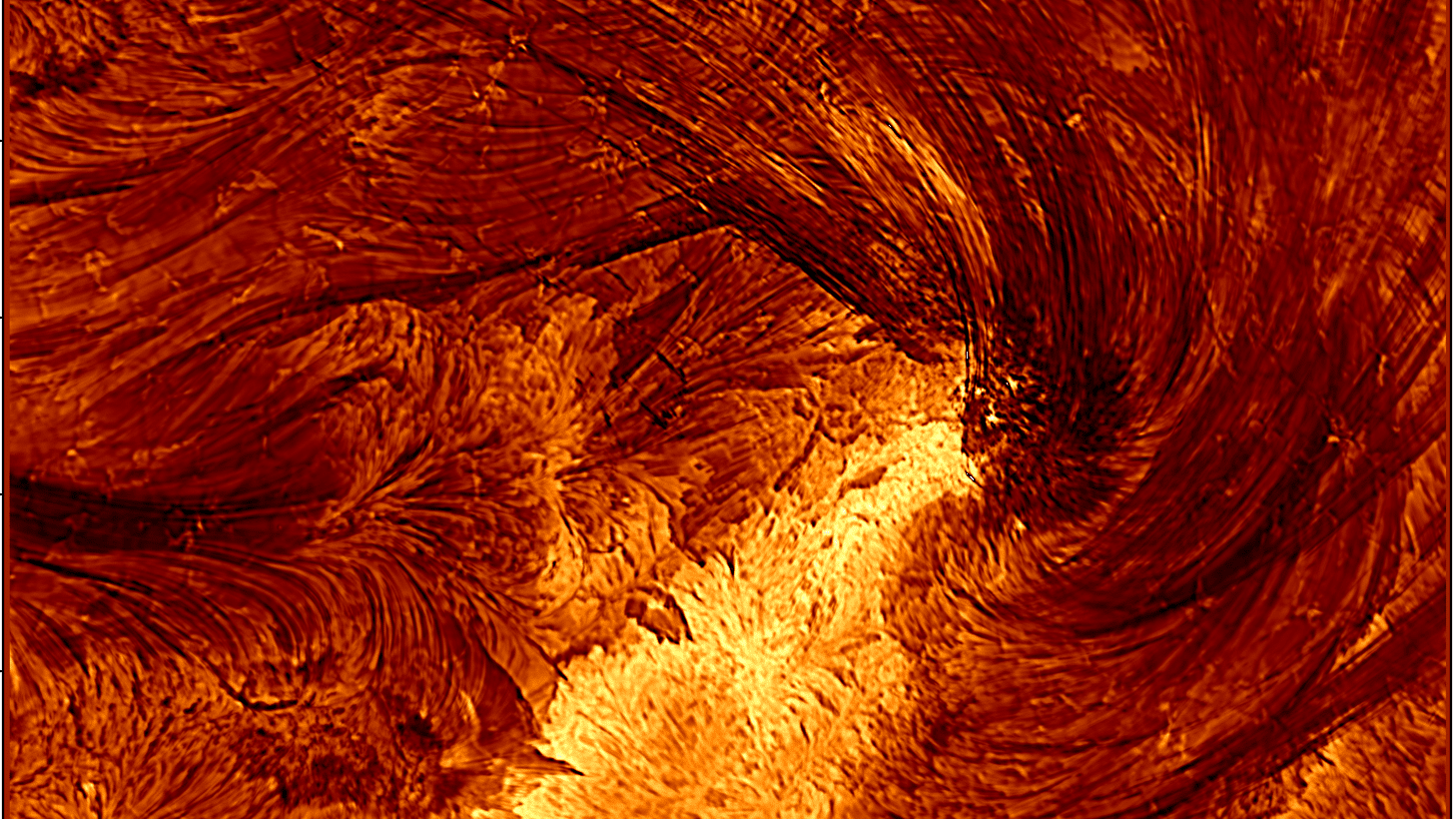
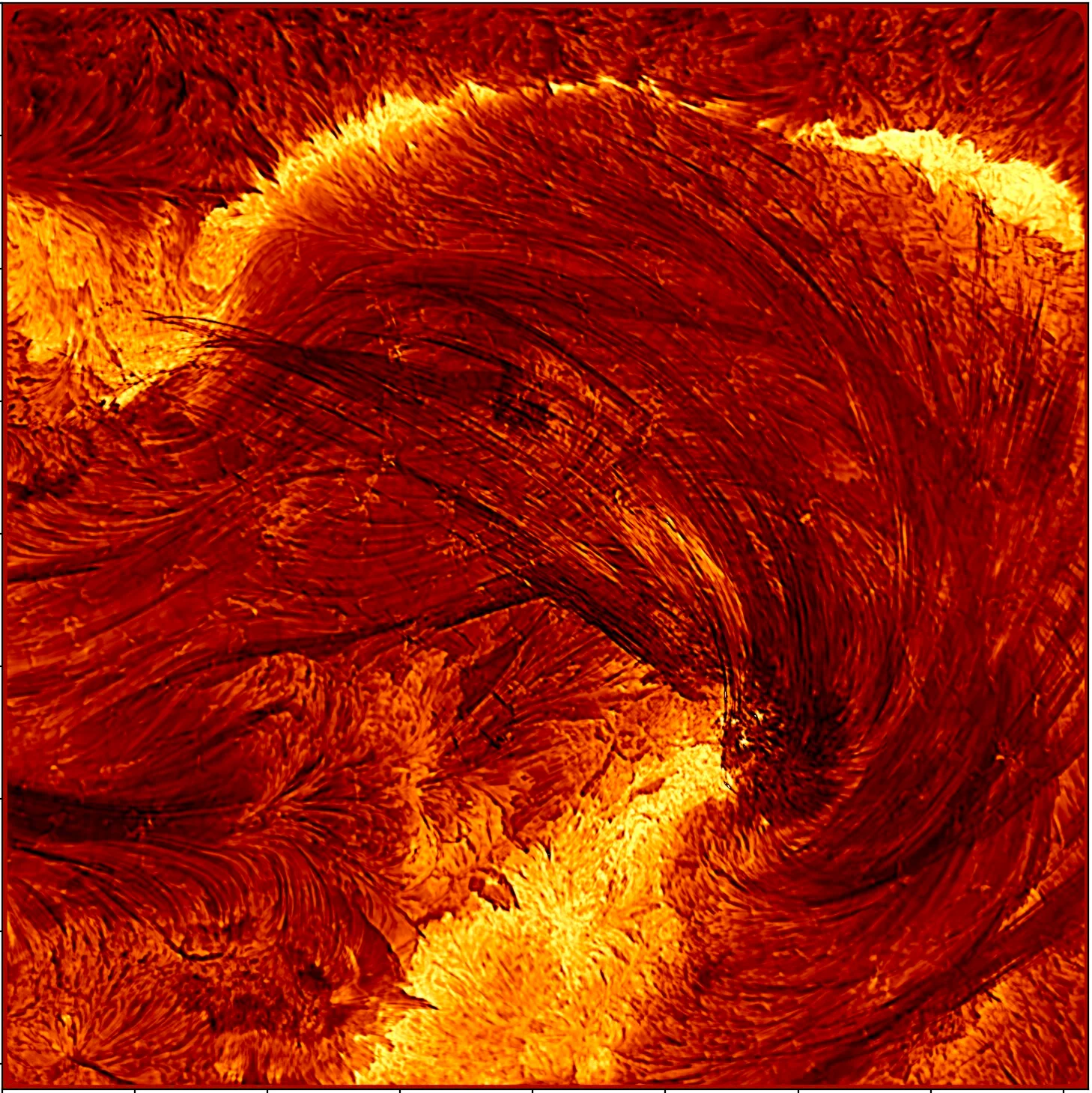
The Daniel K. Inouye Solar Telescope in Hawaii captured the clearest images ever of a solar flare, revealing unprecedented details of coronal loops that could revolutionize our understanding of the Sun's magnetic structure and improve space weather predictions.
Astronomers have captured the most detailed images yet of a powerful X-class solar flare, revealing the smallest coronal loops ever observed and providing new insights into the Sun's magnetic activity and flare architecture, which could improve understanding of solar storms affecting Earth.
The NSF Inouye Solar Telescope captured its first X-class solar flare in unprecedented detail, revealing structures like tiny coronal loops at scales as small as 21 kilometers, providing new insights into the Sun's most energetic eruptions and magnetic reconnection processes.
The Daniel K. Inouye Solar Telescope has captured the highest resolution images of coronal loops during a solar flare, revealing that these loops are much thinner than previously thought, with implications for understanding magnetic reconnection and solar activity.
The Daniel F. Inouye Solar Telescope has captured the smallest magnetic loops ever seen in the sun's corona, revealing details that could help understand the mechanisms behind solar flares. These tiny loops, some as narrow as 13 miles, were observed during a powerful X-class flare, providing new insights into solar magnetic activity. However, funding cuts threaten the telescope's future, risking loss of valuable solar research and expertise.
The Inouye Solar Telescope captured the highest-resolution images of a solar flare, revealing ultra-fine coronal loops as small as 21 km, potentially revolutionizing our understanding of solar magnetic structures and flare mechanisms.
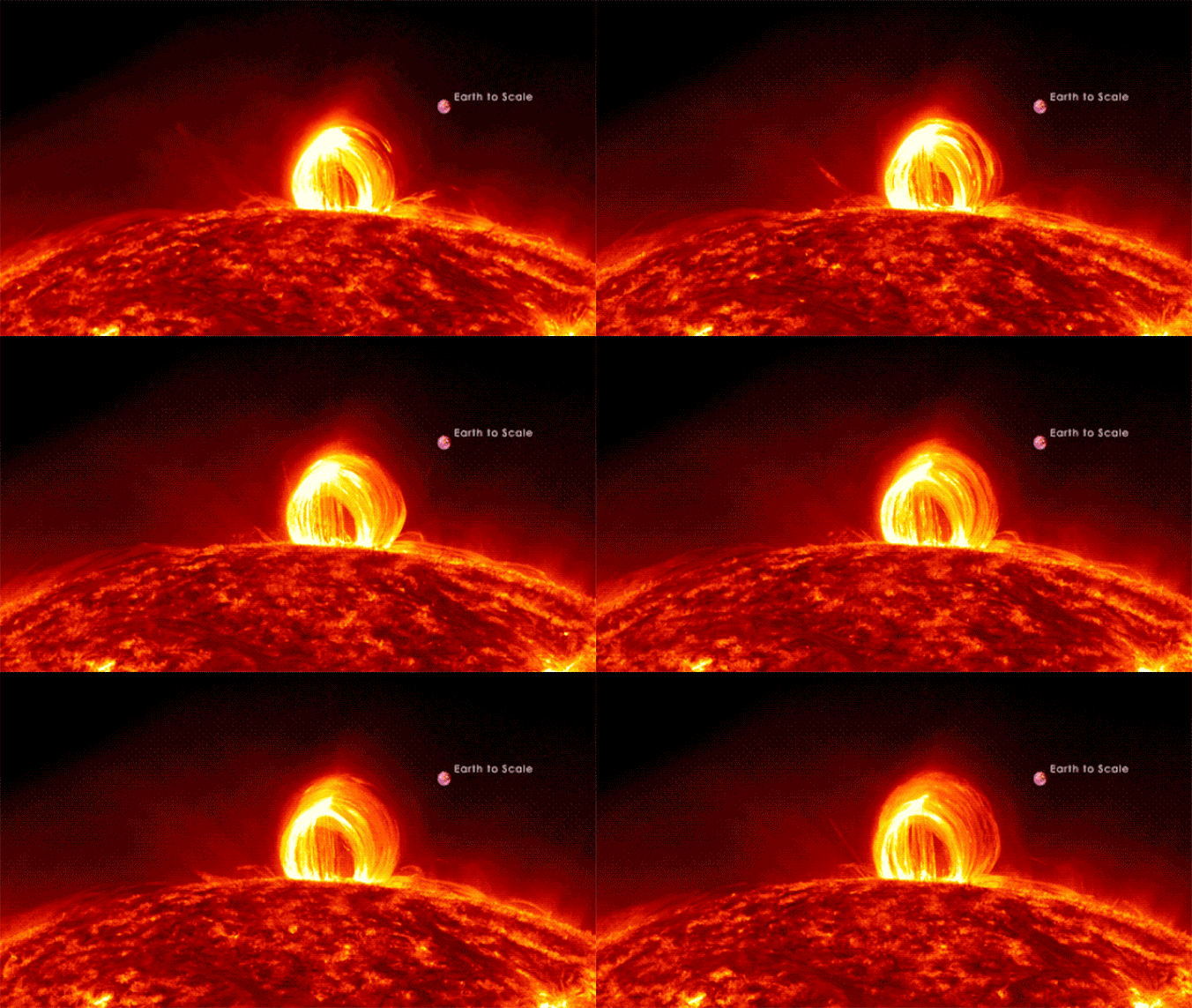
Scientists have used solar flares as a proxy to study the physics behind massive and violent "superflares" that occur on stars thousands of times brighter than the sun. By applying what they have learned about solar flares to other stars, researchers were able to identify the underlying physical mechanisms driving these superflares. They found that the presence of coronal loops, massive hoops of plasma following magnetic field lines, could explain the observed "peak bump" in the light curves of distant stars. Computer simulations showed that these loops would increase in density and contribute to visible light emissions, resulting in a distinct secondary emission peak. The team also found that the late-time "bump" flaring of light in distant stars' spectra is caused by super-hot plasma cooling down and falling back to the star, heating up the atmosphere in the process.