
Unraveling the Mysteries of Violent 'Superflares' on Ultra-Bright Stars
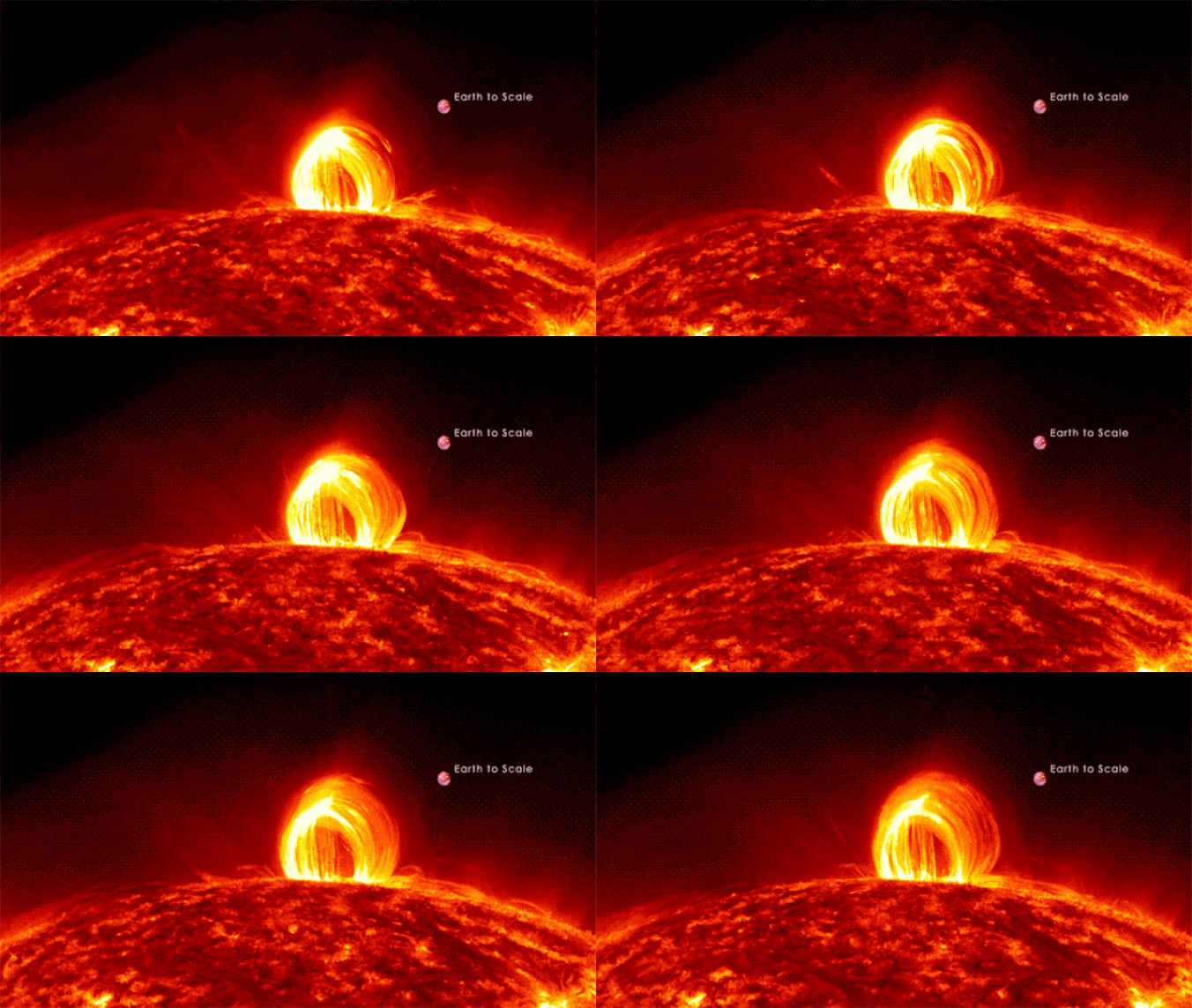
Scientists have used solar flares as a proxy to study the physics behind massive and violent "superflares" that occur on stars thousands of times brighter than the sun. By applying what they have learned about solar flares to other stars, researchers were able to identify the underlying physical mechanisms driving these superflares. They found that the presence of coronal loops, massive hoops of plasma following magnetic field lines, could explain the observed "peak bump" in the light curves of distant stars. Computer simulations showed that these loops would increase in density and contribute to visible light emissions, resulting in a distinct secondary emission peak. The team also found that the late-time "bump" flaring of light in distant stars' spectra is caused by super-hot plasma cooling down and falling back to the star, heating up the atmosphere in the process.
Reading Insights
0
5
3 min
vs 5 min read
83%
807 → 139 words
Want the full story? Read the original article
Read on Space.com