Tag

Kepler Telescope

All articles tagged with #kepler telescope

science1 year ago

Sun's Superflares: A Century-Old Threat Unveiled

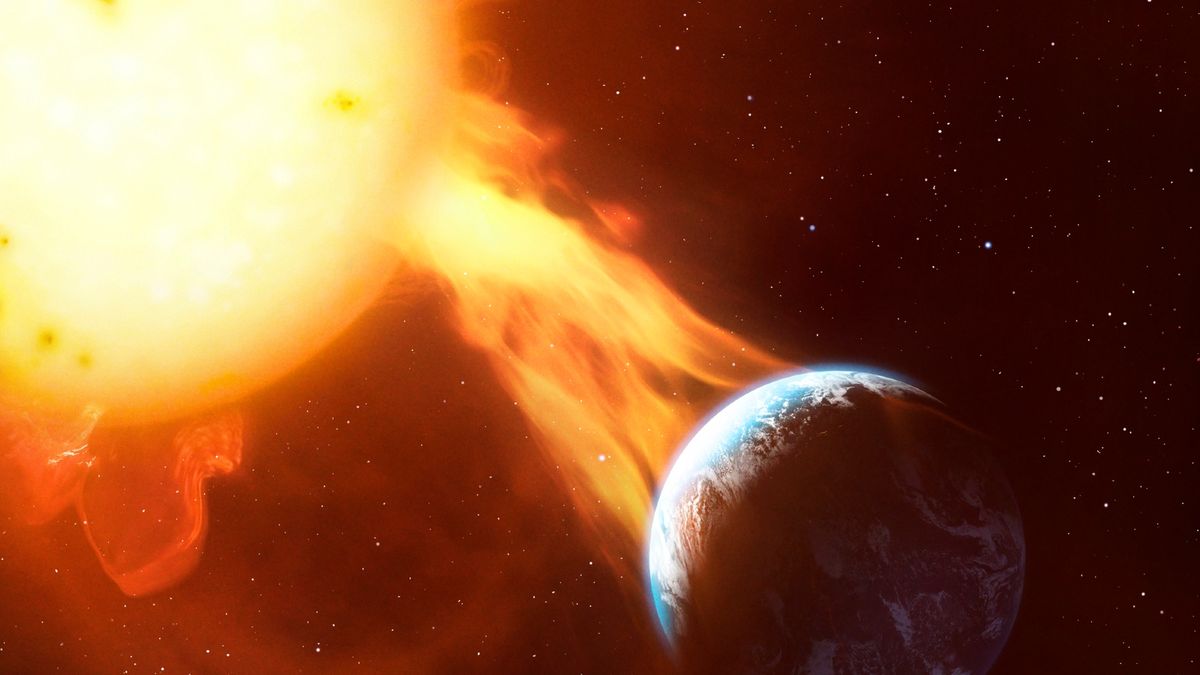
New research suggests that our sun may produce catastrophic superflares more frequently than previously thought, potentially occurring once every century. These superflares, thousands of times more powerful than regular solar flares, could cause significant damage to Earth's technology and atmosphere. The study, which analyzed 56,000 sun-like stars using NASA's Kepler telescope, found that biases in past research may have underestimated the frequency of these events. Further investigation is needed to confirm the likelihood of a superflare impacting Earth.

science1 year ago

Sun-like Stars May Unleash Superflares Every Century, Study Finds

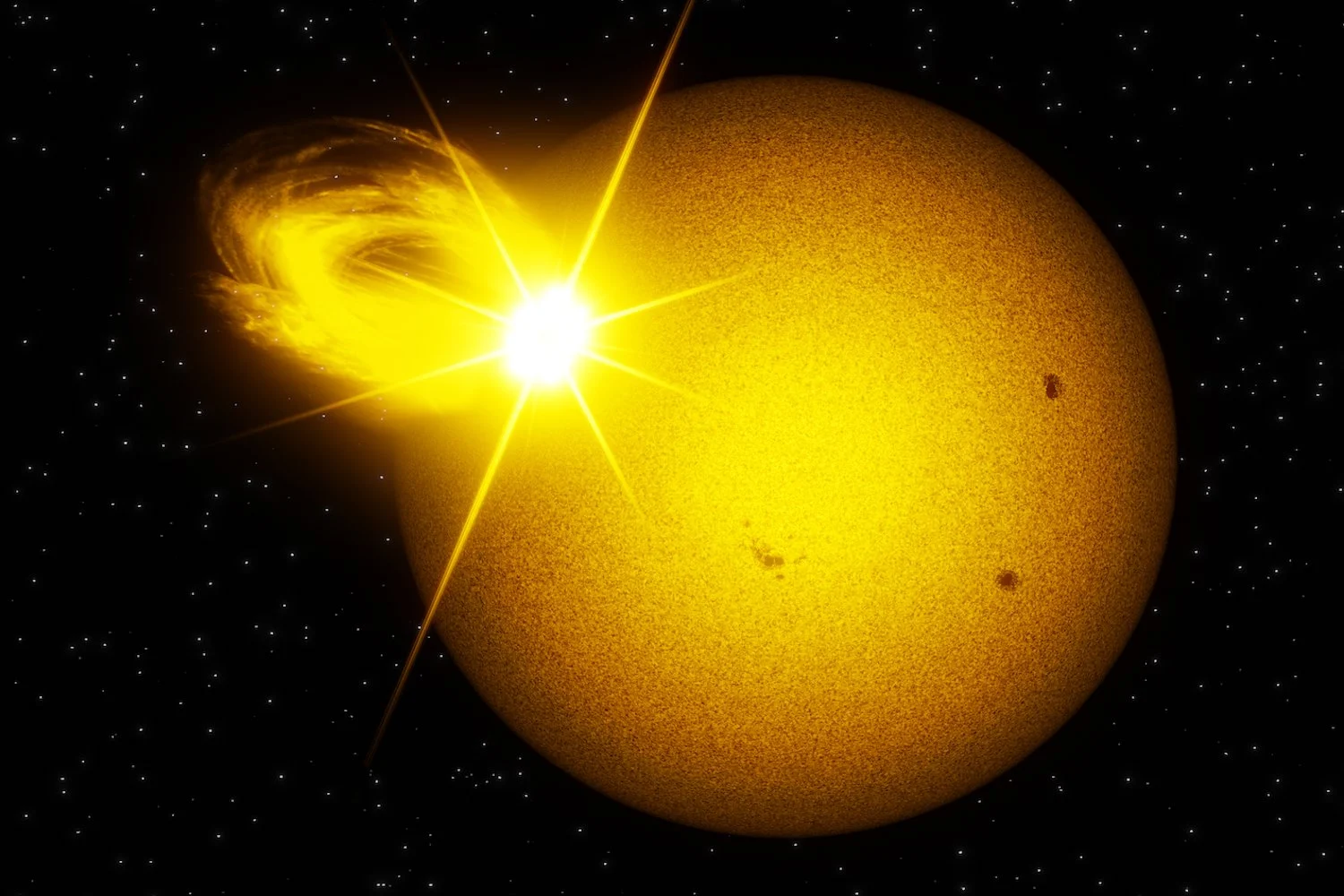
A study analyzing data from 56,000 Sun-like stars suggests that stars similar to our Sun produce superflares, which are thousands of times more powerful than regular solar flares, approximately once every century. While no superflares have been recorded on the Sun, the research indicates a potential for such events, which could cause extreme geomagnetic storms on Earth. The findings, published in Science, help scientists better understand solar activity and predict geomagnetic storms that affect Earth's technology.

science1 year ago

Sun-like Stars Emit Disruptive Superflares Every Century

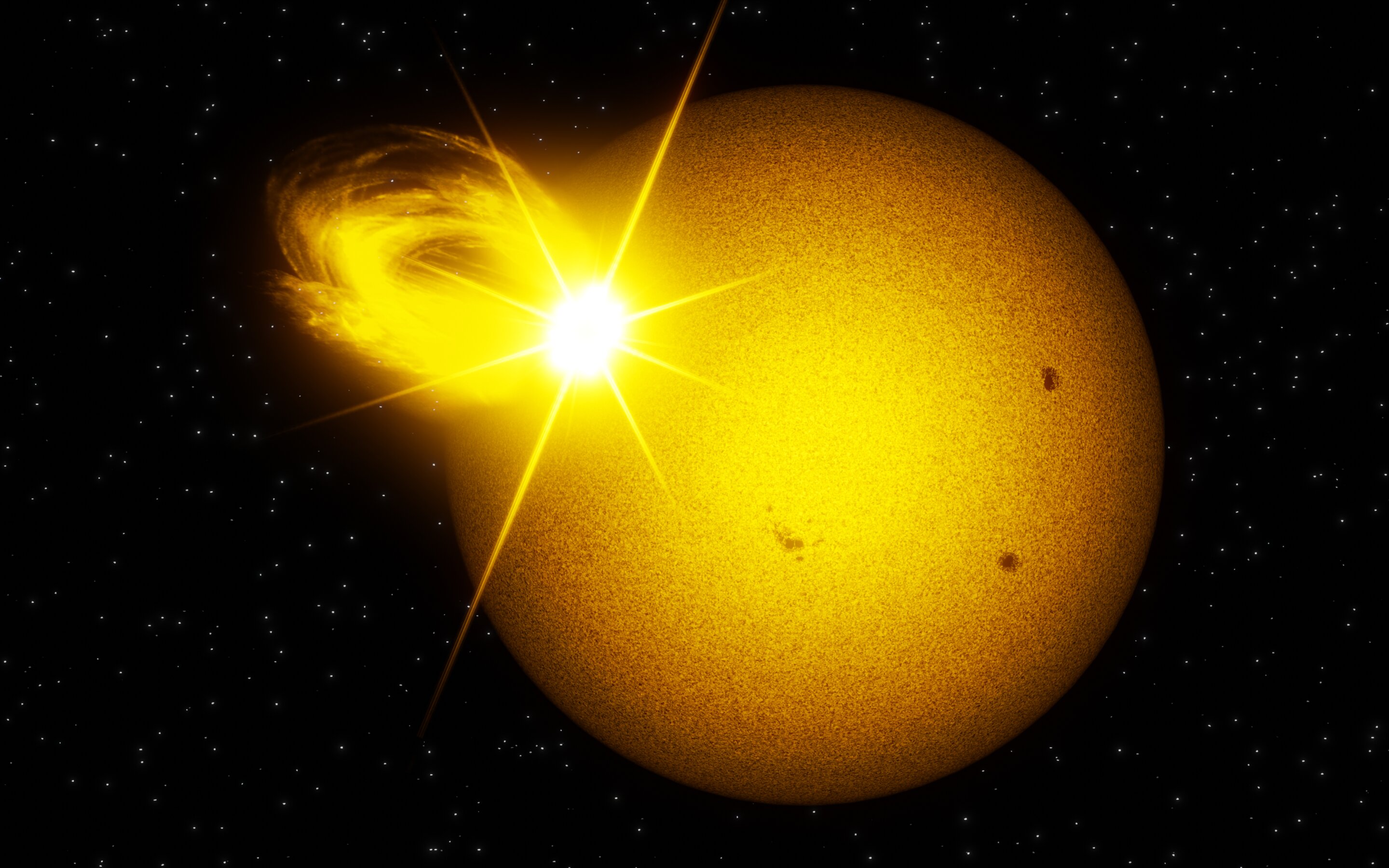
A new study published in Science reveals that sun-like stars emit superflares approximately once per century, challenging previous estimates of longer intervals. By analyzing data from NASA's Kepler telescope, researchers identified 2,889 superflares on 2,527 stars similar to the sun. This finding suggests that such stars are more prone to superflares than previously thought, with implications for understanding solar activity and forecasting space weather. The study highlights the need for further investigation into the relationship between superflares and extreme solar particle events.

astronomy2 years ago

"Kepler's Surprising Find: A Sizzling System of Seven Super-Earths"

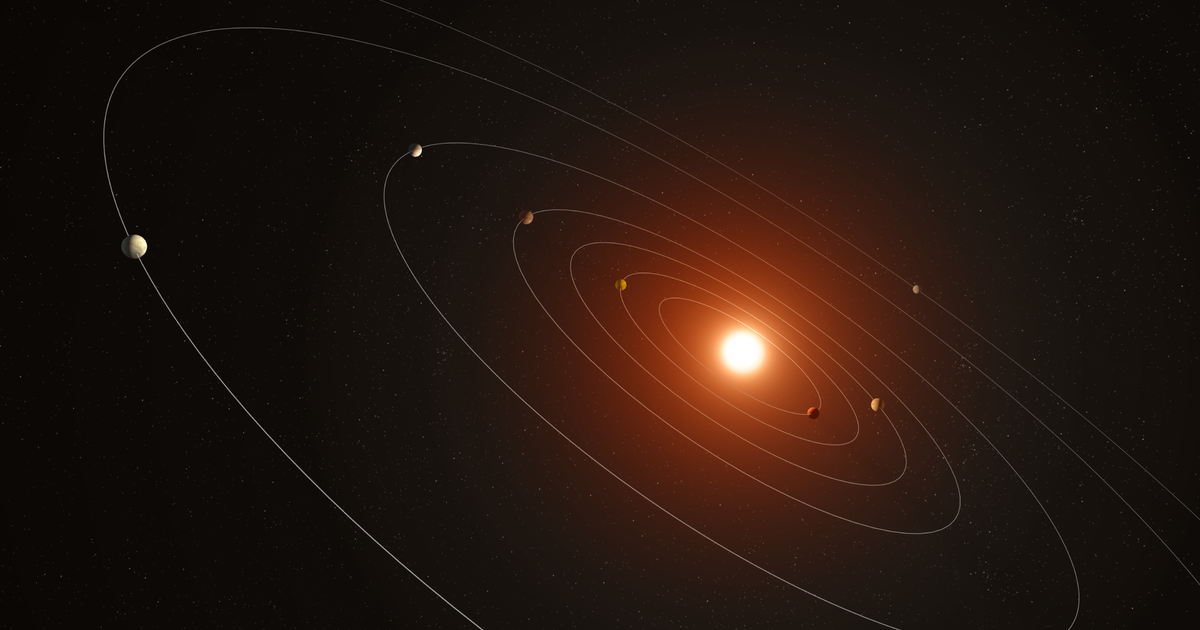
NASA's Kepler telescope has discovered a system called Kepler-385, consisting of seven hot, large planets that orbit a star slightly larger and hotter than our Sun. These planets are larger than Earth but smaller than Neptune, and all of them receive more radiant heat from their host star per area than any planet in our solar system. The Kepler-385 system is one of the few known planetary systems with more than six verified planets or planet candidates. This discovery is part of a new catalog of almost 4,400 planet candidates, providing accurate information about each system and enabling astronomers to learn more about exoplanet characteristics.

space2 years ago

"NASA's Kepler Telescope Discovers Scorching Seven-Planet System"

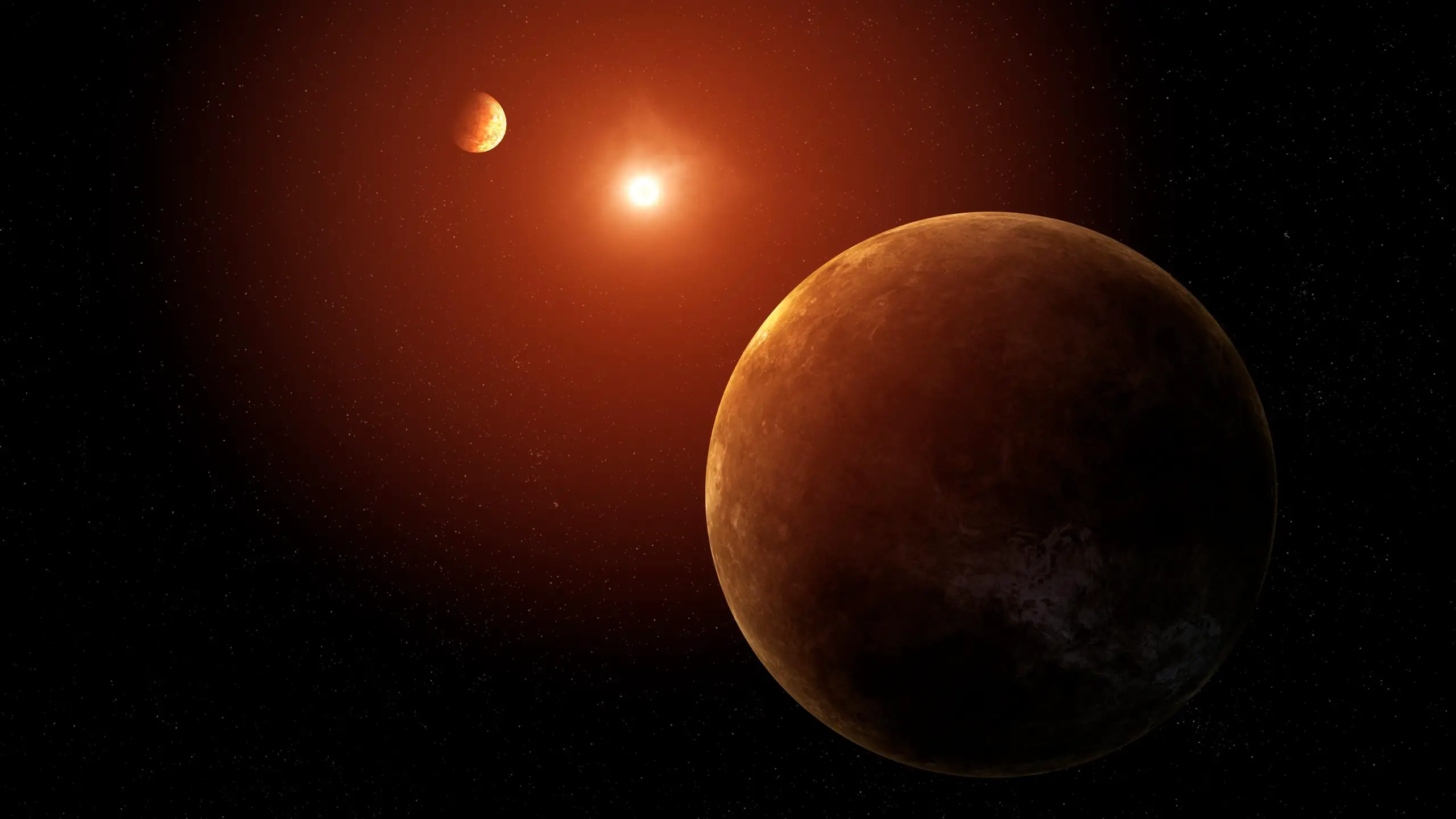
NASA's retired Kepler space telescope has discovered a new system of seven "scorching" planets orbiting a distant star that is bigger and hotter than the sun. The planets are described as "sweltering" and "bathed" in radiant heat emitted by the host star. All of the planets are larger than Earth, with the two inner planets likely rocky with thin atmospheres, and the five outer planets expected to have thick atmospheres. The system, named Kepler-385, is part of a new catalog of planet candidates discovered by the Kepler telescope, which has helped establish a detailed picture of exoplanets and their home systems.

science2 years ago

Scientists find Tatooine-like planetary system using radial velocity data.

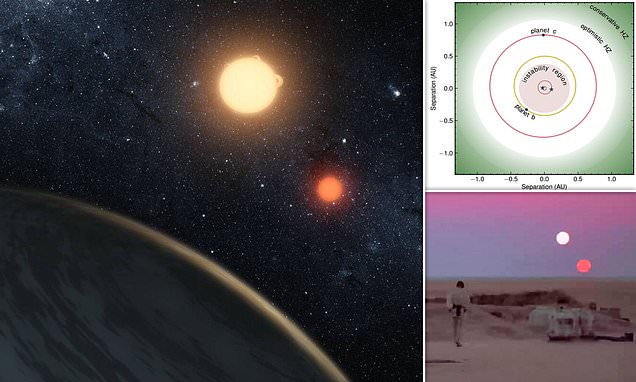
Astronomers have discovered a new planet, TOI-1338 c, in a Tatooine-like system that orbits two stars at once. The gas giant is approximately 65 times the mass of Earth and takes 215 days to orbit its sun. It's the second planet to be found in this faraway solar system, following the discovery of TOI-1338 b in 2019. Both orbit their star in the solar system, called TOI-1338, which is about 4.4 billion years old and located 1,300 light-years away from Earth, in the constellation Pictoris.

astronomy2 years ago

Habitable Zone Planets in Triple Star Systems: A Common Occurrence?

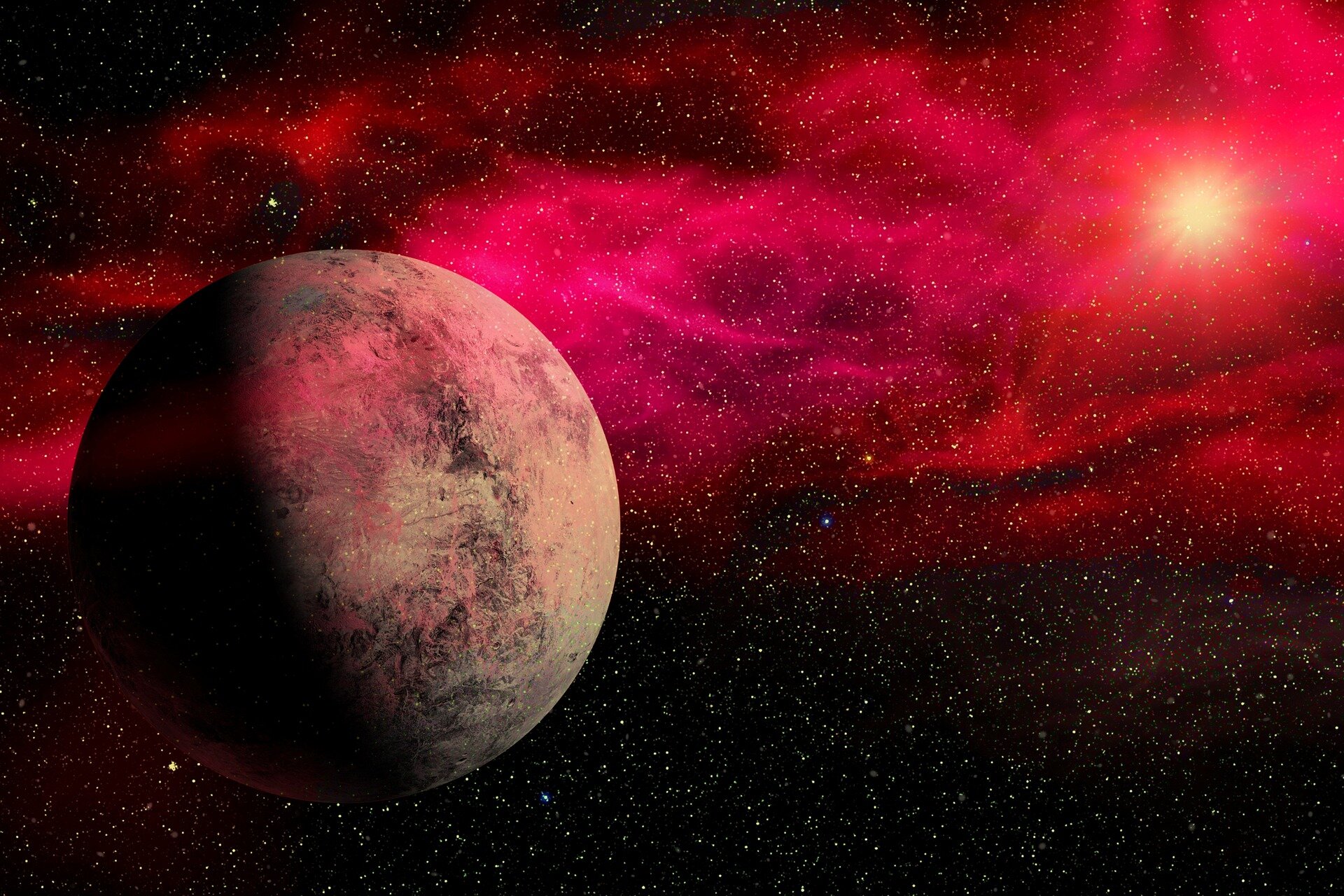
University of Florida astronomers have found that one-third of the planets orbiting the most common stars in the Milky Way, M dwarf stars, could be in a habitable zone. The remaining two-thirds of the planets could be roasted by tidal forces, sterilizing them. The researchers measured the eccentricity of over 150 planets around M dwarf stars and found that stars with multiple planets were more likely to have circular orbits that allow them to retain liquid water. The data came from NASA's Kepler telescope and the Gaia telescope.