Tag

Superconductivity

All articles tagged with #superconductivity

Breakthrough in 30-Year Superconductivity Mystery

Originally Published 11 days ago — by SciTechDaily

Featured image for Breakthrough in 30-Year Superconductivity Mystery
Source: SciTechDaily

New research applying shear strain to ultrathin crystals of strontium ruthenate (Sr₂RuO₄) found that its superconducting transition temperature remains almost unchanged, challenging previous theories and suggesting a simpler, one-component superconducting state. This study refines understanding of the material's hidden symmetry and opens new avenues for exploring unconventional superconductors.

High-Pressure Studies Reveal Superconductivity in Nickelate Crystals

Originally Published 1 month ago — by Nature

Researchers have achieved bulk superconductivity up to 96 K in pressurized bilayer nickelate single crystals synthesized at ambient pressure, overcoming previous growth limitations and revealing structural support for superconductivity in both monoclinic and tetragonal phases, with a correlation between higher Tc and lattice distortion.

Breakthrough in Magic-Angle Graphene Superconductivity Sparks Hope for High-Temperature Applications

Originally Published 2 months ago — by The Debrief

Featured image for Breakthrough in Magic-Angle Graphene Superconductivity Sparks Hope for High-Temperature Applications
Source: The Debrief

MIT researchers have discovered a new type of superconductivity in 'magic-angle' twisted tri-layer graphene, which could be a significant step toward developing room-temperature superconductors, potentially revolutionizing energy transmission and electronic devices.

MIT Researchers Confirm Unconventional Superconductivity in Magic-Angle Graphene

Originally Published 2 months ago — by MIT News

Featured image for MIT Researchers Confirm Unconventional Superconductivity in Magic-Angle Graphene
Source: MIT News

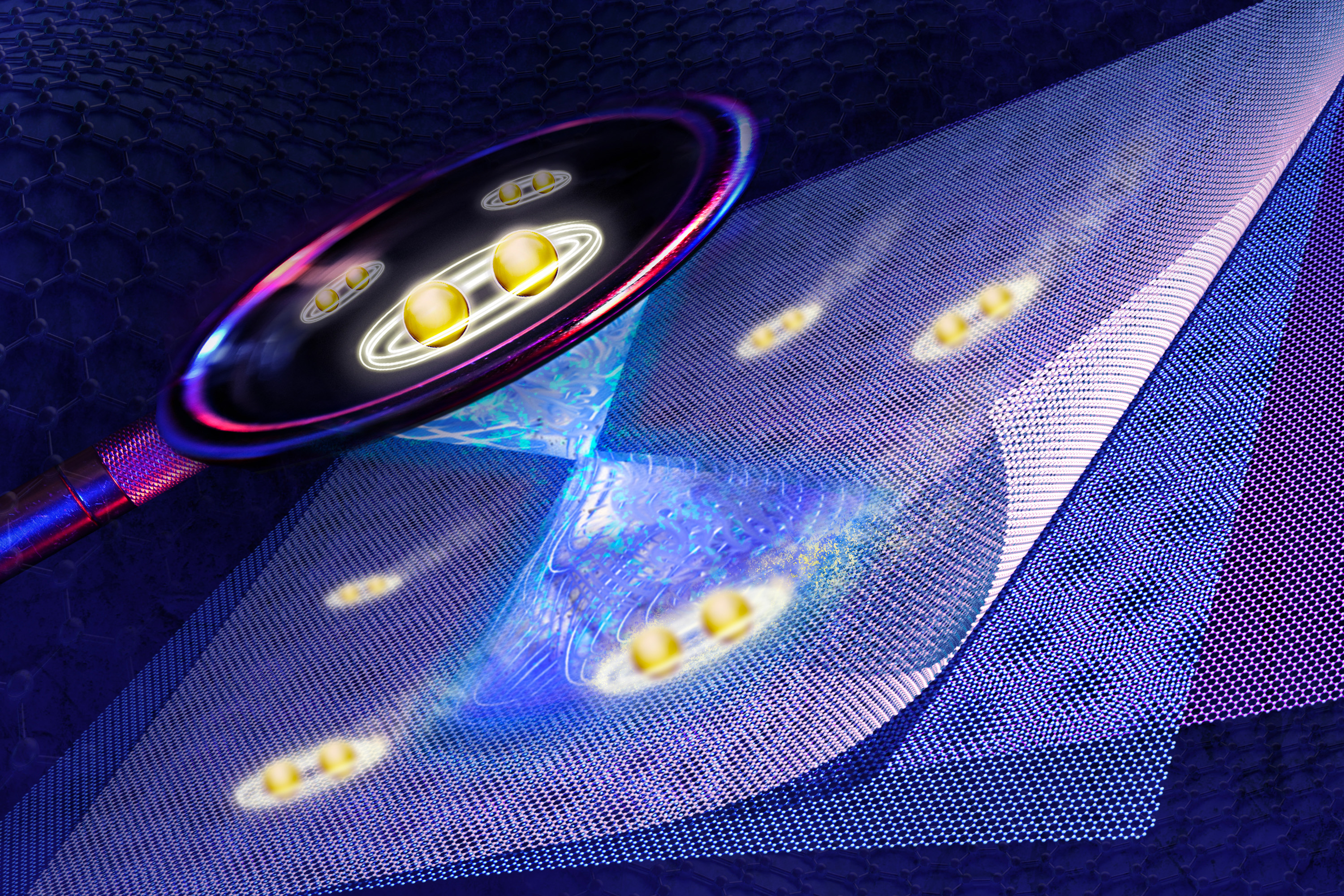
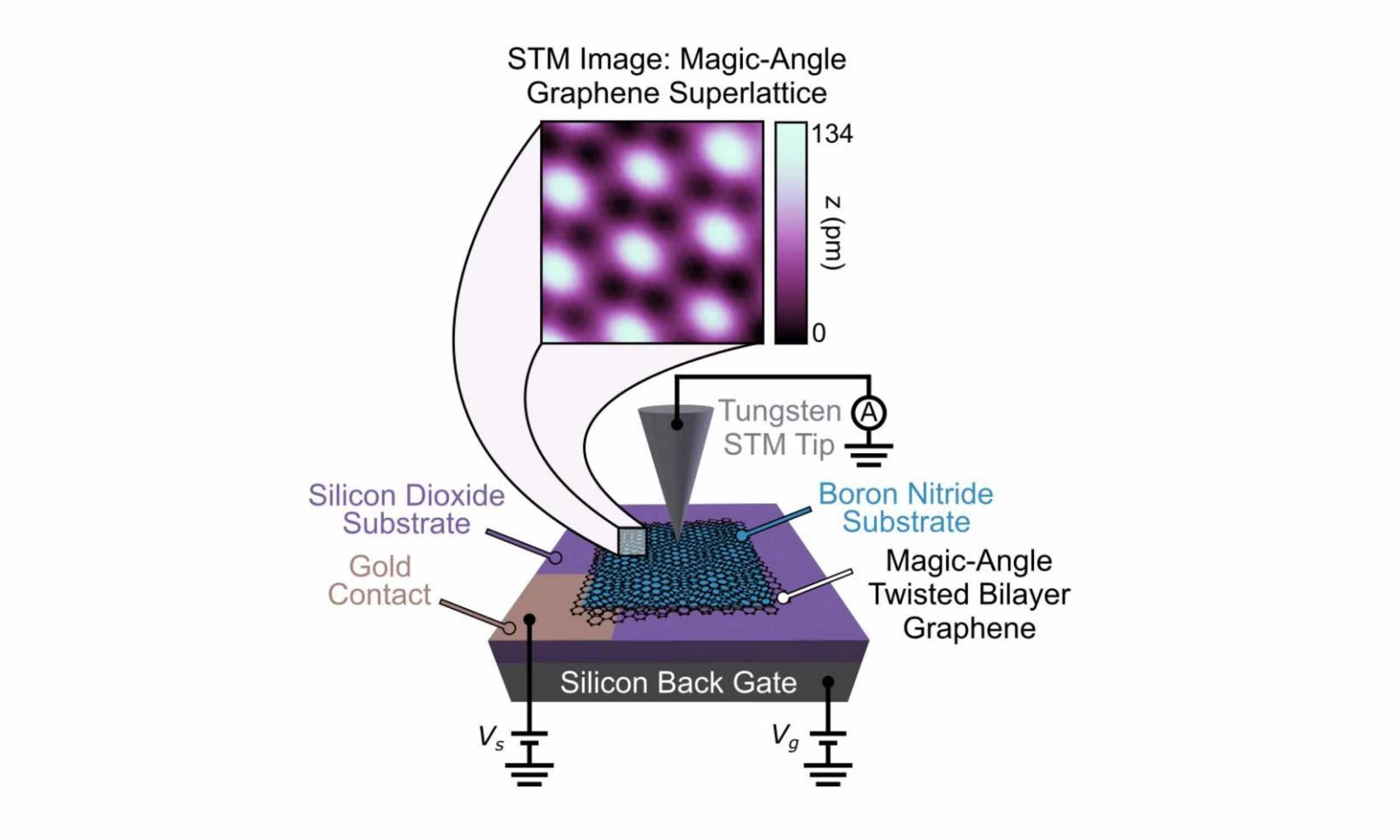
MIT physicists have provided the most direct evidence yet of unconventional superconductivity in magic-angle twisted trilayer graphene (MATTG), revealing a distinct superconducting gap that suggests a different pairing mechanism than traditional superconductors, potentially paving the way for room-temperature superconductivity and advanced quantum technologies.

Scientists Discover a Massless Demon Particle

Originally Published 3 months ago — by yahoo.com

Featured image for Scientists Discover a Massless Demon Particle
Source: yahoo.com

Scientists at the University of Illinois have discovered evidence of a massless, neutral plasmon called a 'demon' in the metal strontium ruthenate, supporting a 1956 theory and potentially advancing understanding of high-temperature superconductors by revealing a new quasiparticle that could operate at room temperature.

First Absolute Superconducting Switch Achieved in Magnetic Technology

Originally Published 4 months ago — by Phys.org

Featured image for First Absolute Superconducting Switch Achieved in Magnetic Technology
Source: Phys.org

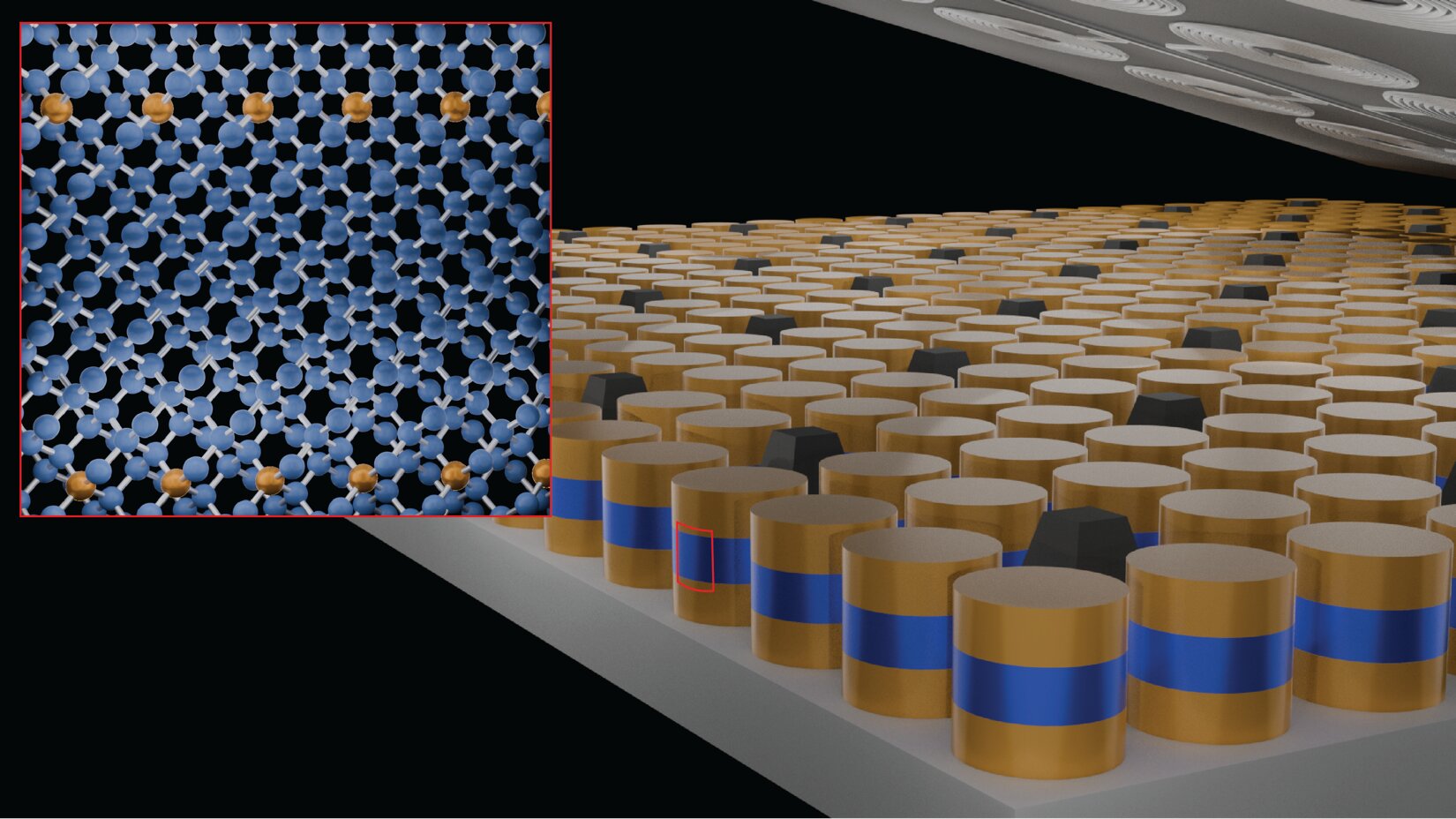
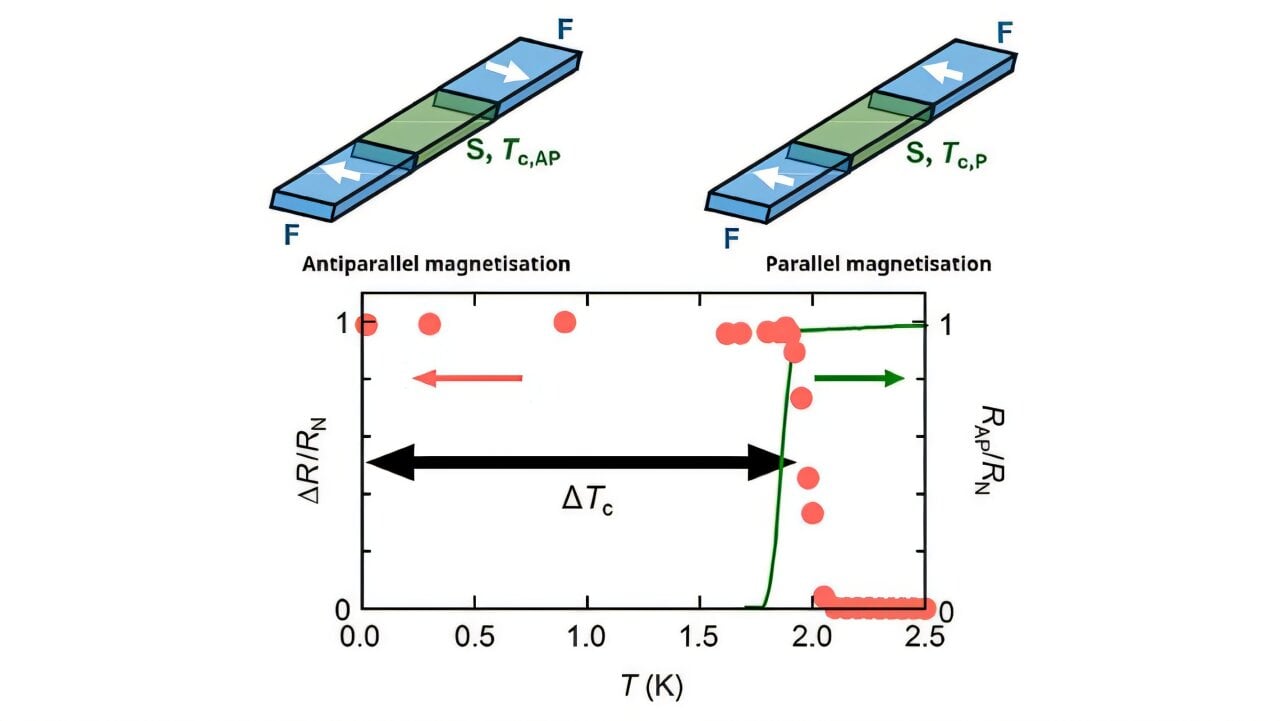
Researchers at the University of Jyväskylä and international partners have developed the first de Gennes' superconducting switch that can completely suppress superconductivity, using a layered structure with EuS, Nb, and a gold interface, paving the way for energy-efficient superconducting memory and low-energy electronics.

Revolutionary Twists in Graphene Unlock High-Performance Superconductivity

Originally Published 6 months ago — by Phys.org

Featured image for Revolutionary Twists in Graphene Unlock High-Performance Superconductivity
Source: Phys.org

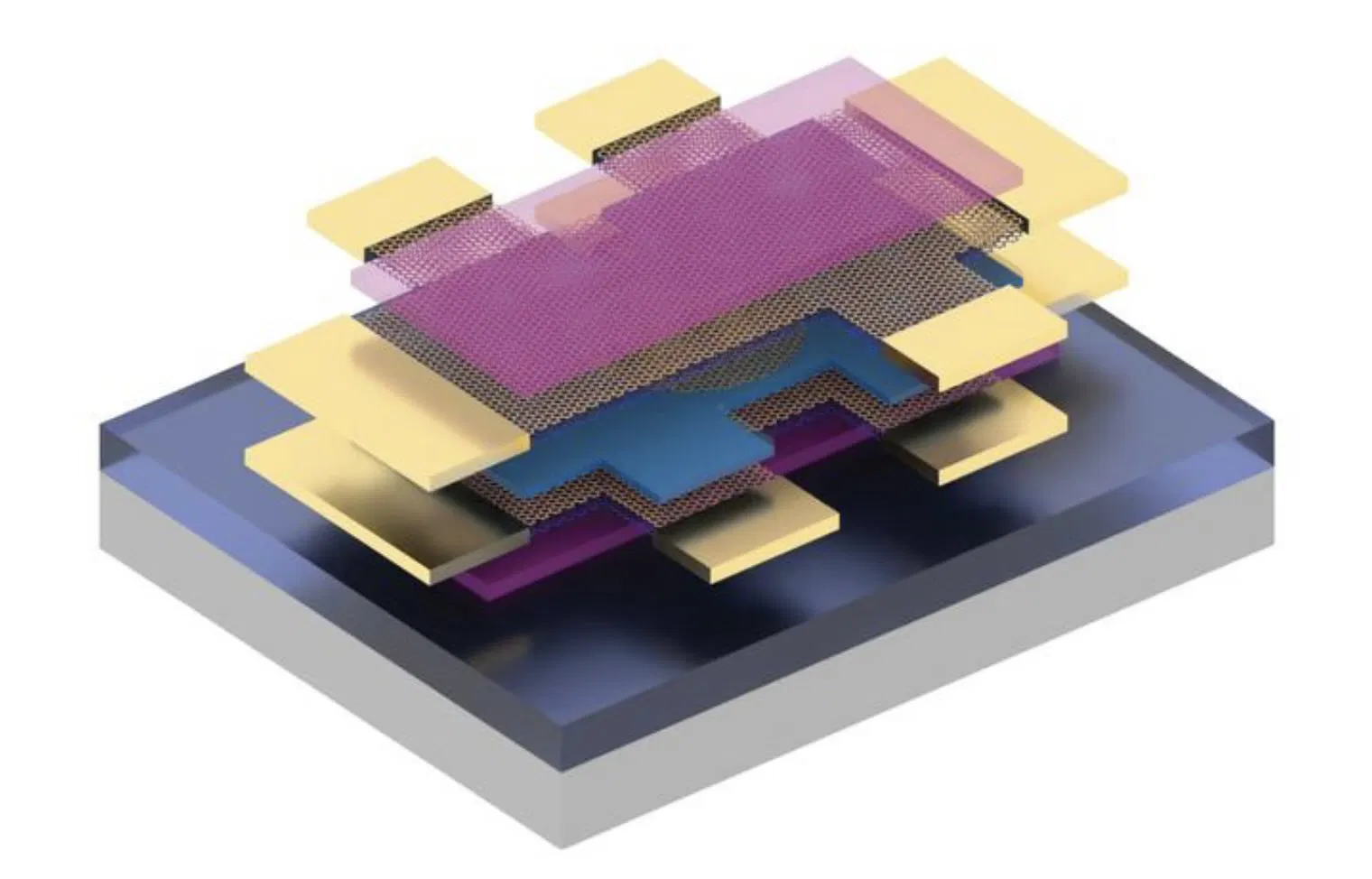
Researchers have discovered that twisted trilayer graphene exhibits high and tunable kinetic inductance and quantum coherence, providing new insights into unconventional superconductivity and potential applications in quantum technologies, although practical use may require further material development.

Scientists Discover Quantum Supermetal with Potential for Energy-Efficient Electronics

Originally Published 7 months ago — by SciTechDaily

Featured image for Scientists Discover Quantum Supermetal with Potential for Energy-Efficient Electronics
Source: SciTechDaily

Scientists at Rice University have developed a new quantum material called a Kramers nodal line metal by adding indium to tantalum disulfide, which exhibits unique electronic and superconducting properties that could revolutionize energy-efficient electronics and future technologies.

Innovative Super Material Promises More Efficient Electronics

Originally Published 7 months ago — by Phys.org

Featured image for Innovative Super Material Promises More Efficient Electronics
Source: Phys.org

Researchers at Rice University have developed a novel Kramers nodal line metal by adding indium to tantalum disulfide, which exhibits unique electronic properties including potential superconductivity, paving the way for more powerful and energy-efficient electronic devices.

Revolutionary Graphene Stacking Unlocks Quantum Potential

Originally Published 1 year ago — by Phys.org

Featured image for Revolutionary Graphene Stacking Unlocks Quantum Potential
Source: Phys.org

Researchers at NYU Tandon School of Engineering have discovered a new method for creating self-organized ABA and ABC stacking domains in three-layer epitaxial graphene, eliminating the need for complex manual alignment. This breakthrough, achieved by observing natural growth-induced stacking on silicon carbide, could significantly advance quantum technologies by enabling scalable production of graphene-based devices with unique quantum properties like superconductivity and unconventional quantum Hall effects.

Breakthrough in Iron-Based Superconductivity Unveiled

Originally Published 1 year ago — by Phys.org

Featured image for Breakthrough in Iron-Based Superconductivity Unveiled
Source: Phys.org

Researchers at the University of California, Irvine have discovered how atomic-scale mechanics enhance superconductivity in iron selenide (FeSe) films on strontium titanate (STO) substrates. Using advanced vibrational spectroscopy, they observed new phonons at the interface, which couple with electrons to increase the superconductivity transition temperature to 65 Kelvin, the highest for its class. This study, published in Nature, highlights the role of electron-phonon coupling and interface uniformity in superconductivity, paving the way for scalable superconductor applications in quantum computing and other fields.

Controversial Superconductivity Scientist Ranga Dias Removed

Originally Published 1 year ago — by Ars Technica

Featured image for Controversial Superconductivity Scientist Ranga Dias Removed
Source: Ars Technica

Physicist Ranga Dias has been terminated from the University of Rochester following a formal investigation that concluded he engaged in research misconduct related to his controversial claims of high-temperature superconductivity. Dias' papers, which initially reported breakthroughs in superconductivity at high temperatures, were retracted due to data reliability concerns. Despite Dias' denial of wrongdoing and a dismissed lawsuit claiming bias in the investigation, the university's decision was upheld by the Board of Trustees.

Breakthrough in Superconductivity: US Scientists Unveil New Material

Originally Published 1 year ago — by Interesting Engineering

Featured image for Breakthrough in Superconductivity: US Scientists Unveil New Material
Source: Interesting Engineering

Researchers at Yale University have discovered a new type of superconducting material that supports the theory of superconductivity driven by electronic nematicity. Using a scanning tunneling microscope, they studied iron selenide materials mixed with sulfur at extremely low temperatures, revealing a "superconducting gap" that aligns with theoretical predictions. This breakthrough enhances understanding of superconductivity mechanisms and could lead to the development of advanced technologies like efficient power grids and high-speed computing systems.