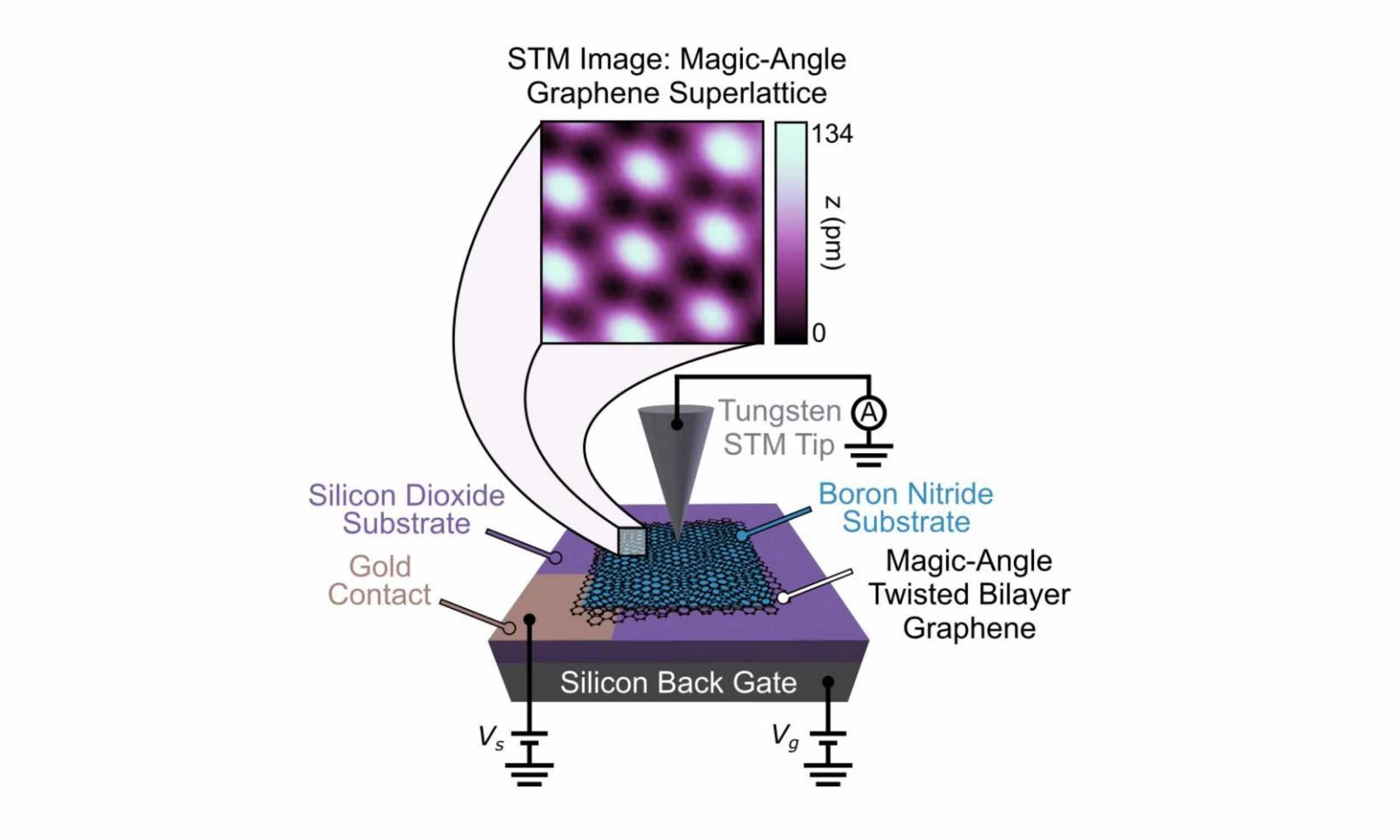
Scientists using a cryogenic microscope have discovered a new collective ripple called a phason in twisted graphene, which could be key to understanding its superconductivity and strange metal behavior, potentially leading to advances in quantum device design.
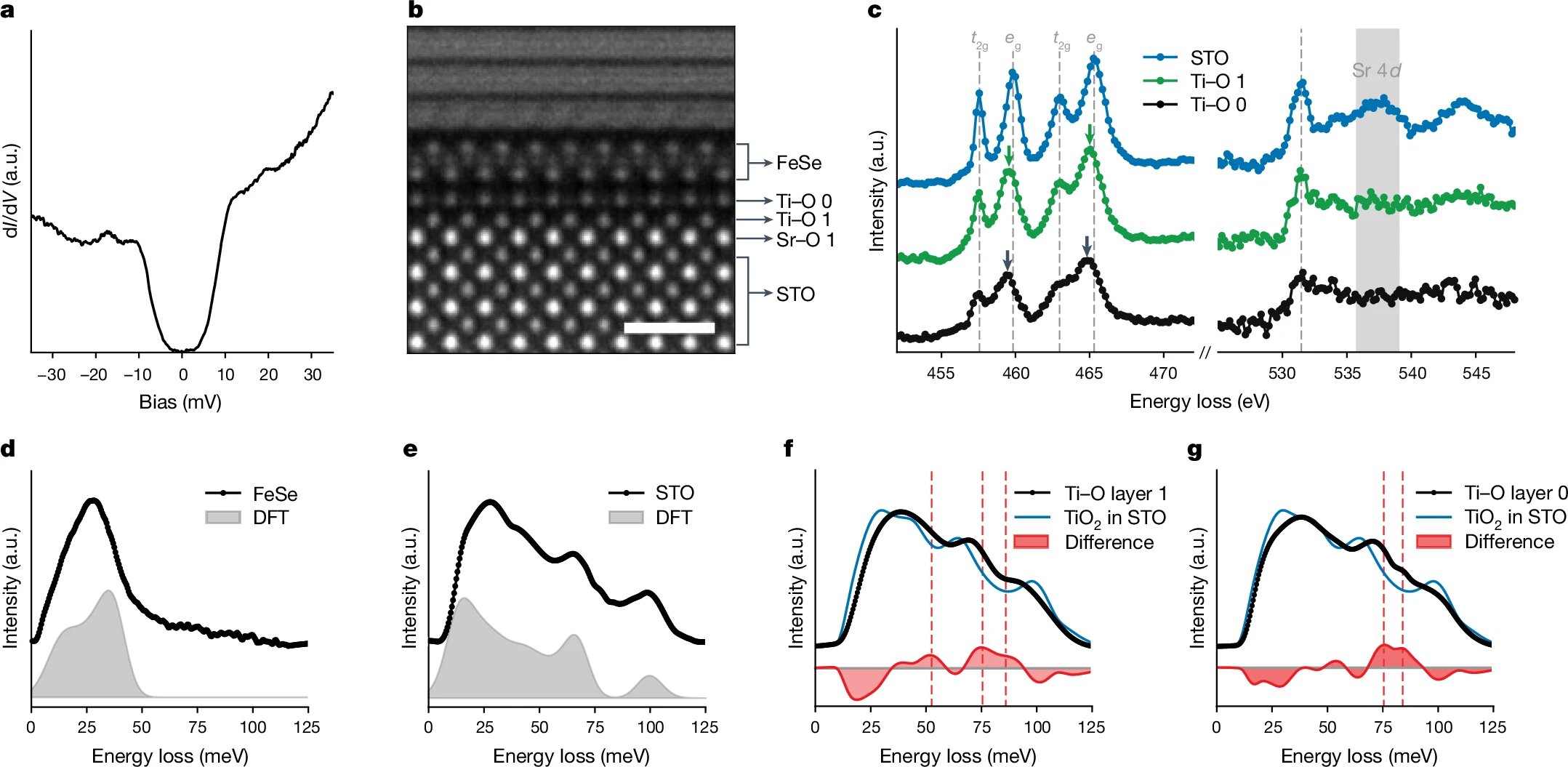
Researchers at the University of California, Irvine have discovered how atomic-scale mechanics enhance superconductivity in iron selenide (FeSe) films on strontium titanate (STO) substrates. Using advanced vibrational spectroscopy, they observed new phonons at the interface, which couple with electrons to increase the superconductivity transition temperature to 65 Kelvin, the highest for its class. This study, published in Nature, highlights the role of electron-phonon coupling and interface uniformity in superconductivity, paving the way for scalable superconductor applications in quantum computing and other fields.
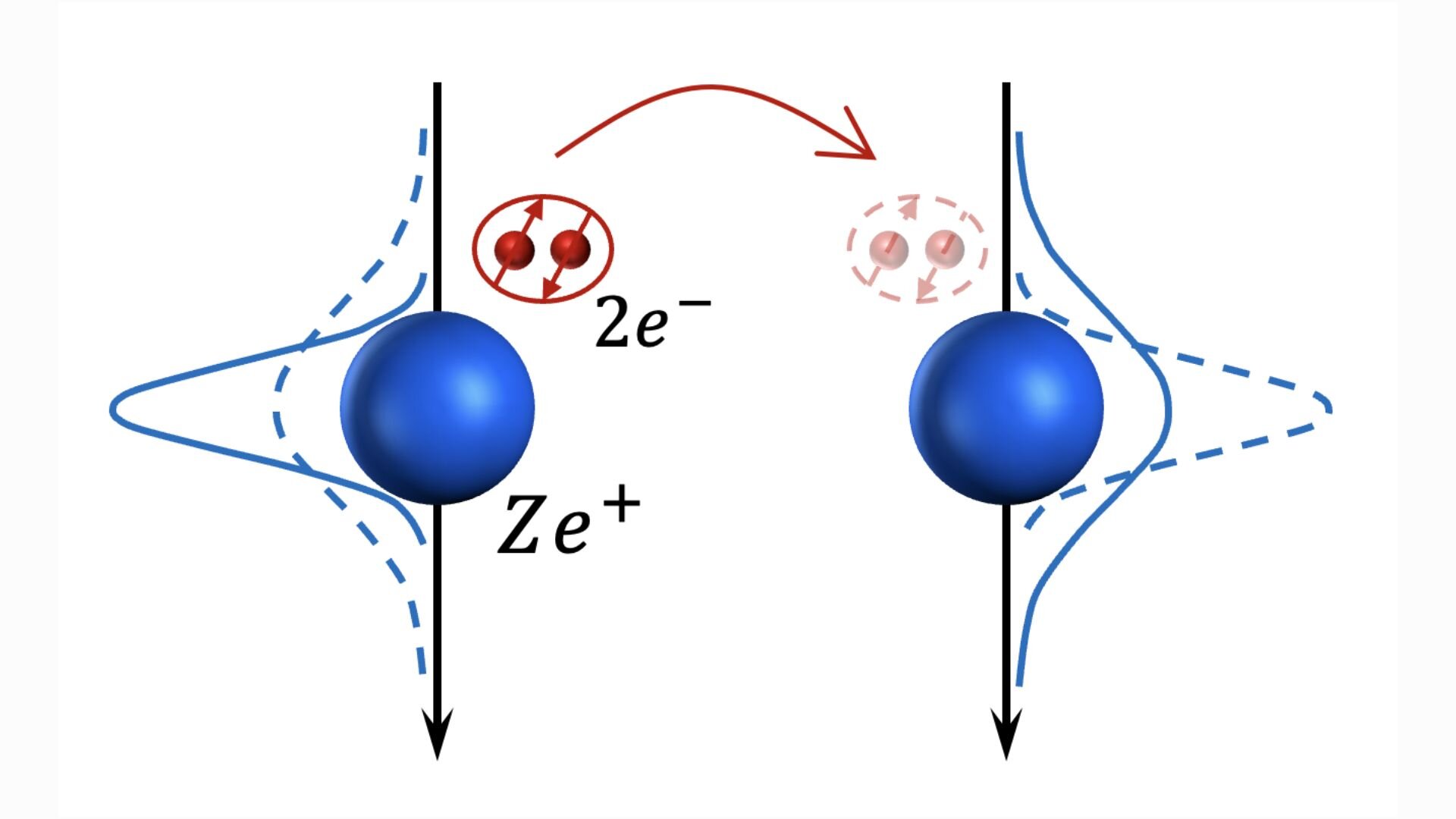
A new study in Physical Review Letters explores how quadratic electron-phonon coupling can enhance superconductivity by forming quantum bipolarons, potentially leading to higher critical temperatures. Researchers extended the Holstein model to incorporate this quadratic coupling, finding that it allows for more stable superconducting states at higher temperatures compared to linear coupling. Future work aims to identify materials with large quadratic couplings and optimize coupling strength for better superconductivity.