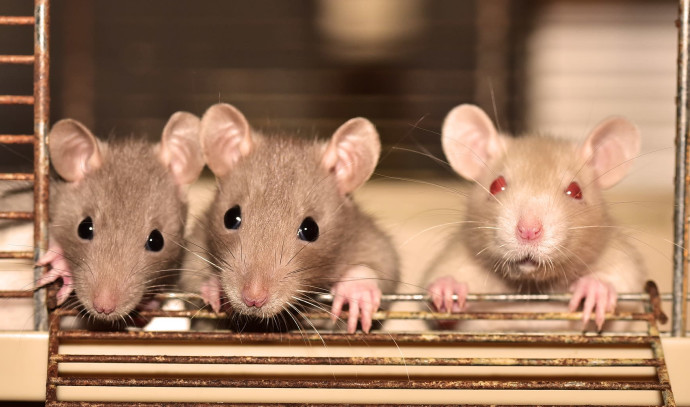
A rat study from the University of Technology Sydney links inflammation in the striatum, driven by astrocytes, to more deliberate, goal-directed compulsive actions—challenging the view that compulsions are automatic habits and pointing to anti-inflammatory treatments as potential therapies.
Scientists have discovered that psychopaths have a 10% larger striatum in the brain, which is linked to impulsivity and a craving for stimulation, providing insights into the neurobiological basis of antisocial behavior and its developmental roots.
A brain imaging study in mice shows that dopamine is predominantly concentrated in the striatum rather than the cortex, challenging previous assumptions and highlighting the importance of the striatum in movement and psychiatric disorders like Parkinson's and schizophrenia.
Researchers have discovered wave-like patterns of the neurochemical acetylcholine in the striatum, a region crucial for motivating actions. This follows previous findings of similar patterns in dopamine in the same region. The study proposes a new mathematical model explaining the simultaneous generation of both acetylcholine and dopamine waves, challenging traditional beliefs about neuronal interactions. The research provides insights into the delicate balance between these neurochemicals and may have implications for understanding movement disorders such as Parkinson's disease.
Scientists have identified a specific region in the brain, called the striatum, that is involved in the perception of time in rodents. By manipulating the neural activity in this brain region through changes in temperature, researchers found that the rats' perception of time changed. A warmer, faster striatum made time appear to pass more slowly, while a cooler, slower striatum made time appear to pass more quickly. This study sheds light on the inner brain mechanisms involved in the perception of time and raises questions about the role of other brain areas in timing behavior.
Scientists have artificially manipulated patterns of neural activity in rats to understand how the brain perceives and measures time. By slowing down or speeding up the activity in the striatum, a deep brain region, researchers were able to alter the rats' judgment of time duration. This study provides compelling evidence for the causal relationship between neural activity and timing behavior. The findings could have implications for the development of therapeutic targets for diseases like Parkinson's and Huntington's, as well as influence algorithmic frameworks used in robotics and learning.
Researchers have discovered a causal link between neural activity and our perception of time. By artificially altering neural activity in rats, they were able to distort the rats' sense of time duration, providing insights into how the brain's inner clockwork influences behavior. The study focused on the striatum, a brain region that correlates with time-related decisions, and found that the speed at which neural activity patterns evolve in the striatum affects the rats' judgment of time intervals. This research sheds light on how the brain measures time beyond the circadian rhythm, on the scale of seconds to minutes, and may have implications for understanding and treating time-related symptoms in diseases such as Parkinson's and Huntington's.
A study from China using MRI data reported that heavier coffee drinkers, based on the number of cups consumed daily, have a lower volume of the striatum, a brain region affected in Parkinson’s disease, whether or not they have Parkinson’s. Regular coffee consumption, without an emphasis on cups per day, also was tied to a significantly reduced volume in this brain region, but only among healthy adults rather than patients. The study provides evidence for the effect of chronic coffee consumption on striatal volume in a living human brain.