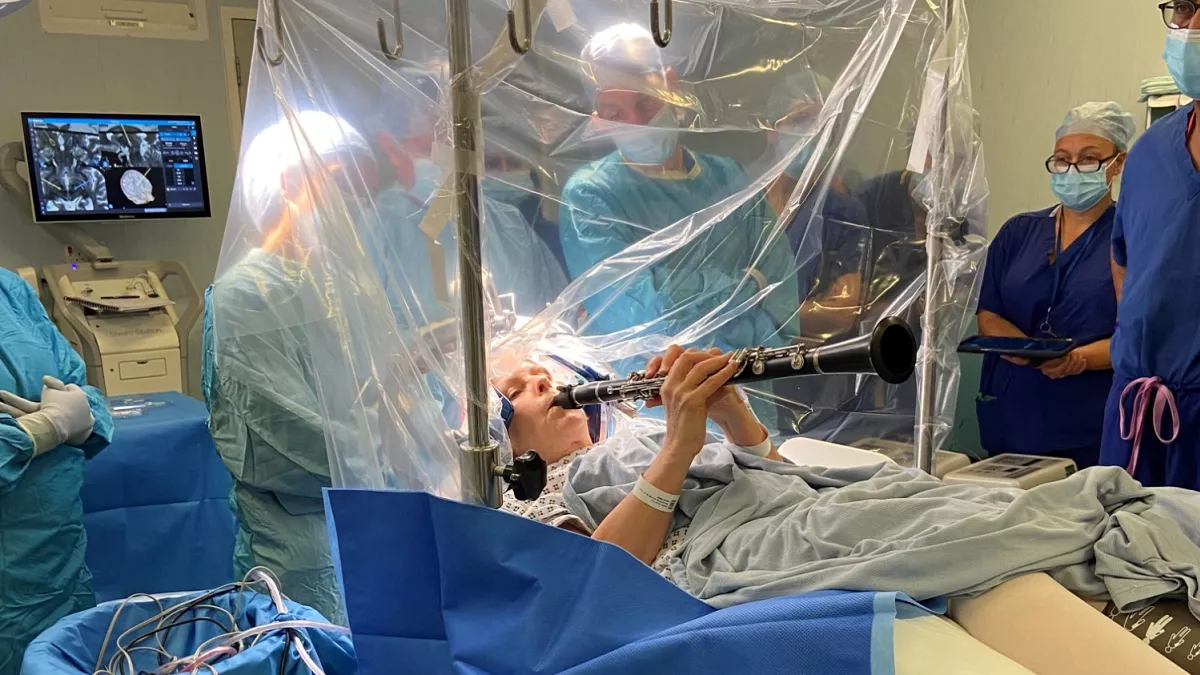
A 65-year-old woman with Parkinson's in England experienced immediate symptom relief during brain surgery when she played the clarinet, demonstrating the effectiveness of deep brain stimulation in alleviating movement symptoms associated with the disease.
Researchers have identified a new group of neurons in the brainstem that receives signals from the basal ganglia to control left-right movements, shedding light on the brain's complex navigation system and potentially offering therapeutic strategies for movement disorders like Parkinson's disease. By studying mice, the team anticipates similar mechanisms in humans, potentially revolutionizing treatments for movement disorders.
Researchers have discovered wave-like patterns of the neurochemical acetylcholine in the striatum, a region crucial for motivating actions. This follows previous findings of similar patterns in dopamine in the same region. The study proposes a new mathematical model explaining the simultaneous generation of both acetylcholine and dopamine waves, challenging traditional beliefs about neuronal interactions. The research provides insights into the delicate balance between these neurochemicals and may have implications for understanding movement disorders such as Parkinson's disease.
A study conducted by UK health authorities using smartwatches to monitor the activity of over 100,000 participants has shown promising results in detecting Parkinson's disease years before diagnosis. By analyzing the data collected from the smartwatches, researchers were able to identify abnormal signals indicating the presence of Parkinson's in the substantia nigra, the part of the brain affected by the disease. The study found that a single week of data could predict Parkinson's diagnosis up to seven years in advance. This early detection could potentially lead to the development of valuable tools for early intervention and treatment.
The Pacific Northwest region is seeing an increase in cases of young-onset Parkinson's disease, a neurodegenerative disorder that affects movement. While the cause of the increase is not yet known, researchers are studying potential environmental factors and genetic predispositions. Symptoms of young-onset Parkinson's can include tremors, stiffness, and difficulty with balance and coordination.