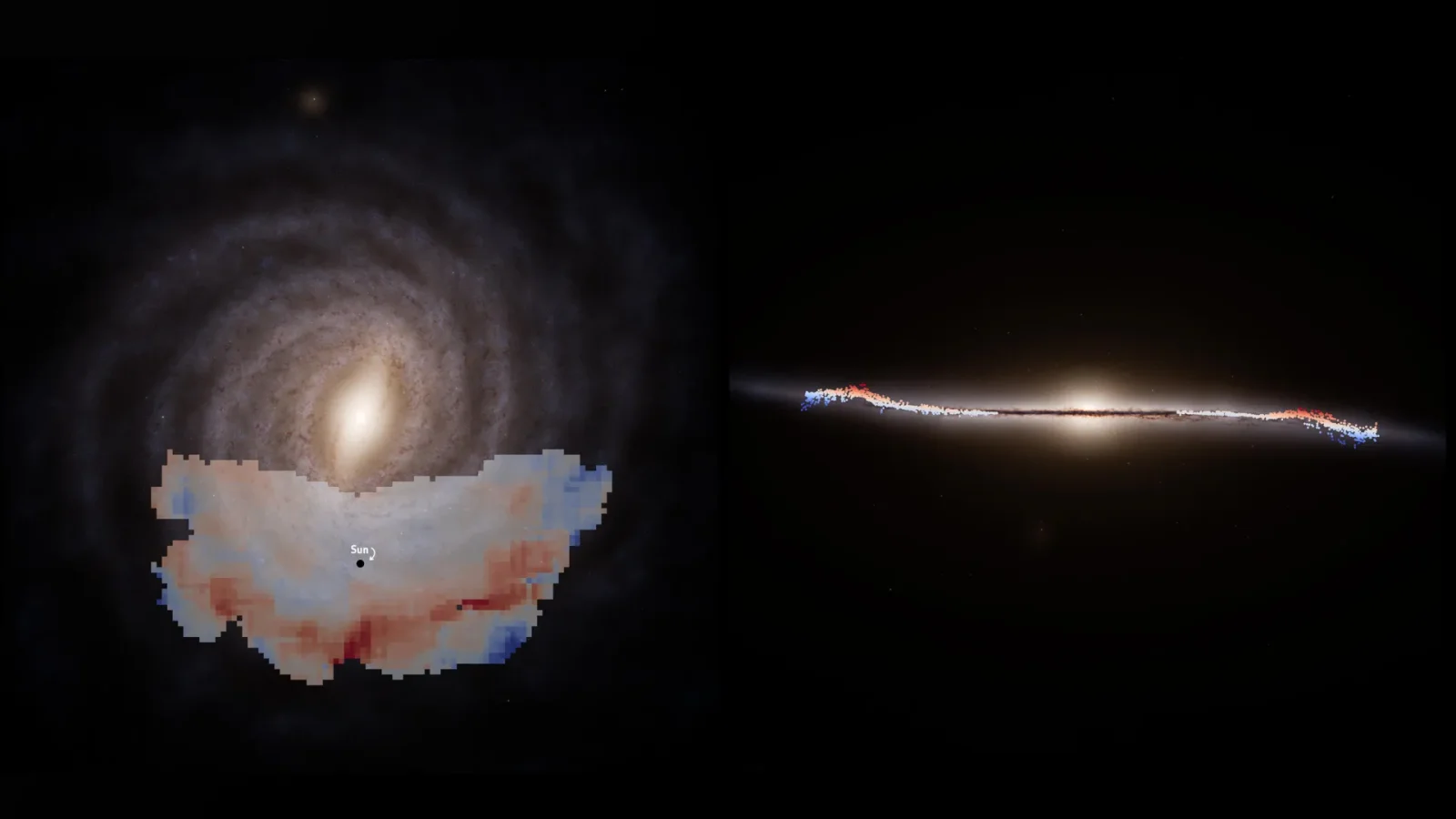
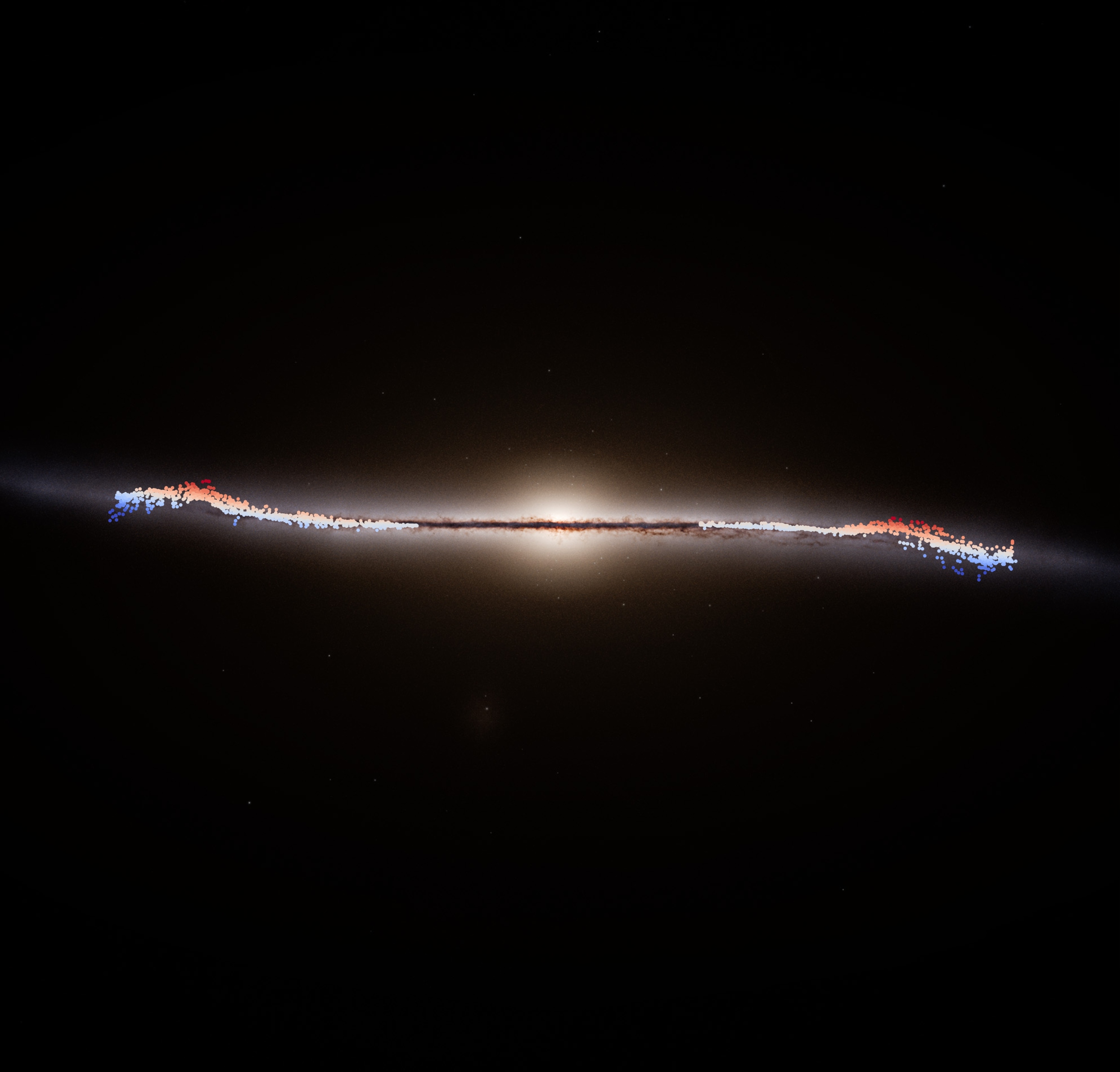
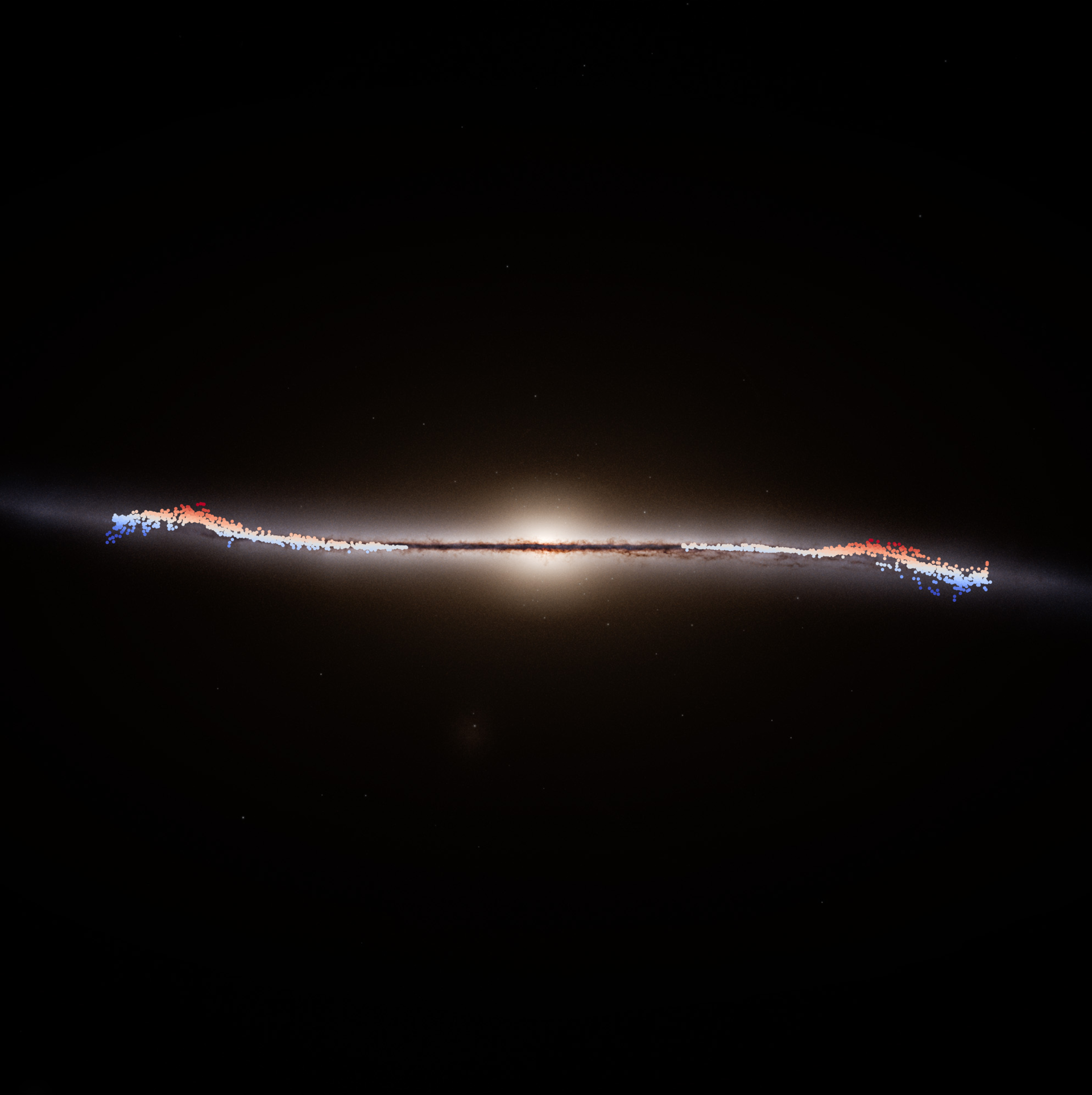
Scientists using Gaia data have discovered a massive wave rippling through the Milky Way's disc, affecting stars thousands of light-years from the center, likely caused by past galactic interactions, though the exact cause remains unknown.
Scientists using Gaia data have discovered a massive wave rippling through the Milky Way's disc, stretching over thousands of lightyears, but the cause remains unknown, with possibilities including past galactic collisions.
Astronomers using Gaia data have discovered a massive wave rippling through the outer disk of the Milky Way, revealing complex motions and possible past disturbances in our galaxy's structure, with future Gaia data expected to refine these findings.
Gaia telescope data reveals a giant wave rippling through the Milky Way's outer disc, caused by large-scale vertical motions of stars, possibly due to past galactic interactions, offering new insights into our galaxy's dynamic structure.
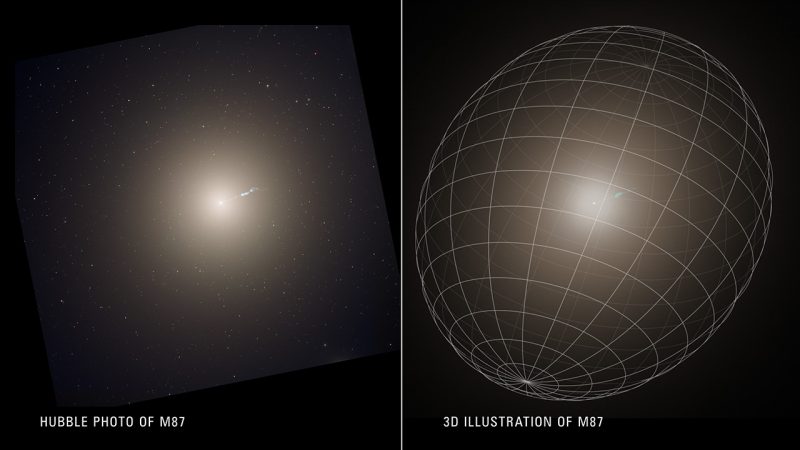
Scientists have created a 3D map of M87, a giant elliptical galaxy, using the Hubble Space Telescope and the Keck Observatory in Hawaii. The map shows that the galaxy has a potato shape, or is triaxial. The researchers were able to make a more precise measurement of the central black hole, which has 5.4 billion times the mass of our sun, and gain insight into its spin rate by studying the stellar motion.