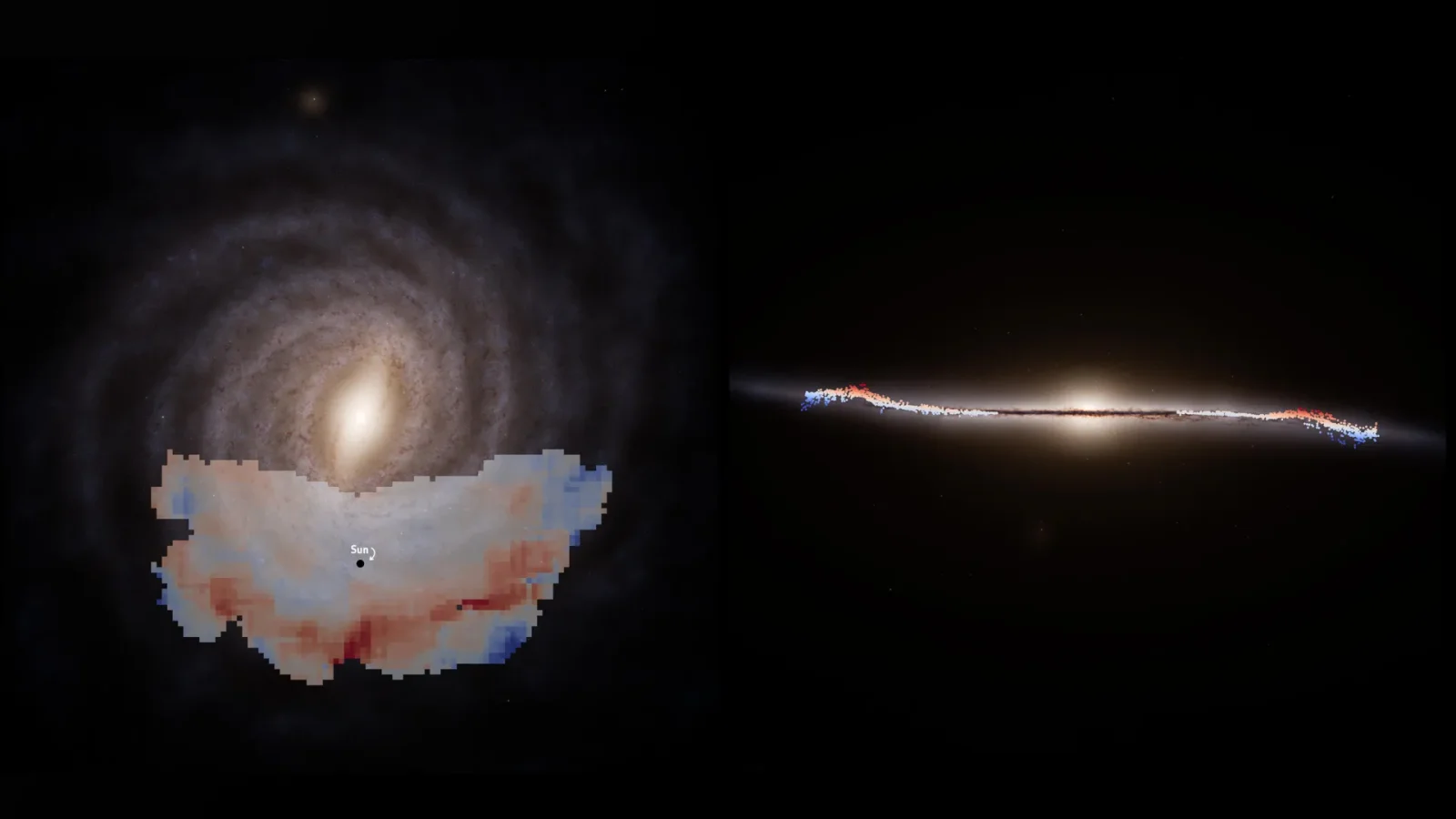
Scientists using Gaia data have discovered a massive wave rippling through the Milky Way's disc, affecting stars thousands of light-years from the center, likely caused by past galactic interactions, though the exact cause remains unknown.
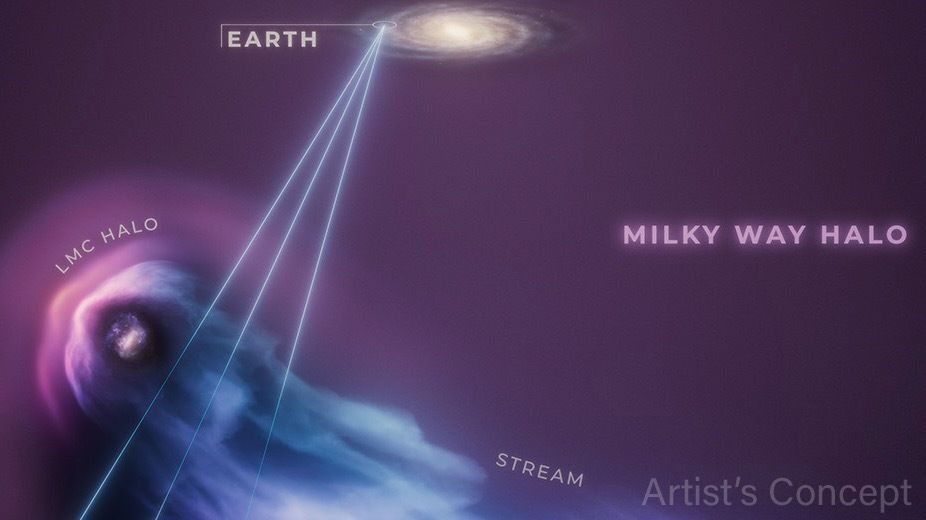
The Hubble Space Telescope has observed the Milky Way stripping gas from its smaller neighbor, the Large Magellanic Cloud (LMC), reducing its halo size significantly. Despite this, the LMC retains enough gas to continue forming new stars. This interaction provides insights into galactic dynamics and evolution, as researchers use Hubble's ultraviolet capabilities to study the LMC's halo through quasar light absorption. The study highlights the complex interactions between galaxies and their halos, with further research planned to explore the collision region between the LMC and Milky Way halos.
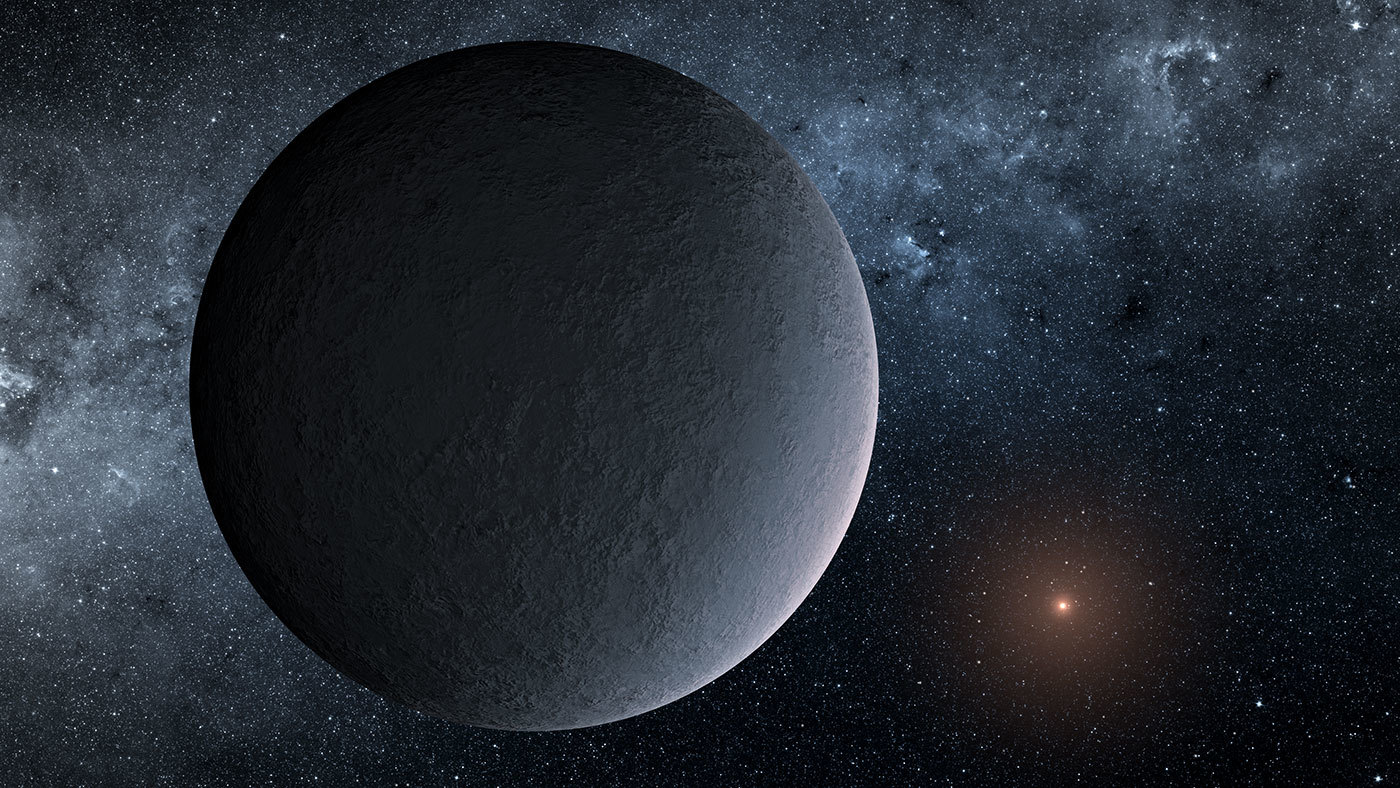
A new study published in the Monthly Notices of the Royal Astronomy Society suggests that up to 10% of a star's original planets could be cast adrift into deep space, and there is about a 7% chance that our solar system has a captured ice giant planet in the Oort cloud. The study shows that planetary systems don't always form in isolation, and there are plenty of star systems that are likely blended families.