Tag

Speed Of Light

All articles tagged with #speed of light

science7 days ago

Scientists Challenge Einstein's Speed Limit

Scientists tested the possibility of breaking Einstein's speed of light rule by examining high-energy gamma rays from distant cosmic sources. Their findings confirmed Einstein's predictions, setting tighter limits on potential violations of Lorentz invariance and advancing our understanding of fundamental physics, though the quest to unify quantum theory and gravity continues.

science-and-technology1 year ago

Why Galactic Civilizations Might Never Exist

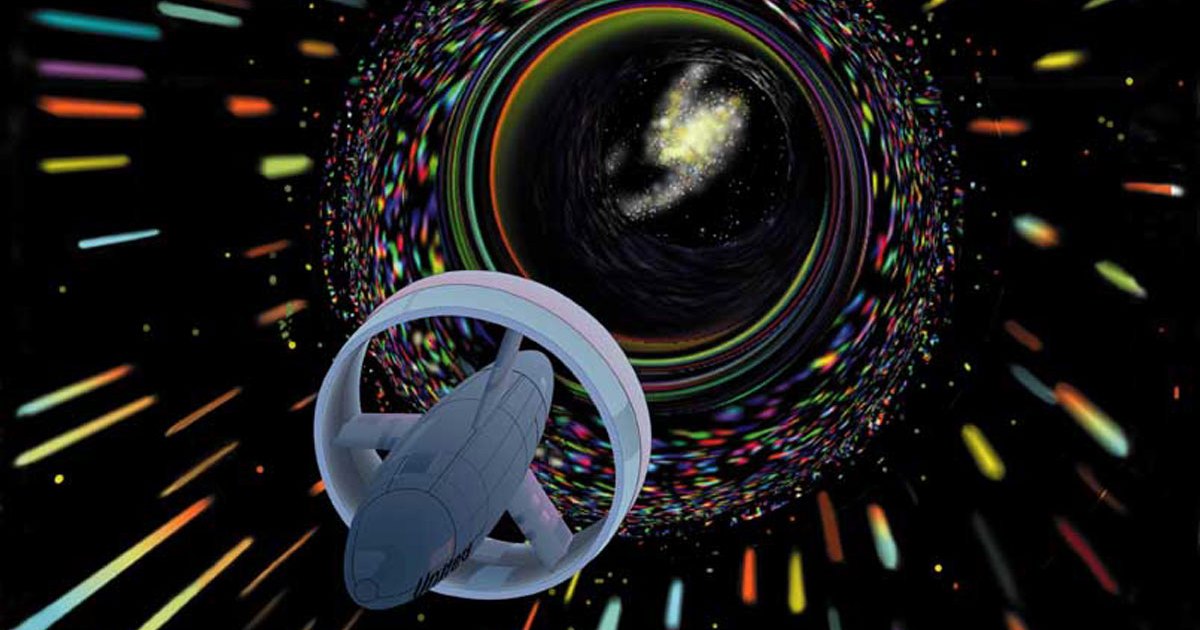
The possibility of galactic civilizations, as depicted in science fiction, faces significant challenges due to the vast distances between stars and the limitations imposed by the speed of light. Interstellar travel times far exceed the lifespans of any known species, making sustained political and cultural interactions across galaxies impractical. While advanced technologies or post-biological life forms might overcome these hurdles, current understanding of physics and biology suggests that such civilizations are unlikely.

science1 year ago

"The Great Pyramid's Latitude: A Cosmic Coincidence"

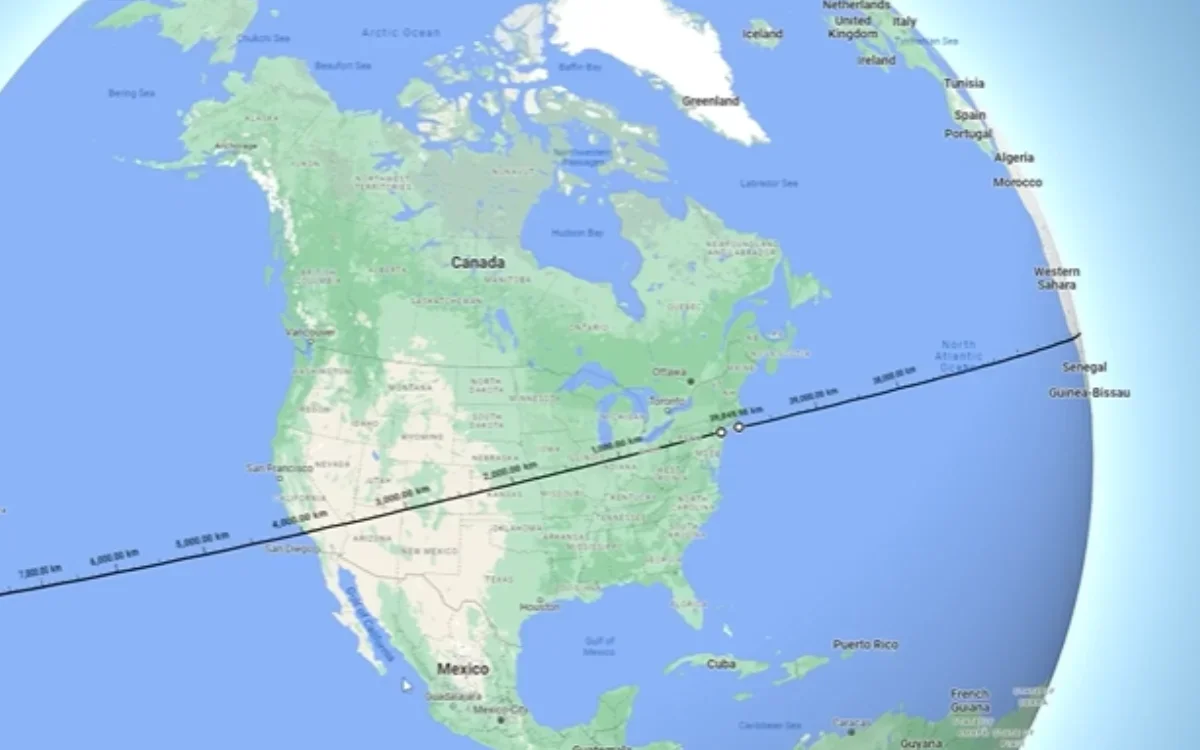
The latitude of the Great Pyramid of Giza coincidentally matches the speed of light when expressed in modern units, but it's simply a coincidence. The Ancient Egyptians did not work in meters, and the speed of light was not measured until centuries after the construction of the pyramids. While the alignment is intriguing, it is not evidence of ancient knowledge of the speed of light.

science1 year ago

"The Speediest Entity on Earth: Unveiling the Fastest Phenomenon"

Neutrinos and photons are the fastest things in the universe, with neutrinos taking the top prize due to their extremely small mass. While light travels at approximately 186,000 miles per second in a vacuum, particles like neutrinos can exceed this speed when given enough energy. Physicists have detected ultra-fast particles, such as the Oh-My-God particle, originating from cosmic rays, and have observed high-energy neutrinos in the IceCube experiment at the South Pole. These record-setting superfast particles are produced by naturally occurring particle accelerators in the universe, showcasing the incredible capabilities of nature compared to human-made accelerators.

science1 year ago

"The Consequences of Traveling at the Speed of Light"

Moving at the speed of light is theoretically impossible for humans due to the extreme acceleration forces involved, which could lead to severe injury or death. Additionally, as an object with mass approaches the speed of light, its mass increases, making it impossible to reach that speed. However, particle accelerators have been able to propel subatomic particles to over 99.9% of the speed of light. If it were possible to move at near light speed, the effects of relativity on time would be experienced, with time passing more slowly for the traveler.

science1 year ago

"Exploring the Limits of Alien Space Travel: The Speed of Light Barrier"

The speed of light is considered an insurmountable limit for space travel, but there are potential ways around it, such as tachyonic motion, wormholes, warp drive, and closed time-like loops in general relativity. While these concepts are currently speculative and unproven, they offer possibilities for faster-than-light travel that may challenge the long-held assumption that alien space travel is limited by the speed of light. As our understanding of the universe evolves, it remains uncertain whether advanced alien species or humanity in the distant future may find ways to overcome this cosmic speed limit.

science-and-technology2 years ago

"Record-breaking YouTubers film the speed of light at 10 trillion frames per second"

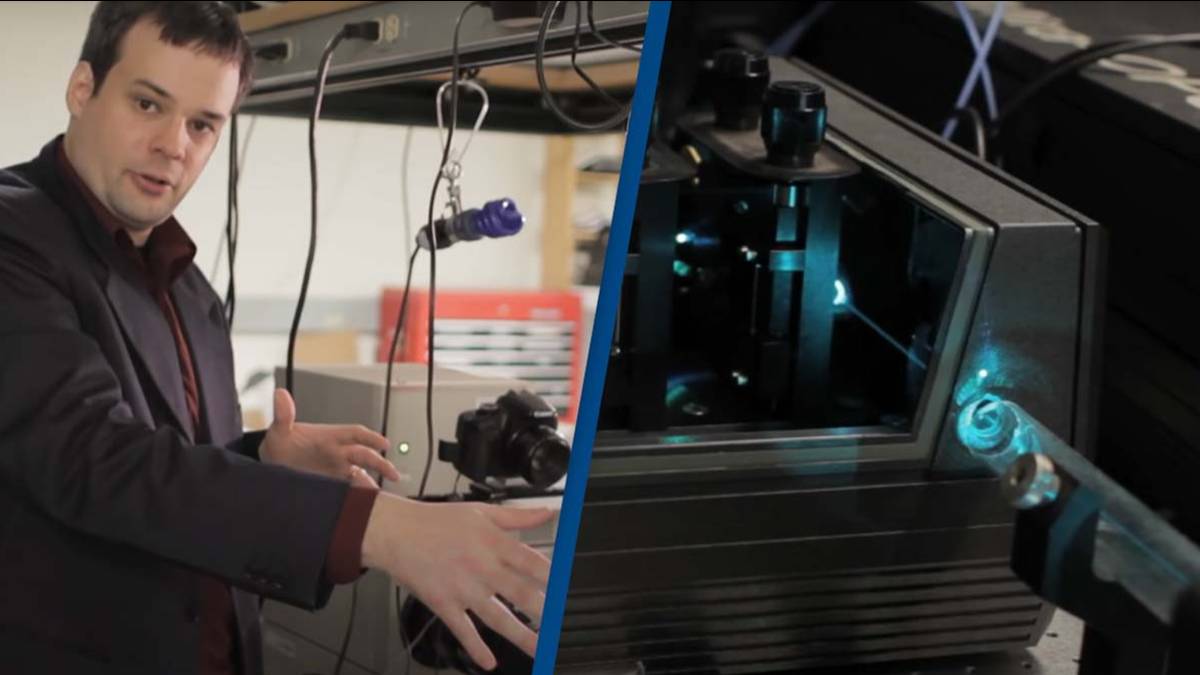
Popular YouTubers, The Slow Mo Guys, known for capturing slow-motion footage, have managed to film the speed of light using a high-speed camera that shoots at an incredible 10 trillion frames per second. With the help of specialist equipment at CalTech, they were able to see light moving the length of a bottle in 2,000 picoseconds of footage. The impressive technology and editing skills showcased in the video have left viewers in awe of humanity's ability to capture such phenomena.

space2 years ago

Interstellar Travel Faces Communication Hurdles with Light-Speed Spaceships

A new analysis explores the challenges of communicating with a spacecraft traveling close to the speed of light. As a spaceship approaches the speed of light, messages from Earth will no longer be able to reach it, leaving the craft out of contact. Additionally, time dilation effects mean that a spaceship accelerating at 1g could reach the center of the galaxy in just 20 years and the edge of the visible universe in 45 years. The study suggests that interstellar spacecraft and their crews would need to accept highly autonomous operations and abandon the notion of maintaining continuous communication with Earth or the destination throughout the mission.

spacescience2 years ago

"Time Dilation: The Communication Challenge for Interstellar Astronauts"

Interstellar travel would present significant communication challenges due to the finite speed of light and time dilation. Messages sent to spacecraft traveling at near light speed would experience significant time delays, and spacecraft would suffer severe communication blackout periods. Different scenarios, such as constant acceleration or deceleration, would introduce their own set of challenges. Communication with near-light-speed spacecraft would be very challenging, requiring interstellar vehicles to operate independently. Interstellar travel would be a lonely journey with limited communication capabilities.

science-and-technology2 years ago

"Scientists Capture Speed of Light with Mind-Blowing Camera Technology"

Scientists at MIT have developed a camera that can capture the movement of light in slow motion by using a specially adapted sensor and a rotating mirror. The camera, consisting of an array of 500 sensors, can capture one trillion frames per second, allowing researchers to track the path of light as it moves through a scene. This technology has potential applications in medical imaging, industrial analysis, and even consumer photography.

science-and-technology2 years ago

Mind-Blowing Videos: Speed of Light and ISS Leave Viewers in Awe

An Instagram account has created a video demonstrating the incredible speed of light by superimposing it over Earth and our solar system. The video reveals that something traveling at the speed of light in a vacuum around Earth would complete around 7.5 orbits per second at the Earth's surface. While light itself doesn't always travel at the speed of light due to obstacles, its speed in a vacuum is approximately 299,792,458 meters per second, or 671 million miles per hour.

science-and-technology2 years ago

"Terrifying Simulation Reveals Catastrophic Impact of Light-Speed Needle on Earth"

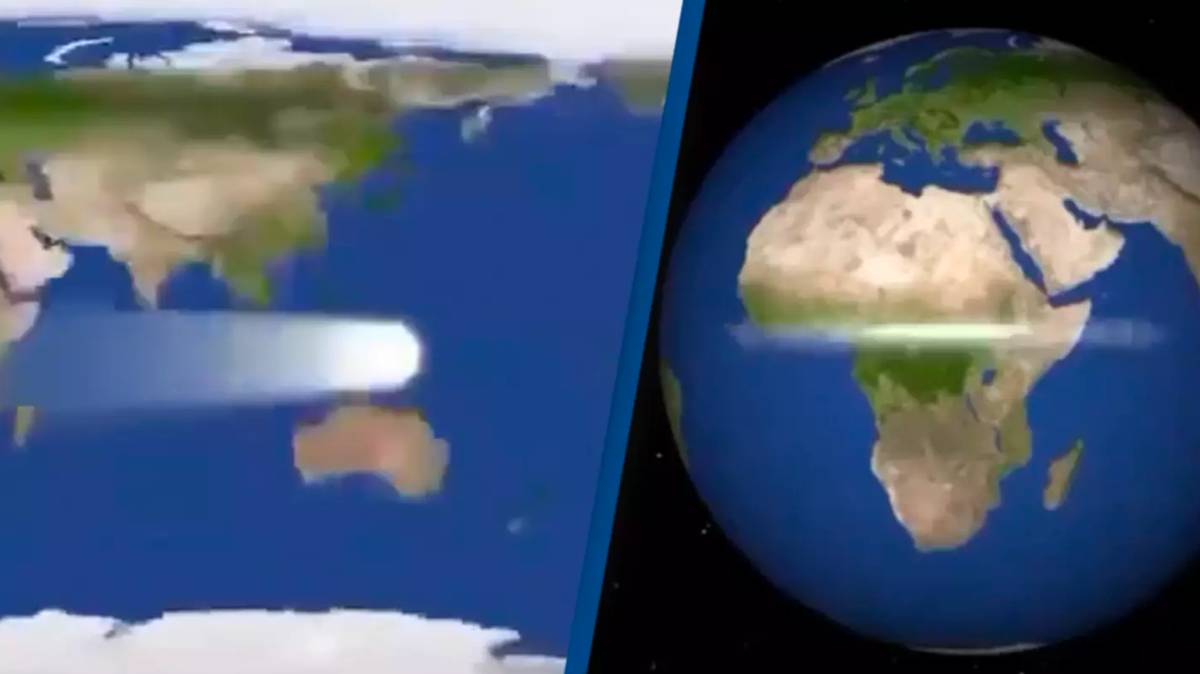
An apocalyptic video explores the hypothetical scenario of a needle hitting Earth at the speed of light. In the worst case, the impact would create a massive hole in the Earth's crust, causing the mantle to be ejected into space and resulting in the extinction of life due to the immense heat. Alternatively, the energy released could be so great that the Earth disintegrates. However, there is a possibility that the needle would simply pass through the Earth without significant impact, happening so quickly that it goes unnoticed, except for those unlucky enough to be in its path. This theoretical scenario highlights the immense energy possessed by an object traveling at the speed of light, even if it is small like a needle.