Tag

Spacetech

All articles tagged with #spacetech

spacetech1 year ago

"3-Legged Hopping Robot: Future Asteroid Exploration"

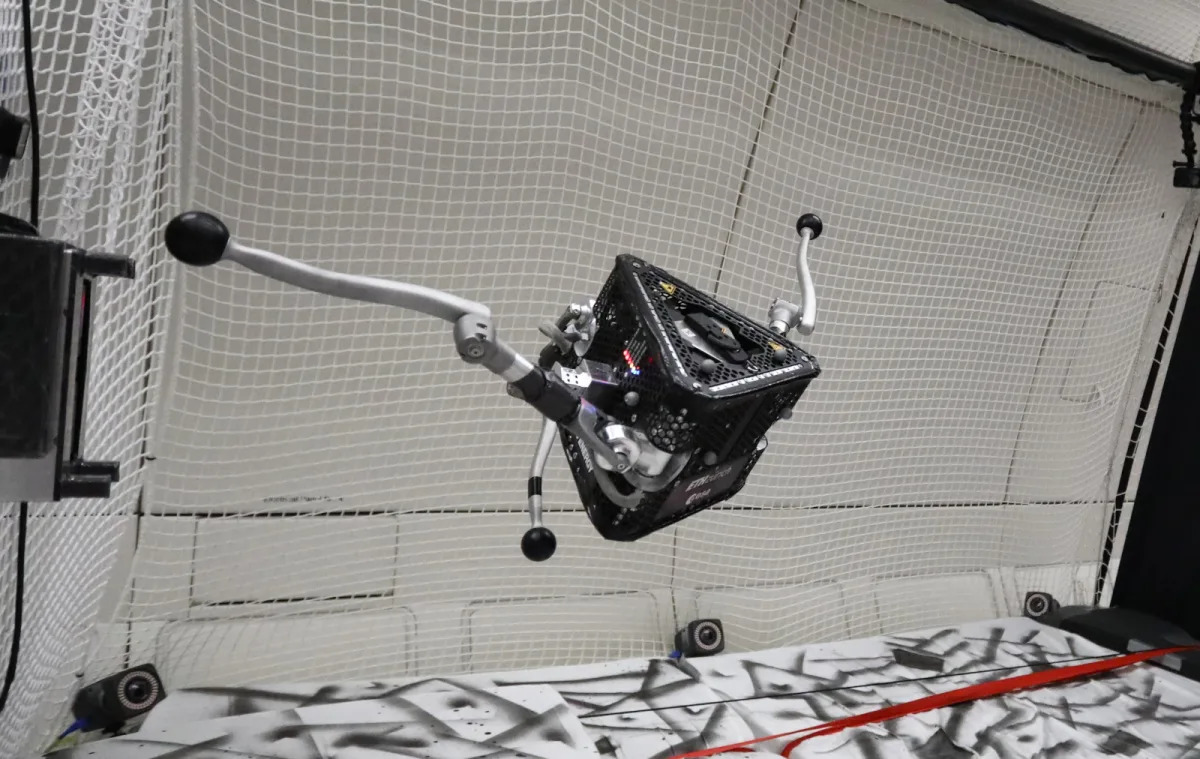
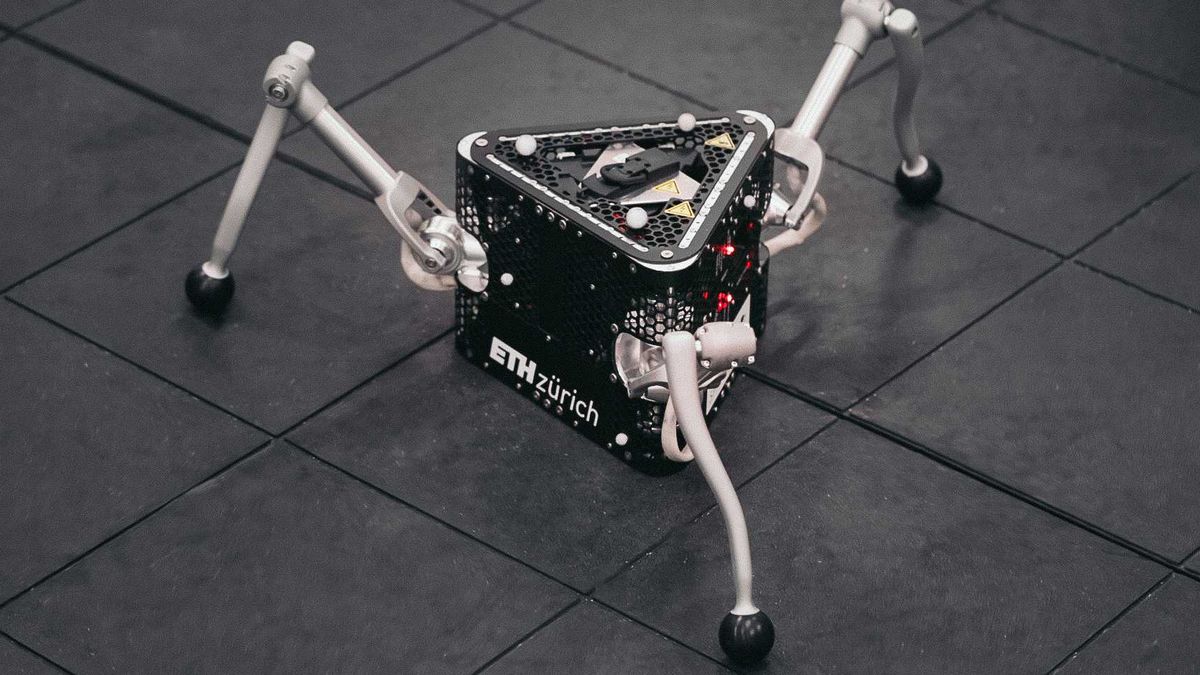
A group of students from ETH Zurich have developed a hopping robot called SpaceHopper, designed for space exploration of asteroids and moons. With three spindly legs and nine motors, it can jump long distances in low-gravity environments and self-right after landing. Tested in a zero gravity environment during a parabolic flight, the robot successfully demonstrated its capabilities, providing potential for advancing our understanding of life's origin, water sources, and asteroid resources.
spacetech1 year ago

"Zero-Gravity Testing: Hopping Robot Explores Asteroids in Space"

SpaceHopper, a three-legged robot developed at ETH Zurich, has been tested in a simulated zero-gravity environment during a European Space Agency parabolic flight. Designed to explore asteroids and moons, the robot's hopping movements combat low-gravity environments, allowing it to reposition and jump in a specific direction. The successful experiments demonstrate its potential for future deployment in space exploration missions.

spacetech1 year ago

"NASA Engineers Uncover Voyager 1 Malfunction Source"

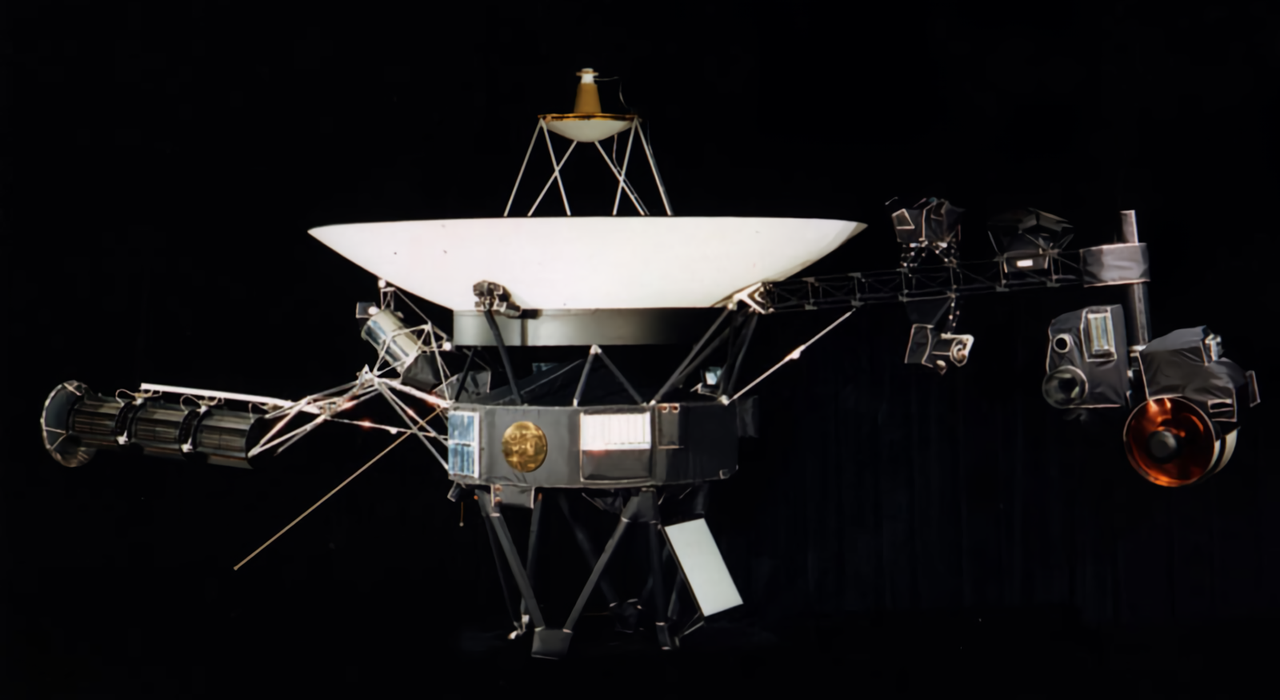
NASA engineers have identified the root cause of Voyager 1's malfunction, discovering that approximately three percent of the craft's Flight Data Subsystems (FDS) memory is corrupted, likely due to a faulty chip. The issue has caused the probe to lose its ability to send telemetry data back to Earth. Engineers are optimistic about finding a way to bypass the faulty memory and restore normal function, but the process could take weeks or even months. Voyager 1, currently the most distant human-made object, is about 15 billion miles from Earth and moving at a velocity of about 38,000 mph relative to the Sun.

spacetech1 year ago

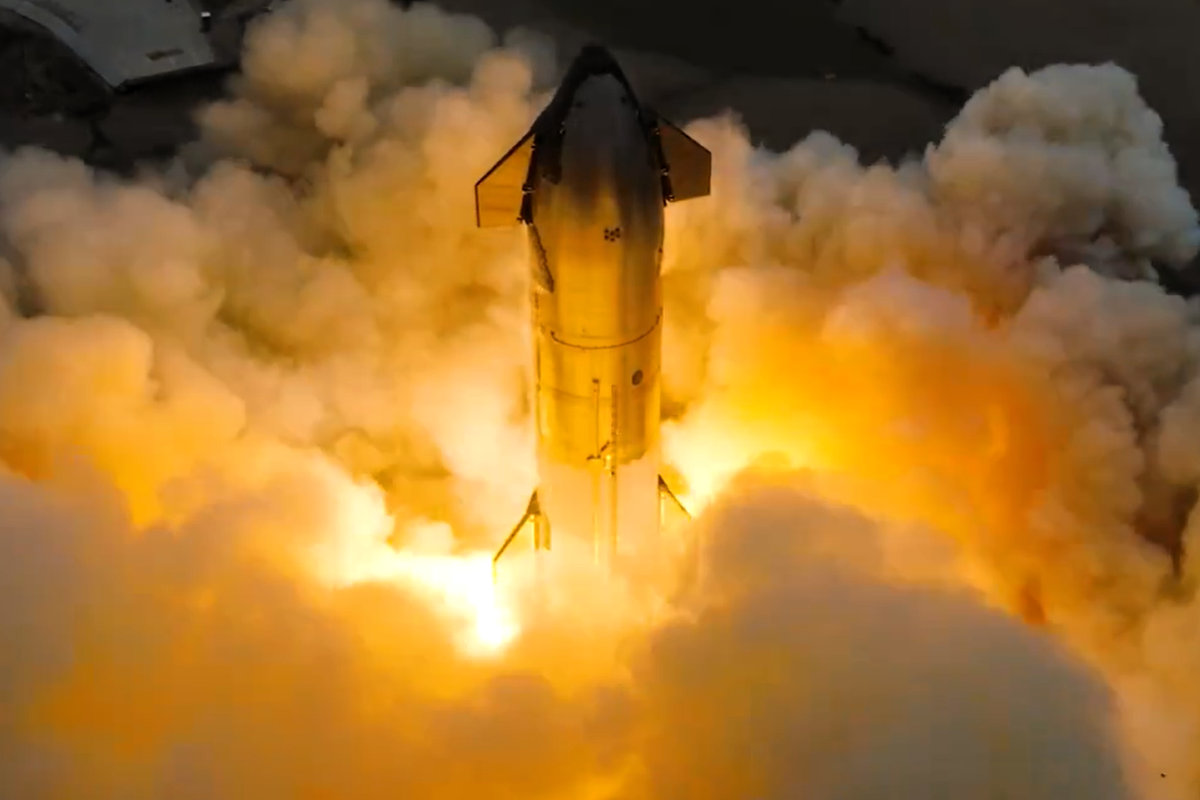
"Elon Musk Sets Goal for SpaceX's Fourth Starship Mission"

Elon Musk has revealed the goals for the next Starship mission, which is expected to take place in early May, focusing on bringing the craft back to Earth safely from orbit for the first time. The recent successful static fire test of the Starship rocket at SpaceX's Starbase facility in Texas sets the stage for this upcoming mission, which aims to resolve issues that arose during the last mission. With plans for commercial missions and a multi-billion dollar contract with NASA, SpaceX is working towards making Starship a reliable and reusable rocket for future space exploration, including potential missions to Mars.

spacetech1 year ago

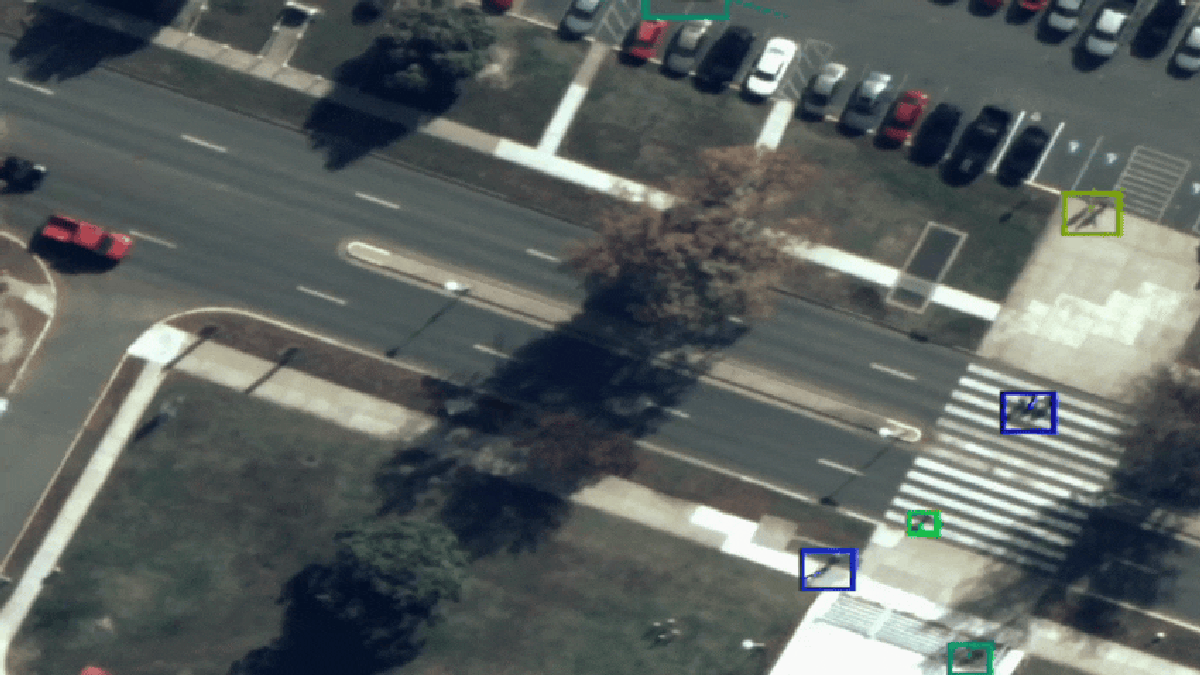
"SpaceX Developing Network of Hundreds of Spy Satellites for U.S. Intelligence"

SpaceX is reportedly working with the National Reconnaissance Office (NRO) to develop a classified system of swarming spy satellites, worth $1.8 billion, capable of Earth-imaging and sharing data with U.S. intelligence and military officials. The program, managed under SpaceX's Starshield unit, aims to provide continuous imagery of global activities, intensifying competition in space military power. The leaked contract raises concerns about the public's limited knowledge of SpaceX's classified work, while highlighting the U.S. military's reliance on the company.

spacetech1 year ago

"China's Ambitious Lunar Surveillance: Skynet-Like CCTV Network Planned for the Moon"

China plans to bring its national surveillance system, Skynet, to its proposed lunar base, with a network of connected surveillance cameras covering a 3.7-mile radius. The cameras are expected to be equipped with AI-driven chips, but may face challenges transmitting data back to Earth and operating in extreme lunar conditions. This move has raised concerns about privacy and security, given China's history of extensive surveillance measures, and could shape the future of lunar development.

spacetech1 year ago

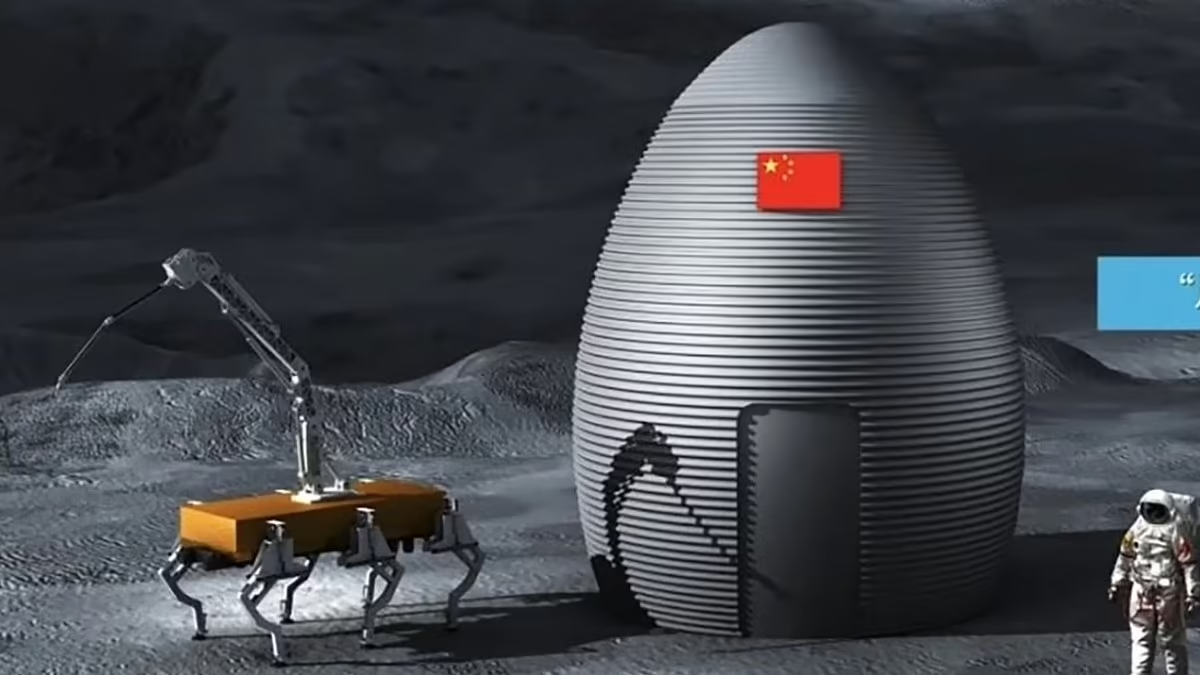
"China's Ambitious Lunar Surveillance Network to Safeguard Future Lunar Assets"

China plans to install a surveillance system on the moon, using its Skynet technology, to protect a proposed lunar base larger than Disneyland from "suspicious targets." The system, equipped with AI chips, would be capable of identifying, locating, and tracking potential threats. China aims to begin building the lunar base within the next few years and is also working on designing a robot to make bricks out of lunar soil for construction.

spacetech1 year ago

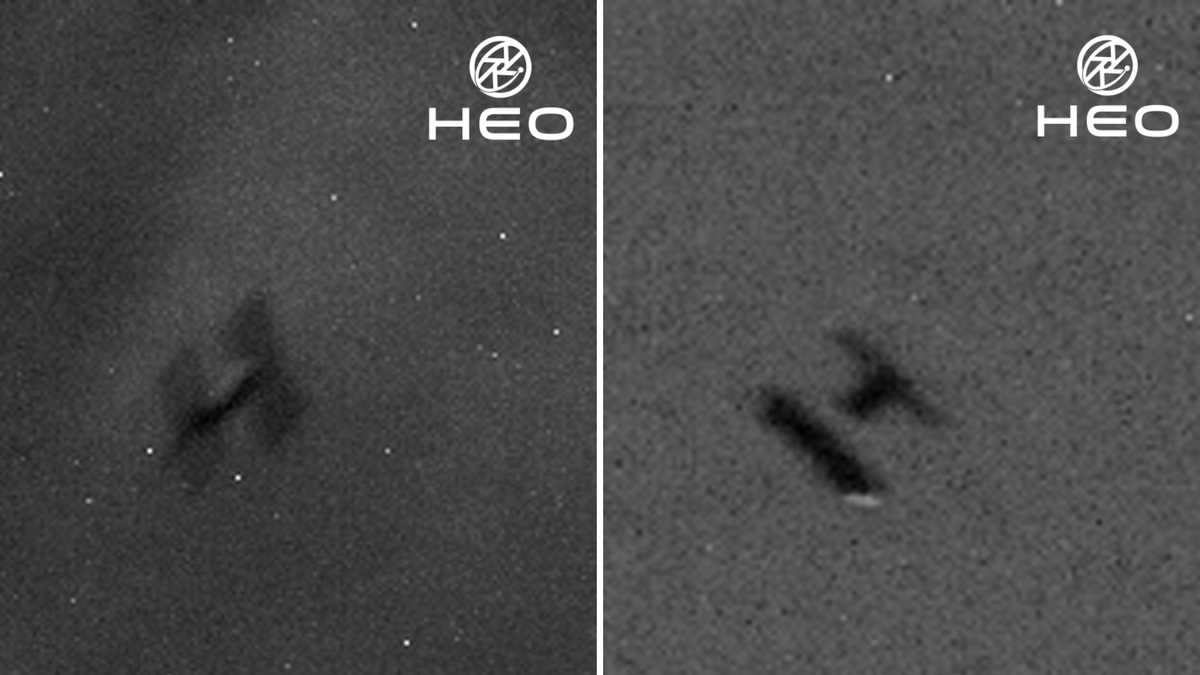
"Fiery Reentry: Satellite ERS-2 Plunges Towards Earth Over Pacific Ocean"

The European Space Agency captured images of the reentry of the ERS-2 satellite, which was decommissioned in 2011 after years of Earth observation. The satellite, launched in 1995, played a crucial role in advancing our understanding of climate change and gathering data for scientific research. It finally made an uncontrolled reentry into Earth's atmosphere, landing in the North Pacific Ocean without causing any damage. ESA highlighted the significant contributions of the ERS satellites to our understanding of the world and the foundation they laid for future Earth observation missions.

spacetech1 year ago

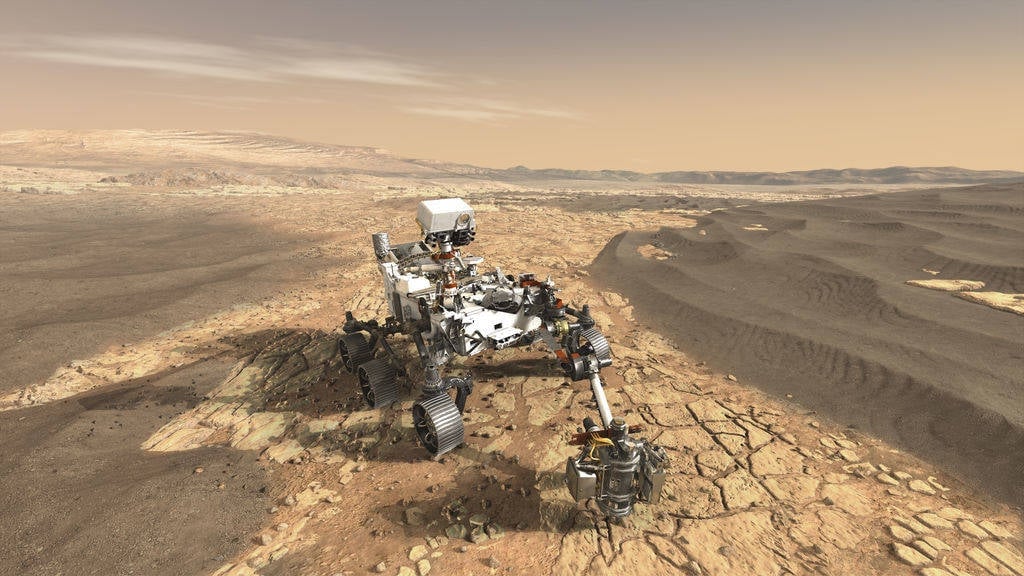
"NASA's Perseverance Rover Faces Technical Challenges on Mars"

NASA's Perseverance rover is facing issues with its SHERLOC instrument, which may prevent it from using its laser to zap rocks due to a malfunctioning dust cover. Engineers are working to resolve the problem, but if unsuccessful, the rover has other instruments like WATSON, SuperCam, and PIXL that can still perform spectroscopy. This comes as the Mars helicopter Ingenuity sustained rotor damage and was retired, while Perseverance celebrates its 1000th Martian day, well past its initial mission expectancy.

science-and-technology2 years ago

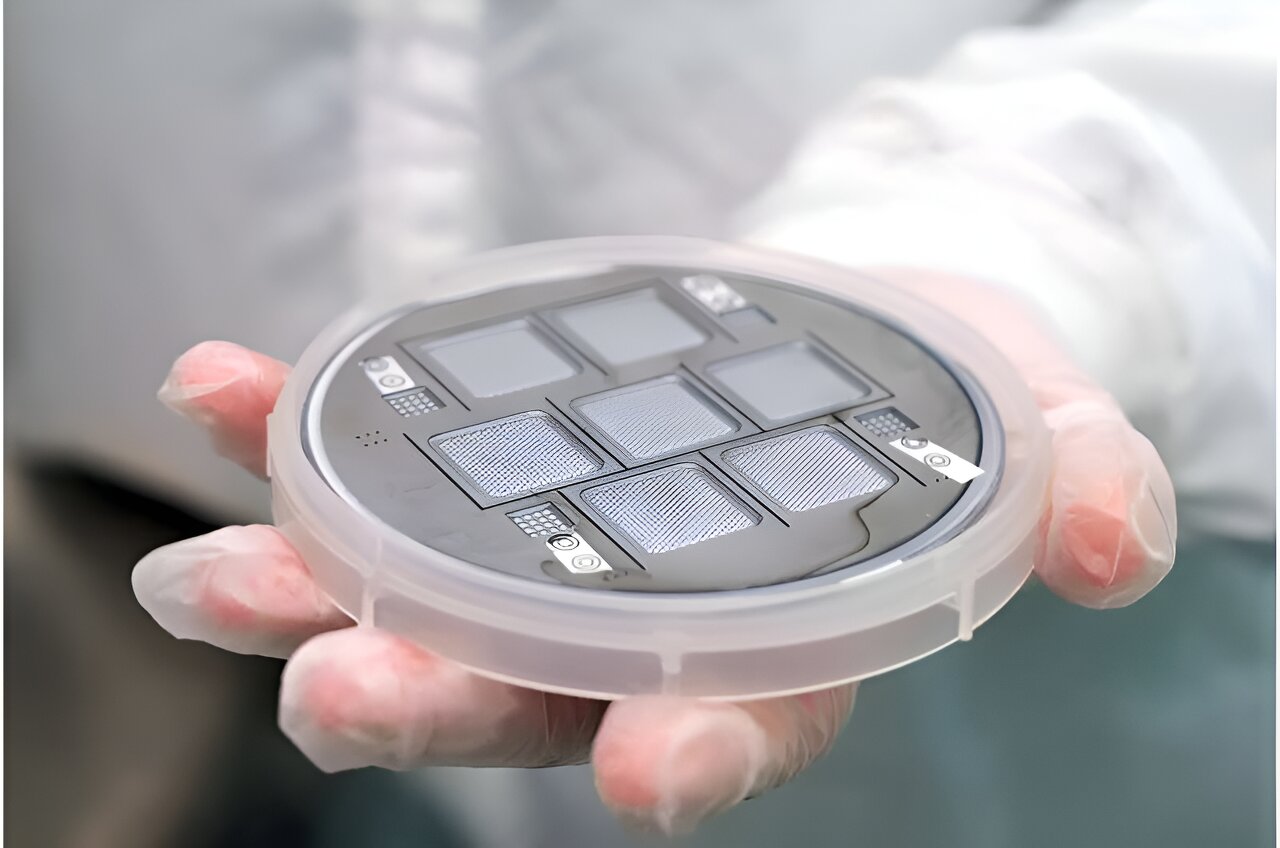
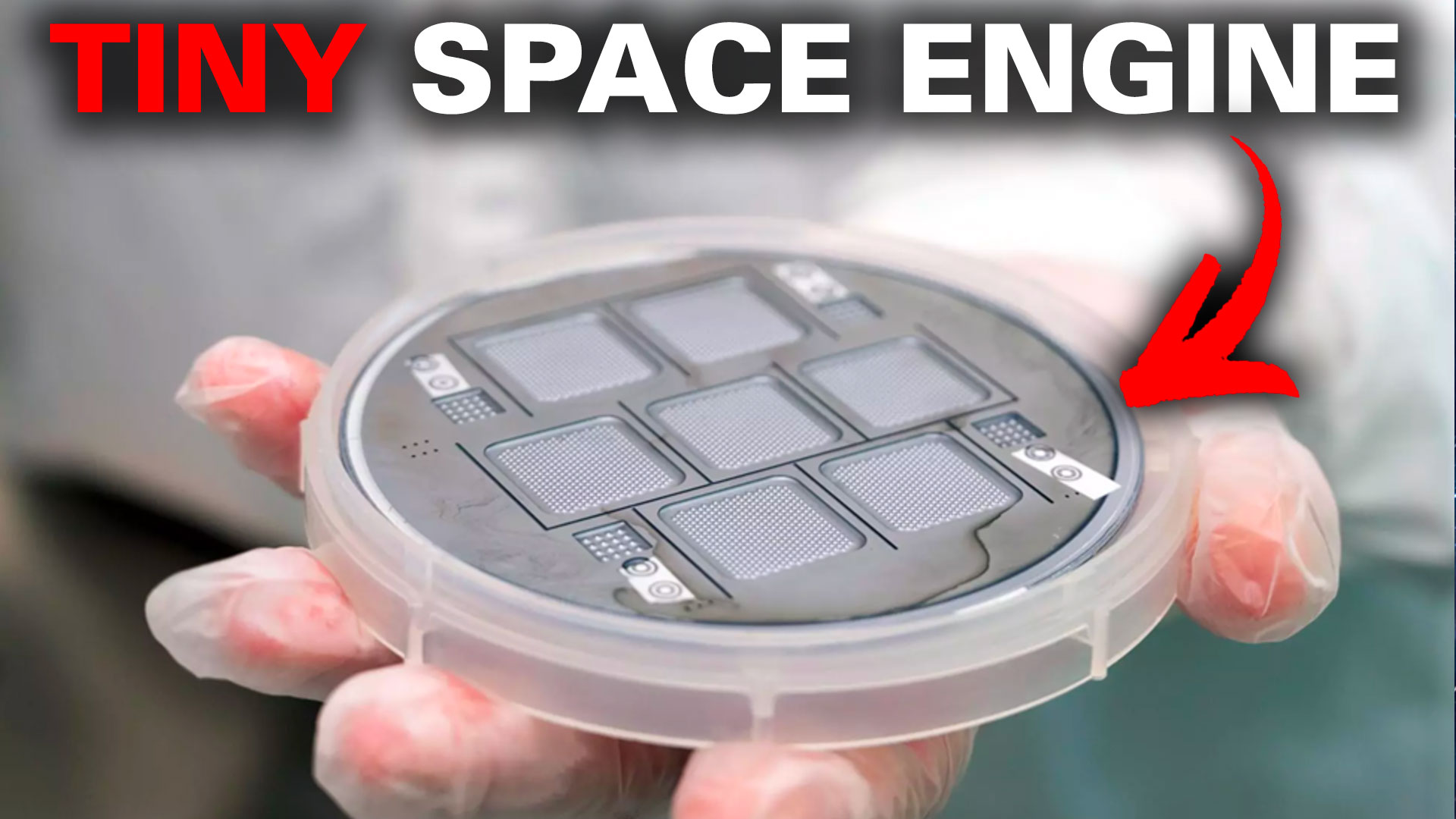
"ESA's Miniature Pinhole Thruster Enters Production Phase"

The European Space Agency (ESA) is advancing in miniaturized propulsion technology with the development of the Athena thruster, a palm-sized system designed for cubesats and small satellites. Created by IENAI Space, this thruster uses electrospray technology to eject electrically charged particles from pinhole emitters, providing efficient propulsion in space. The eco-friendly thrusters can be reconfigured in flight and are expected to be prototyped by the end of 2024, potentially revolutionizing the maneuverability and deployment of small spacecraft.

science-and-technology2 years ago

"ESA's Miniature Pinhole Thruster Enters Production Phase"

The European Space Agency (ESA) is advancing in the production of a palm-sized thruster named ATHENA, designed for maneuvering cubesats and small satellites in space. This Adaptable Thruster based on Electrospray powered NAnotechnology utilizes electrospray technology to eject electrically charged particles from pinhole emitters, achieving high thrust levels. ATHENA is eco-friendly, highly adjustable, and can be configured in various clusters to suit different satellite sizes. A prototype is expected by the end of 2024, marking a significant step in miniaturizing space propulsion systems.