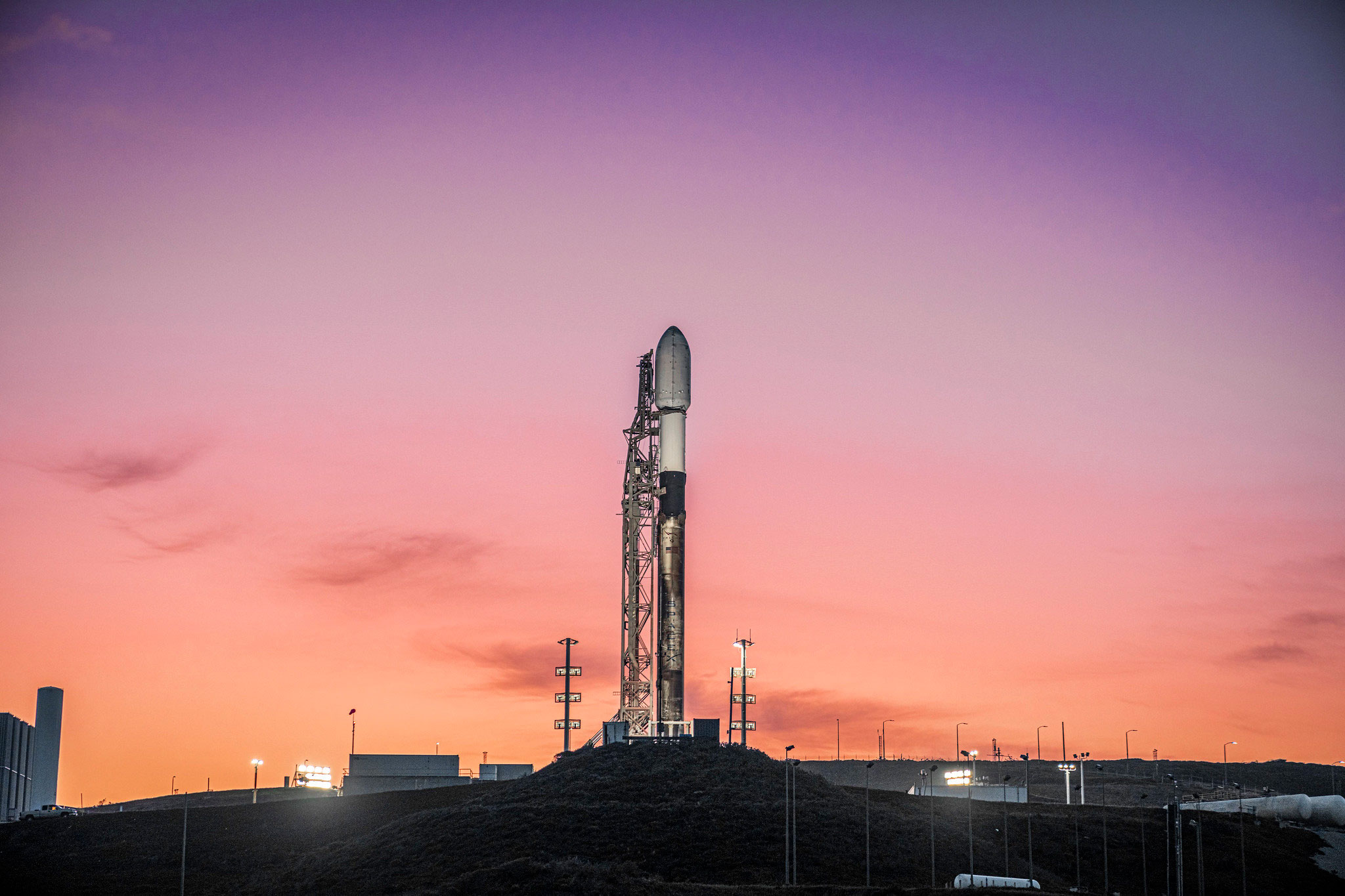
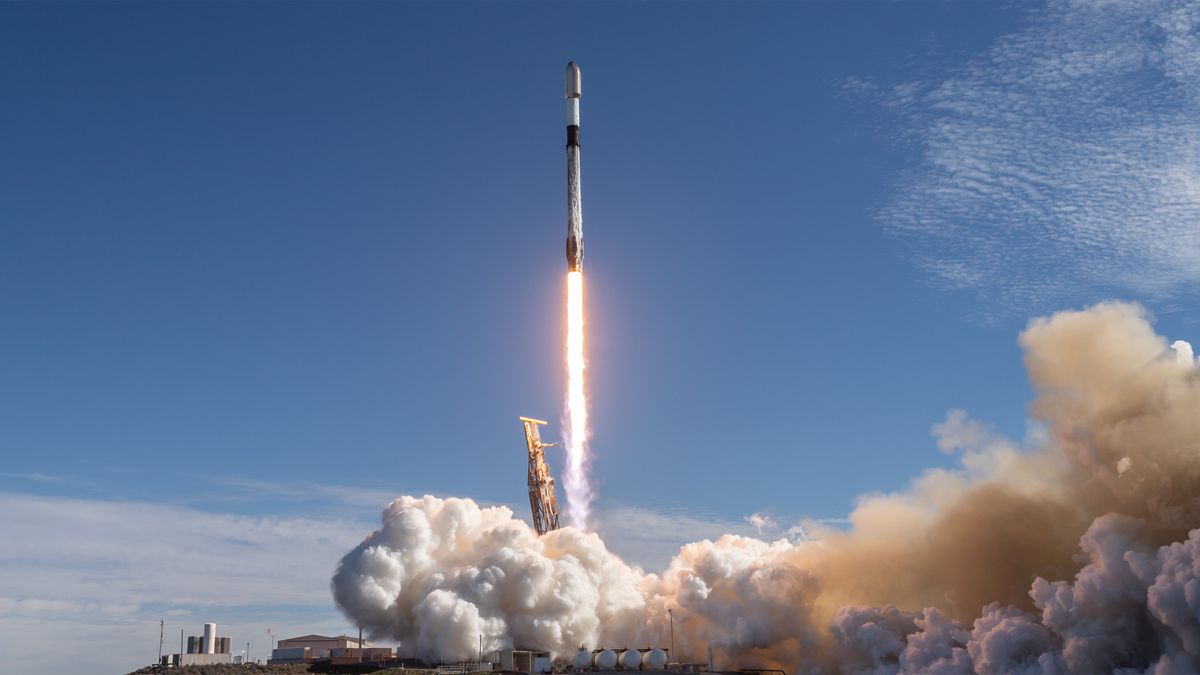
The NRO launched its 11th batch of reconnaissance satellites, believed to be Starshield, into low Earth orbit using a Falcon 9 rocket from Vandenberg, marking a continued effort to build a resilient and extensive satellite constellation for intelligence gathering, with the mission featuring the booster’s 18th flight and return to the launch site.
SpaceX is set to launch a Falcon 9 rocket from Vandenberg Space Force Base, carrying a National Reconnaissance Office payload and 20 Starlink satellites. However, for the second consecutive West Coast launch, SpaceX will not provide a livestream of the countdown and liftoff, citing no specific reasons. The launch window opens early Saturday morning, with a backup opportunity later that night. The mission involves a first-stage booster making its maiden flight, which will land on a droneship in the Pacific Ocean. The secrecy surrounding the launch has led to speculation about national security concerns.
SpaceX is set to launch a Falcon 9 rocket from Vandenberg Space Force Base in California on November 30, carrying U.S. spy satellites for the National Reconnaissance Office (NRO) and 20 Starlink satellites. This mission, NROL-126, is part of the NRO's "proliferated architecture" strategy, which involves deploying numerous smaller, resilient satellites. The Falcon 9's first stage will attempt a landing on a drone ship in the Pacific Ocean, marking the first launch and landing for this booster.
SpaceX aims to launch the next Starship test flight in early May, potentially impacting small satellite launch providers. Rocket Lab successfully launched a classified payload for the National Reconnaissance Office, marking its fourth launch from Wallops Island, Virginia. Astrobotic's Xodiac rocket completed its first night flight in preparation for upcoming NASA testing to simulate lunar surface landings.
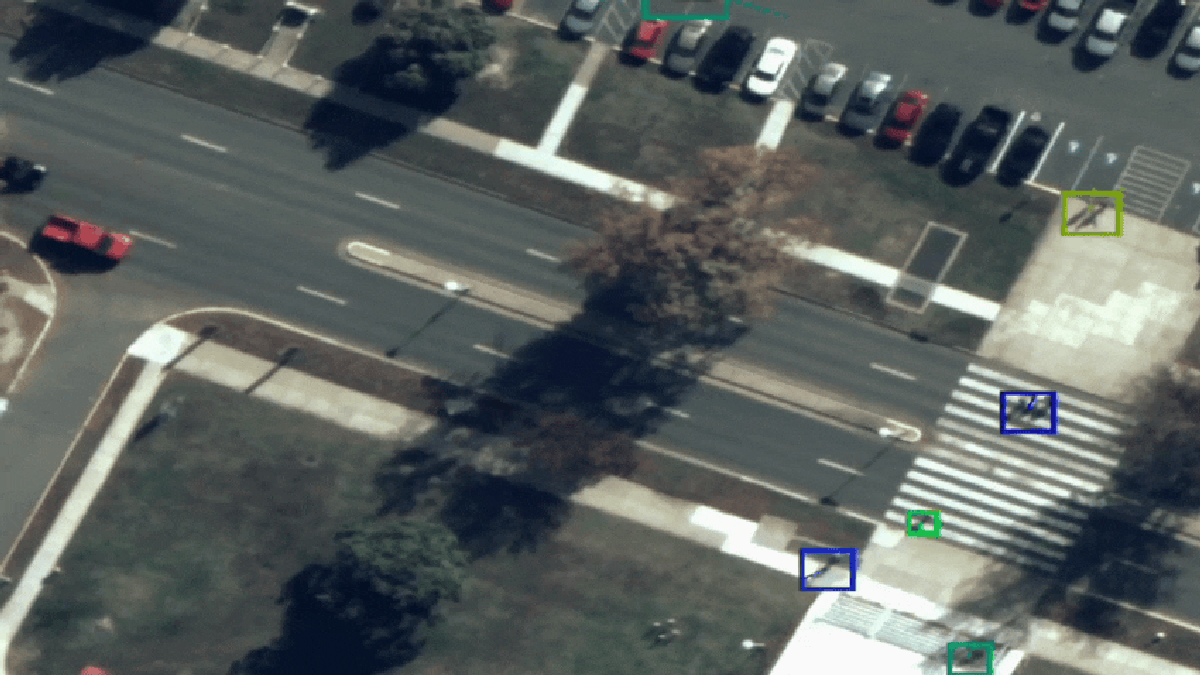
SpaceX is reportedly working with the National Reconnaissance Office (NRO) to develop a classified system of swarming spy satellites, worth $1.8 billion, capable of Earth-imaging and sharing data with U.S. intelligence and military officials. The program, managed under SpaceX's Starshield unit, aims to provide continuous imagery of global activities, intensifying competition in space military power. The leaked contract raises concerns about the public's limited knowledge of SpaceX's classified work, while highlighting the U.S. military's reliance on the company.
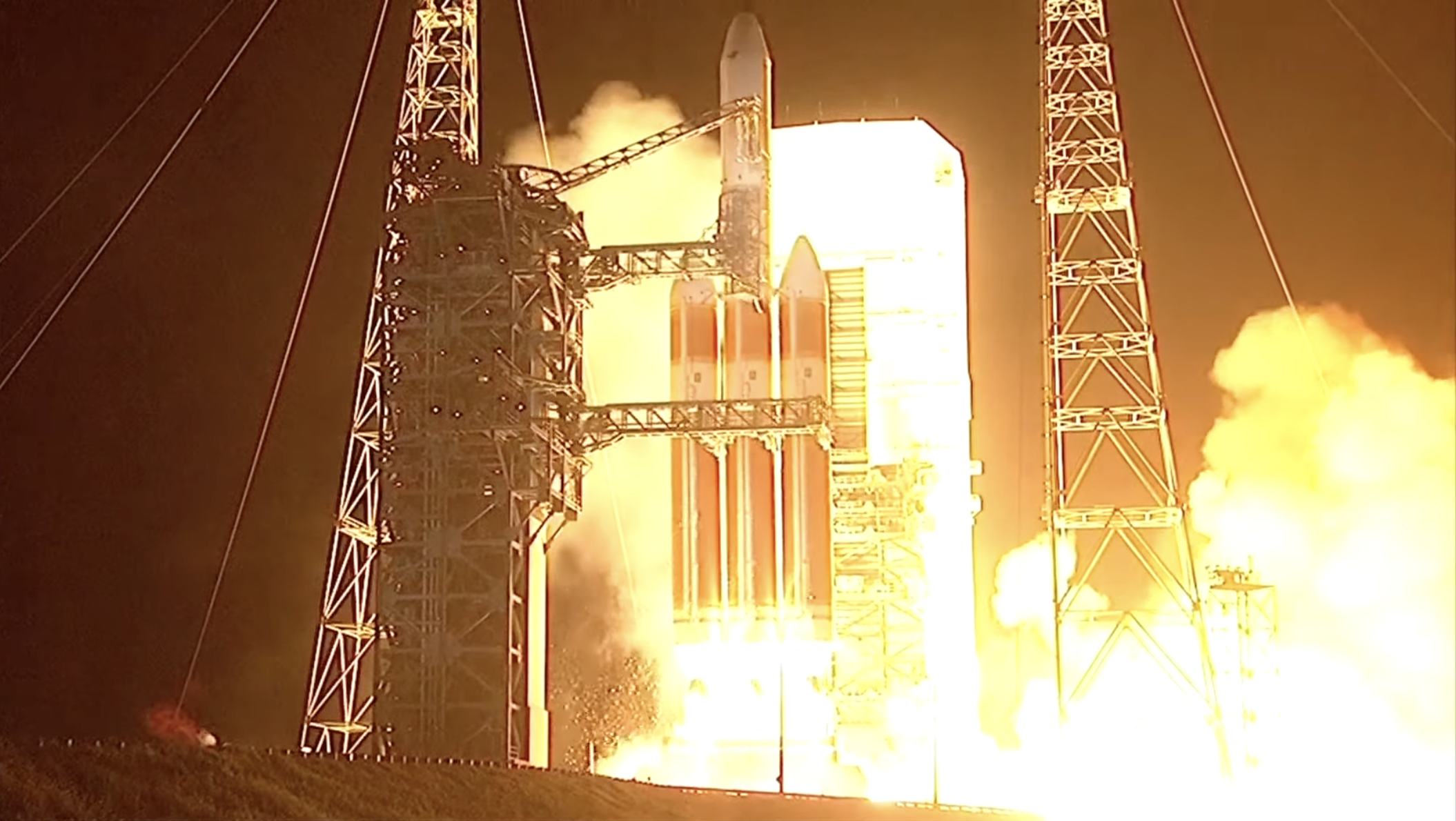
United Launch Alliance (ULA) successfully launched a classified National Reconnaissance Office (NRO) spy satellite on a Delta 4 Heavy rocket from Cape Canaveral Space Force Station, Florida. The launch was ULA's first of 2023 and the Delta 4 Heavy's 15th and penultimate launch before its expected retirement. The NRO requested that ULA end the webcast after the nose fairing was jettisoned. ULA is under contract to launch one more NRO satellite on the Delta 4 Heavy in 2024 before retiring it and replacing it with the new Vulcan Centaur rocket.
United Launch Alliance (ULA) has delayed the launch of its Delta 4-Heavy rocket carrying a classified spy satellite for the National Reconnaissance Office (NRO) due to a problem with a ground systems pneumatics valve. The launch has been rescheduled for Thursday, with an 80% chance of favorable conditions. The NRO's Advanced Orion satellites are believed to intercept telephone calls, data transmissions, and other types of communication by U.S. adversaries. ULA is retiring the Delta family of rockets in favor of the new-generation Vulcan launch vehicle, which is scheduled to make its first test flight later this year from Cape Canaveral.