New coronal adaptive optics technology has enabled unprecedented high-resolution images of the sun's corona, revealing fine structures, turbulent flows, and phenomena like coronal rain, which could lead to breakthroughs in understanding solar activity and space weather. The system, installed at the Big Bear Solar Observatory, corrects atmospheric turbulence, allowing for detailed observation of the sun's outer atmosphere and promising future applications at larger telescopes.
During the April 8 solar eclipse, in addition to the 4 minutes and 28 seconds of totality, observers witnessed strange phenomena including solar prominences, the discovery and destruction of a comet, unusual animal behaviors, a significant drop in internet usage, and the visibility of daytime planets. Other peculiar occurrences included Baily's beads and "diamond rings," as well as changes in lighting and temperature. The next total solar eclipse is expected in 2026.
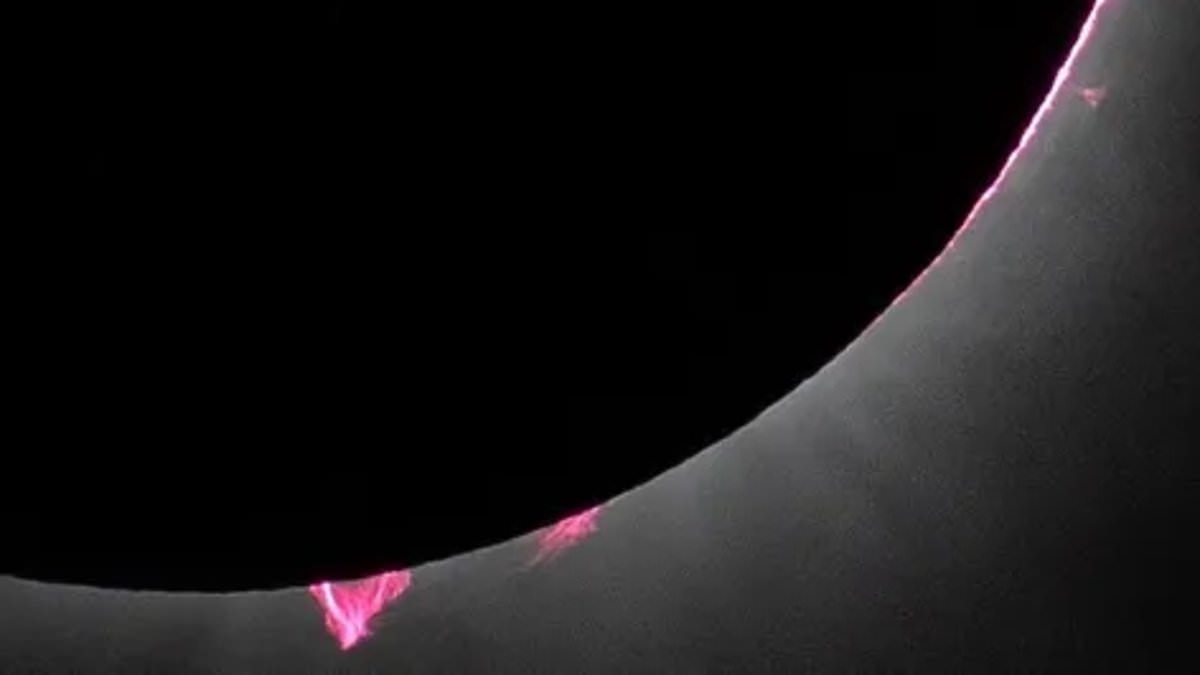
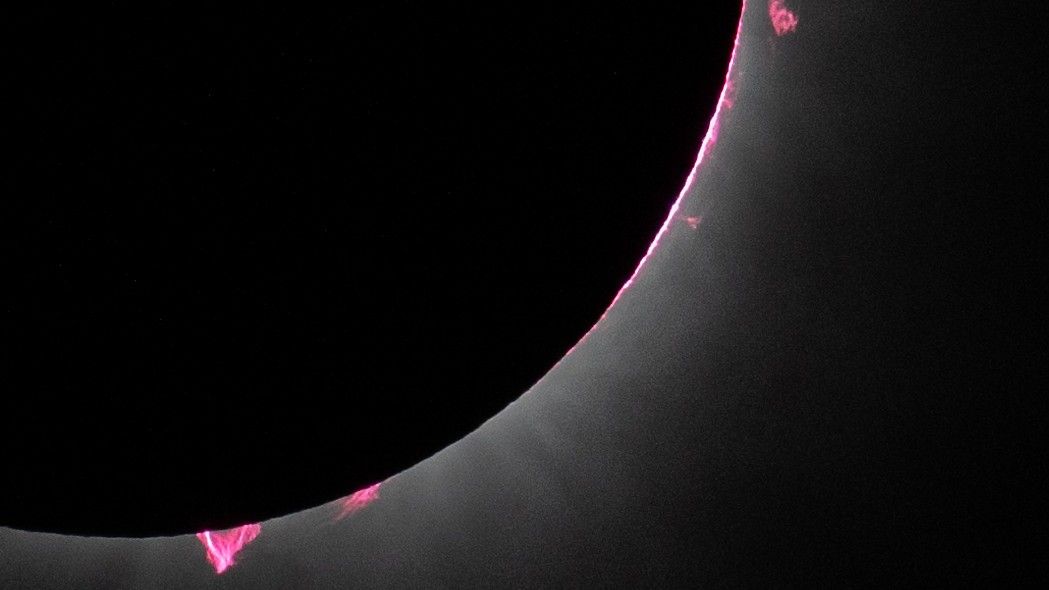
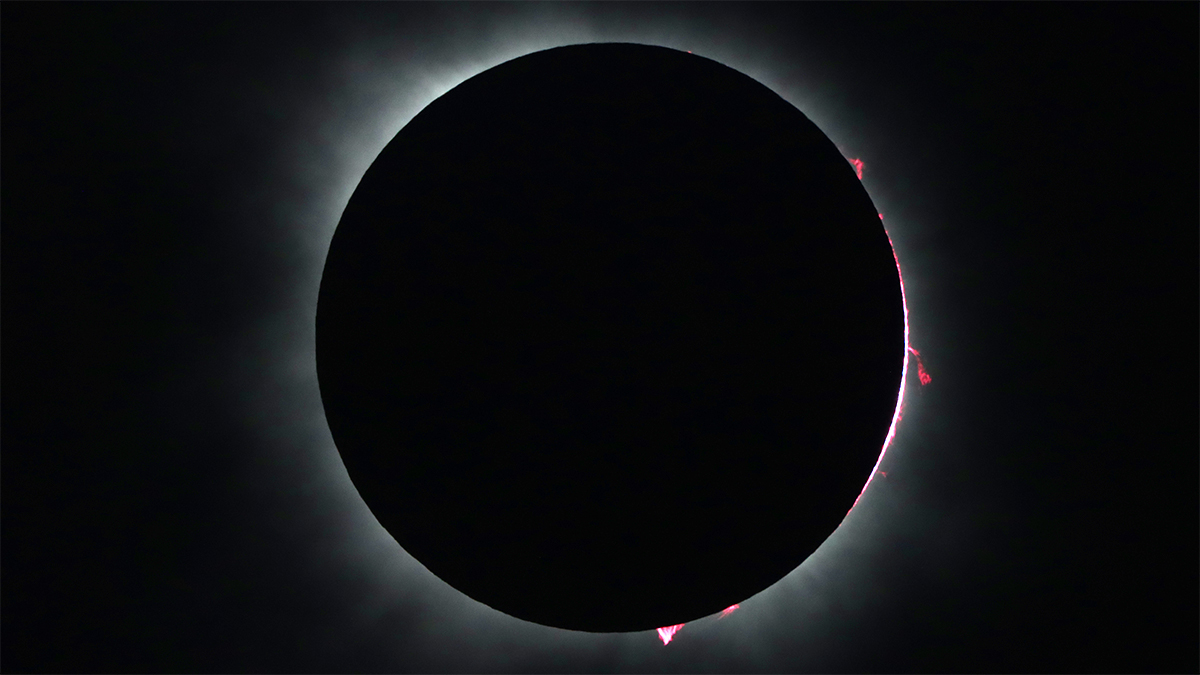
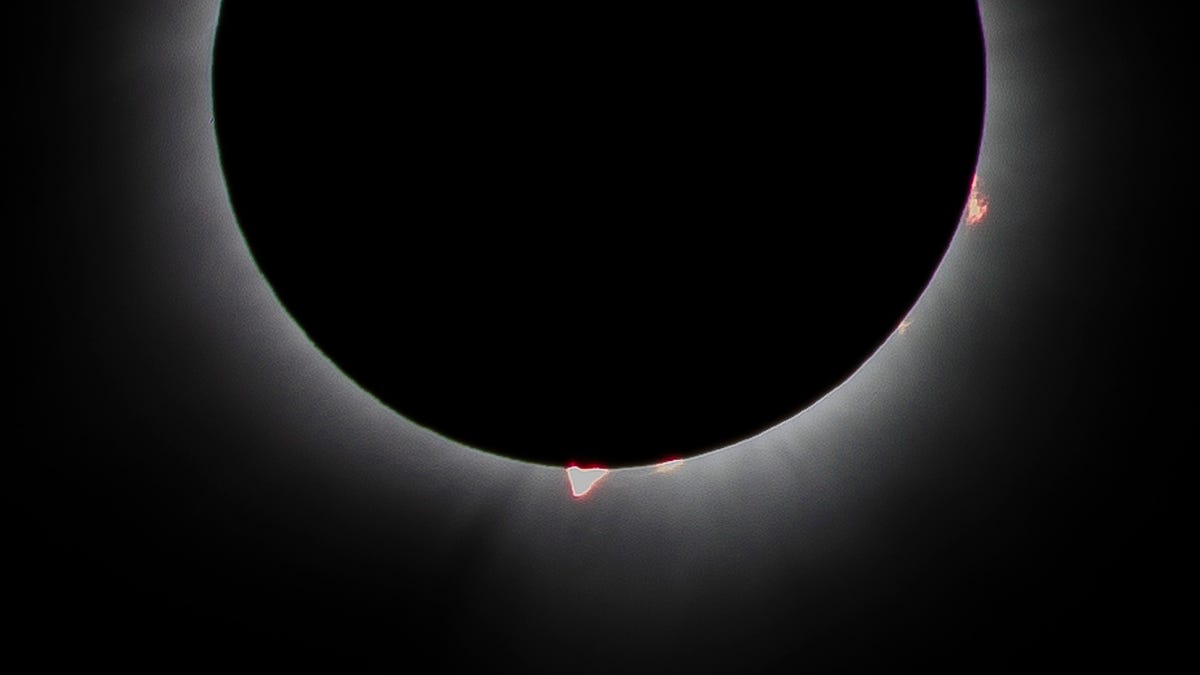
NASA photographer captures stunning images of pink solar prominences, massive loops of anchored plasma on the sun's surface, during the total solar eclipse in Dallas, Texas. These planet-sized pink flames, visible due to the eclipse, are ten times the diameter of Earth and emit a pinkish-reddish hue due to the transformation of hydrogen gas into plasma. The prominences are formed by magnetic fields trapping electrically charged hydrogen plasma, and their release into space can lead to powerful eruptions. The 2024 eclipse showed heightened solar activity compared to the 2017 eclipse, with more intense solar energy and prominences visible.
During the total solar eclipse on April 8, 2024, NASA captured a rare image showing pink towers of plasma, known as solar prominences, erupting from the sun's surface. These structures, which are not solar flares, are large and often looping towers of plasma that stand anchored on the sun's surface for weeks or months. The pinkish hue of the prominences comes from the sun's hydrogen emitting a reddish light at high temperatures, and their visibility from nearly 93 million miles away highlights their incredible size. This phenomenon is just one of the many beautiful and elusive occurrences visible during a total solar eclipse.
The red blotchy areas around the sun during the recent total solar eclipse were solar prominences, which are eruptions of plasma extending from the sun's surface along its magnetic field. Unlike solar flares and CMEs, prominences are anchored to the sun and have no impact on Earth. Solar flares are bursts of X-rays and energy that can cause disruptions to satellites and communications, while CMEs are slower and can lead to auroras when their charged particles interact with the Earth's atmosphere.
During the recent solar eclipse, the bright red spots observed were solar prominences, which are large loops of plasma anchored to the Sun's surface. These prominences, visible during eclipses, are akin to clouds in Earth's atmosphere but made of hot gas trapped by magnetic fields. The red color is due to fluorescing hydrogen gas. Additionally, the eclipse may have featured a "post eruptive solar prominence," likely the location of a solar flare. Solar flares are intense bursts of radiation near sunspots, while coronal mass ejections are large clouds of solar plasma and magnetic fields that move at different speeds. Community science groups across the U.S. collaborated to capture video clips of the eclipse for a National Science Foundation project.
During the rare total solar eclipse on April 8, 2024, viewers were able to witness the sun's glowing, ghostly corona and vivid red or pinkish solar prominences, which are eruptions from the sun's surface. These phenomena, composed of hot hydrogen and helium gas, extend hundreds to thousands of miles into space and can last weeks to months. The next total solar eclipse to sweep across parts of the U.S. will be in 2044 and 2045, providing an amazing experience not to be missed.
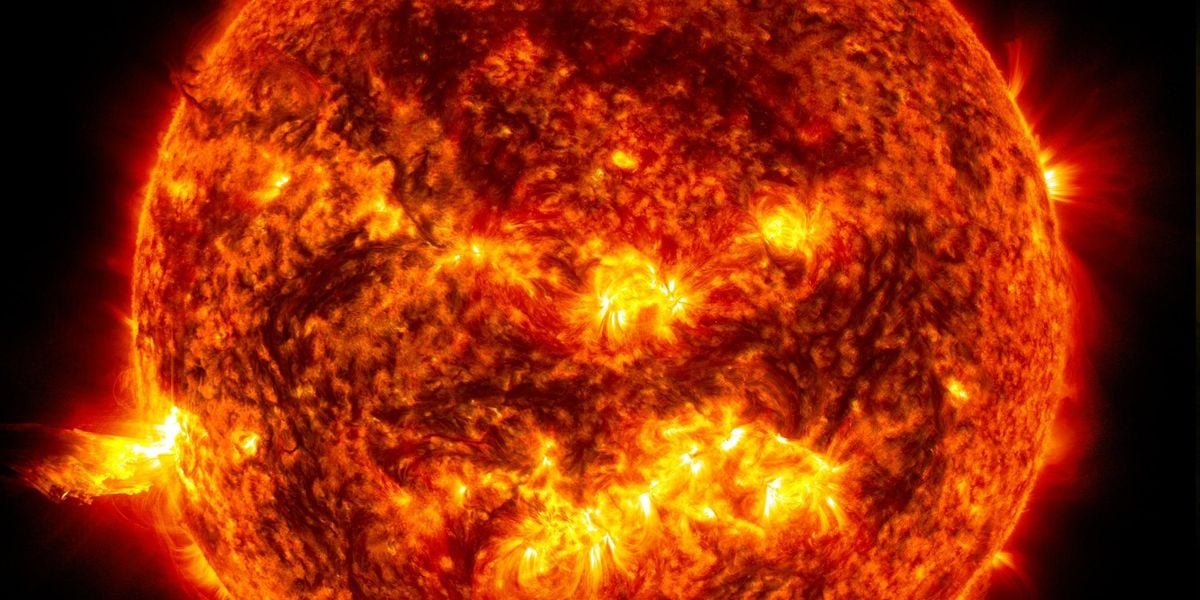
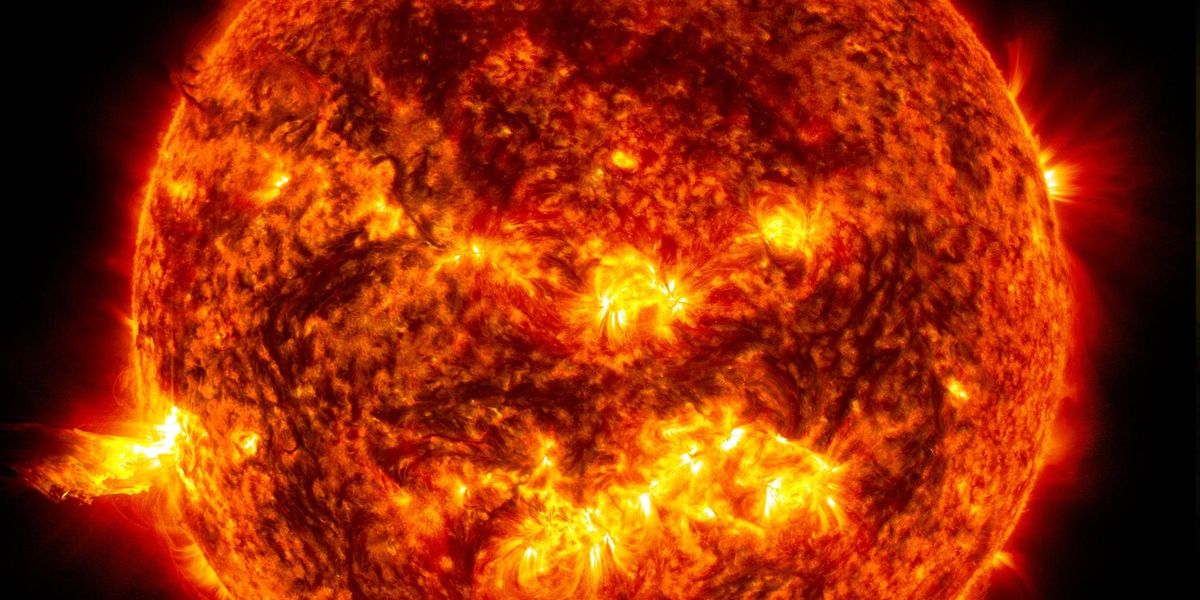
Scientists have observed a section of the sun breaking away from the surface and circulating around the star like a polar vortex, leaving them puzzled about the cause. The phenomenon, detected by the James Webb Space Telescope, involves material from a northern prominence detaching and forming a massive polar vortex around the sun's north pole. It is speculated that the event may be related to the reversal of the sun's magnetic field and a known occurrence when the sun reaches a 55-degree latitude in its 11-year solar cycle.
Scientists have observed a section of the sun breaking away from the surface and circulating around the star like a polar vortex. The cause of this phenomenon is unclear, but it may be related to the reversal of the sun's magnetic field and the 55-degree latitude reached in the 11-year solar cycle. Solar physicists are intrigued by this occurrence and are seeking to understand why it only happens once in each cycle and reappears in the same region years later.
Scientists have observed a section of the sun breaking away from the surface and circulating around the star like a polar vortex, leaving them puzzled about the cause. The phenomenon, detected by the James Webb Space Telescope, involves material from a northern prominence detaching and forming a massive polar vortex around the sun's north pole. It is speculated that the event may be related to the reversal of the sun's magnetic field and a known occurrence when the sun reaches a 55-degree latitude in its 11-year solar cycle.