Scientists discovered a 520-million-year-old fossilized larva with remarkably preserved internal structures, including its brain, digestive system, and nerves, providing new insights into early arthropod evolution and challenging previous assumptions about the simplicity of ancient creatures.
Dolphins running back De’Von Achane will miss time due to a soft-tissue lower-body injury, but his availability for the season opener is not currently a concern, according to coach Mike McDaniel.
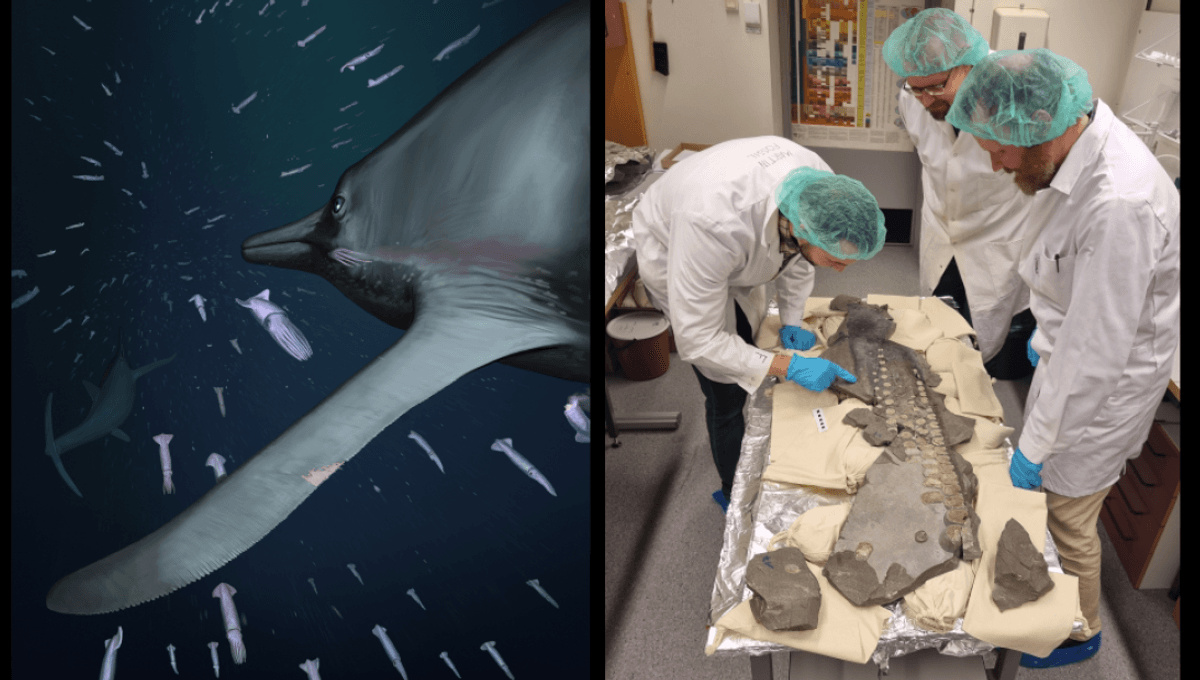
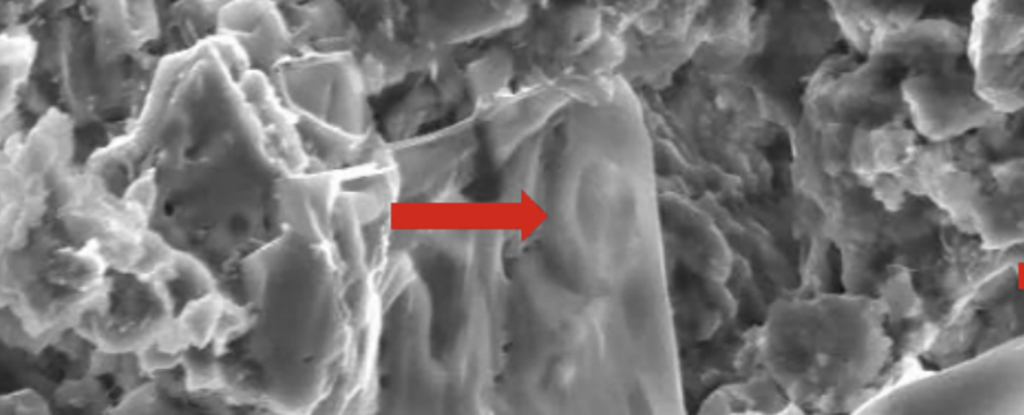
A groundbreaking 183-million-year-old fossil of an ichthyosaur's flipper reveals new features called chondroderms, suggesting these marine reptiles were silent, stealthy hunters capable of ambushing prey, which could revolutionize our understanding of their biology and evolution.
Scientists discovered evidence of cancer in a 66-70 million-year-old dinosaur fossil, suggesting that preserved soft tissues can provide insights into the evolution of cancer and potentially inform modern treatments. This finding highlights the importance of preserving fossils for future molecular research that could benefit human health.
New research suggests dinosaurs had soft tissue structures called 'exoparia' that functioned like cheeks, indicating they may have chewed their food more mammal-like than previously thought, challenging traditional views of dinosaur anatomy.
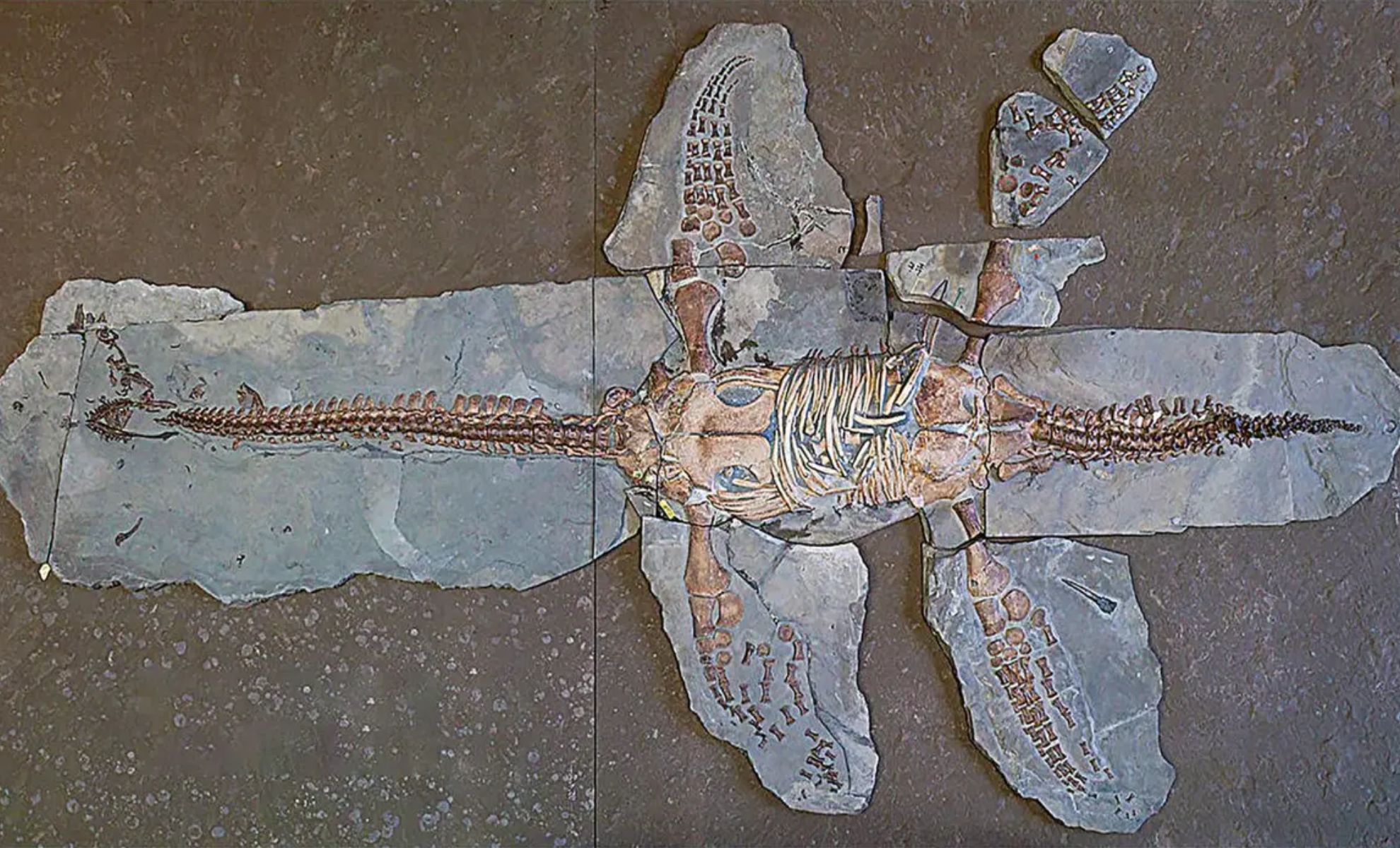
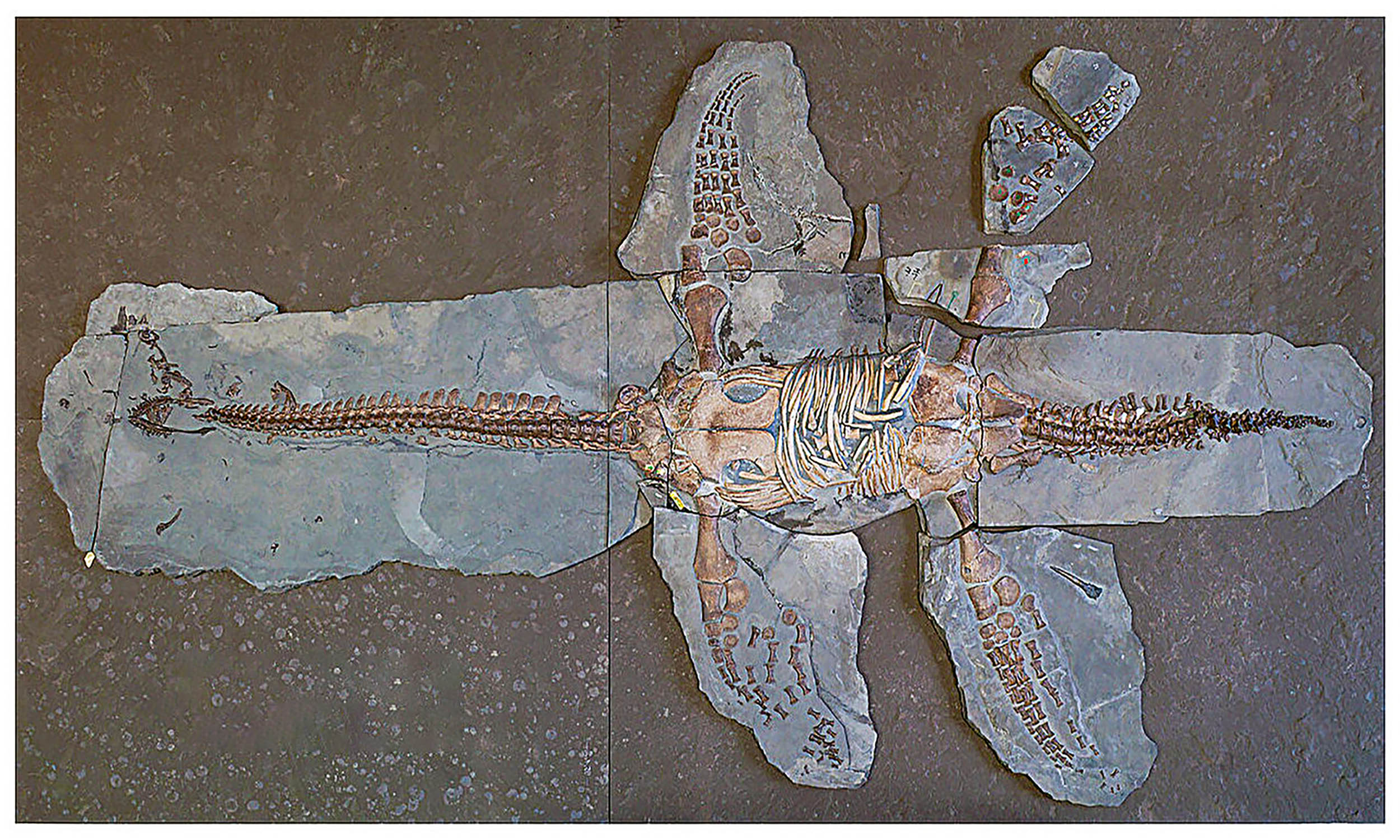
A remarkably preserved 183-million-year-old plesiosaur fossil from Germany reveals soft tissues, skin, scales, and a tail fin, providing new insights into its appearance, movement, and evolution, challenging previous assumptions about marine reptile camouflage and agility.
A 180-million-year-old plesiosaur fossil with well-preserved skin and tissue provides new insights into the creature's appearance, evolution, and regional diversity, revealing details about its skin texture, coloration, and hydrodynamic adaptations that challenge previous assumptions about marine reptiles.
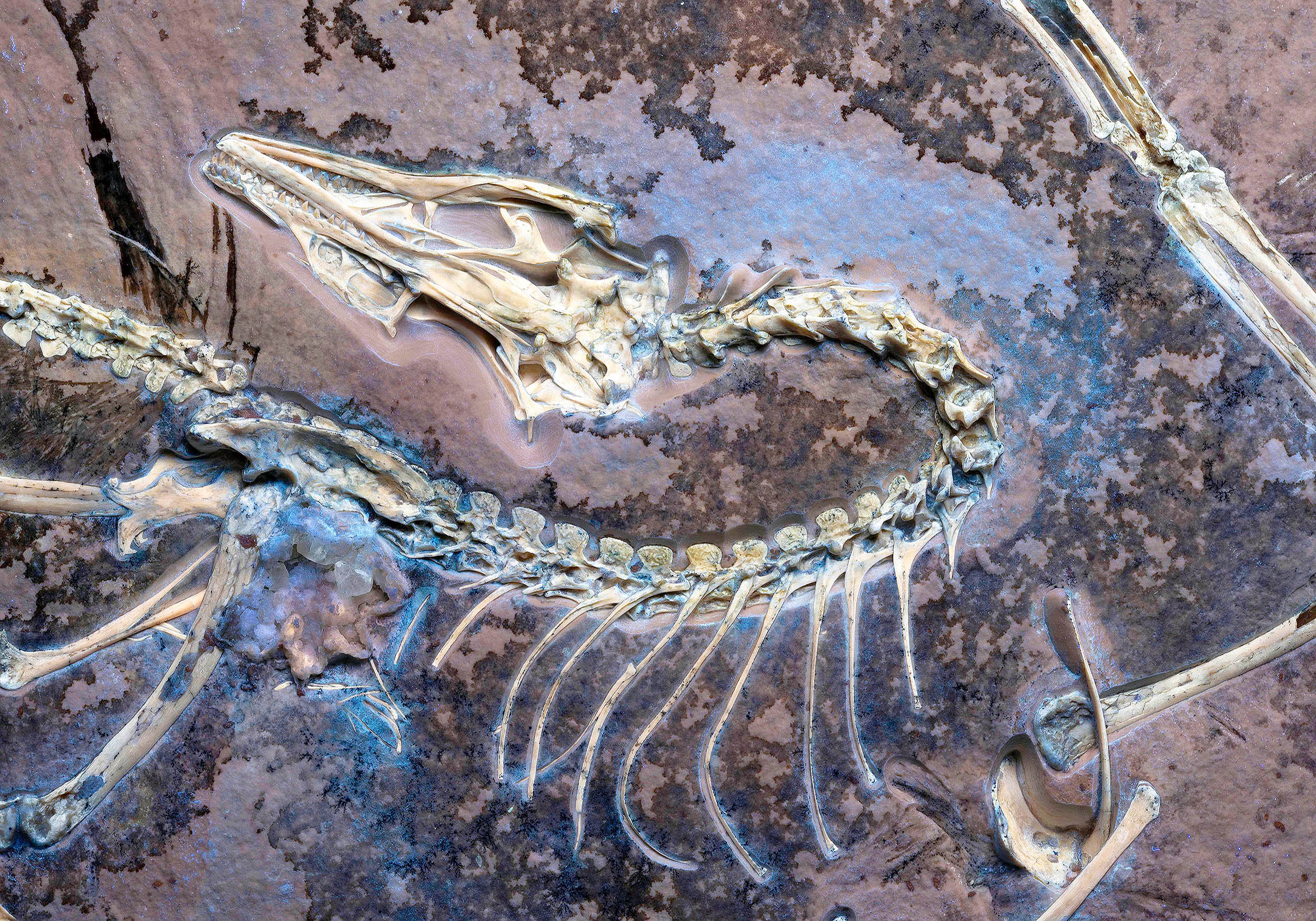
The discovery and advanced study of a well-preserved, small Archaeopteryx fossil with soft tissues has provided new insights into bird evolution, particularly how flight may have originated in dinosaurs, confirming long-standing theories with unprecedented detail.
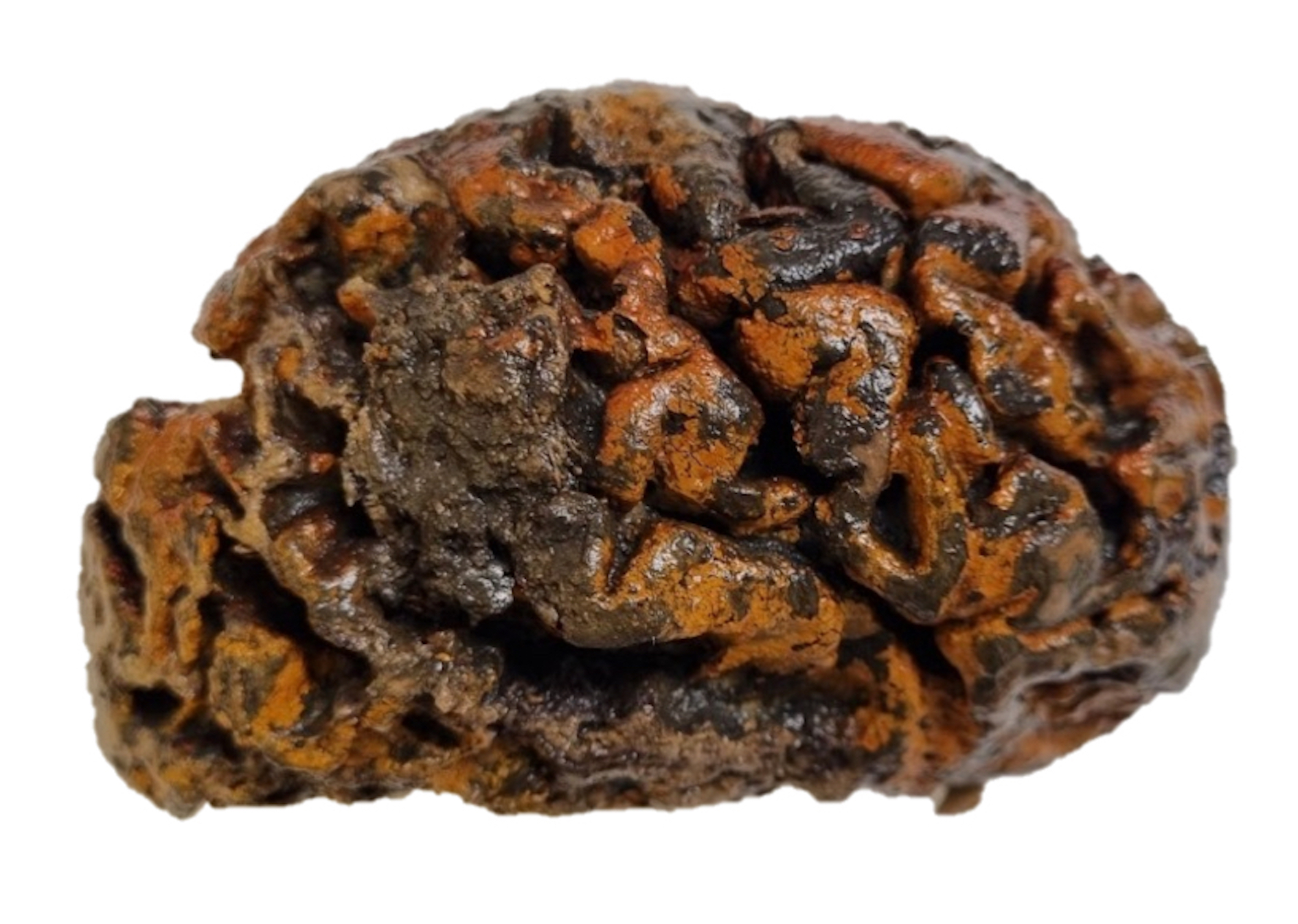
A global archive of over 4,400 preserved human brains, some dating back 12,000 years, has provided groundbreaking insight into soft tissue preservation, challenging the perception that naturally preserved brains are extremely rare. The brains, originating from various environments worldwide, were found to have been preserved through mechanisms such as dehydration, freezing, saponification, and tanning. This research could offer valuable information on human evolution, ancient health, and diseases, including neurodegenerative conditions like Alzheimer's. The study highlights the need for excavating archaeologists to remain open to unexpected discoveries and emphasizes the scientific value of studying these preserved human remains.