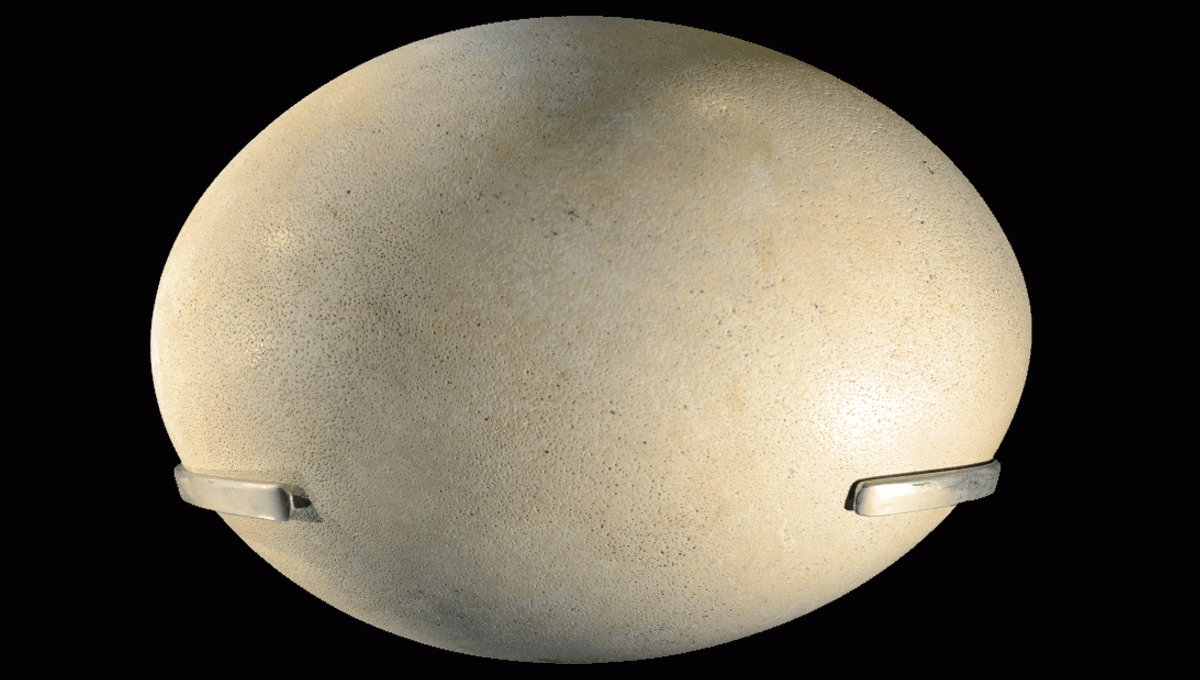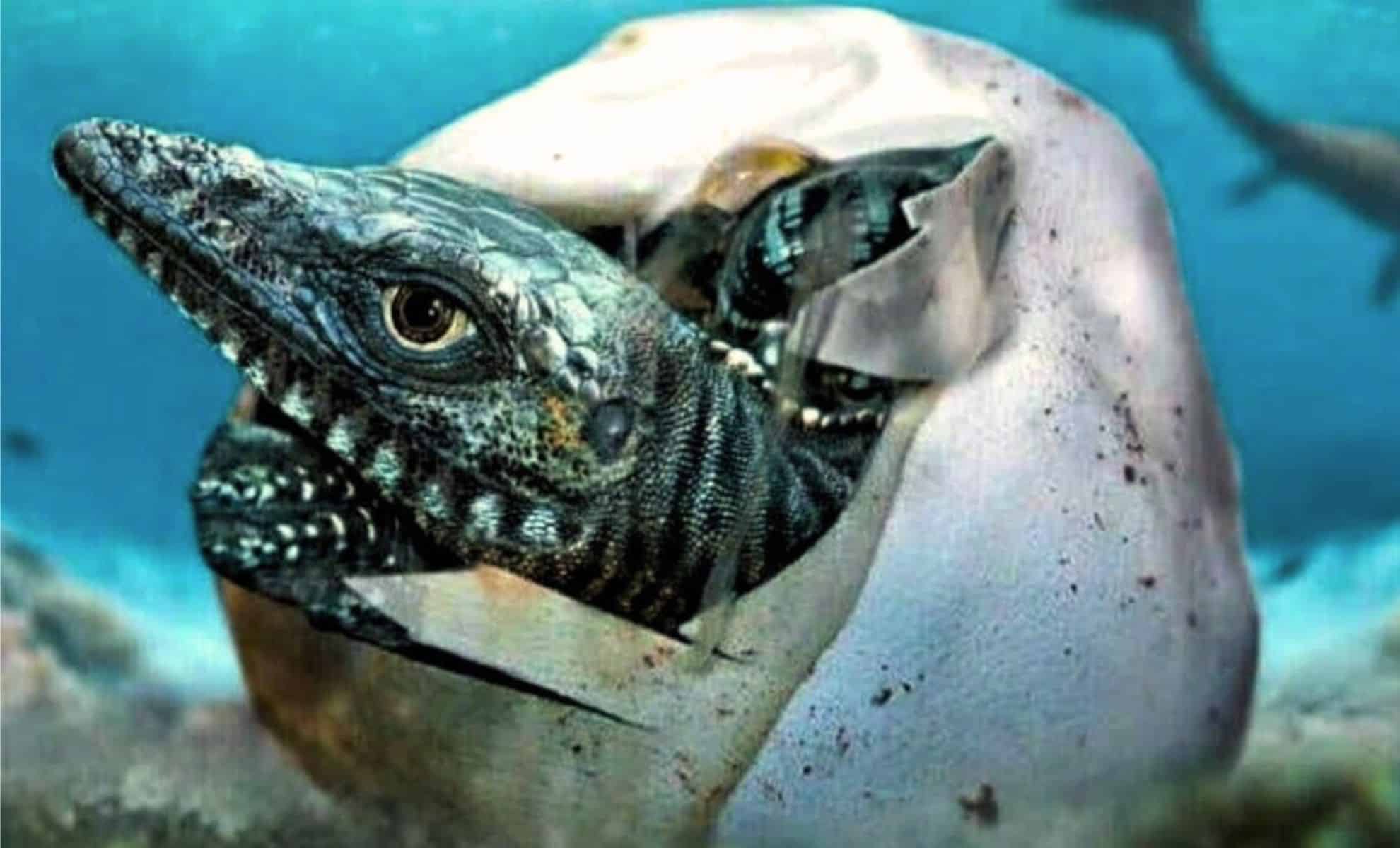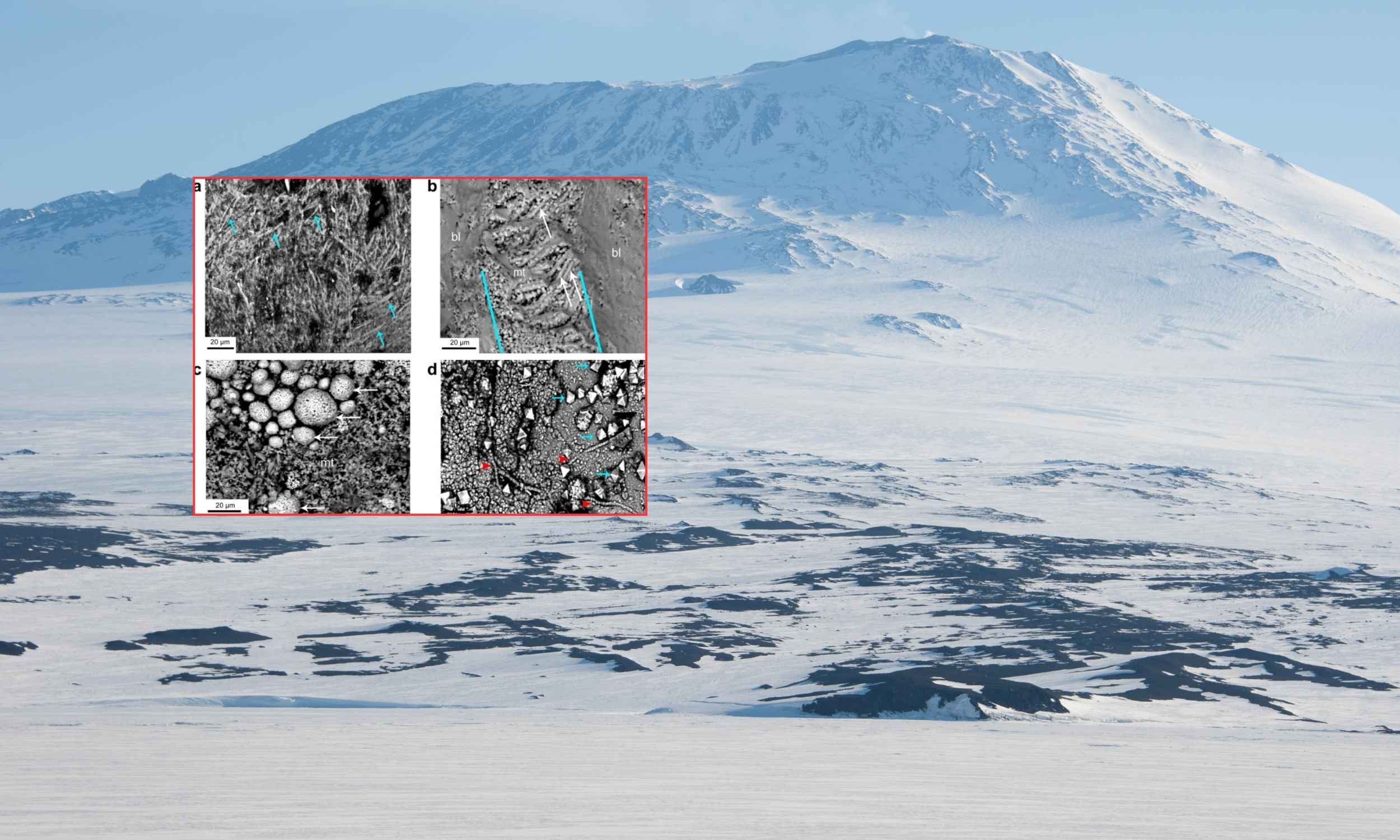
A 68-million-year-old soft-shelled fossil egg, nicknamed 'The Thing', was discovered in Antarctica, revealing that large marine reptiles like mosasaurs laid eggs in water, challenging previous beliefs that they gave birth to live young. The egg's size and structure suggest a reproductive strategy involving soft shells and quick hatching, with the fossil providing insights into ancient marine life and reproductive behaviors near the poles.
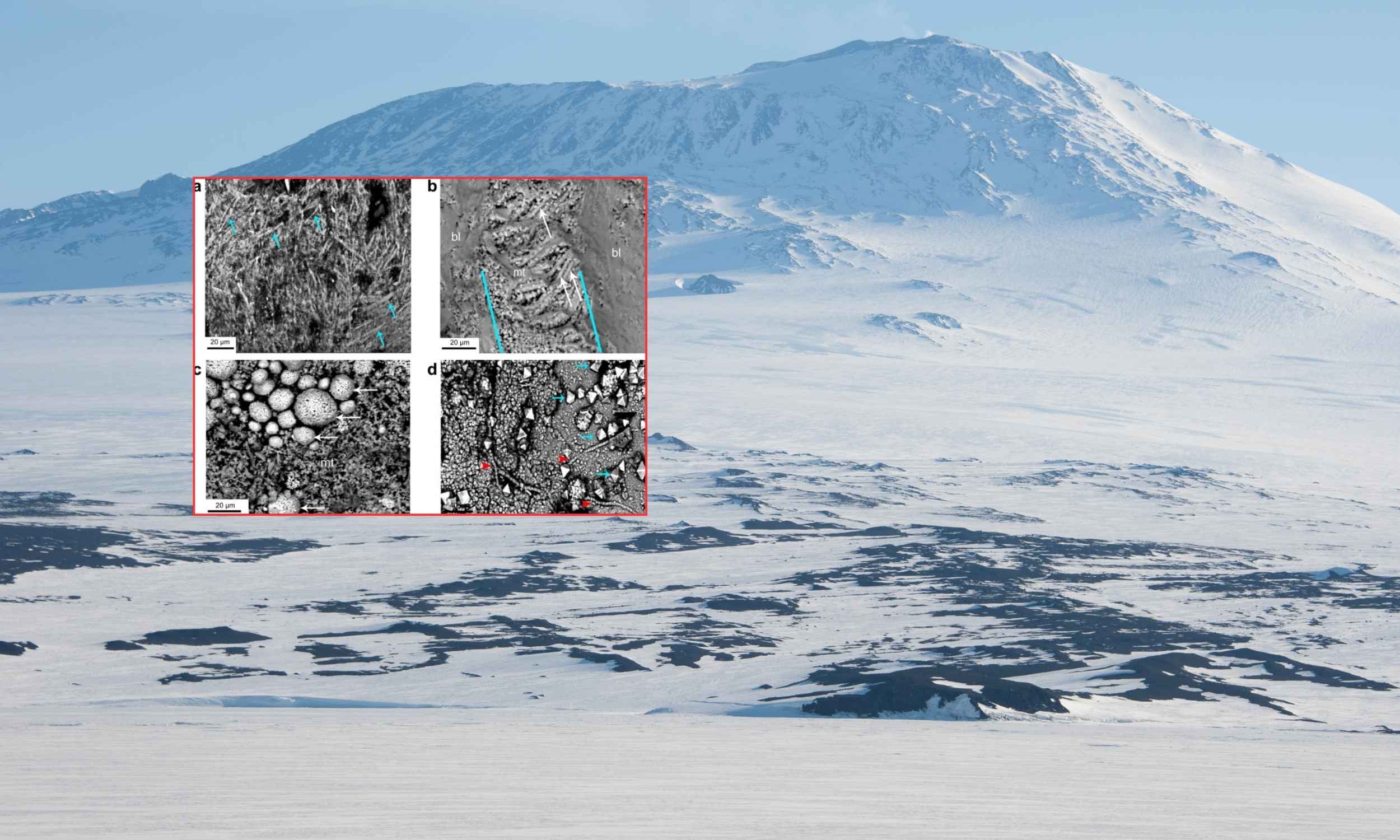
A 68-million-year-old soft-shelled fossil egg, nicknamed 'The Thing,' was discovered in Antarctica, revealing that large marine reptiles like mosasaurs laid eggs in water, challenging previous beliefs that such reptiles gave birth to live young. The egg, the largest soft-shelled egg found, suggests a reproductive strategy involving quick hatching in sheltered waters, and its preservation provides insights into ancient life near the poles.
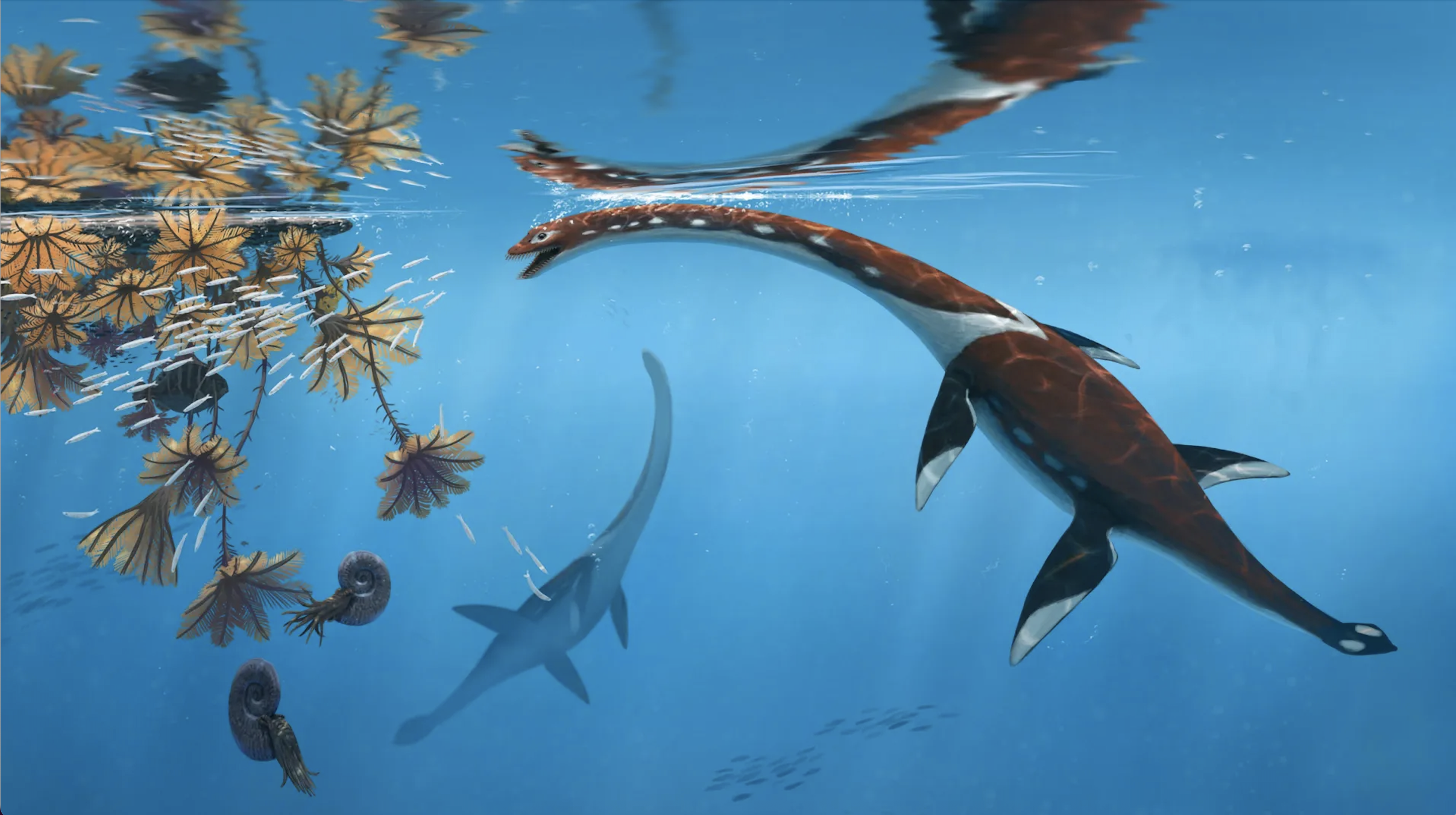
A new species of marine reptile called Xiphodracon goldencapensis, or 'sword dragon,' was discovered along England's Jurassic Coast, providing valuable insights into ichthyosaur evolution and Jurassic marine ecosystems during the Early Jurassic period.
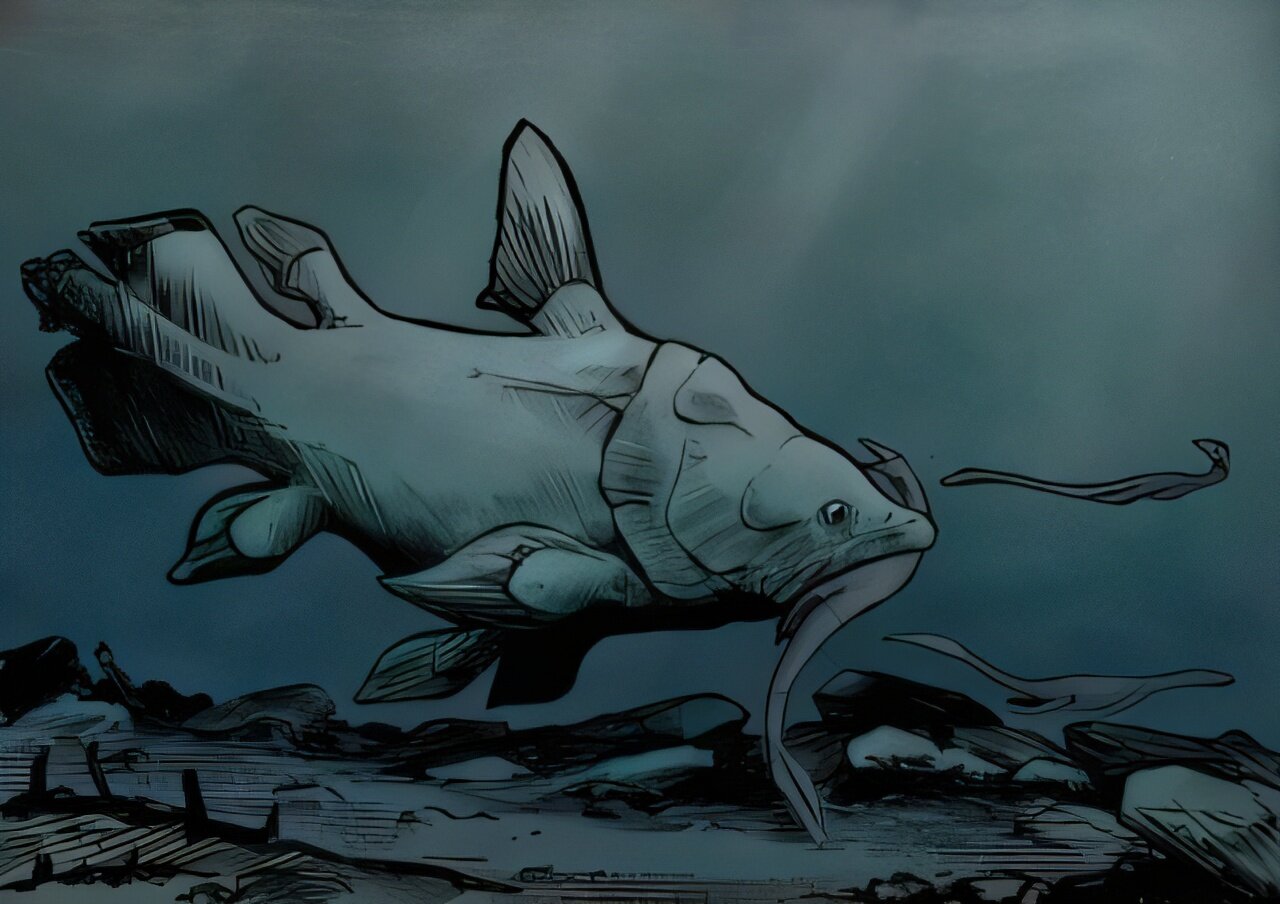
Researchers have identified over 50 coelacanth fossils from the British Triassic period, dating back around 200 million years, revealing a complex community of these 'living fossil' fish that had been misidentified or overlooked in museum collections for over 150 years.
The largest eggs of any animal were laid by the extinct elephant bird Aepyornis maximus, weighing up to 1,000 kg, with fossil evidence suggesting even larger eggs from marine reptiles like mosasaurs. Currently, ostrich eggs are the largest among living birds, weighing about 2.6 kg. The article explores various giant eggs from extinct species and their significance in understanding animal evolution.
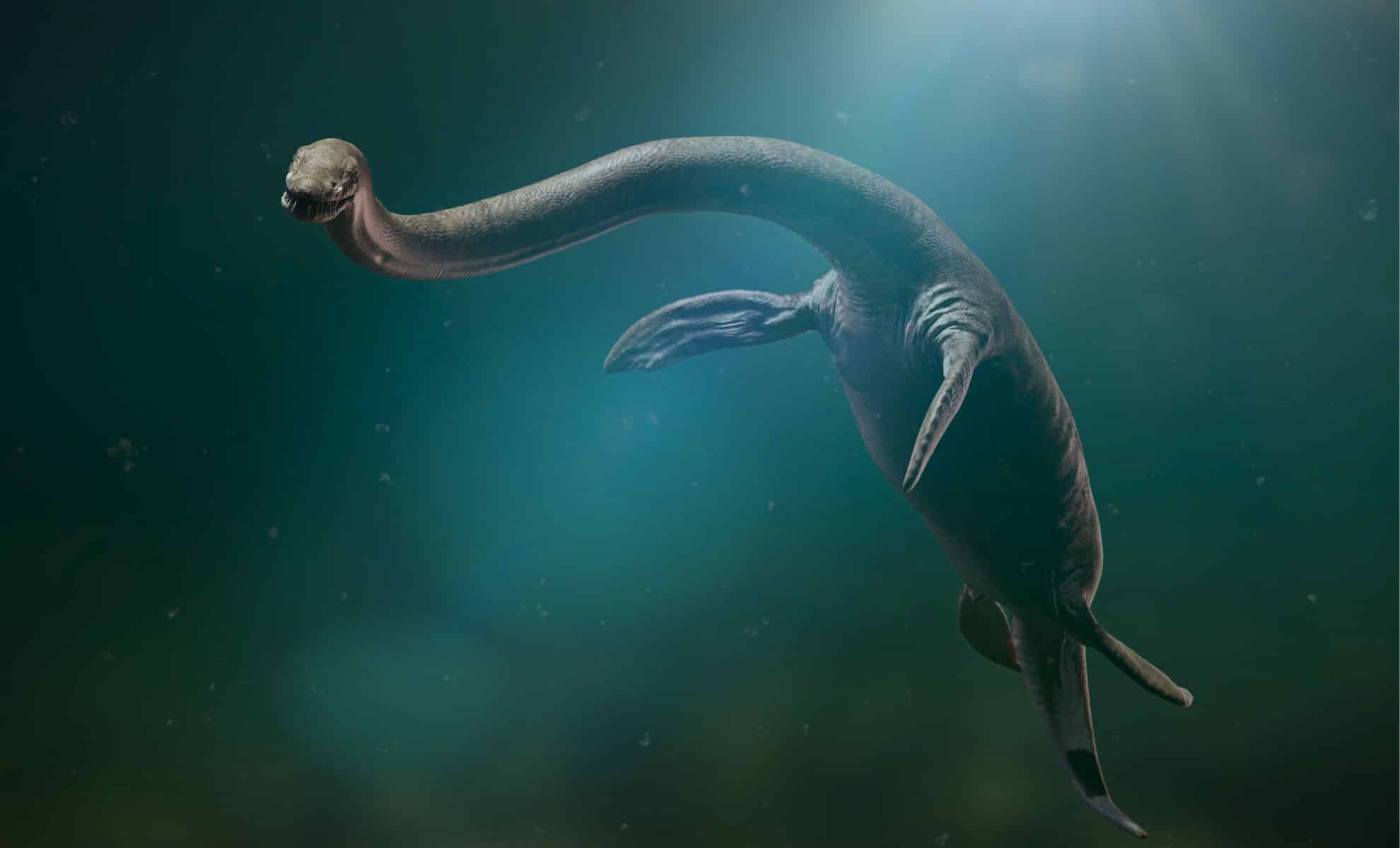
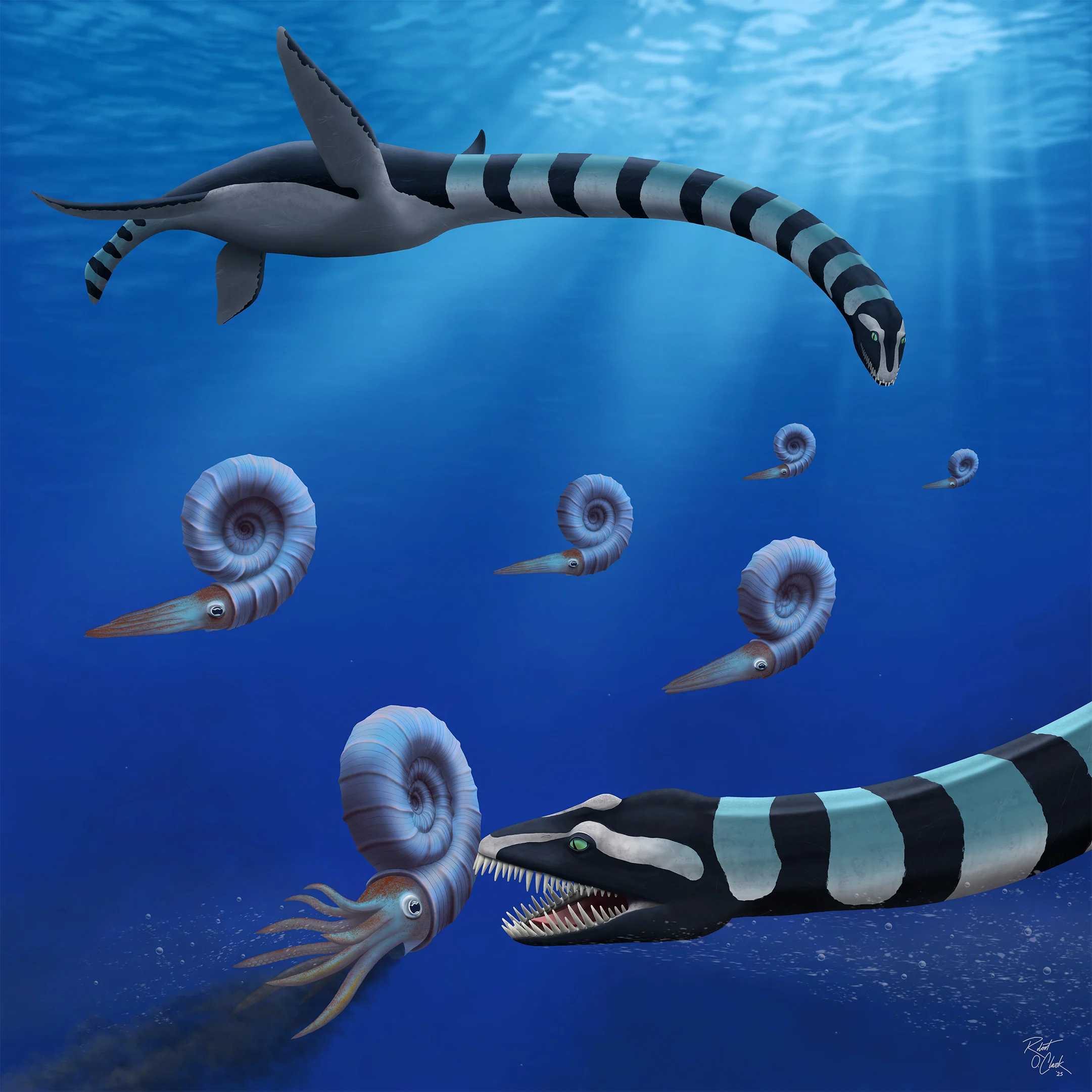
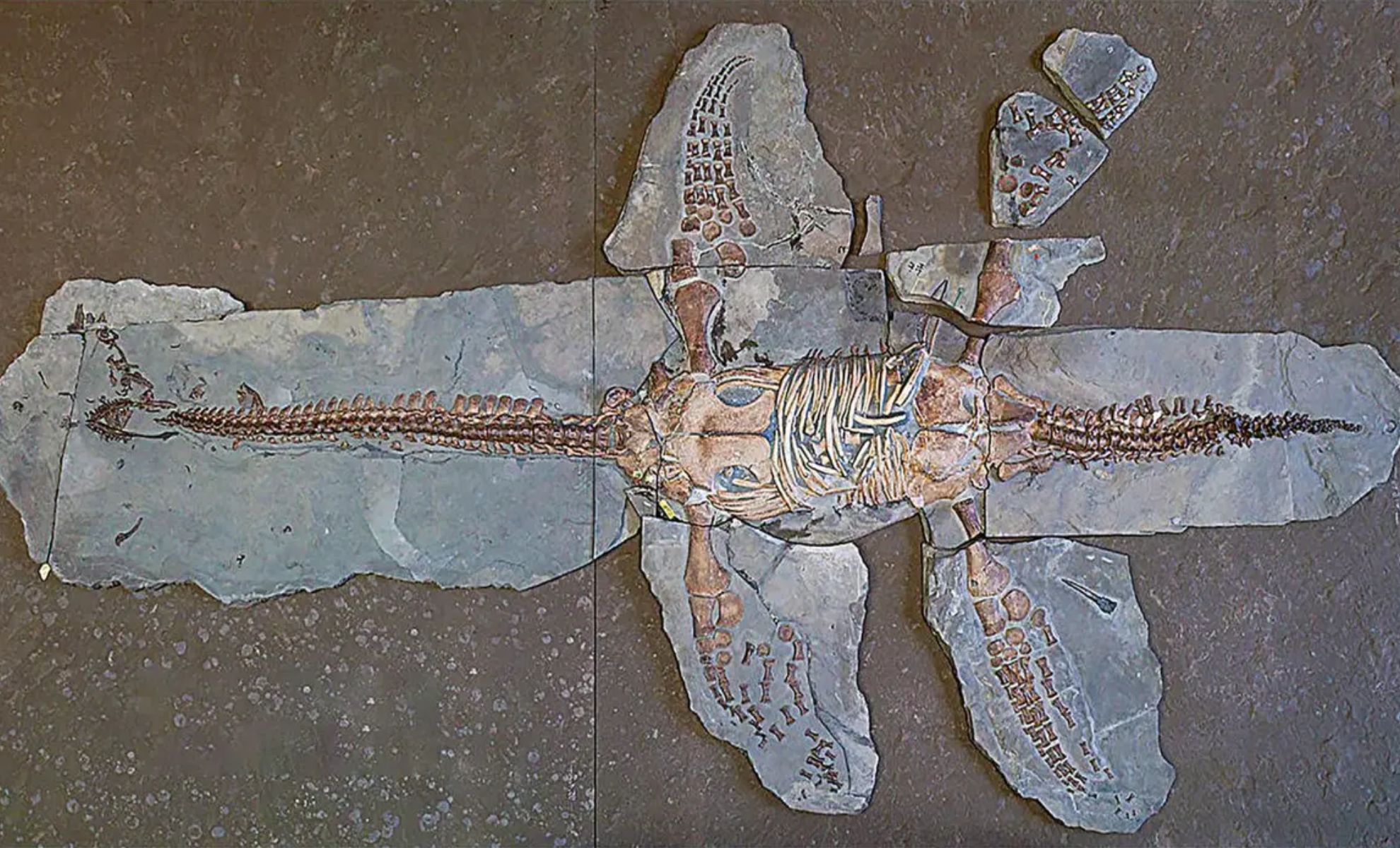
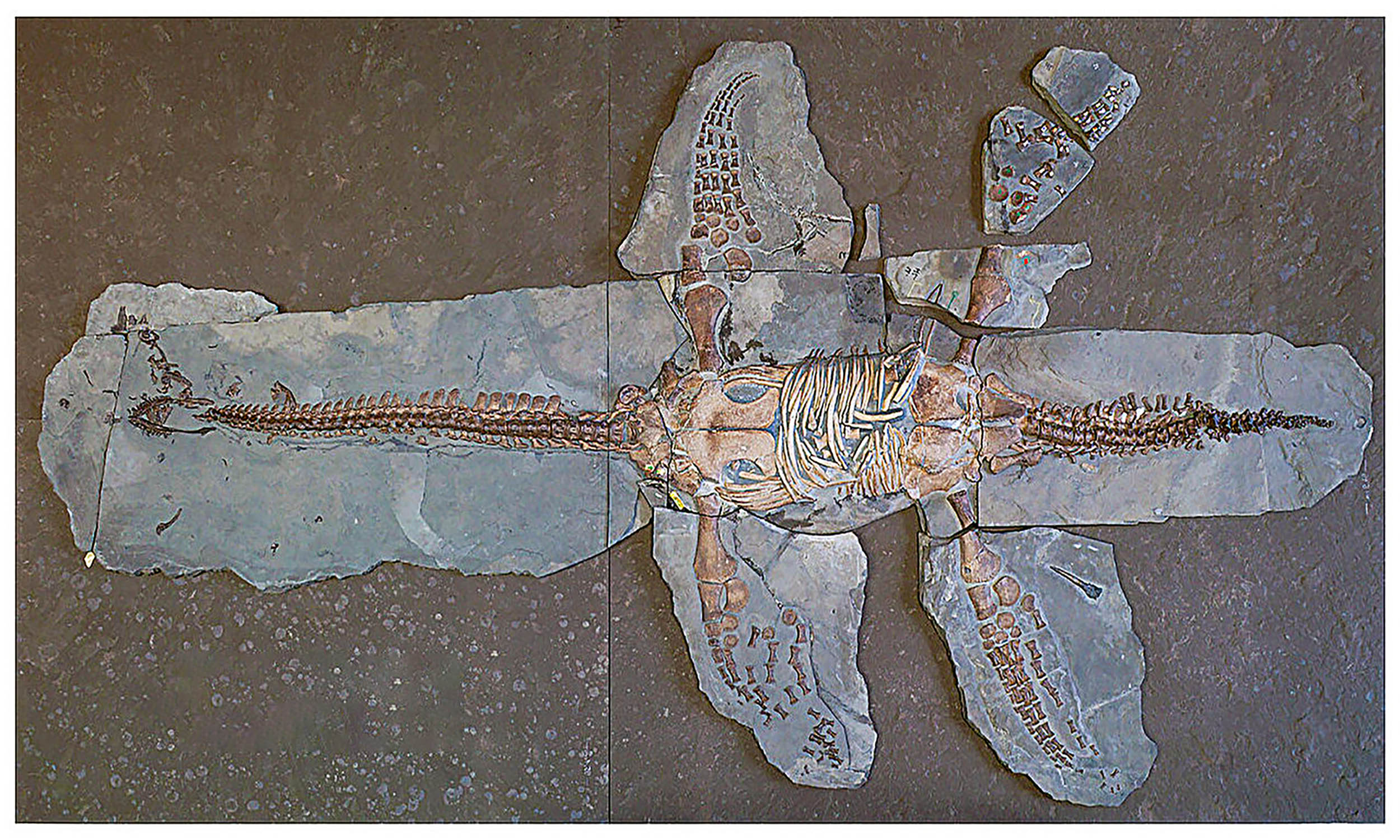
A nearly 50-year-old fossil from Germany has been reclassified as a new genus and species, Plesionectes longicollum, a Jurassic marine reptile with an exceptionally long neck, revealing new insights into plesiosaur evolution and adaptation during a period of significant oceanic change.
A nearly complete fossil of a previously unknown Jurassic sea monster, Plesionectes longicollum, was discovered in Germany, revealing new insights into marine reptile diversity during the Early Jurassic period and highlighting the impact of environmental changes on marine ecosystems.
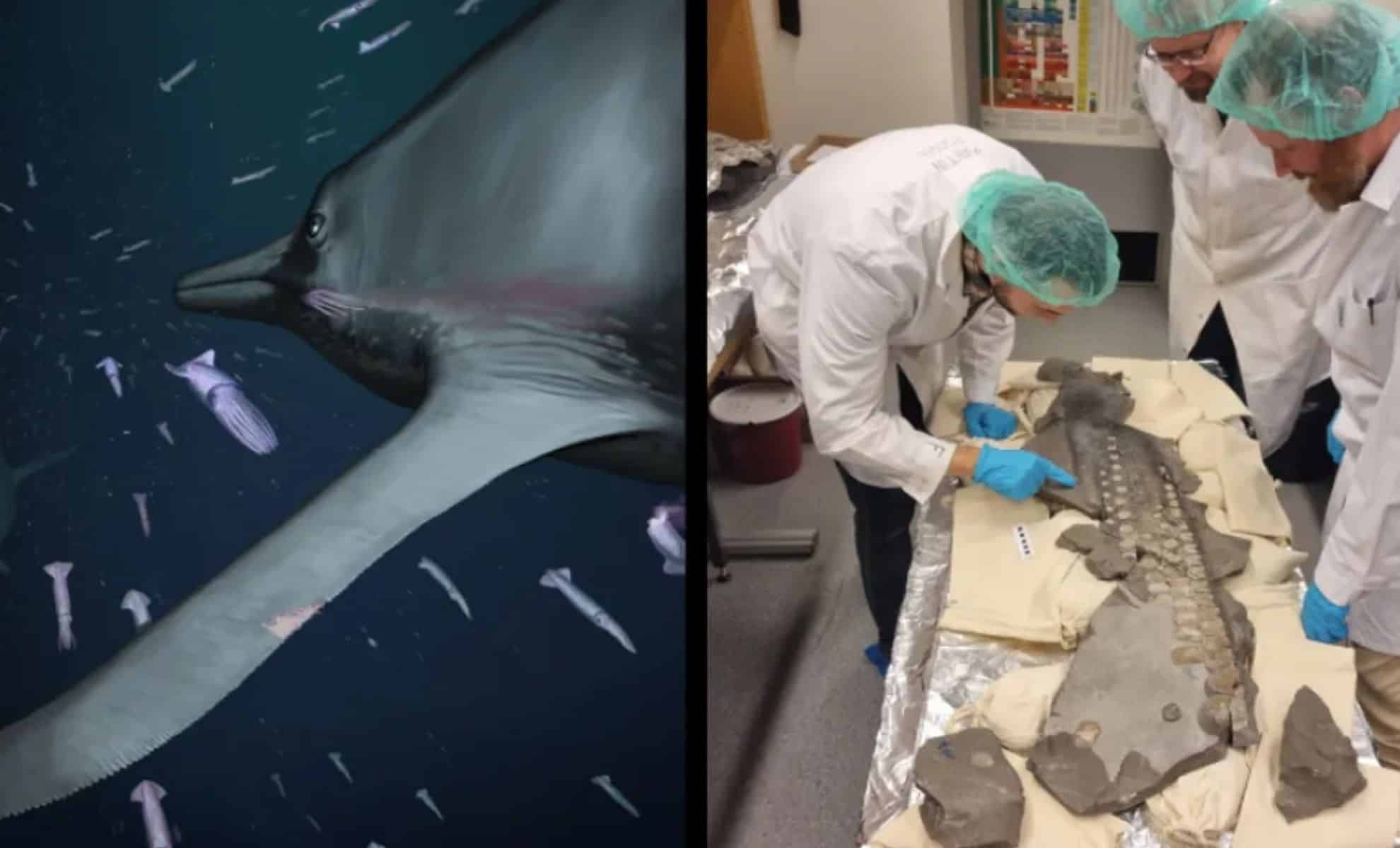
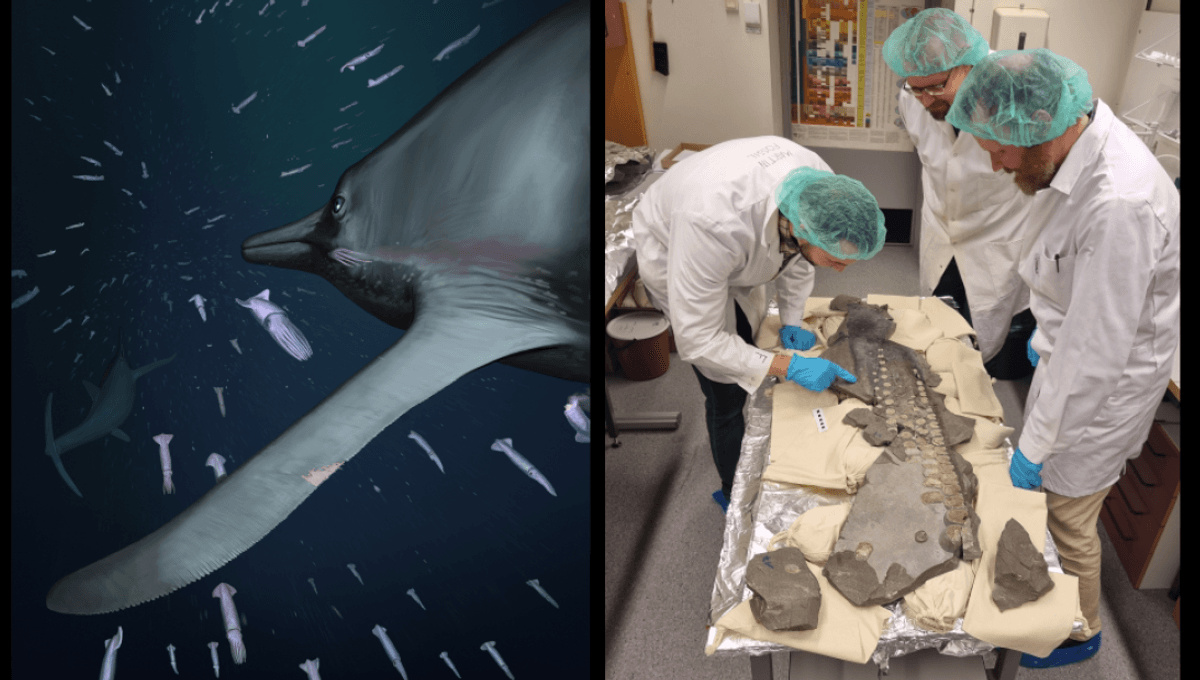
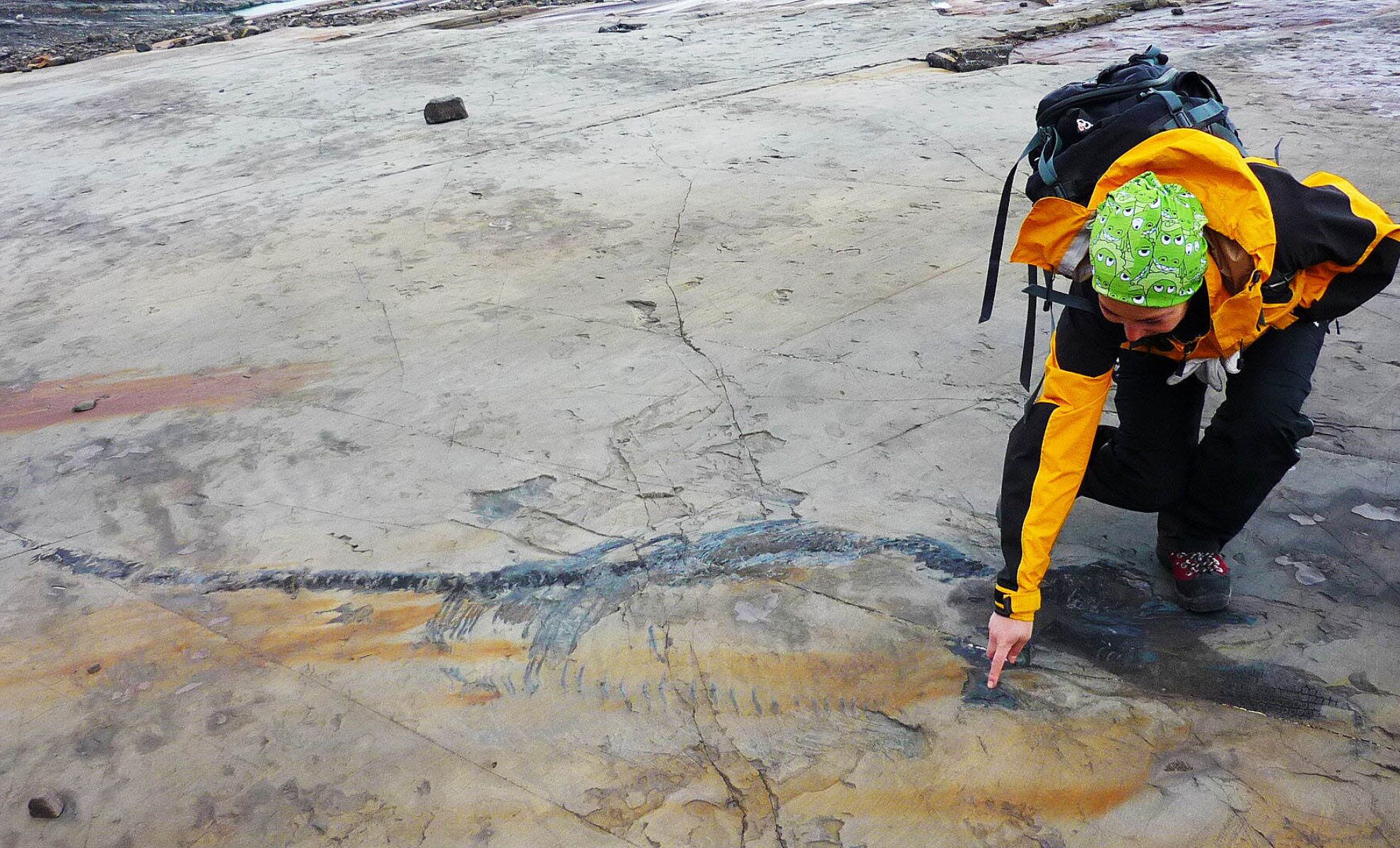
A groundbreaking discovery of the first soft tissue fossil of a giant ichthyosaur from 183 million years ago reveals new features like chondroderms, which suggest the ichthyosaur was a stealthy, apex predator. This find challenges previous understanding of these marine reptiles, offering insights into their hunting strategies, evolution, and ecological role in the Jurassic seas.
A groundbreaking 183-million-year-old fossil of an ichthyosaur's flipper reveals new features called chondroderms, suggesting these marine reptiles were silent, stealthy hunters capable of ambushing prey, which could revolutionize our understanding of their biology and evolution.
A 68-million-year-old soft-shelled egg, nicknamed 'The Thing,' was discovered in Antarctica, challenging previous beliefs about marine reptile reproduction by suggesting mosasaurs may have laid eggs in water, and providing new insights into the evolution of reptile eggs.
Scientists discovered a nearly complete 100-million-year-old fossil of Fiona, an ichthyosaur, in Patagonia, revealing her as a pregnant apex predator and providing insights into marine life during the Early Cretaceous, including reproductive strategies, environmental adaptations, and injury history.
Scientists have identified a new genus and species of marine reptile, Traskasaura sandrae, an 85-million-year-old elasmosaur with unique primitive and advanced traits, likely used for hunting prey from above, and now designated as the Provincial Fossil of British Columbia.
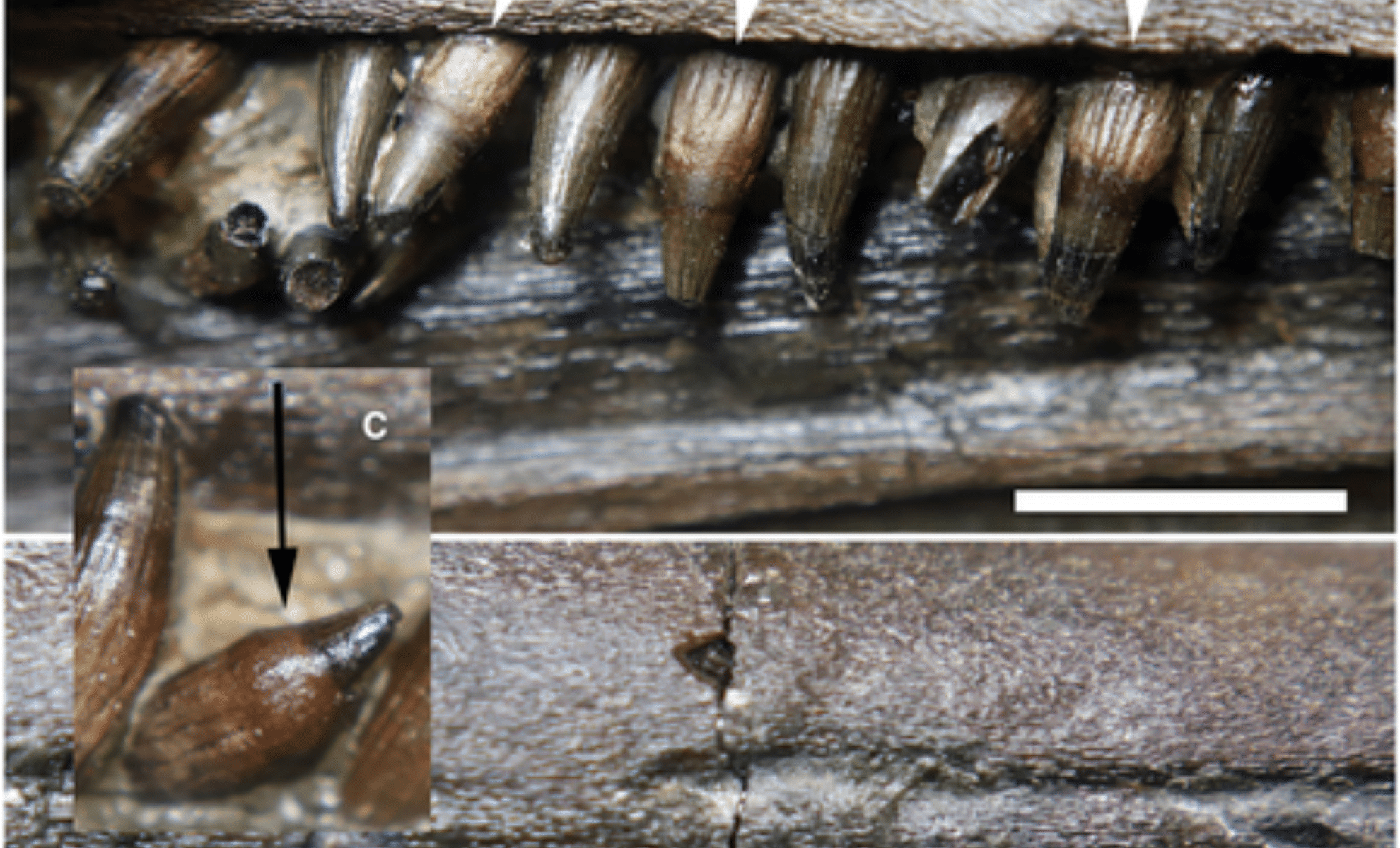
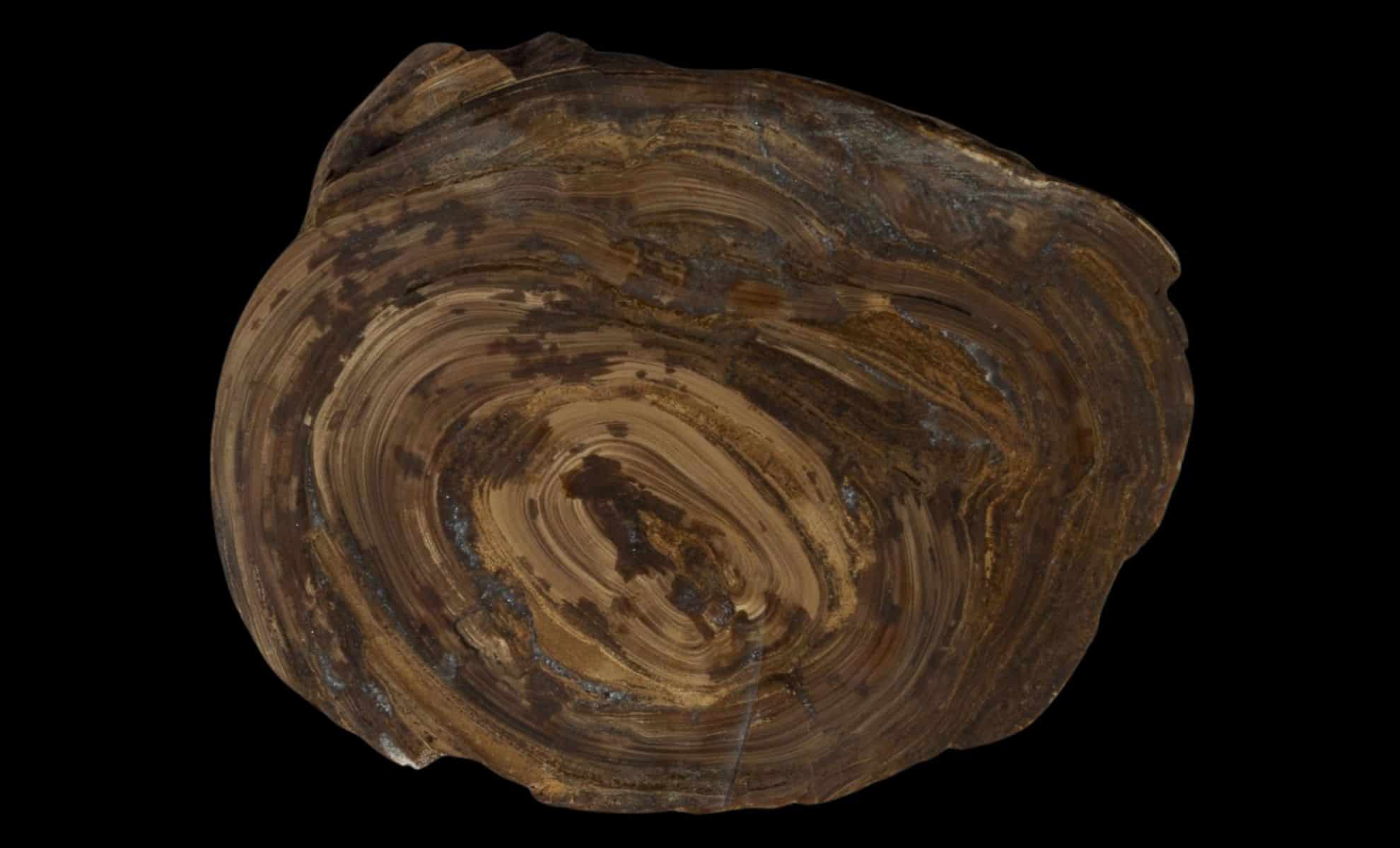
Paleontologists discovered the world's oldest stomach stone fossil, dating back 150 million years, along England's Jurassic Coast. The find, likely from a large marine reptile such as an ichthyosaur or plesiosaur, provides new insights into the diets and physiology of Jurassic marine animals, extending the fossil record of gastroliths by nearly 60 million years.
A remarkably preserved 183-million-year-old plesiosaur fossil from Germany reveals soft tissues, skin, scales, and a tail fin, providing new insights into its appearance, movement, and evolution, challenging previous assumptions about marine reptile camouflage and agility.
A 180-million-year-old plesiosaur fossil with well-preserved skin and tissue provides new insights into the creature's appearance, evolution, and regional diversity, revealing details about its skin texture, coloration, and hydrodynamic adaptations that challenge previous assumptions about marine reptiles.