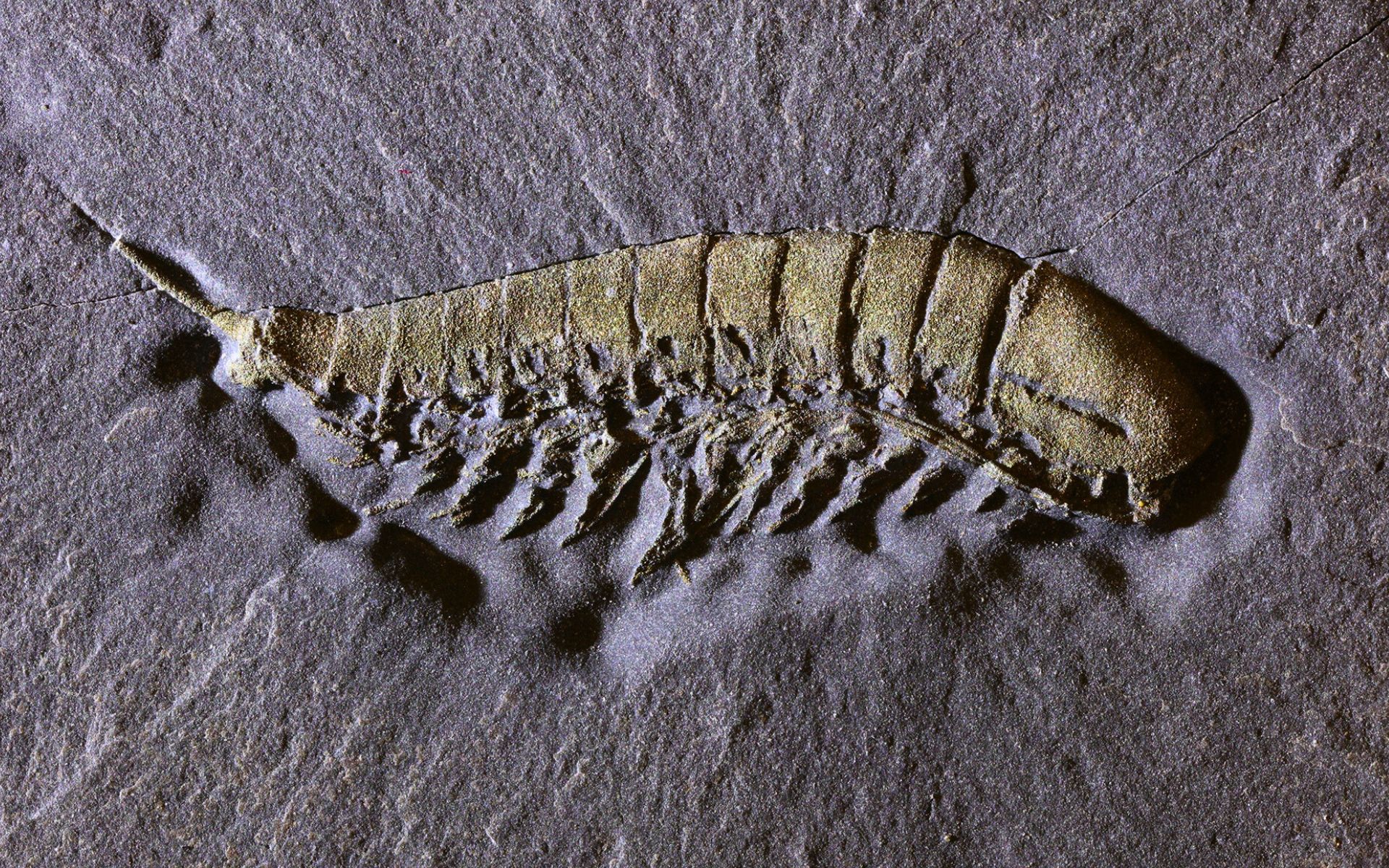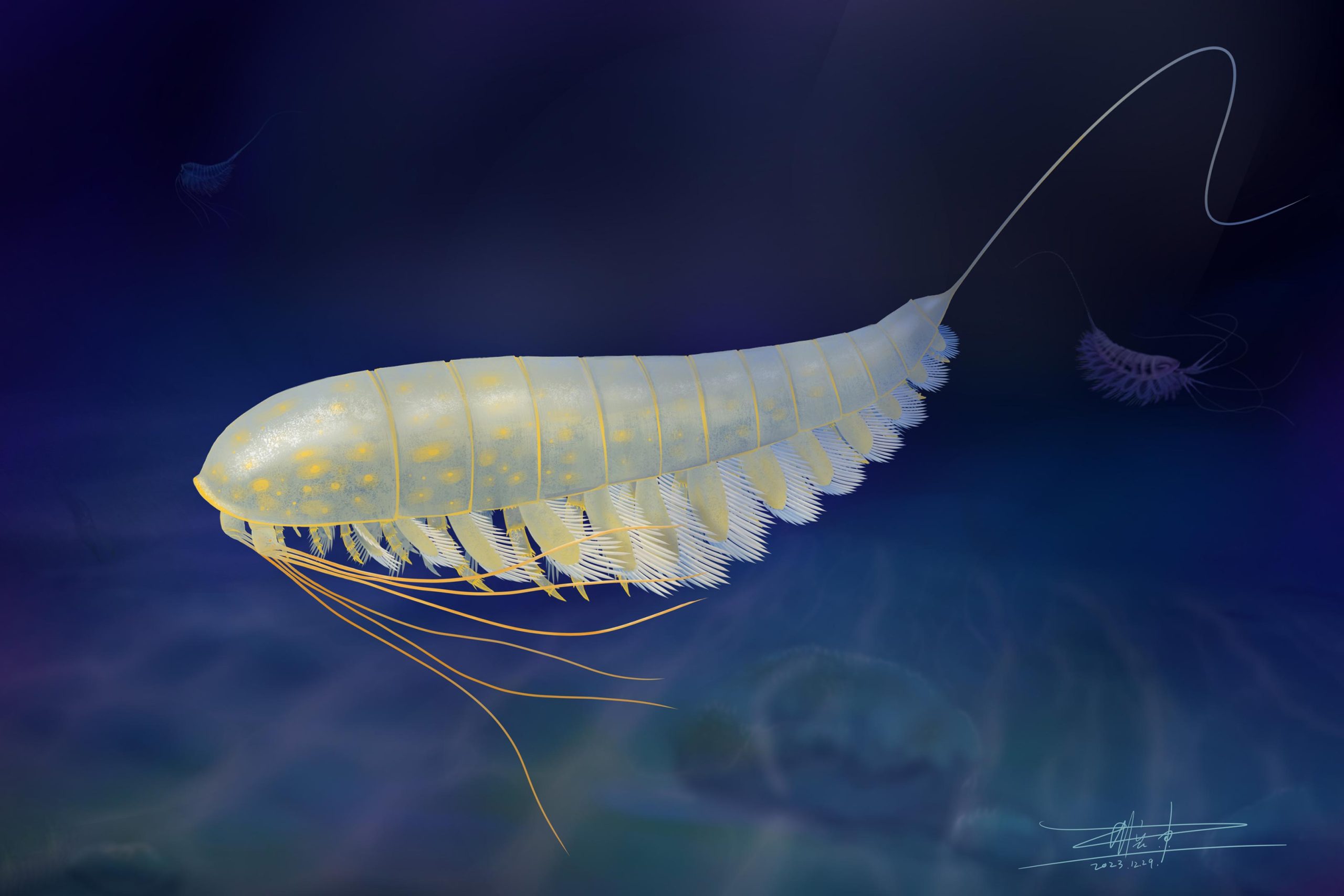
Scientists discovered a 520-million-year-old fossilized larva with remarkably preserved internal structures, including its brain, digestive system, and nerves, providing new insights into early arthropod evolution and challenging previous assumptions about the simplicity of ancient creatures.
Scientists discovered a 520-million-year-old larva fossil with perfectly preserved brain and organs, providing new insights into early arthropod evolution and challenging previous assumptions about their simplicity, thanks to advanced 3D imaging techniques.
Scientists discovered a 520-million-year-old fossil of a larva called Youti yuanshi with remarkably preserved internal organs, including the brain and gut, providing new insights into early arthropod anatomy and evolution during the Cambrian Explosion.
A 520-million-year-old fossil of a Cambrian-era larva named Youti yuanshi has been discovered with preserved brains, guts, and internal organs, providing unprecedented insights into early arthropod evolution and the development of complex body plans, thanks to advanced 3D imaging techniques.
Paleontologists have discovered a 450-million-year-old arachnid fossil, named lomankus edgecombei, encased in fool's gold in upstate New York. This ancient arthropod, found at Beecher’s Trilobite Bed, offers a rare 3D preservation, providing insights into the evolution of arthropod characteristics. The fossil's unique front limb, akin to a "biological Swiss army knife," suggests it was used for capturing prey and sensing the environment, highlighting evolutionary adaptations. This discovery aids in understanding the evolutionary pathways of modern arthropods like spiders and scorpions.
A 450-million-year-old arthropod fossil, Lomankus edgecombei, preserved in fool's gold, has been discovered in New York, offering insights into the evolution of arthropod appendages. This species, related to spiders and scorpions, shows a shift from predation to environmental sensing, lacking eyes and using its appendages to navigate its dark, low-oxygen habitat. The fossil's preservation in pyrite allows for detailed 3D analysis, providing clues about the evolutionary adaptations of ancient arthropods.